Archiv der Kategorie: 2025

TANKE – LIESA FRITZSCHE | BA 2025

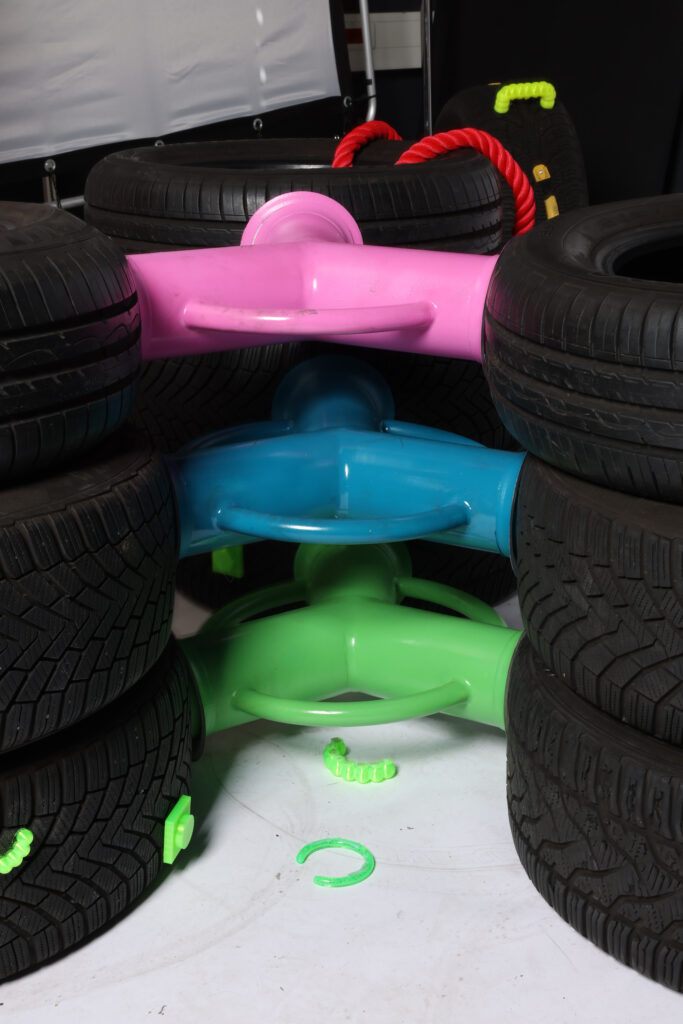
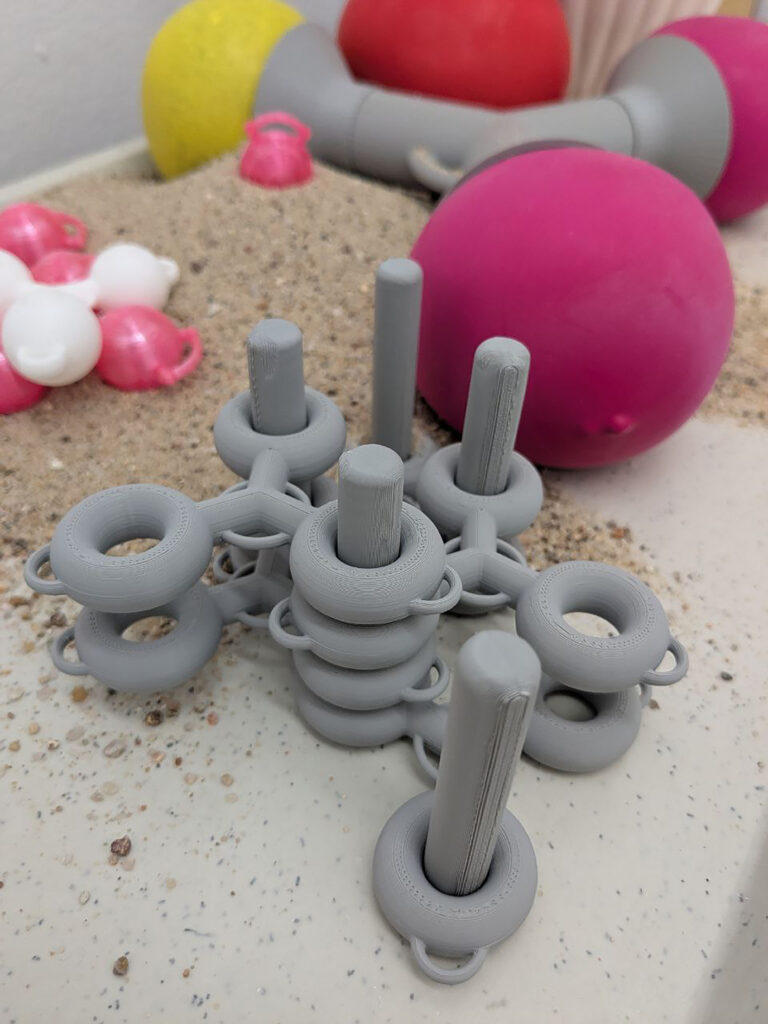
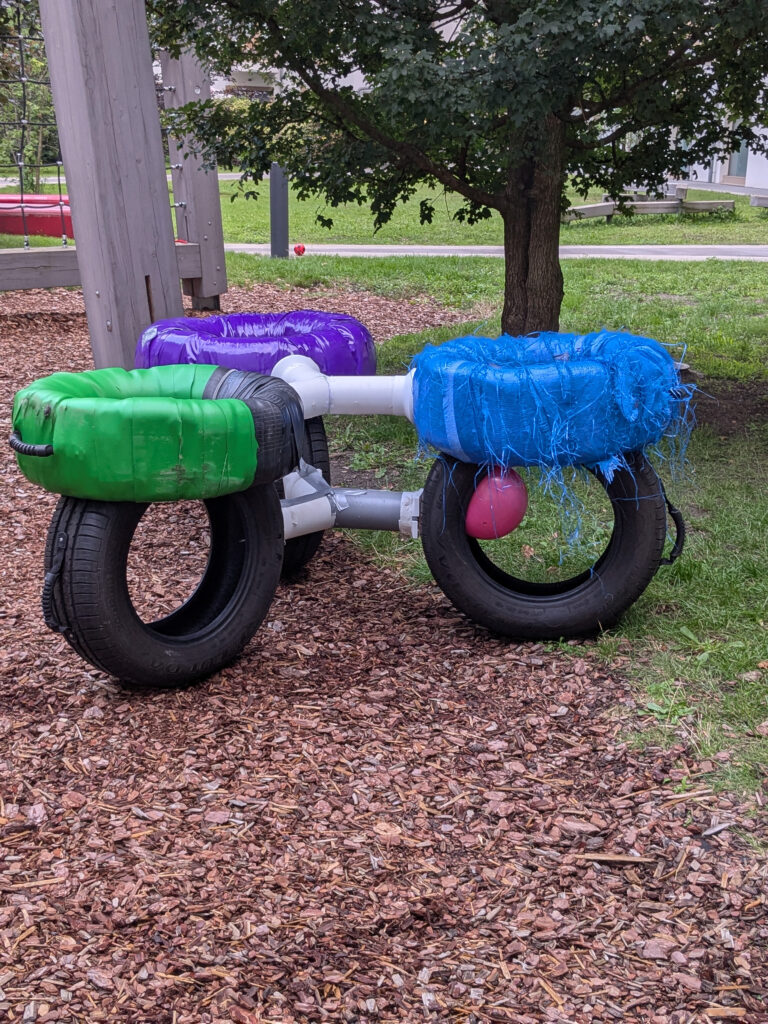
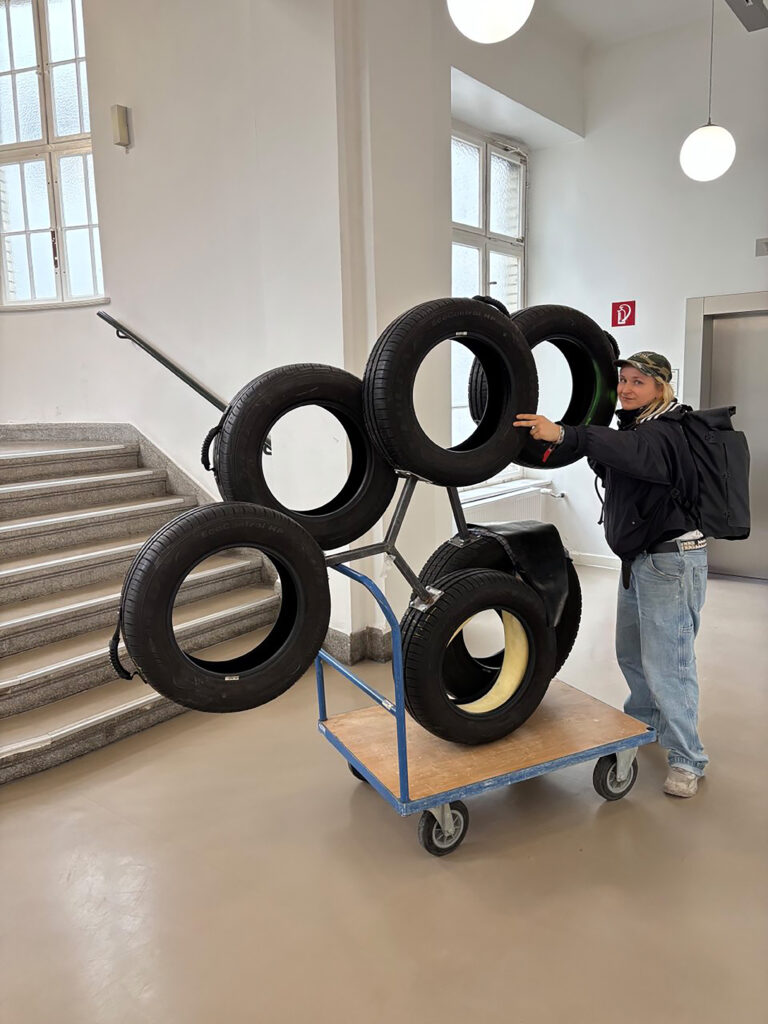
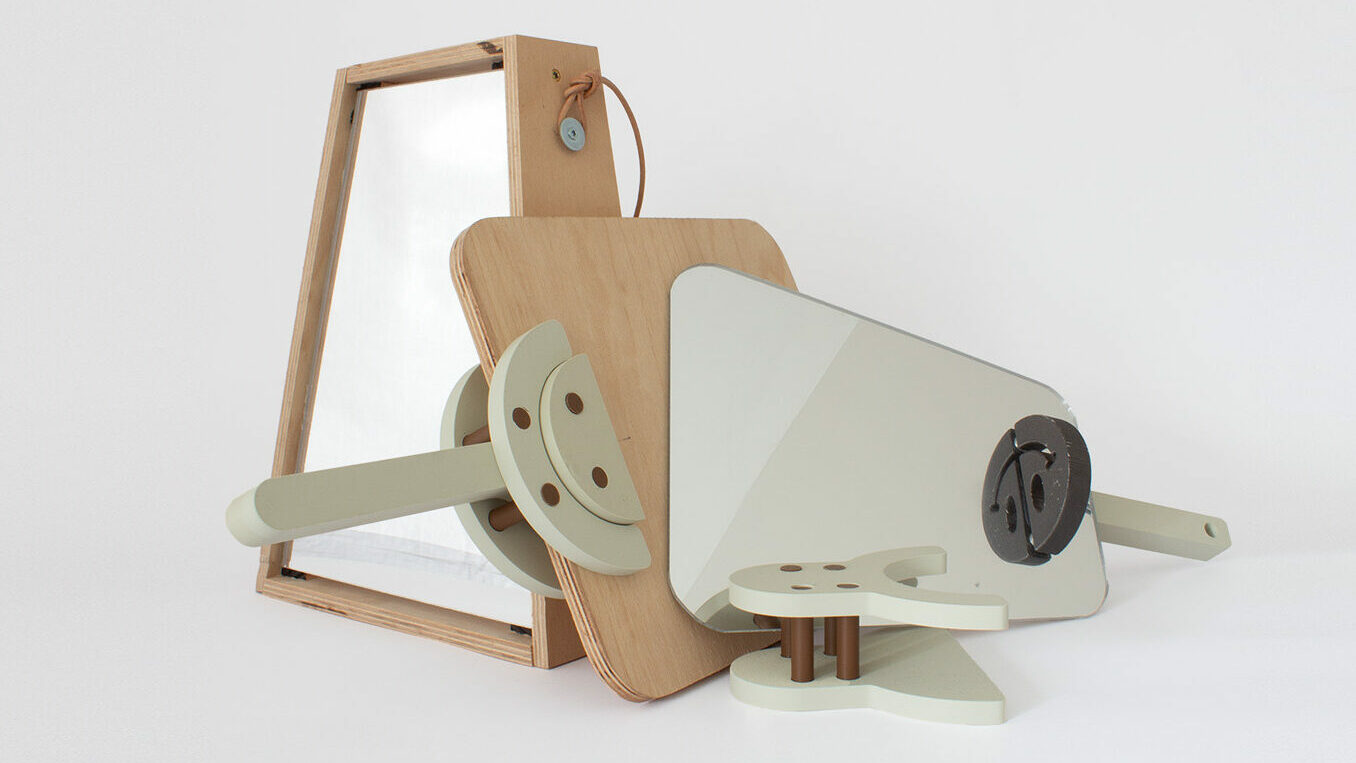
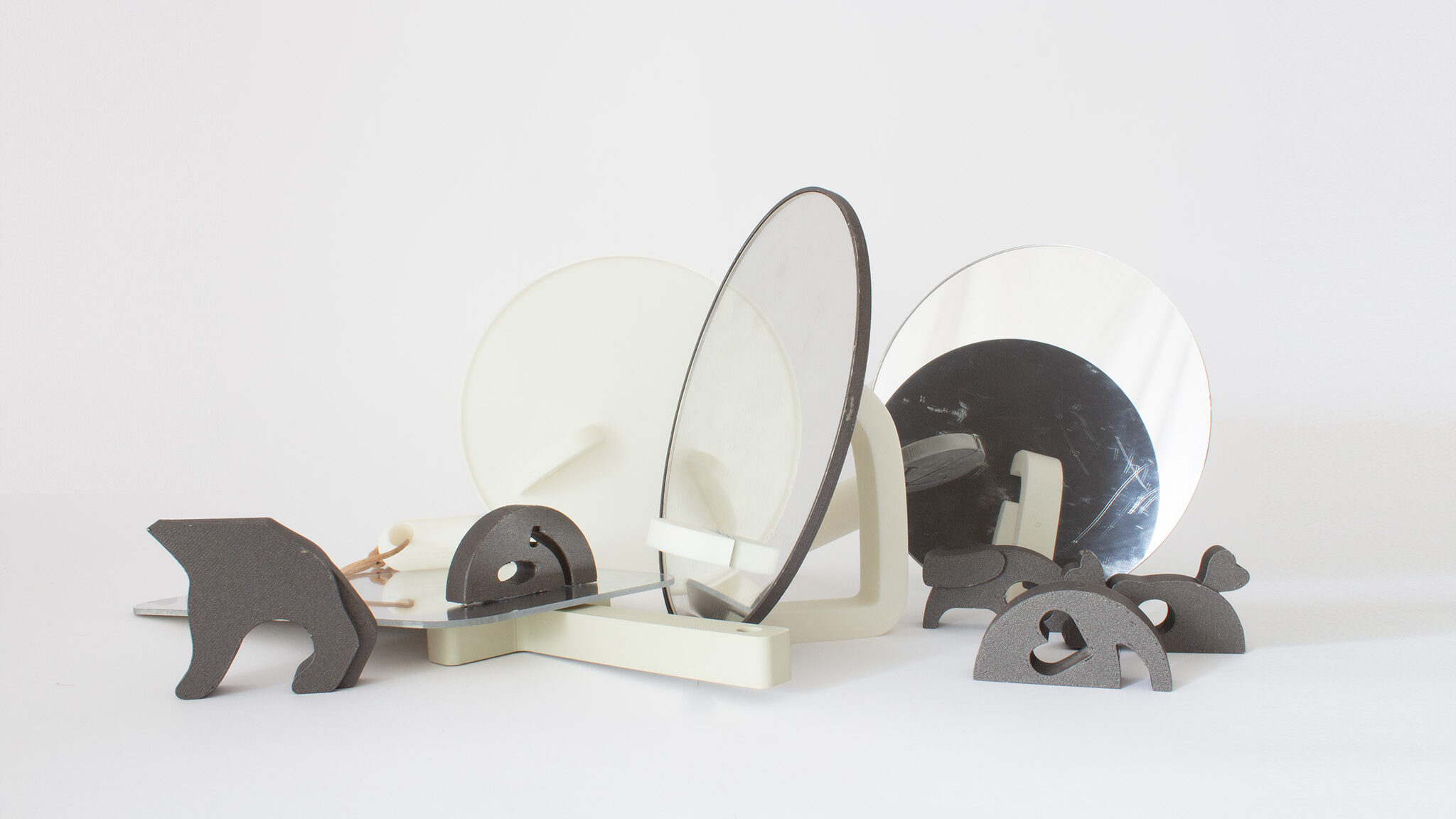
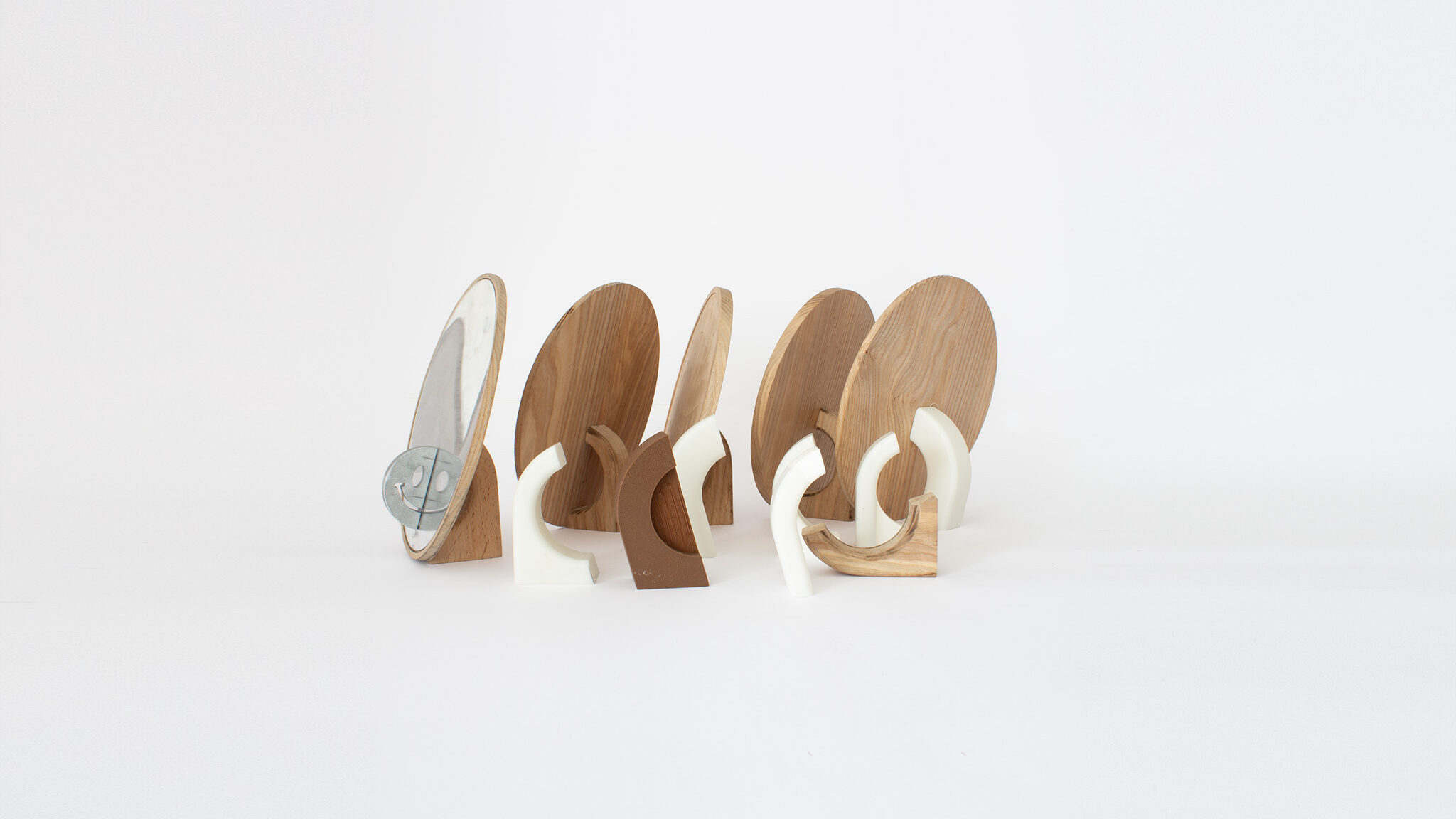
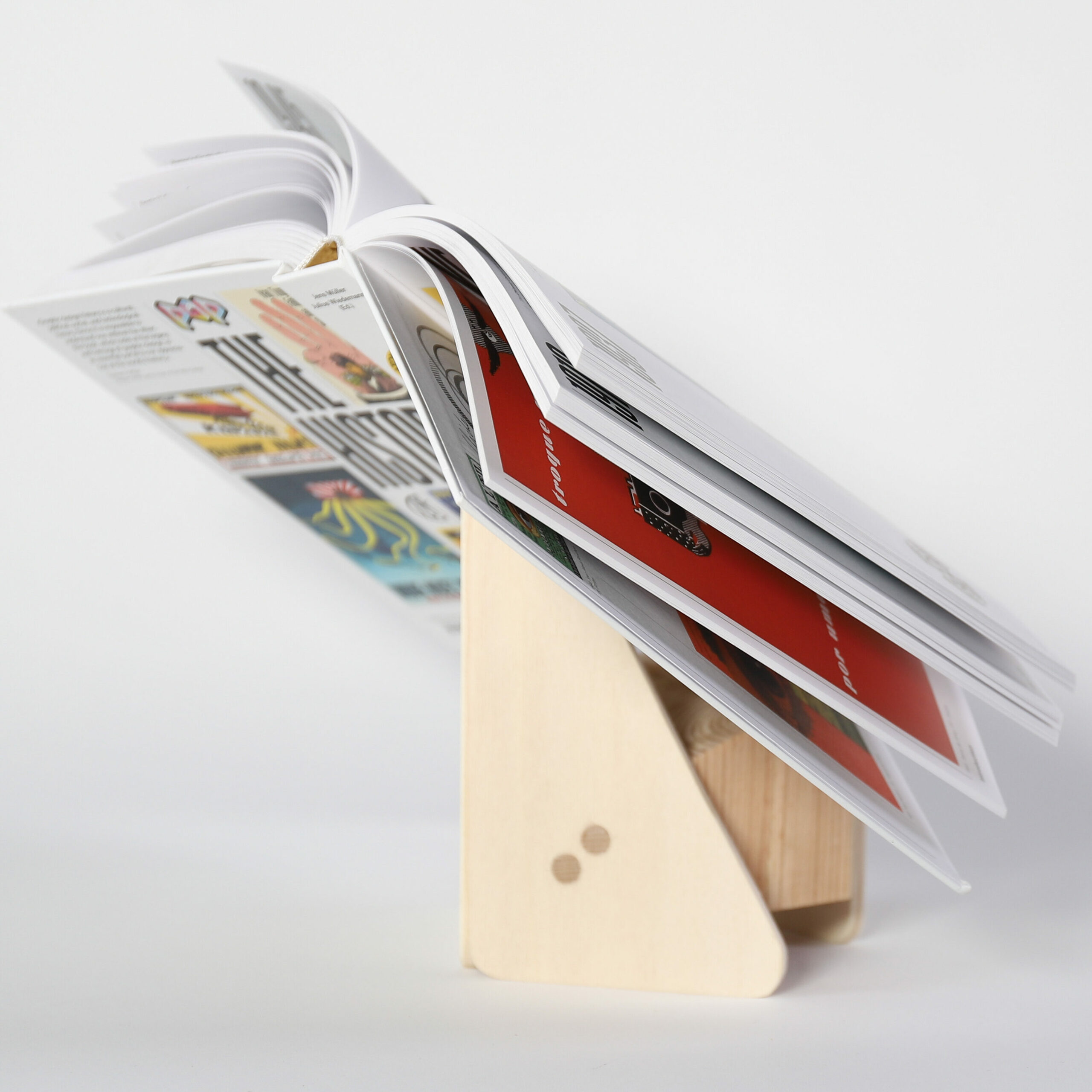
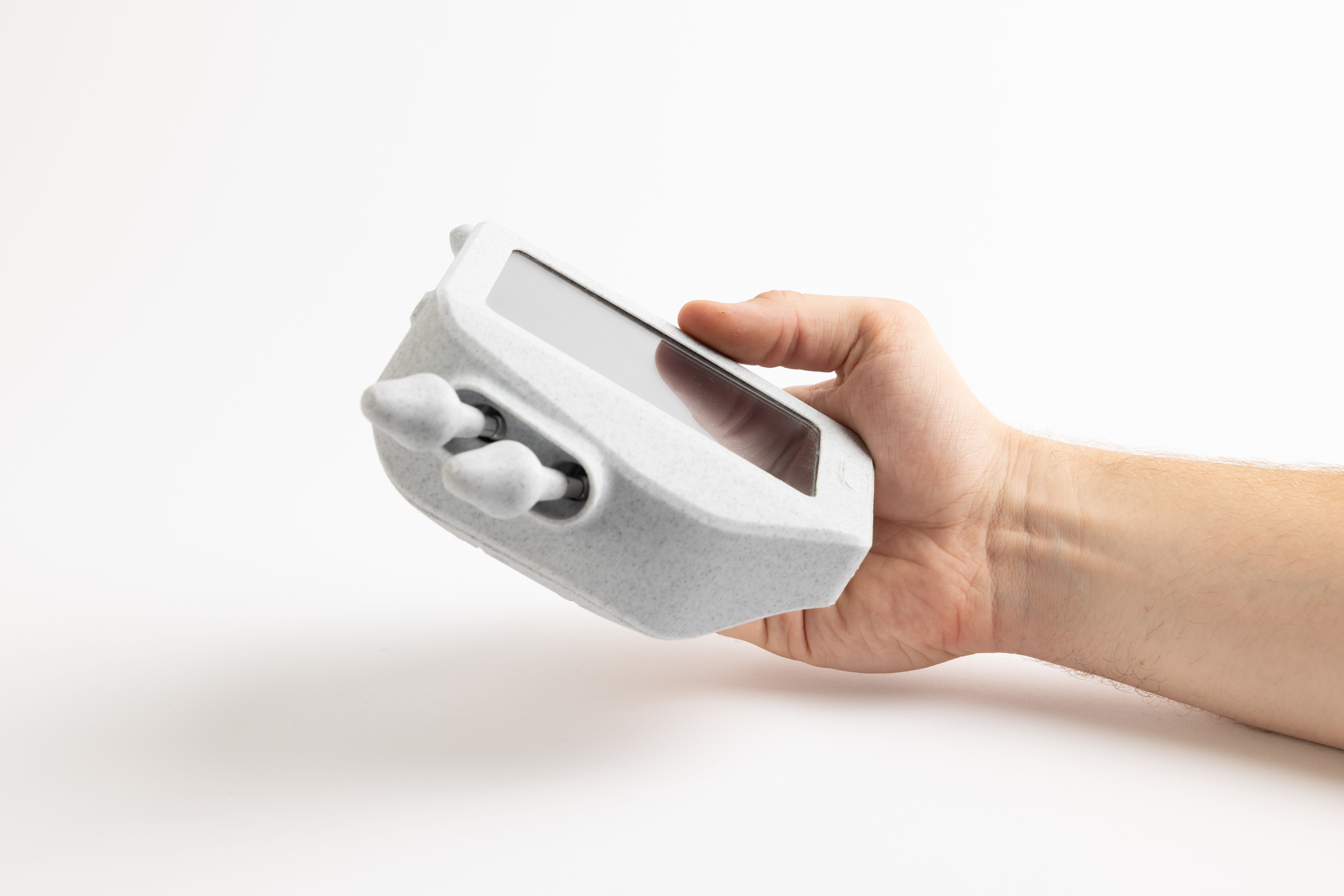
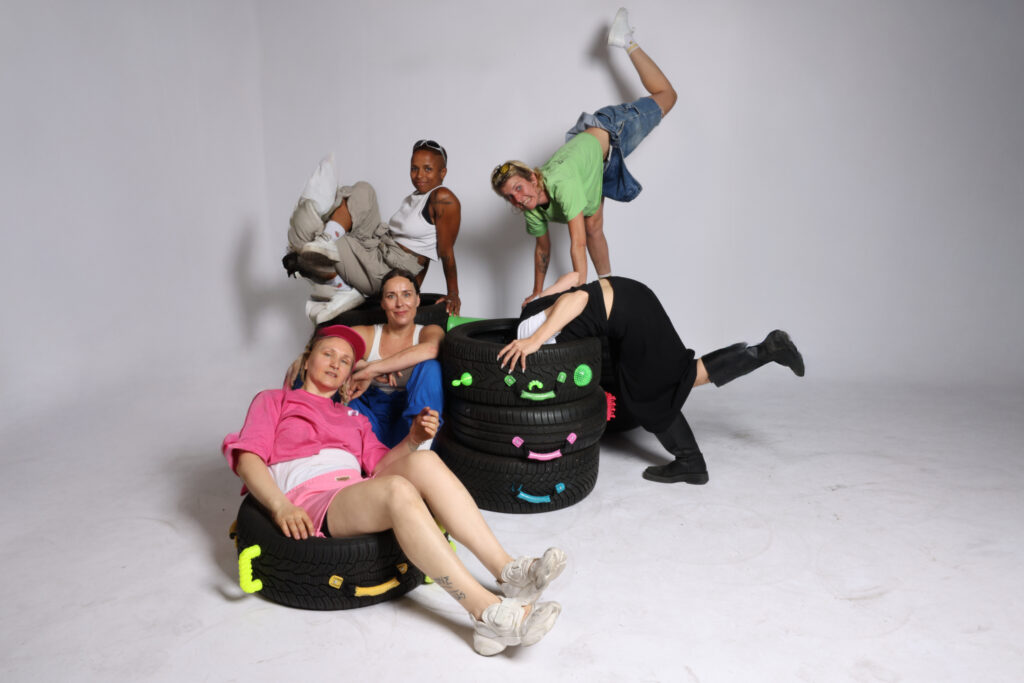
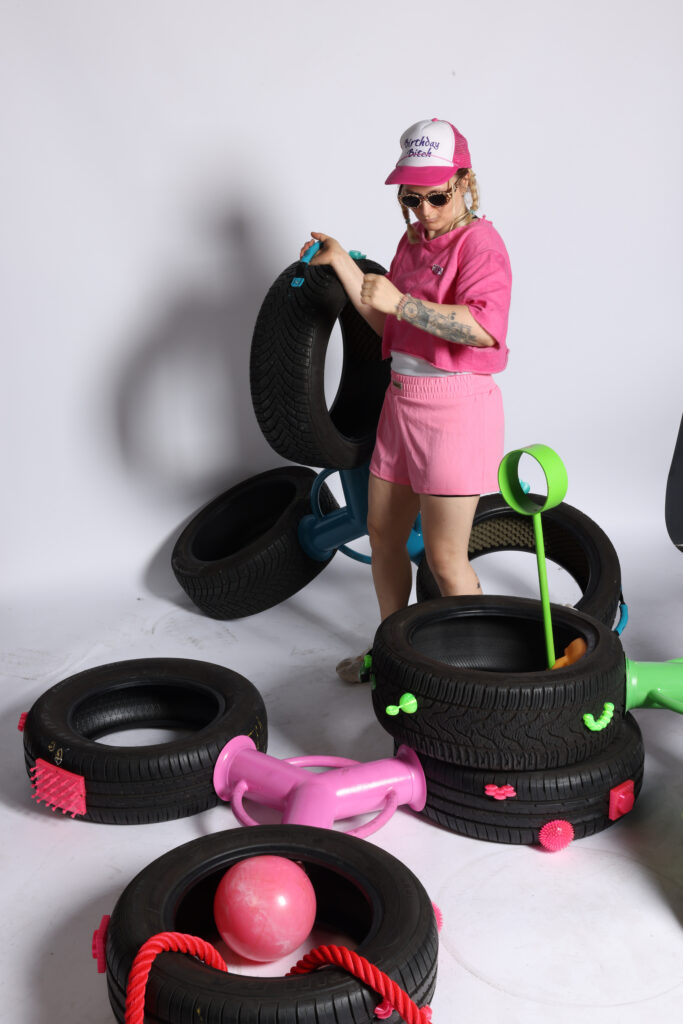
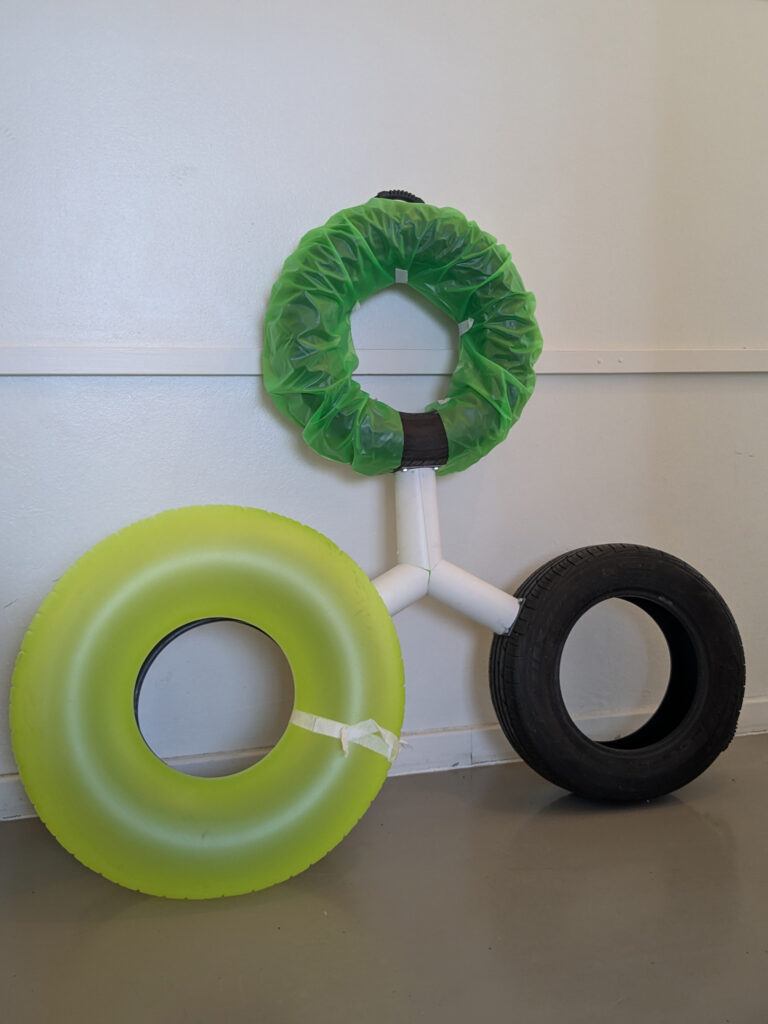
TANKE ist eine Play-Skulptur, die vertraute Elemente wie Autoreifen mit überraschenden Gimmicks kombiniert und zum Forschen und Entdecken einlädt. Wiederkehrende Formen schaffen neue Räume, die eingenommen, neu interpretiert und kombiniert werden können. Inmitten wachsender, voller Städte, die oft Ohnmacht vermitteln und wenig Mitgestaltung zulassen, eröffnet TANKE einen Gegenentwurf: einen Ort, an dem Spielkultur erfahrbar wird, Beziehungen neu entstehen und Nutzer*innen spielerisch oder ruhig aktiv Teil des Raums werden können.

TANKE is a play-sculpture that combines familiar elements, such as car tires, with surprising gimmicks, inviting exploration and discovery. Recurrent forms create new spaces that can be inhabited, reinterpreted, and combined. Amidst growing, crowded cities that often evoke powerlessness and allow little opportunity for participation, TANKE offers a counter-design: a place where play culture becomes tangible, where relationships can emerge anew, and where users can actively take part in the space, whether playfully or quietly.
Prozess
Prüfer: A.Stankowski, A. Engelmann, M. Beck
SPURENSAMMLER – KAROLINE HEYDE | BA 2025

Spurensammler – eine Materialgeschichte

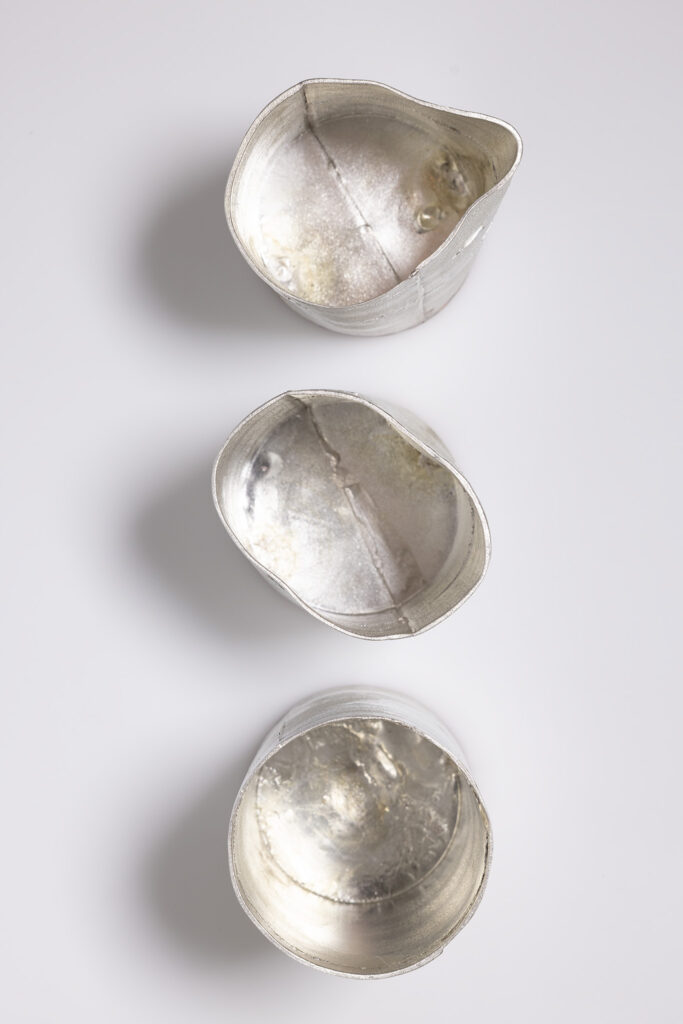
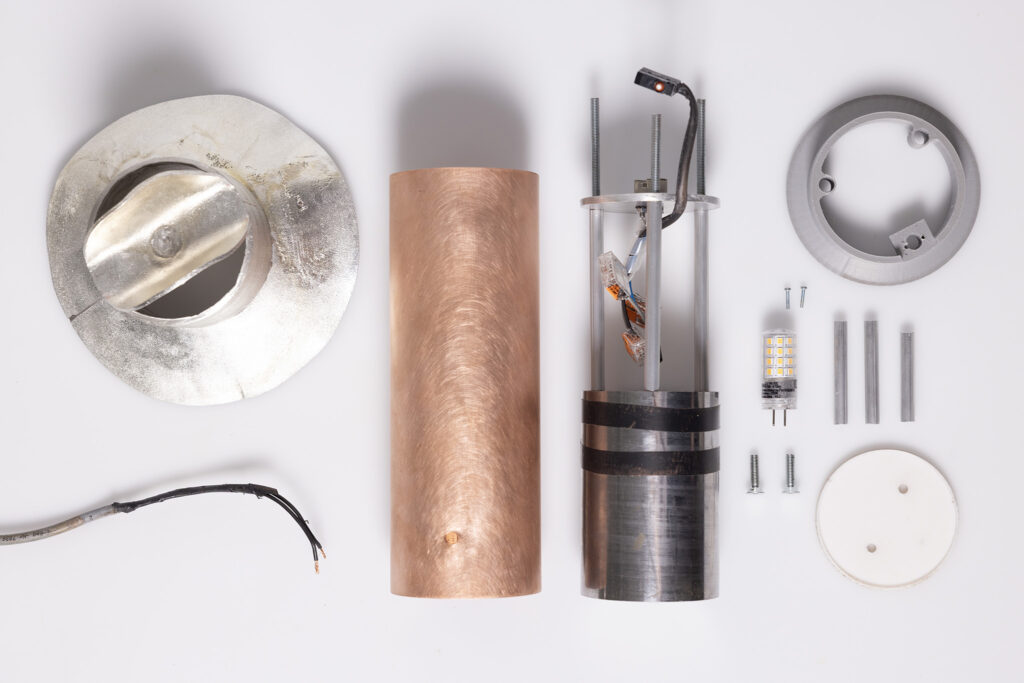
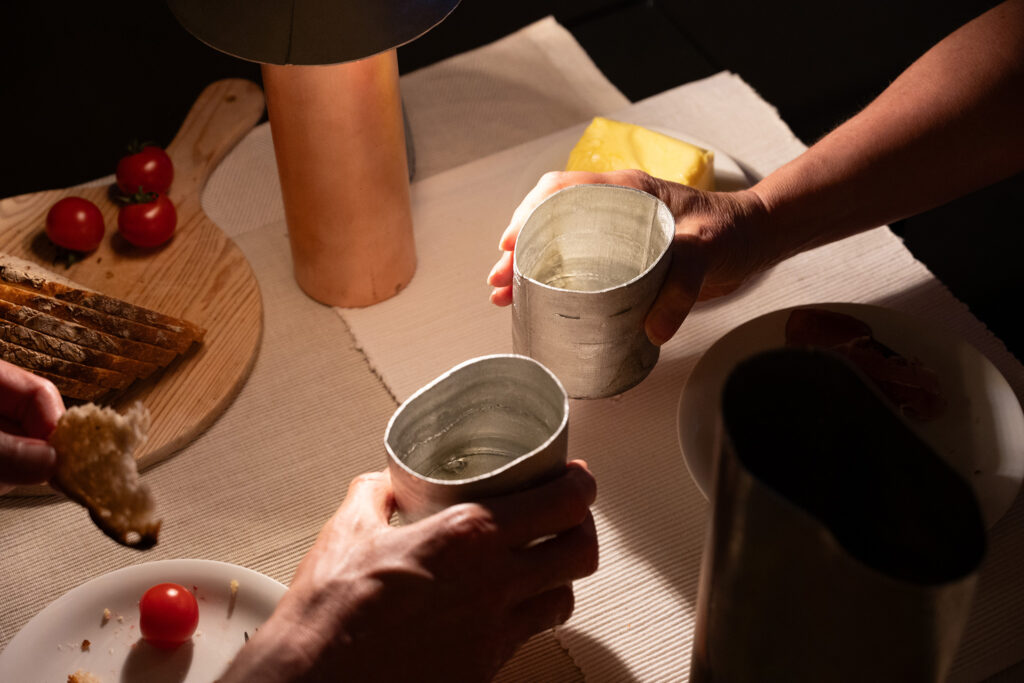
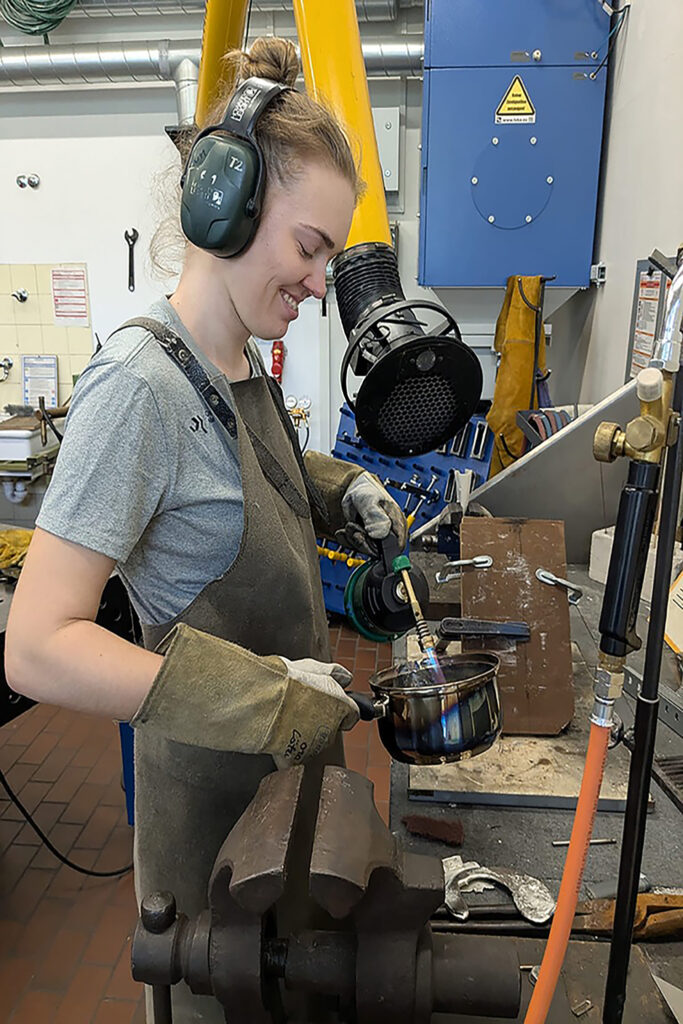
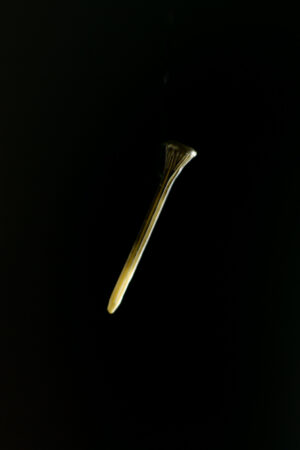
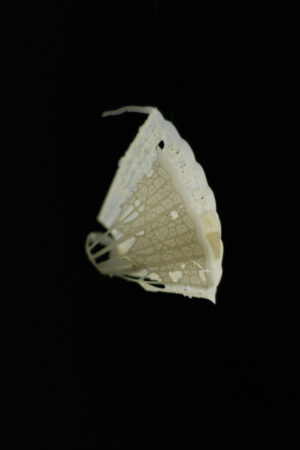
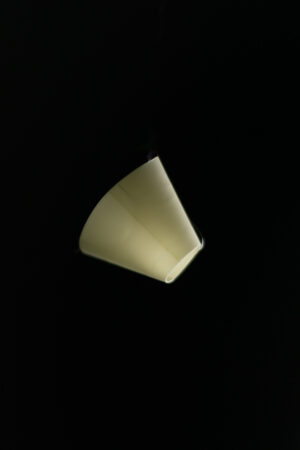
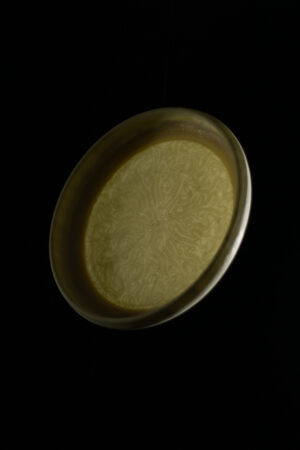
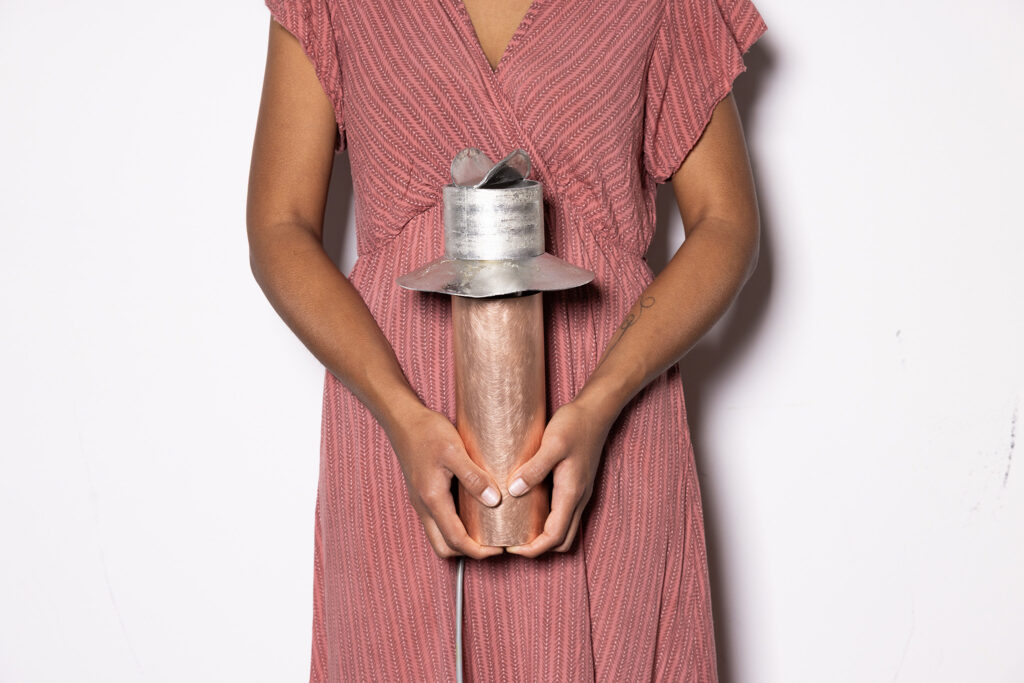
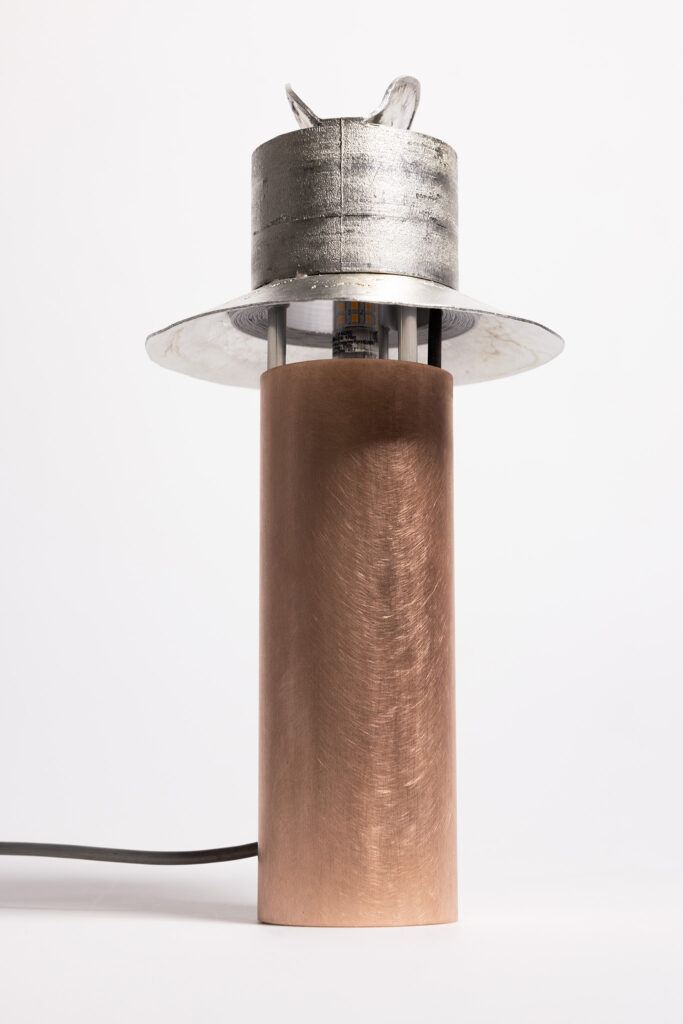
Können Gebrauchsspuren und Imperfektion nicht auch Wert erzeugen und Objekte durch ihre (Ab-)Nutzung persönlicher und bedeutungsvoller werden? Das Projekt Spurensammler – eine Materialgeschichte geht dieser Frage nach und arbeitet experimentell mit Zinn, einem weichen, leicht verformbaren Metall, das jede Nutzung offenlegt. Kratzer und Dellen werden zu Erinnerungen, die Nähe bewahren. So entstanden Becher Mano, Karaffe Rivo und Leuchte Clair – Objekte, die zu Begleitern werden, die Geschichten sammeln und sich mit der Zeit immer weiter verändern.

Spurensammler – A Material History

Can signs of wear and imperfection also create value and make objects more personal and meaningful through their use and wear? The project Spurensammler – eine Materialgeschichte explores this question and works experimentally with tin, a soft, easily deformable metal that reveals every use. Scratches and dents become memories that preserve closeness. This is how the Mano cup, Rivo carafe, and Clair lamp were created—objects that become companions, collecting stories and changing more and more over time.

Prozess

Prüfer: M. Hahn, H.Neumann, J. Ribler

MARIA PAULA SALAMANCA MILLÁN – MISAK PIUREK | BA 2025

DE

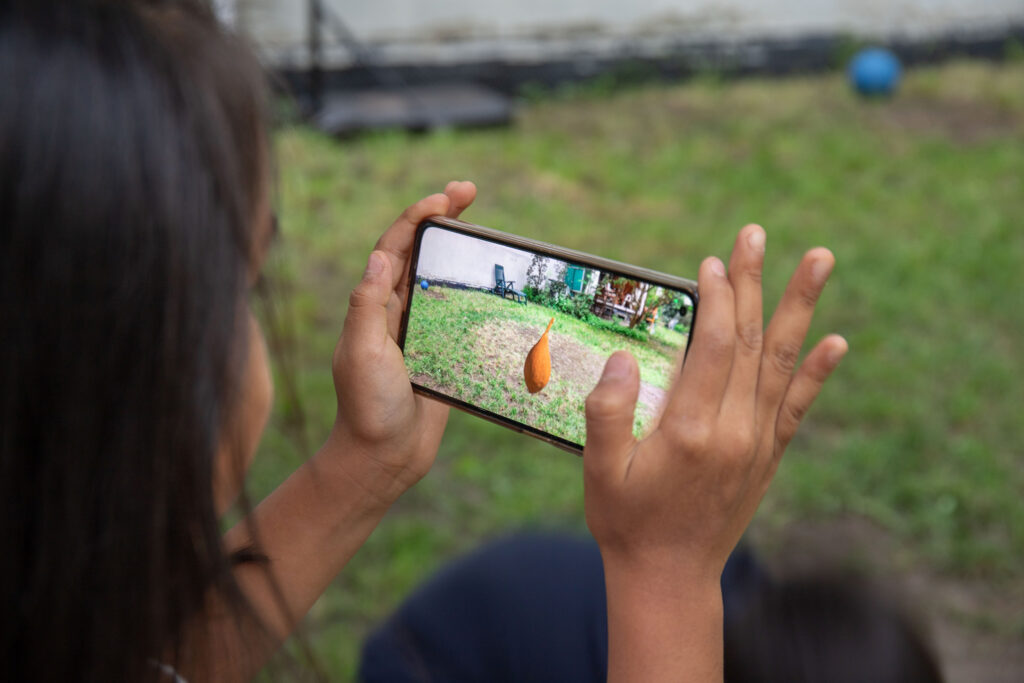
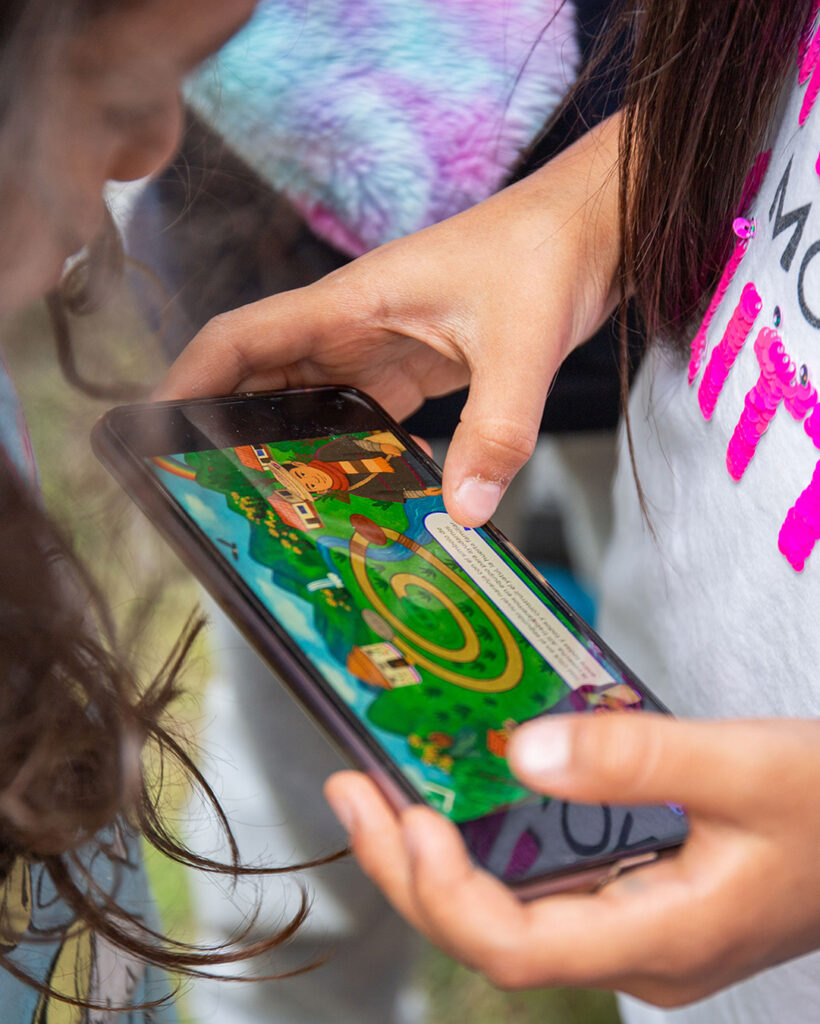
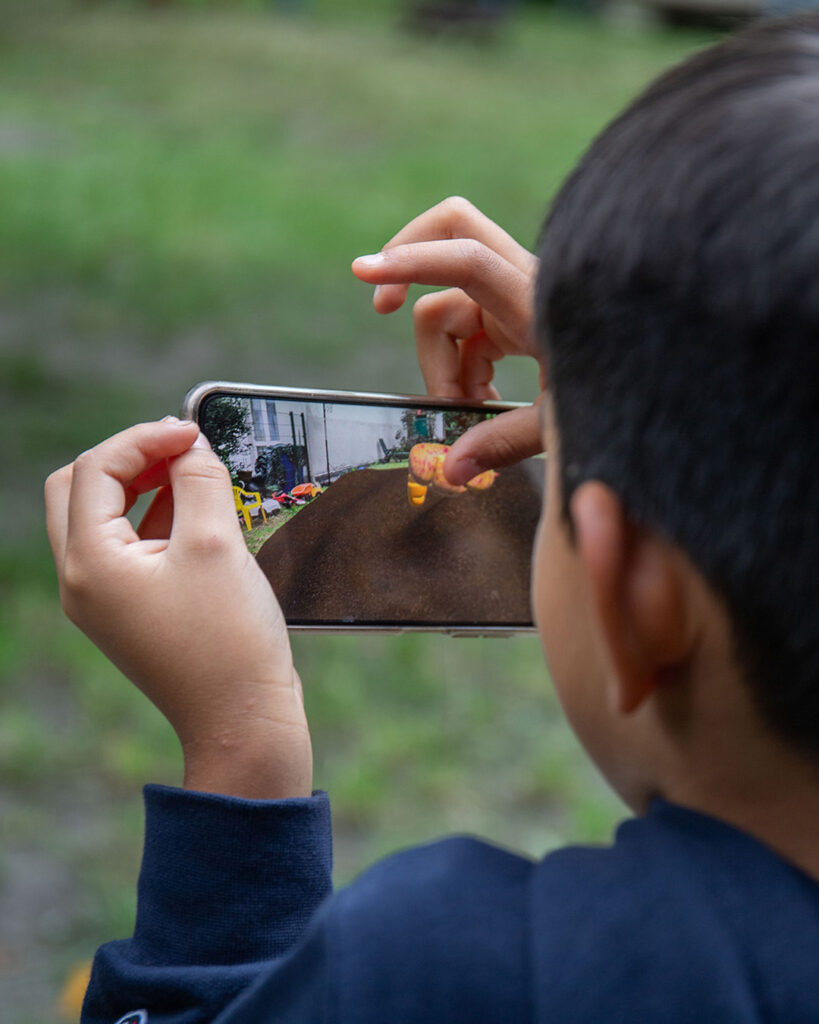
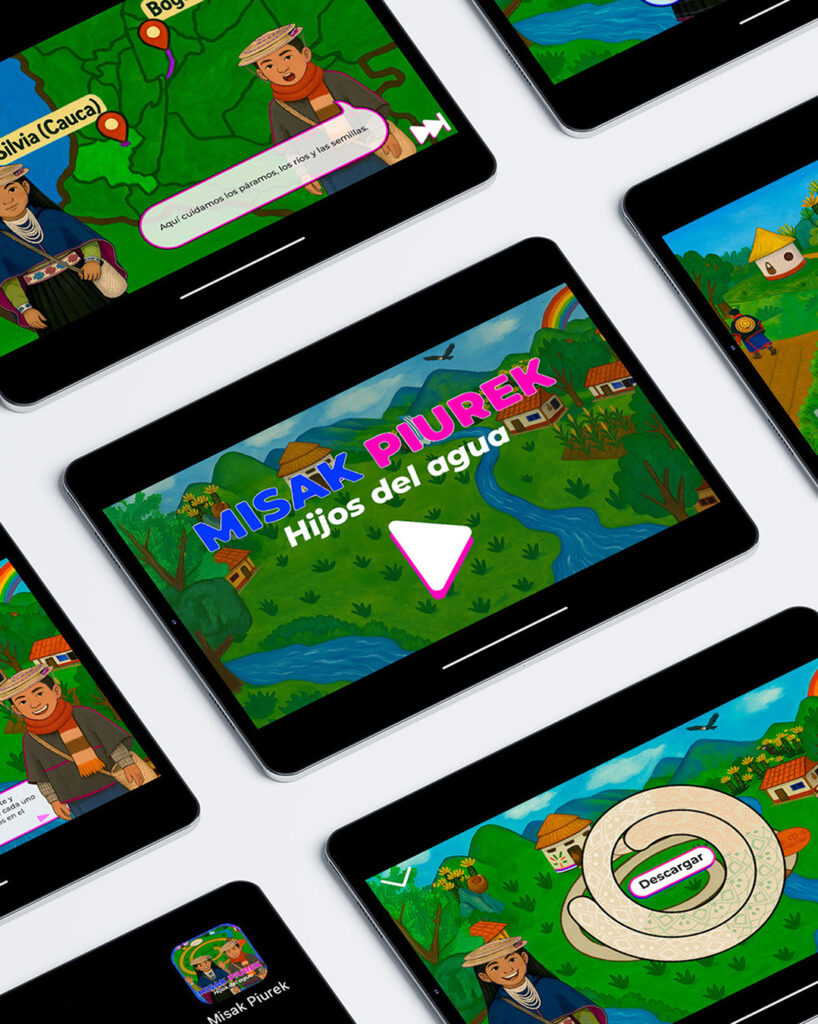
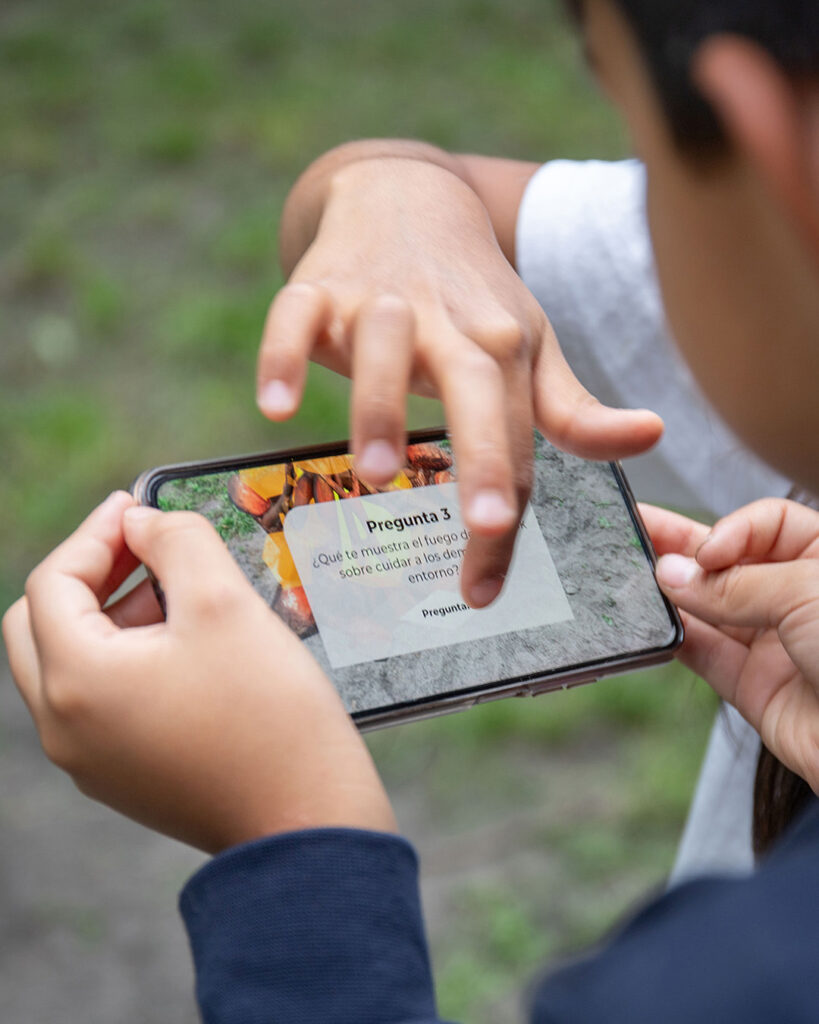
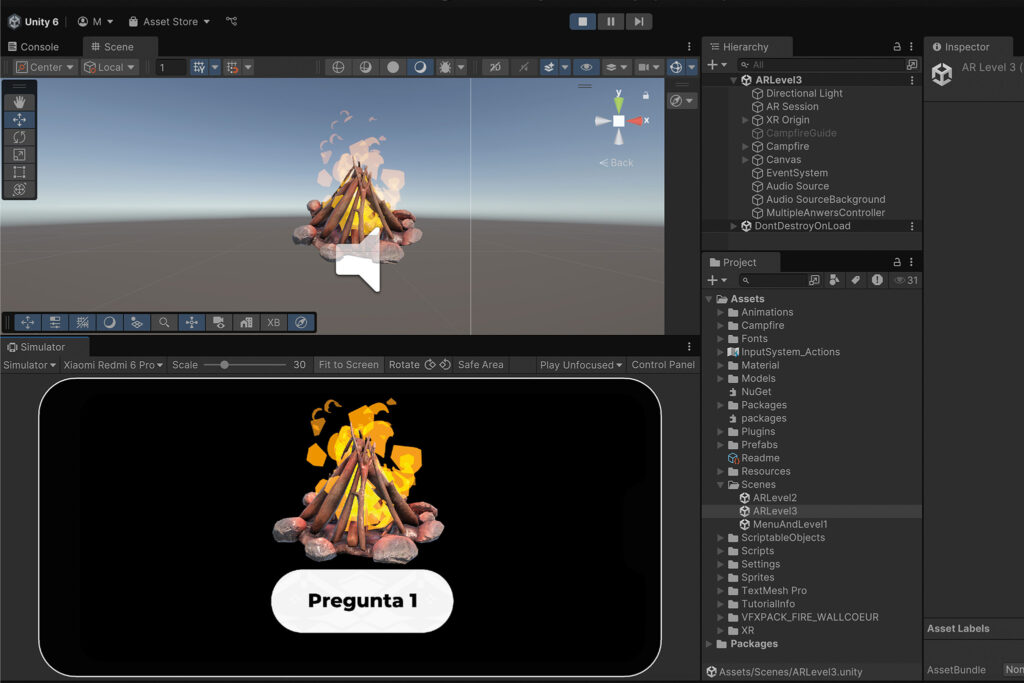
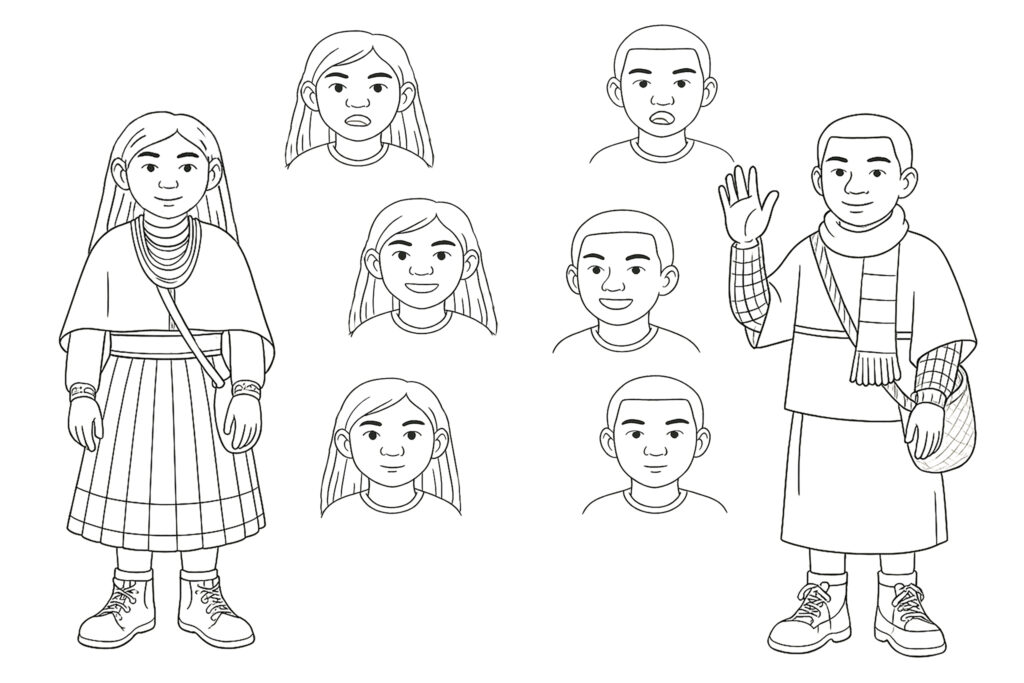
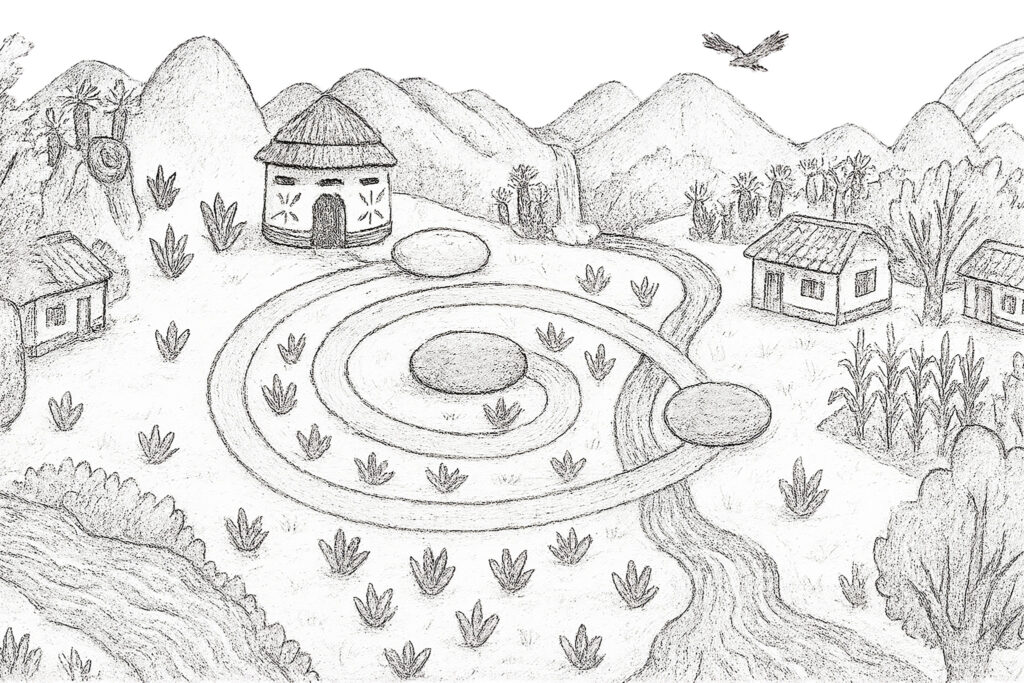
Misak Piurek – hijos del agua ist ein Serious Game über die Misak, eines der indigenen Völker Kolumbiens. Mit Hilfe der Misak entwickelt, lädt es Kinder zwischen 8 und 11 Jahren dazu ein, Klang, Bild, Erzählung und Handlung als zusammenhängendes Wissensgeflecht zu erleben. Die Spiralstruktur führt vom Staunen zur Verantwortung: Sprache (Namtrik/Spanisch) eröffnet Perspektiven, Rituale rahmen Verbundenheit, und Reflexion verbindet Lernen mit respektvollem Handeln. Statt Folklore vermittelt das Spiel Gegenwart, Würde und Selbstrepräsentation indigener Stimmen, als Einladung zu Anerkennung, Fürsorge und dekolonialem Denken.

EN

Misak Piurek – hijos del agua is a serious game about the Misak, one of Colombia’s Indigenous peoples. Developed with the help of the Misak, it invites children aged 8 to 11 to experience sound, image, narrative, and action as an interconnected web of knowledge. Its spiral structure leads from wonder to responsibility: language (Namtrik/Spanish) opens perspectives, rituals frame connectedness, and reflection links learning with respectful action. Instead of folklore, the game conveys the present, dignity, and self-representation of Indigenous voices—an invitation to recognition, care, and decolonial thinking.

Prozess

Prüfer: A.Stankowski, A. Engelmann, M. Beck
ASHABAG – JOHANNA KLEIN | BA 2025

DE

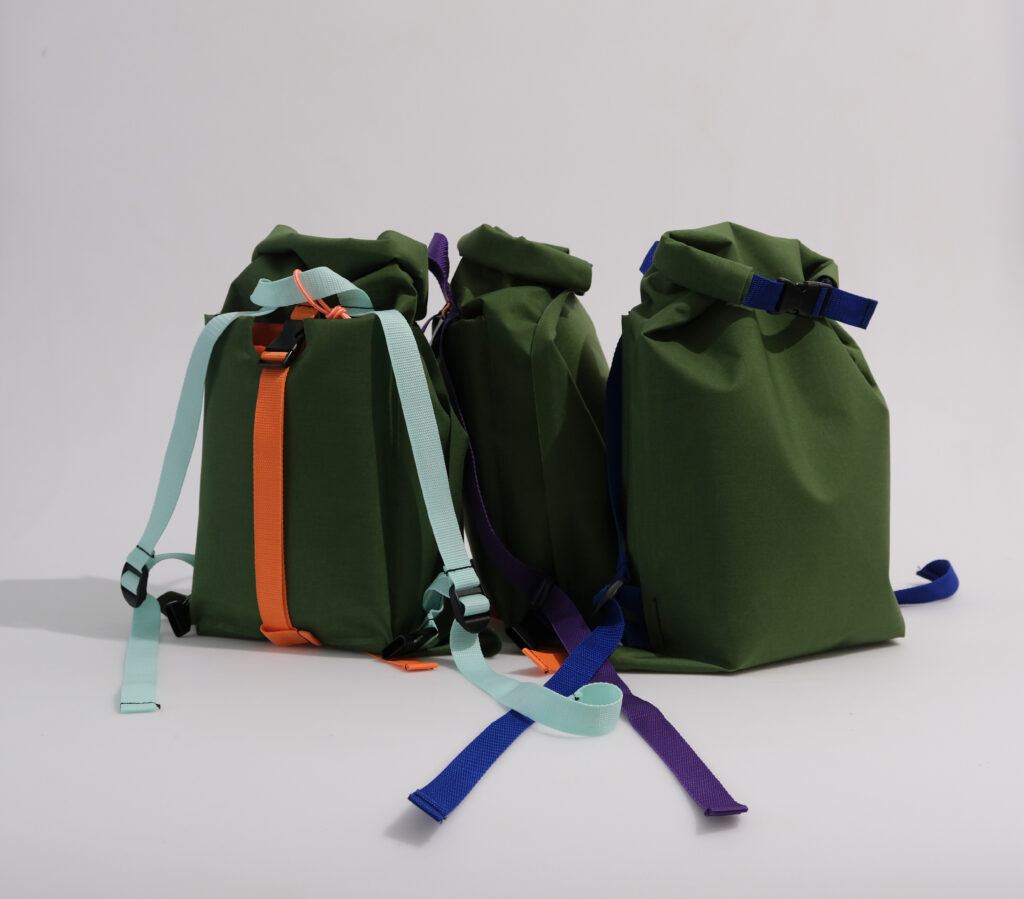
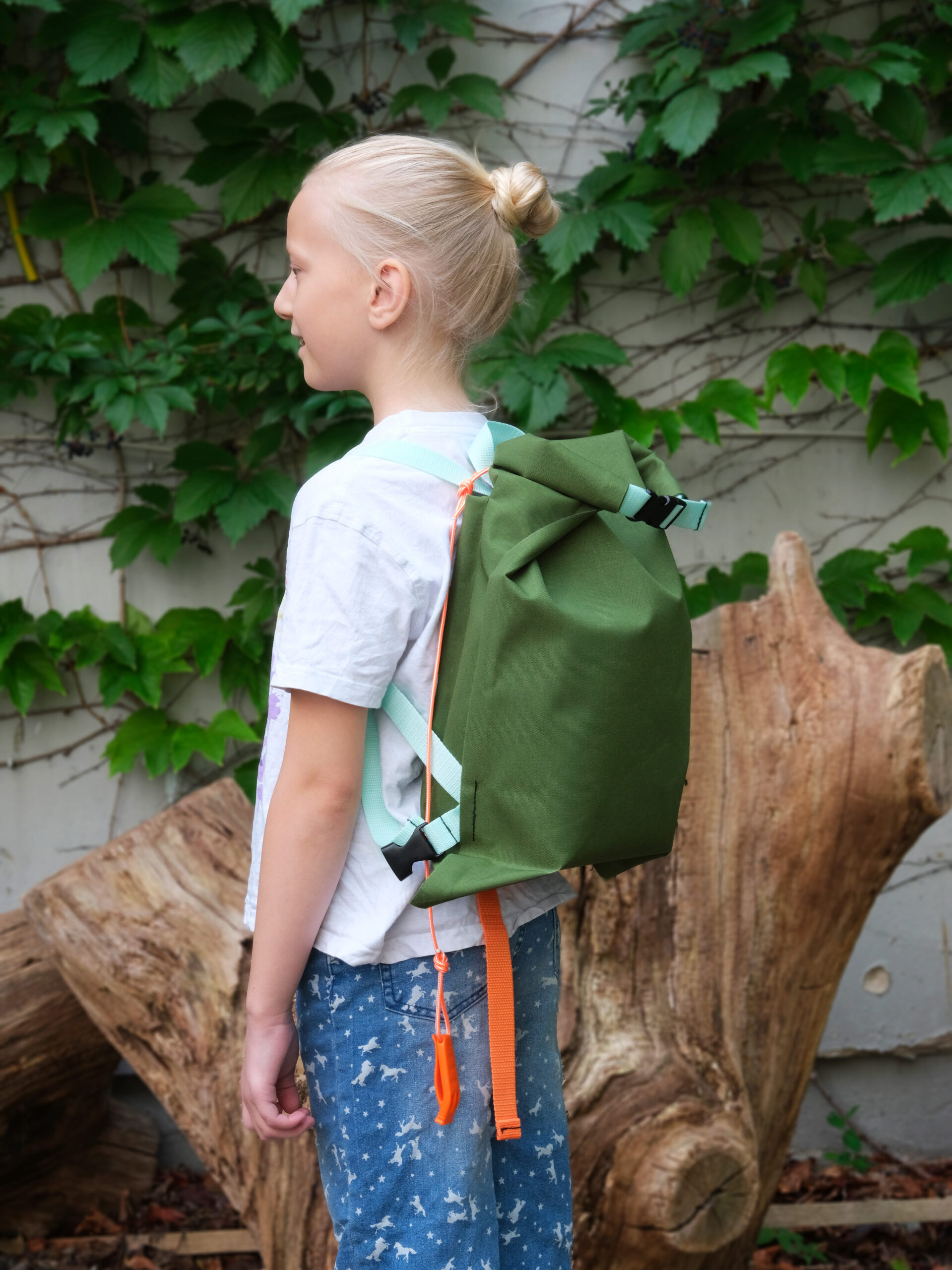
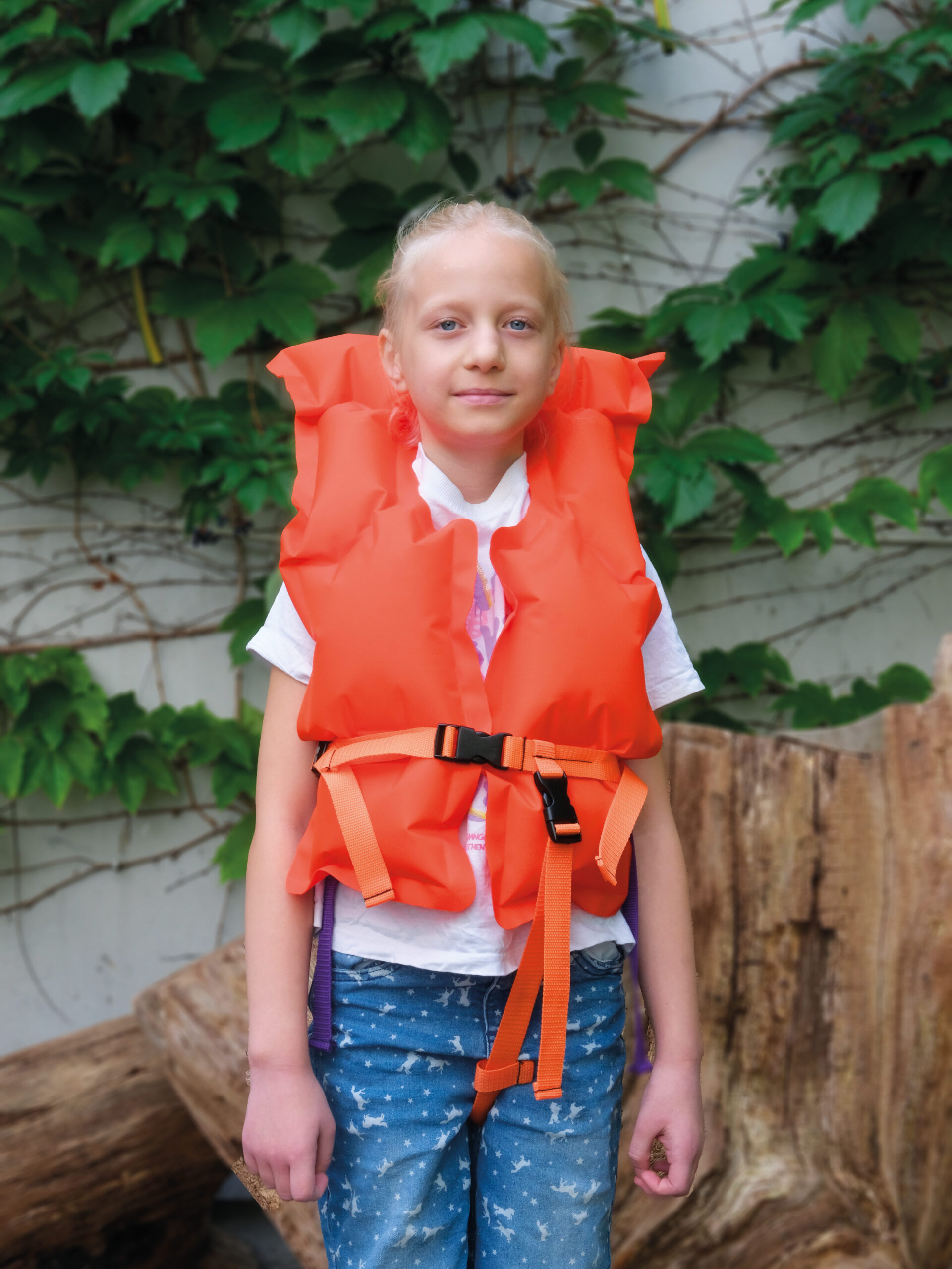
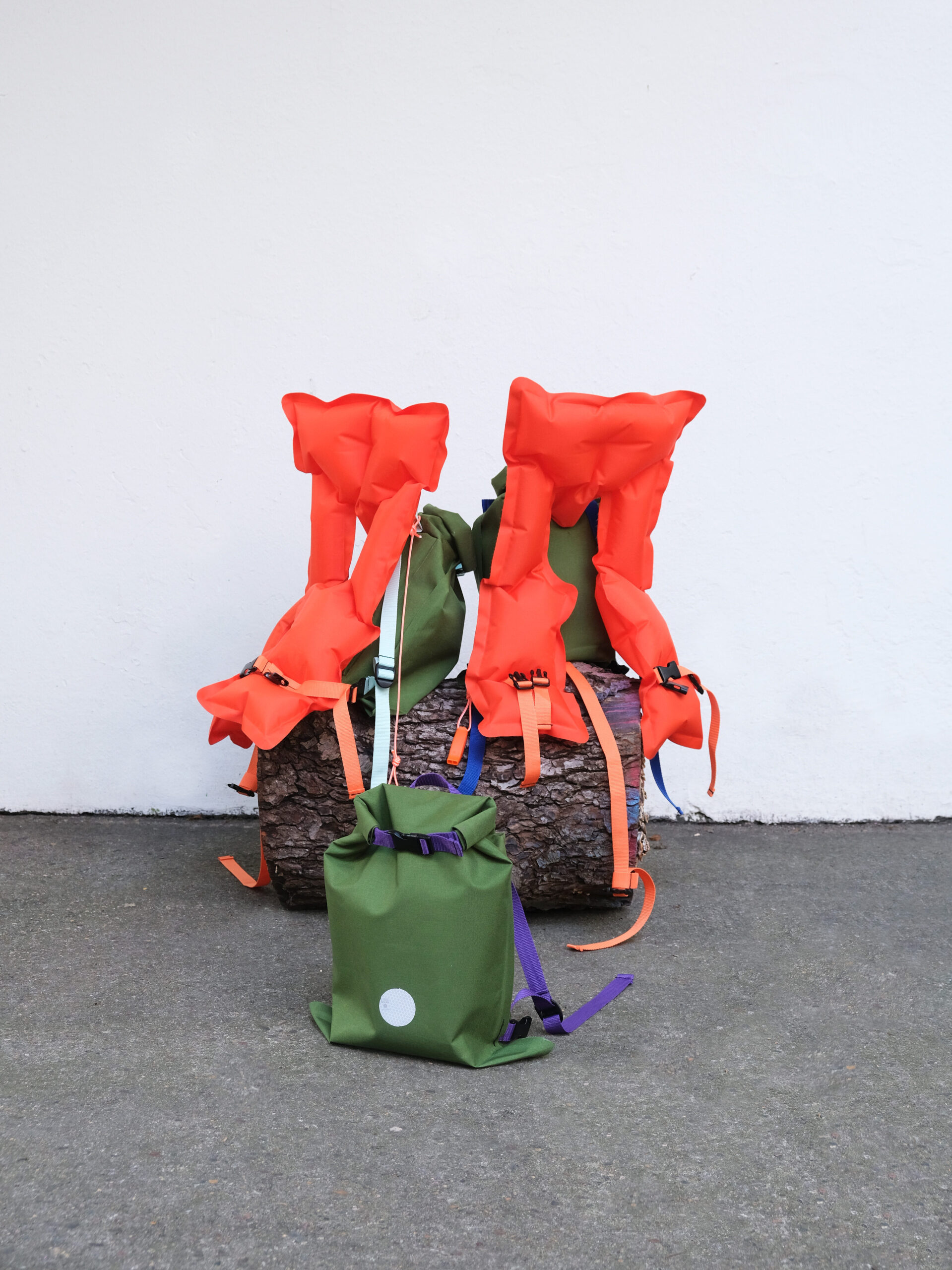
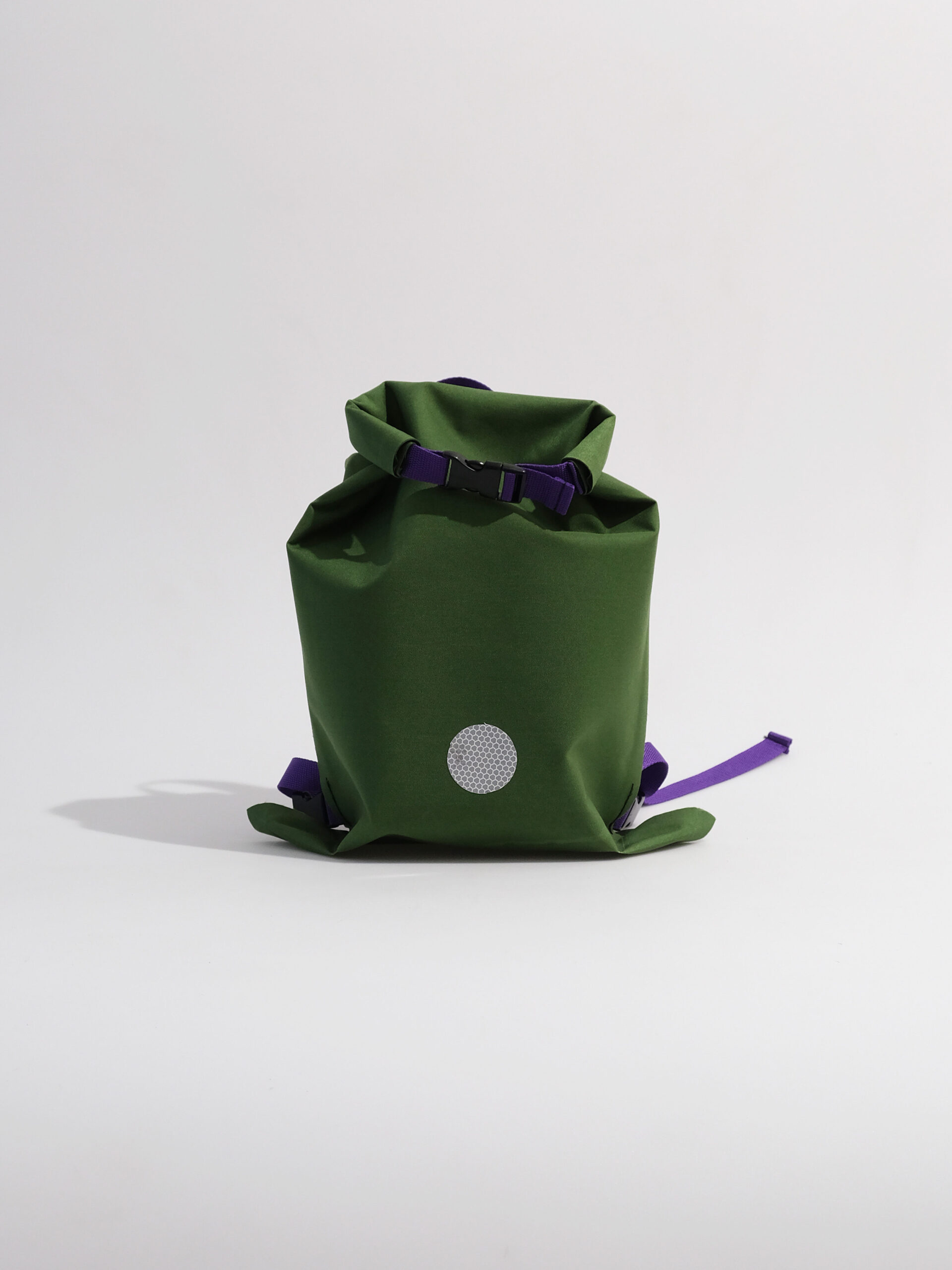
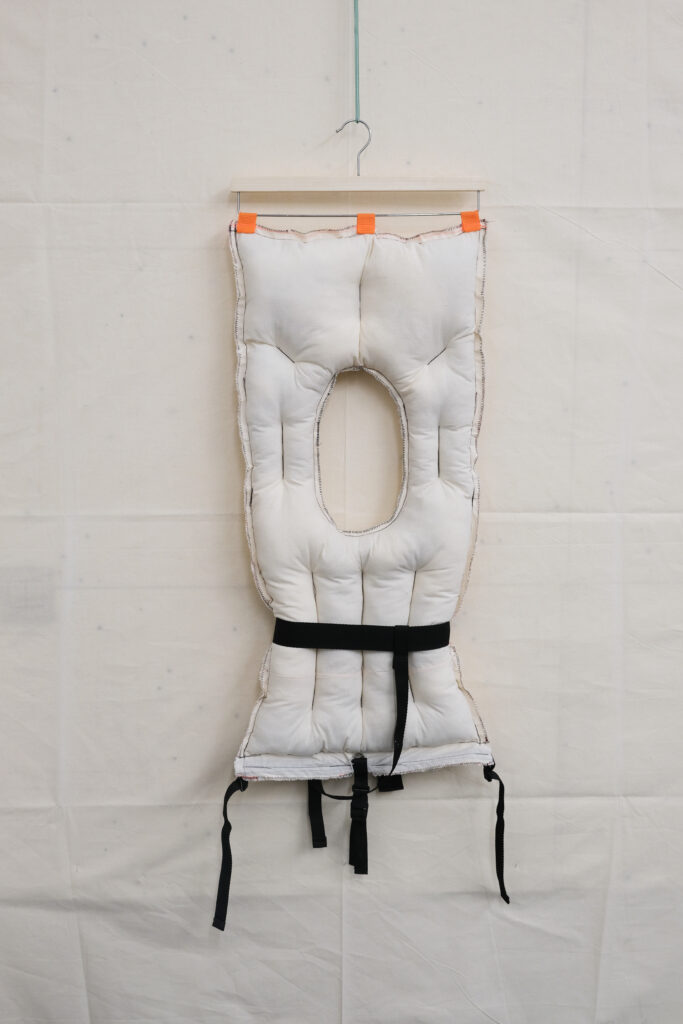
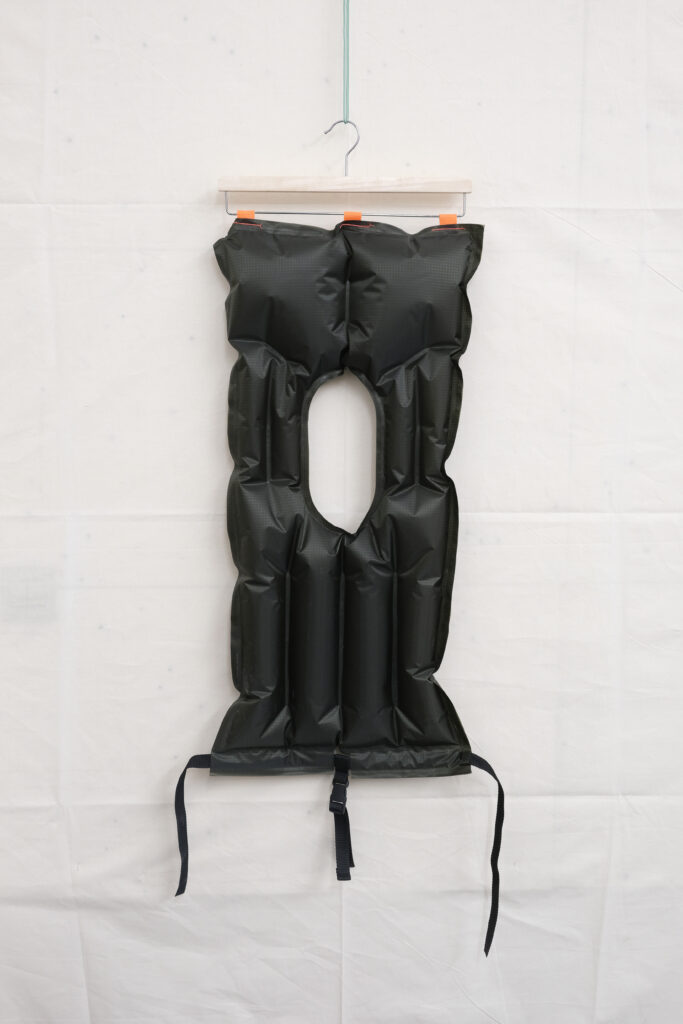
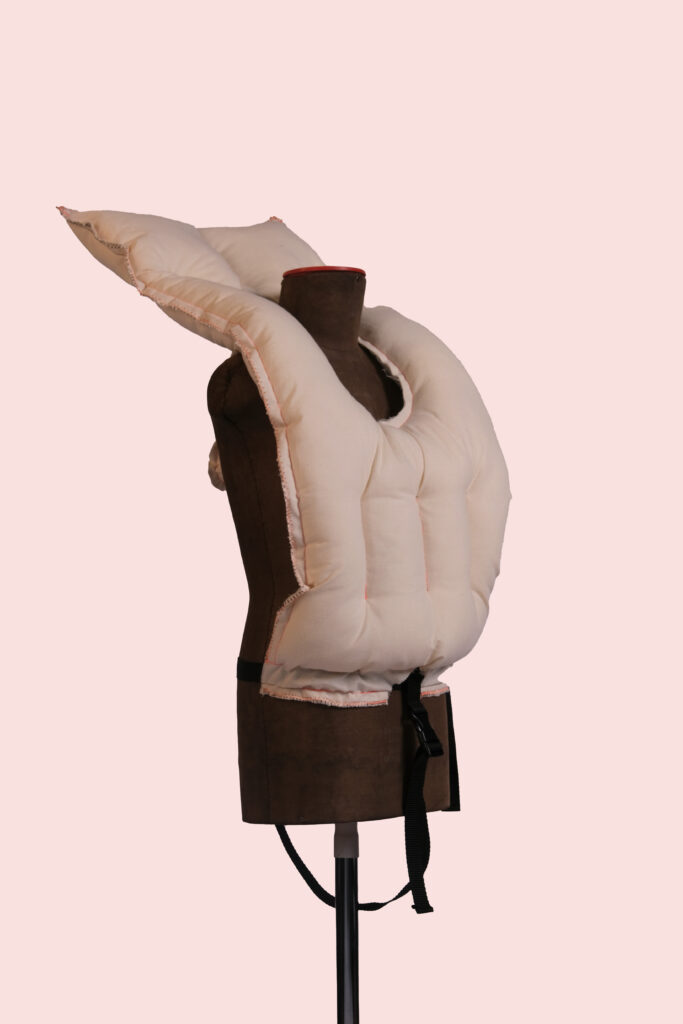
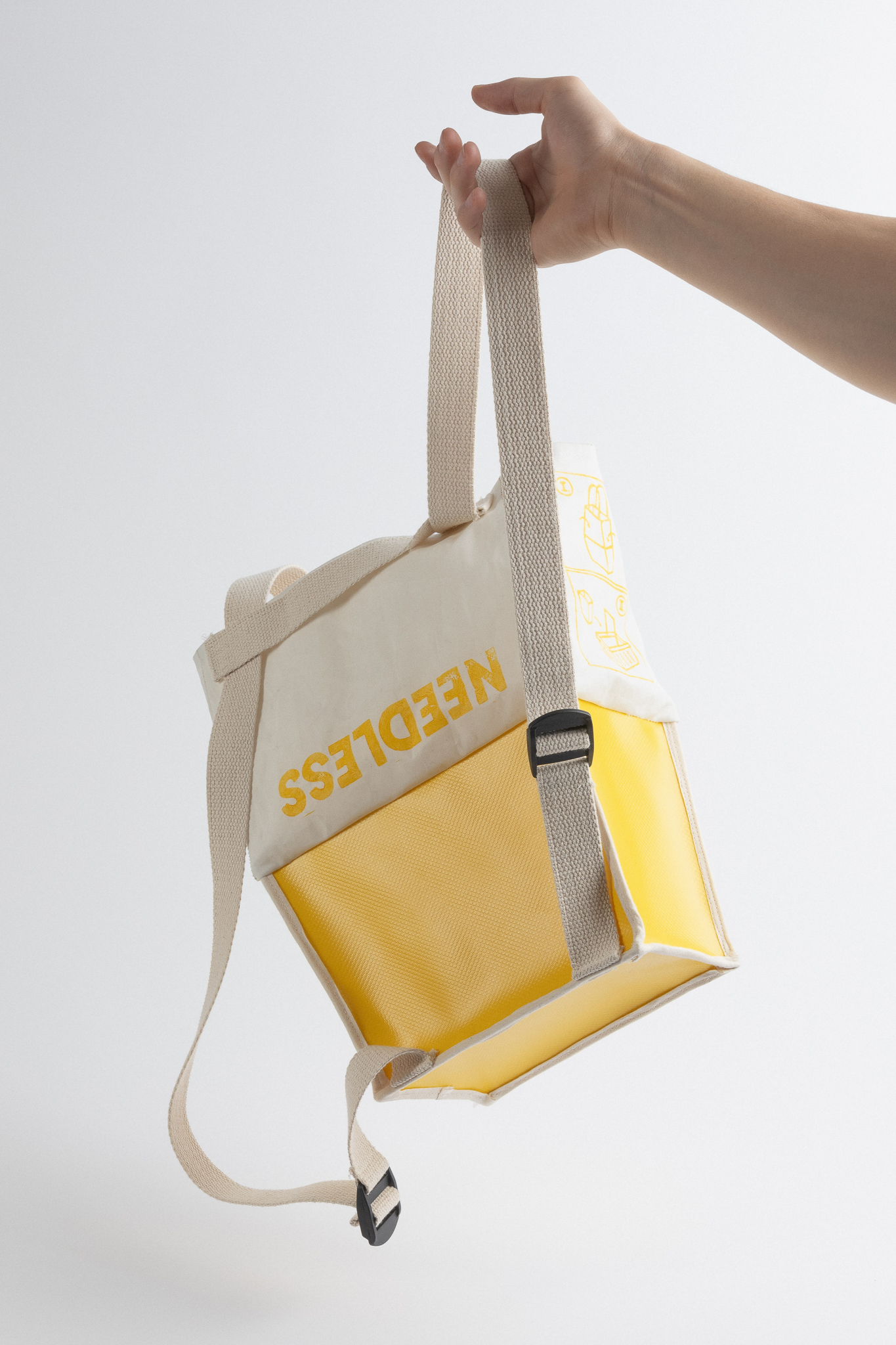
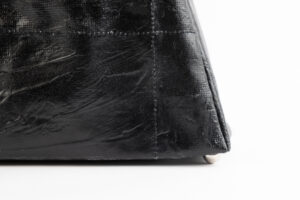
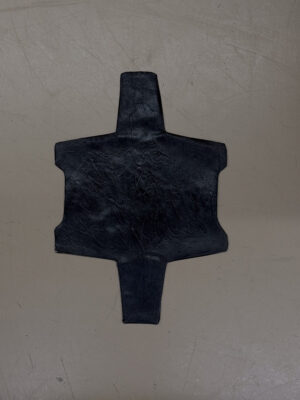
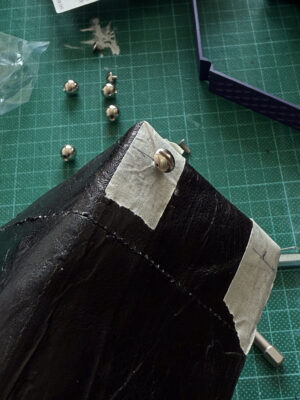
Der Kinderrucksack Ashabag verbindet Alltag und Ausnahmesituation in einem Produkt. Er dient im Notfall als Schwimmkörper und kann Kinder in Flutgebieten wie z.B in Vietnam, Bangladesh und den Philippinen vor dem Ertrinken schützen. Gleichzeitig bietet er die Möglichkeit Schulmaterial, Spielzeug oder Lebensmittel sicher durch eine Krise zu bringen und schafft so einen kleinen geschützten Raum. Der Rucksack ist als Low-Budget-Lösung gedacht, robust, materialeffizient und einfach herzustellen. So begleitet er Kinder zuverlässig im täglichen Leben und bietet im Ernstfall Schutz und Unterstützung.

EN

The Ashabag children‘s rucksack combines everyday use and emergency situations in one product. In an emergency, it serves as a flotation device and can protect children in flood areas such as Vietnam, Bangladesh and the Philippines from drowning. At the same time, it offers the possibility of safely transporting school supplies, toys or food through a crisis, thus creating a small protected space. The rucksack is designed as a low-budget solution that is robust, material-efficient and easy to manufacture. It reliably accompanies children in their daily lives and offers protection and support in emergencies.

Prozess

Prüfer: M. Hahn, H.Neumann, J. Ribler

DRYWALL CONSTRUCTION – CRISTIANO PICAO PEREIRA | BA 2025

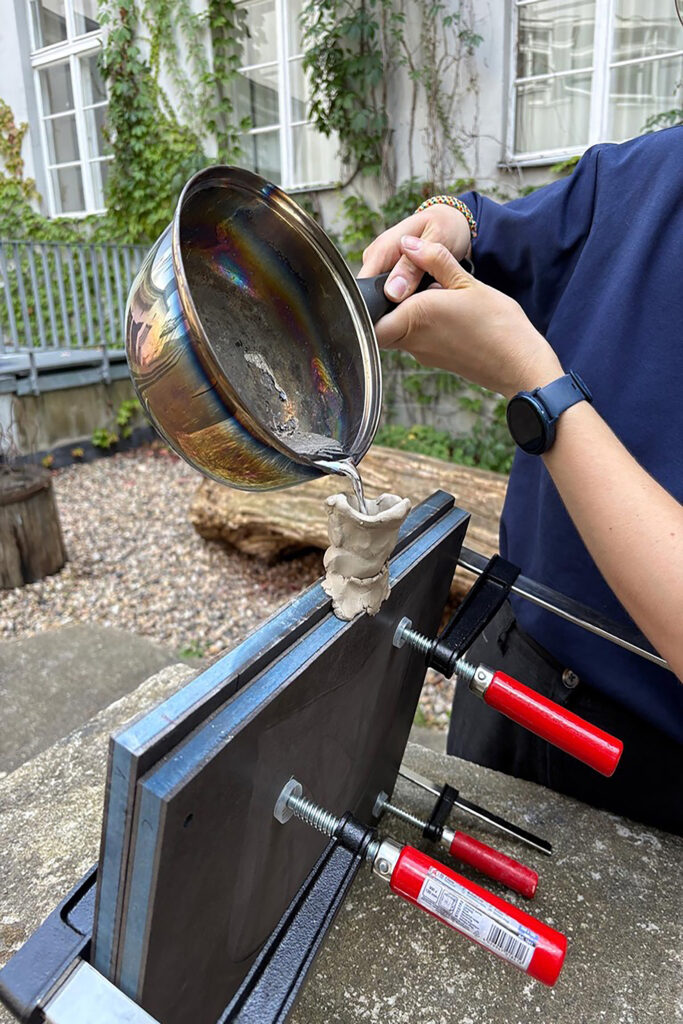
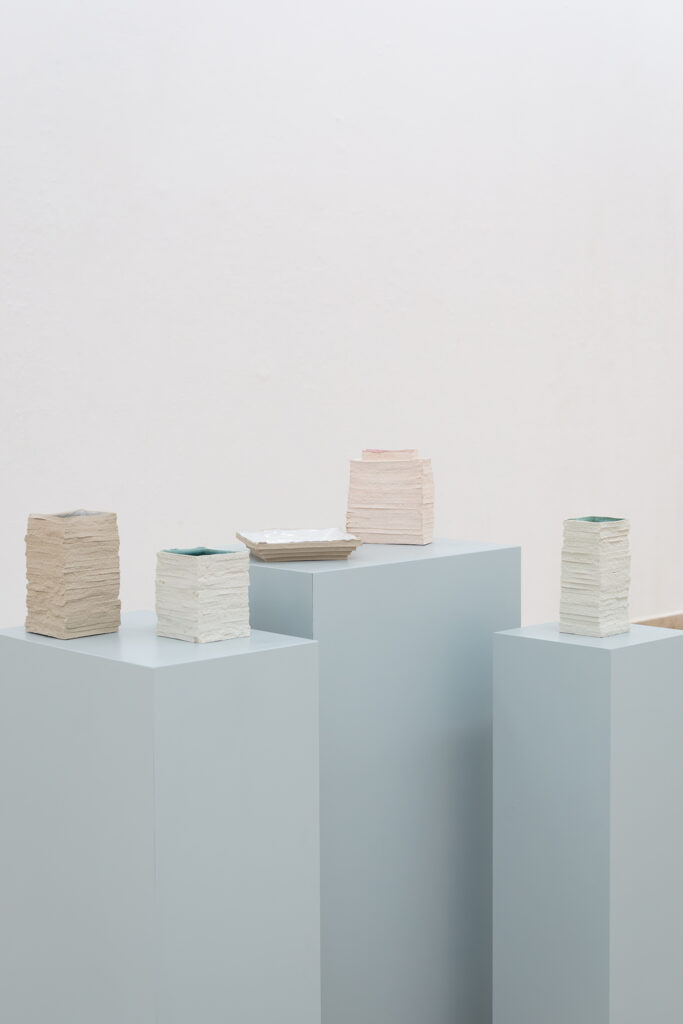
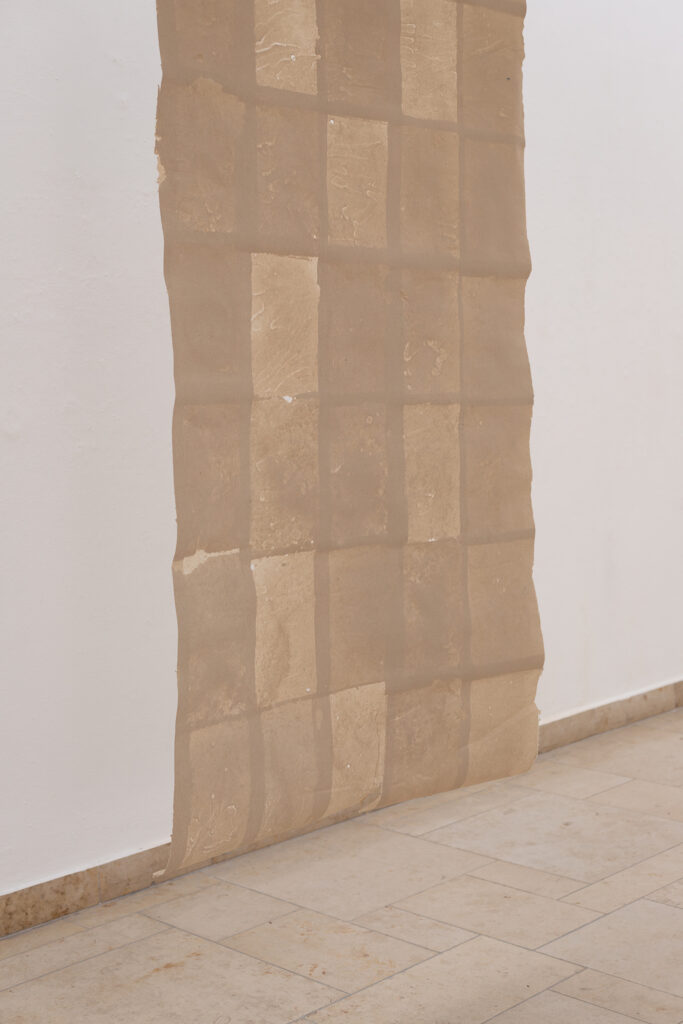
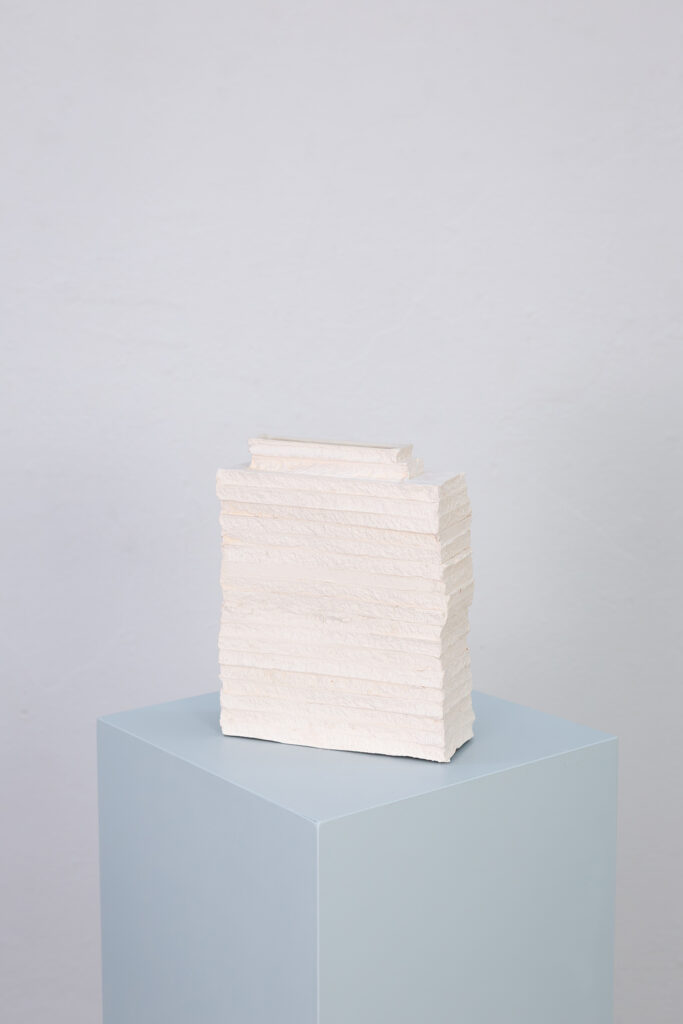
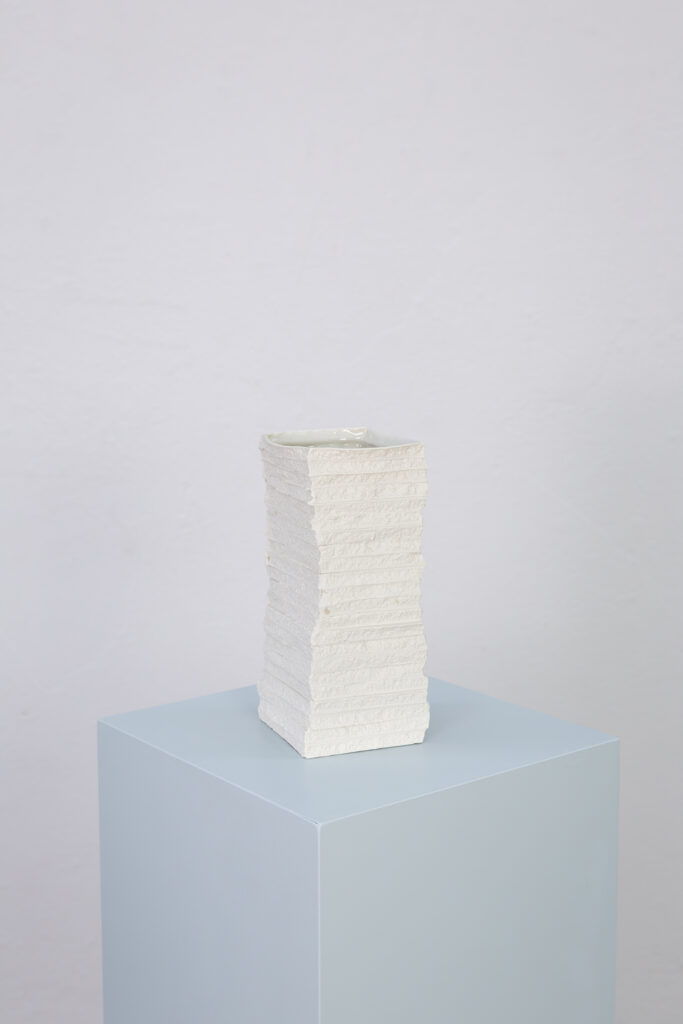
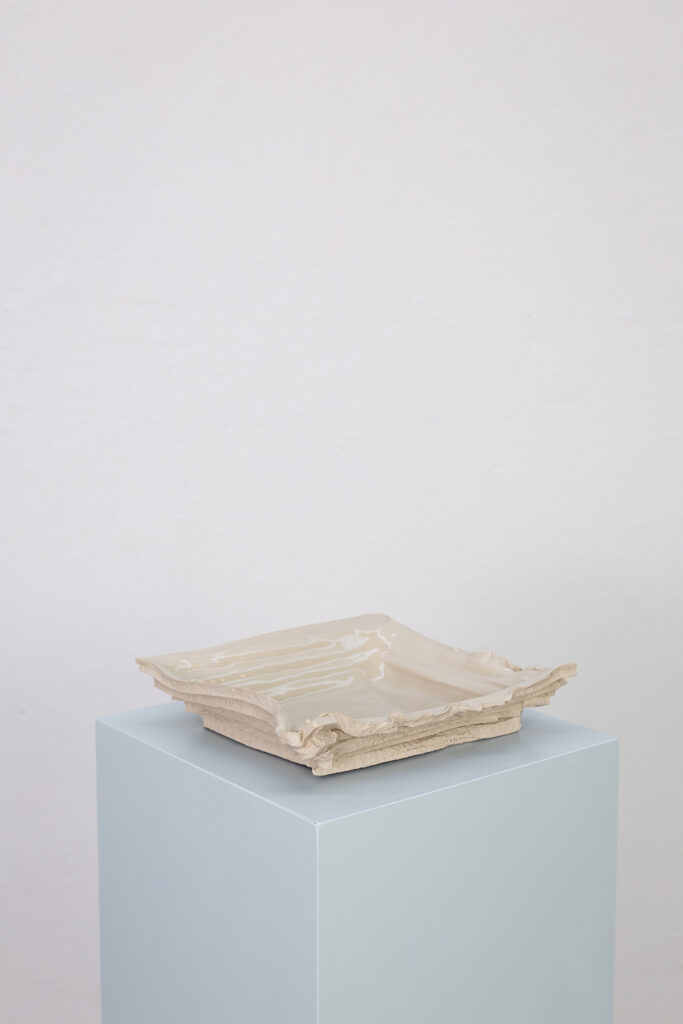
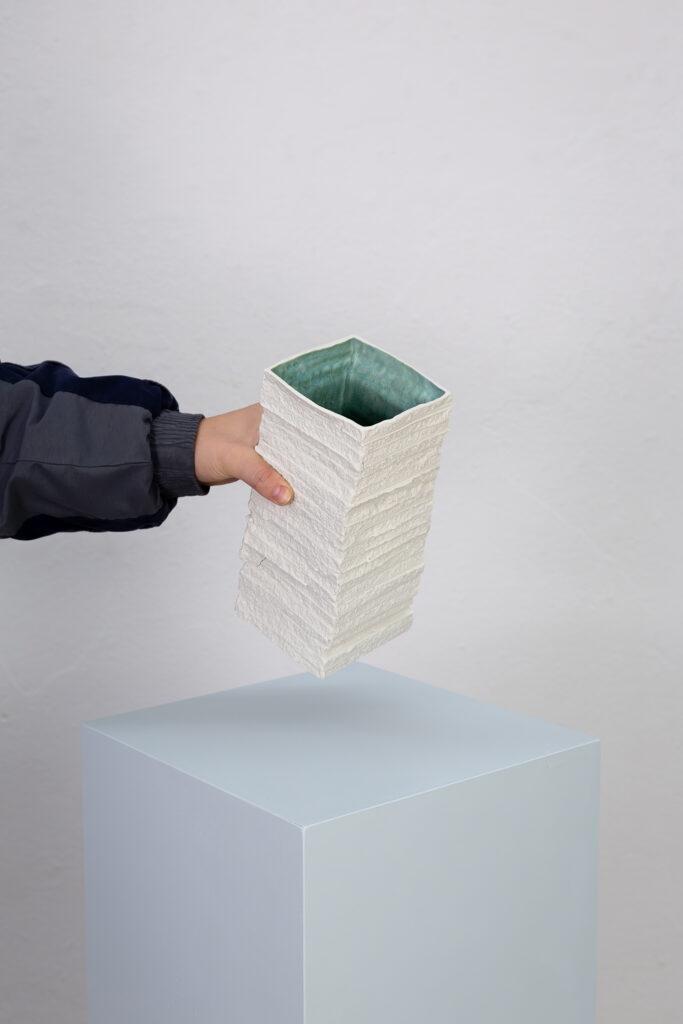
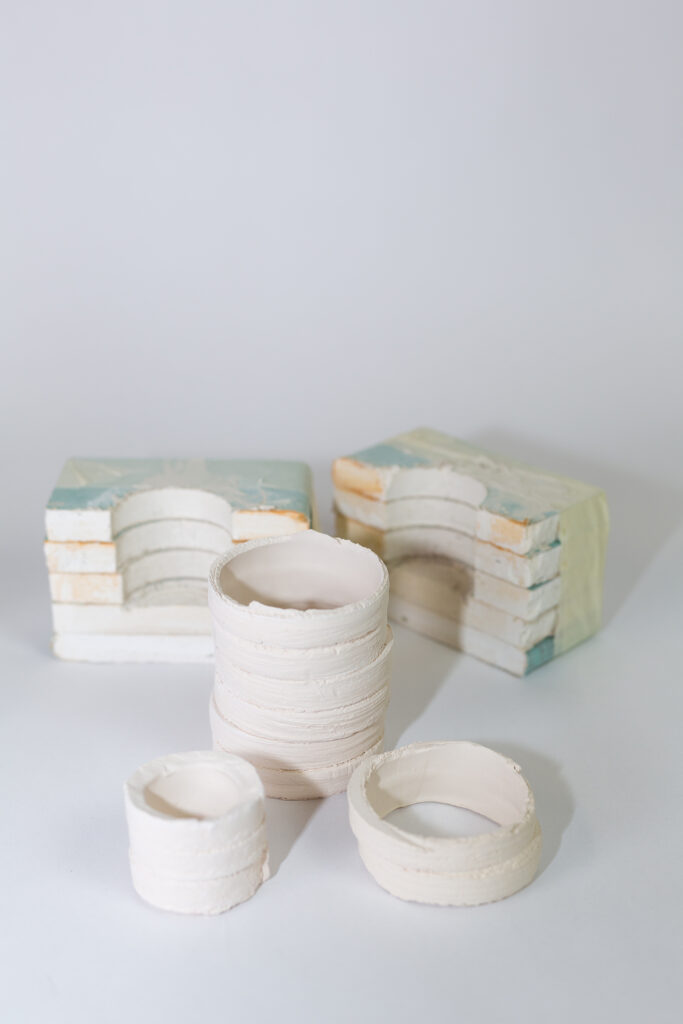
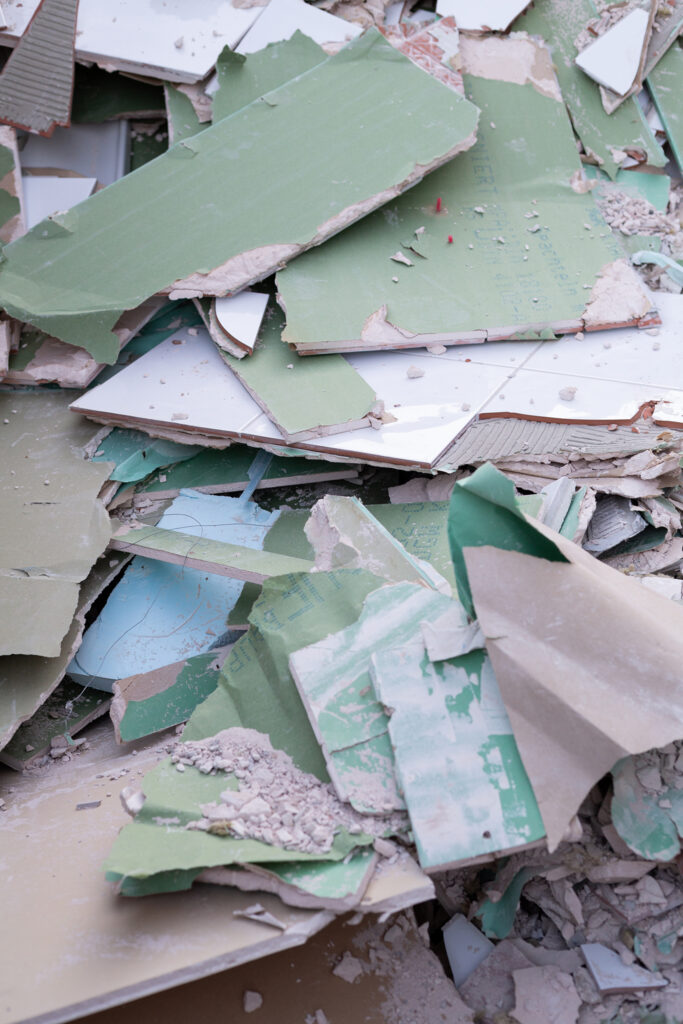
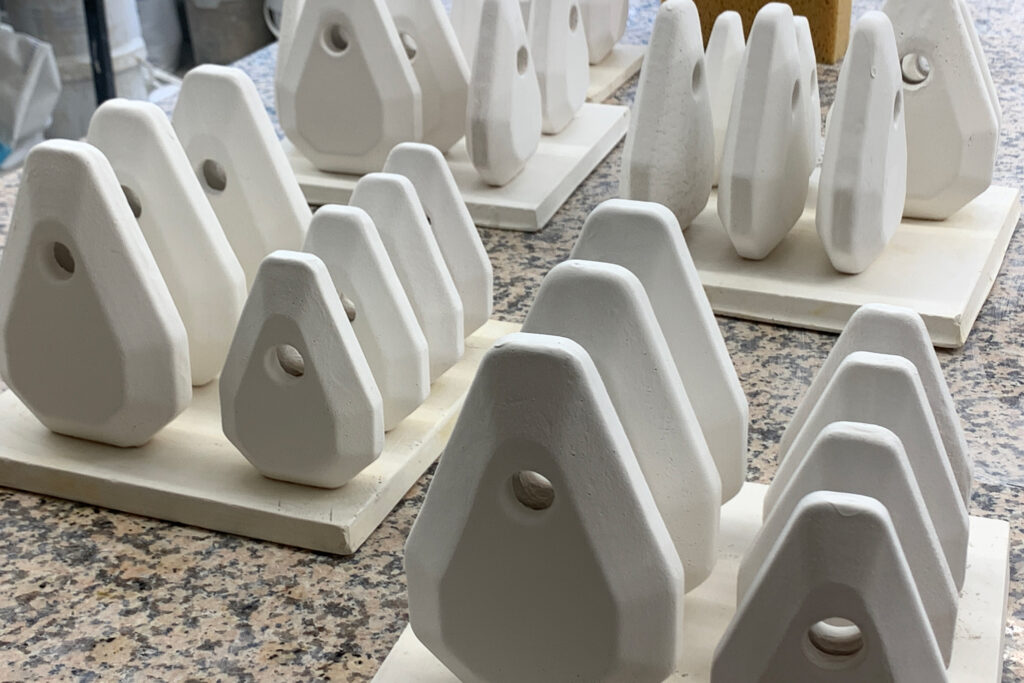
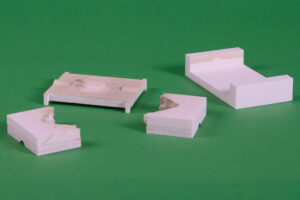
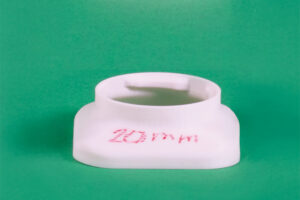
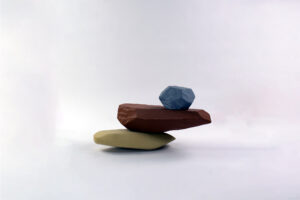
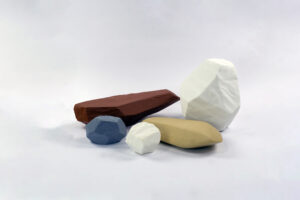
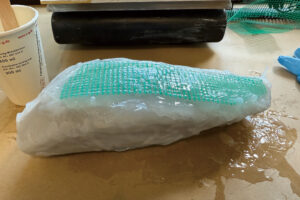
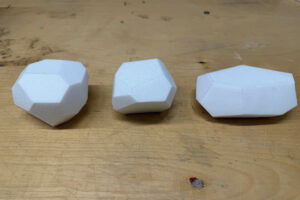
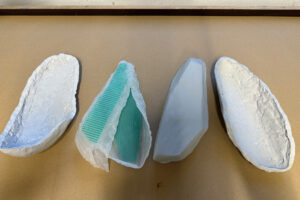
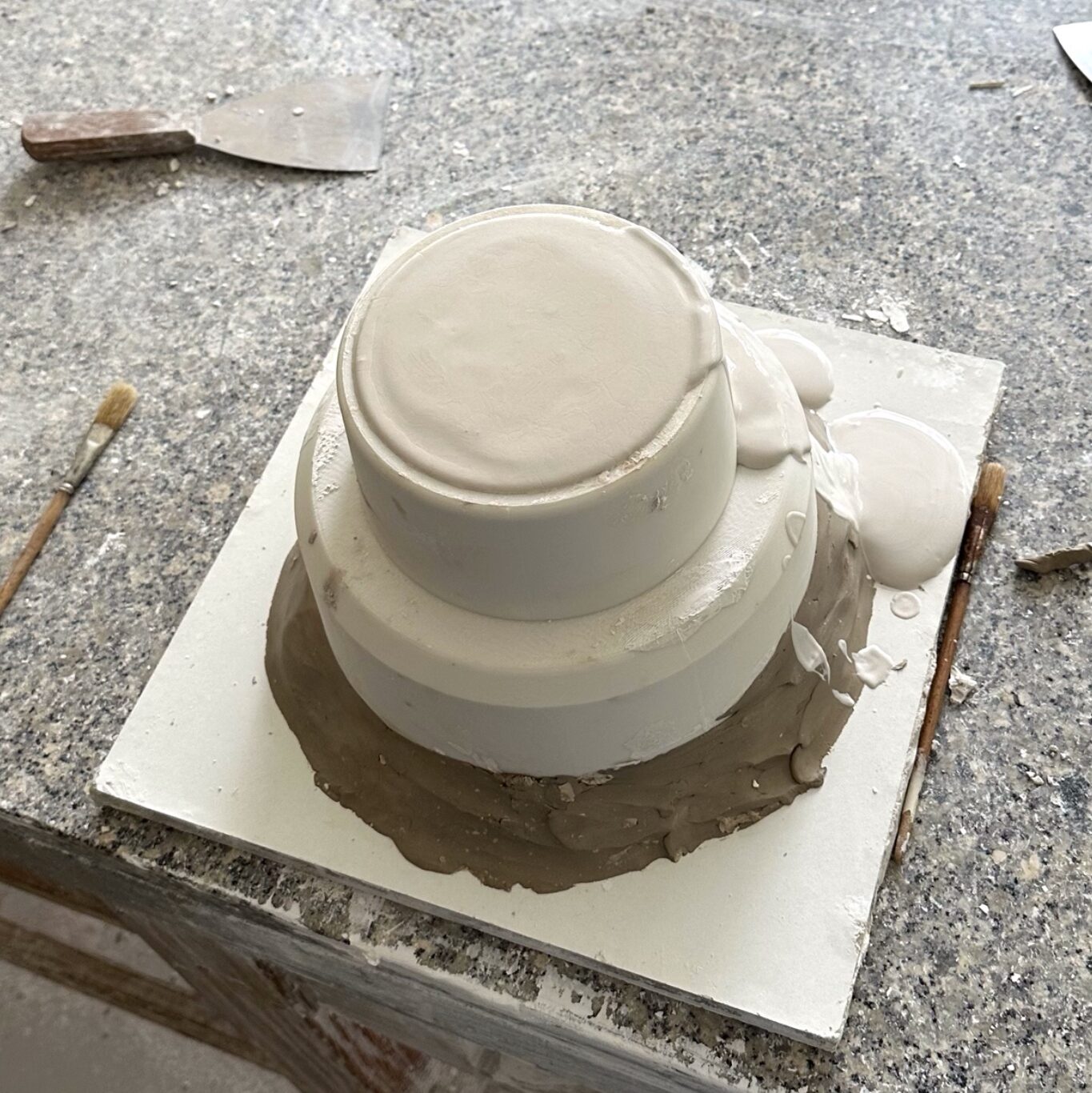
The project Drywall Construction presents ceramic vessels and an installation of recycled plasterboard paper. All vessels derive from experimental exploration of drywall as part of research into gypsum recyclability in artistic and industrial contexts. Cast within panel fragments, their dimensions recall architectural aesthetics and industrial processing. The fragments reference manual drywall construction, where standardized panels are broken and fixed. Reinterpreted as decorative objects, they question perception and reveal hidden material qualities and contexts.

Prozess

Prüfer: A.Stankowski, A. Engelmann, S.Stanislawski

MANCA – JAIRO CUICAPUZA | BA 2025

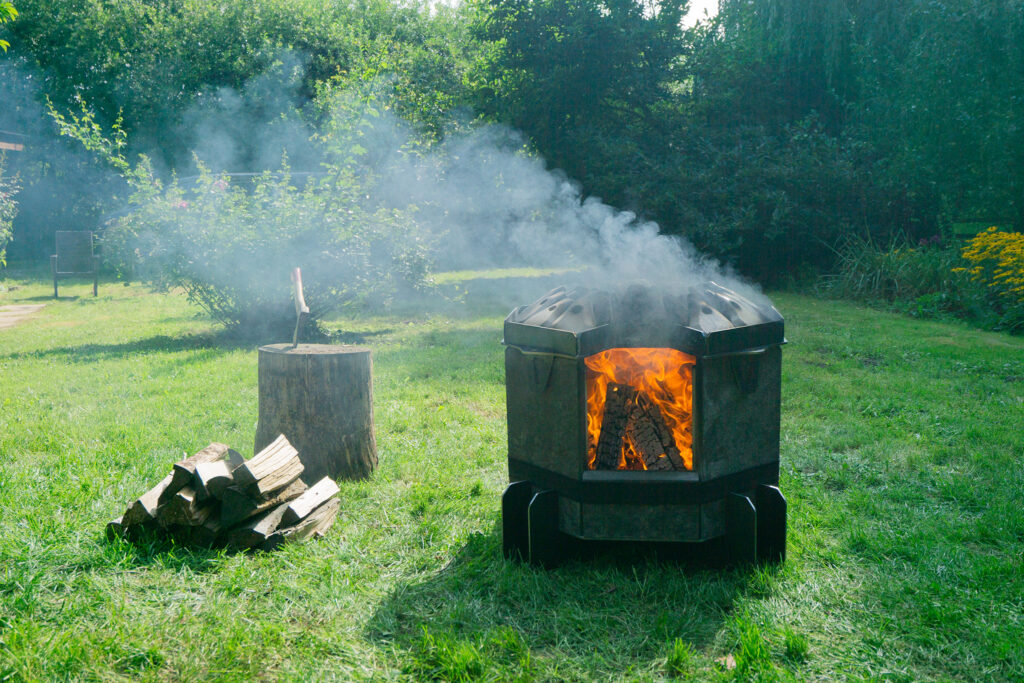
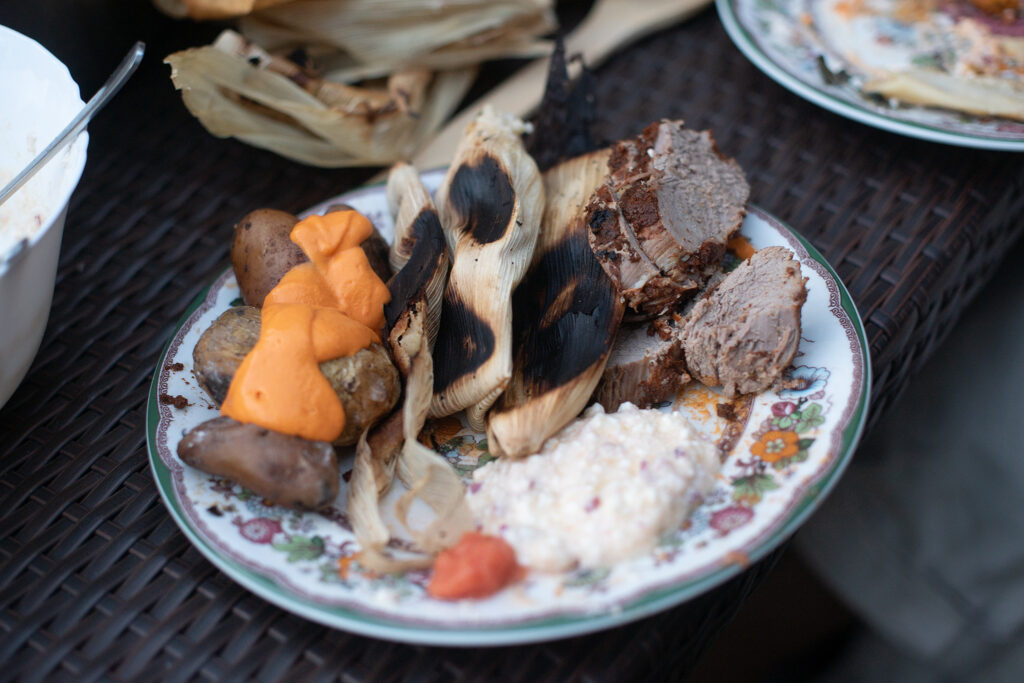
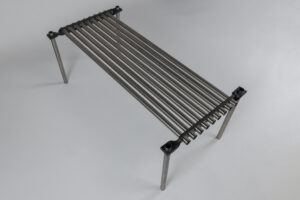
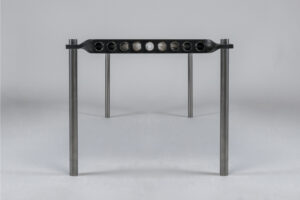
Manca ist ein Ofen, inspiriert von einer jahrhundertealten peruanischen Tradition namens „Pachamanca“. Dieses Gericht, das ursprünglich in einem Erdloch mit glühenden Steinen gegart wird, ist weit mehr als eine Zubereitungsmethode. Es ist ein Ritual der Gemeinschaft, ein Fest des Miteinanders und der Verbundenheit mit der Natur.

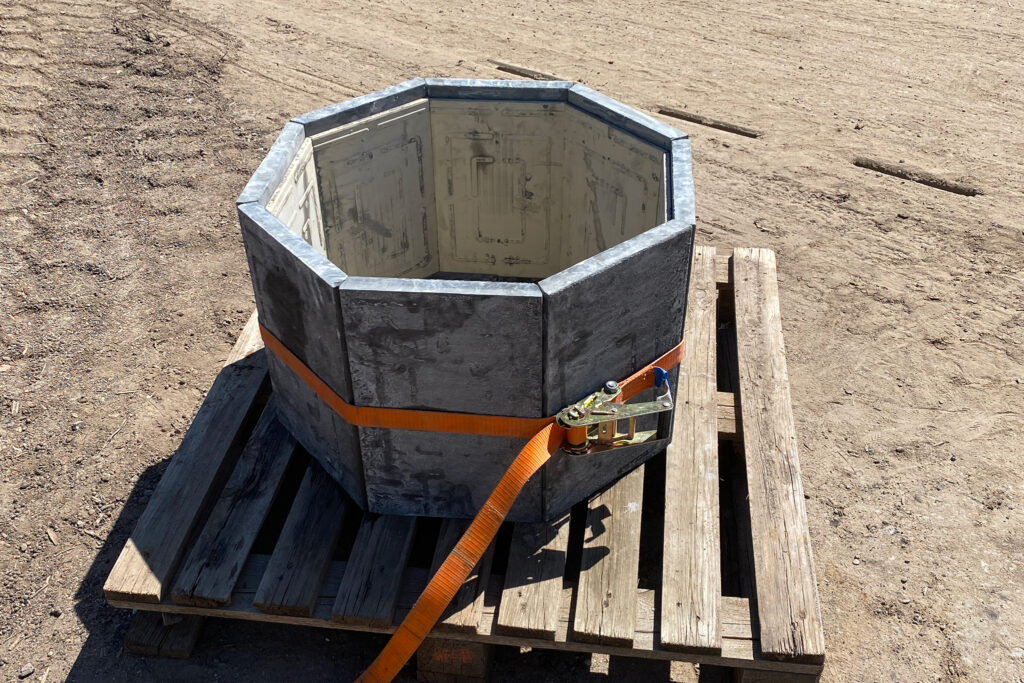
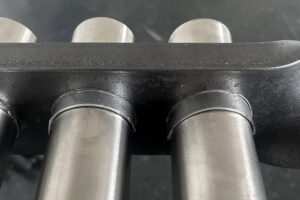
Mit Manca wird diese Tradition in einen neuen Kontext übersetzt. Der Ofen bietet eine klare und sichere Struktur für den komplexen Garprozess und macht ihn in urbanen Räumen erlebbar, ohne den kulturellen Ursprung aus den Augen zu verlieren. Er schafft einen Ort, an dem Menschen zusammenkommen, gemeinsam kochen und den Wert des kollektiven Handelns spüren können.

Manca ist ein Versuch eine Brücke zu schlagen, welche es ermöglicht eine alte Tradition im Wandel der Zeit, in einer modernen Urbanen Umgebung am leben zu halten.

Manca is an oven inspired by a centuries-old Peruvian tradition known as Pachamanca. Traditionally prepared in an earthen pit with heated stones, this dish is much more than a way of cooking. It is a ritual of community, a celebration of togetherness, and a profound connection to nature.

With Manca, this tradition is reinterpreted in a contemporary context. The oven provides a clear and safe framework for the complex cooking process, making it accessible in urban settings without losing sight of its cultural roots. It becomes a place where people gather, cook side by side, and experience the value of collective action.

Manca seeks to build a bridge that keeps an ancient tradition alive amidst the changes of time, while allowing it to take shape within a modern urban environment.

Prozess

Prüfer: M.Hahn, A.Engelmann, J.Hille

TOBRICK – Caspar_Fischer | BA 2025

DE

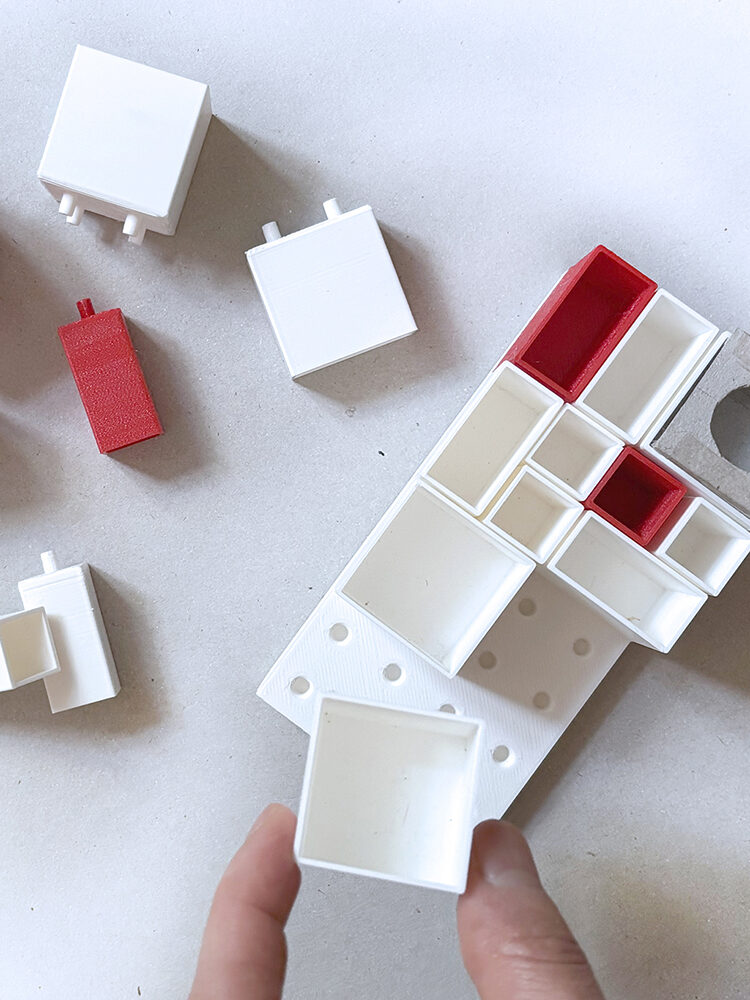
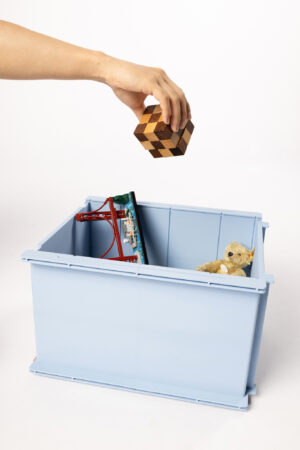
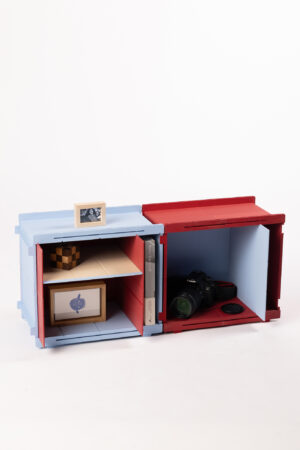
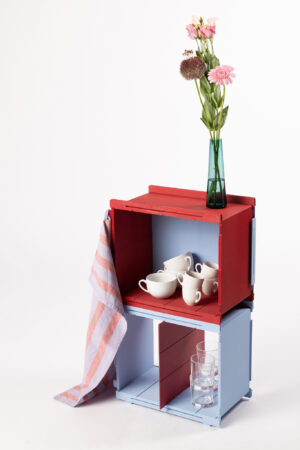
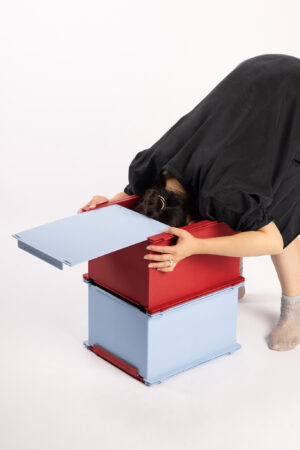
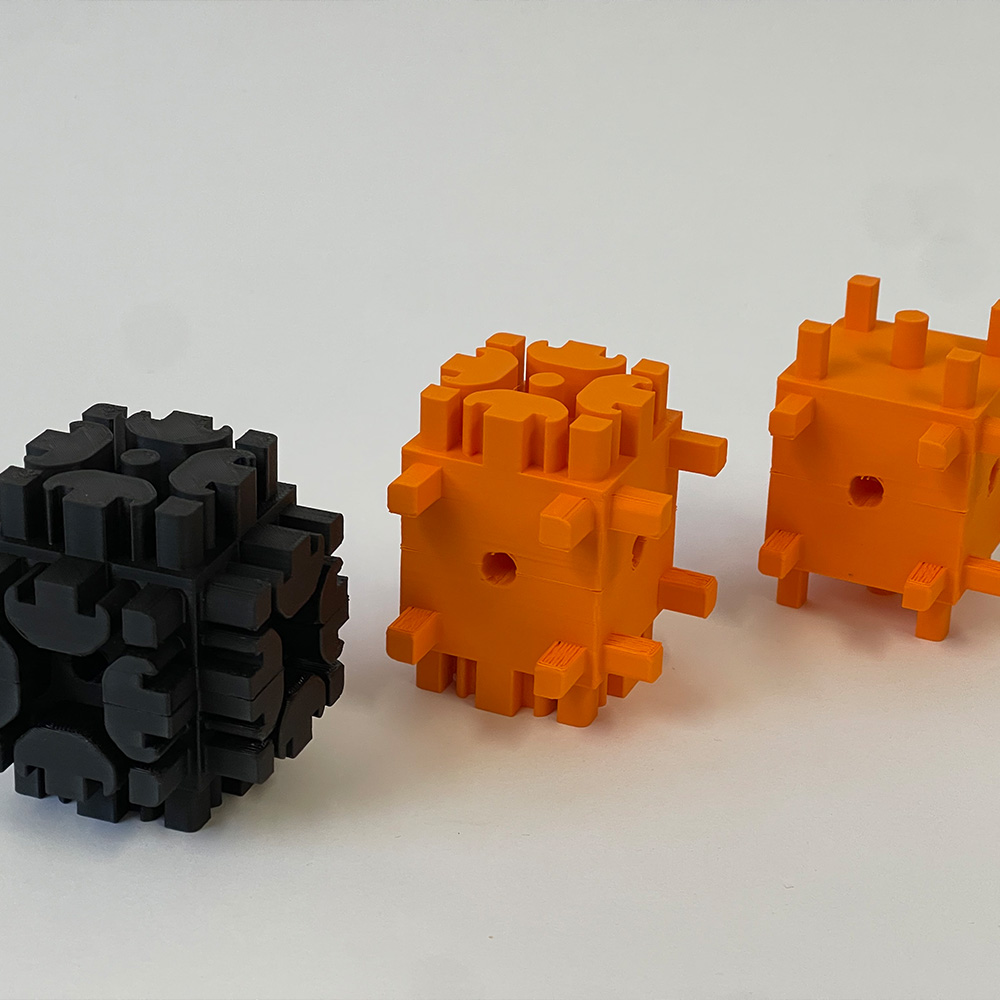
To Brick or Not To Brick ist ein modulares Open-Source-Möbelsystem, das auf einem anpassbaren Raster und einem eigens entwickelten Verbindungssystem basiert. Nutzer:innen können über einen digitalen Konfigurator individuelle Möbel entwerfen, die kompatibel miteinander bleiben. Durch vier speziell entwickelte Pins wird Stabilität gewährleistet und flexible Erweiterungen möglich. Das Projekt versteht sich als Beitrag zu demokratischem Design: Gestaltung wird zugänglich, partizipativ und individuell anpassbar.

EN

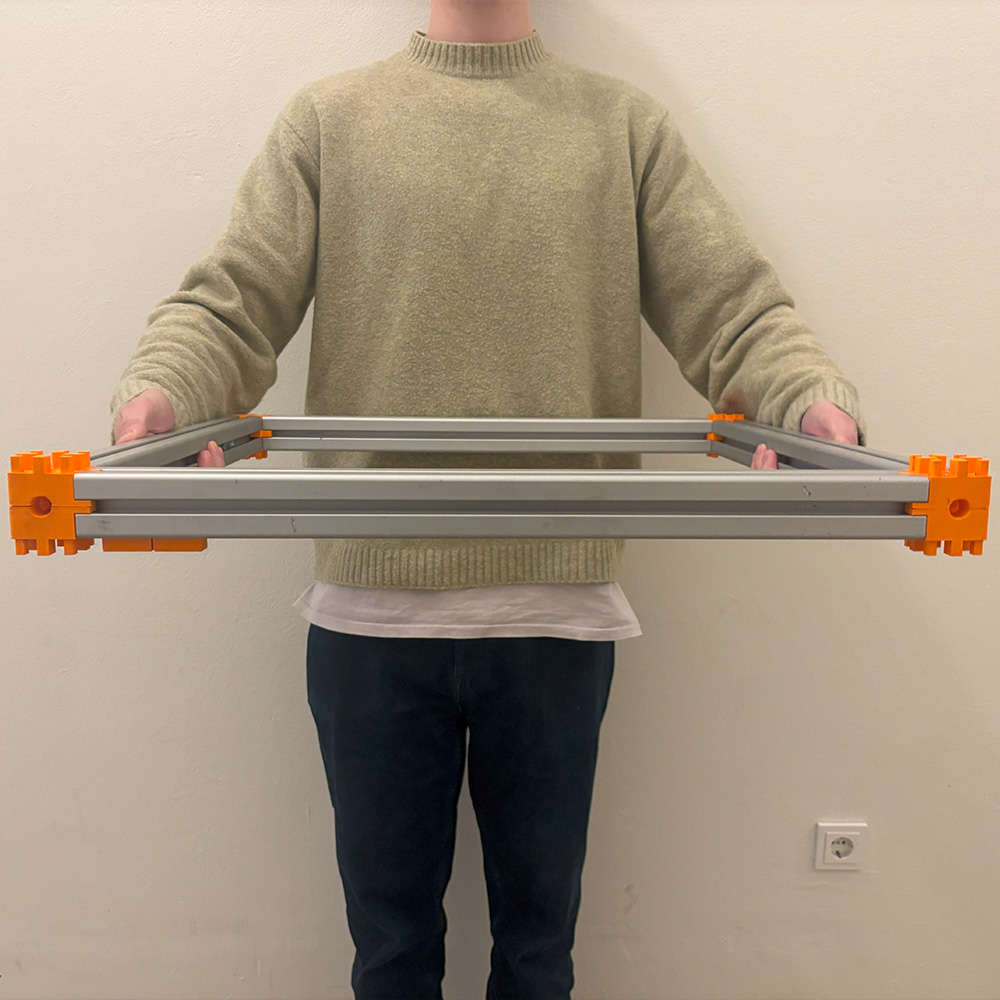
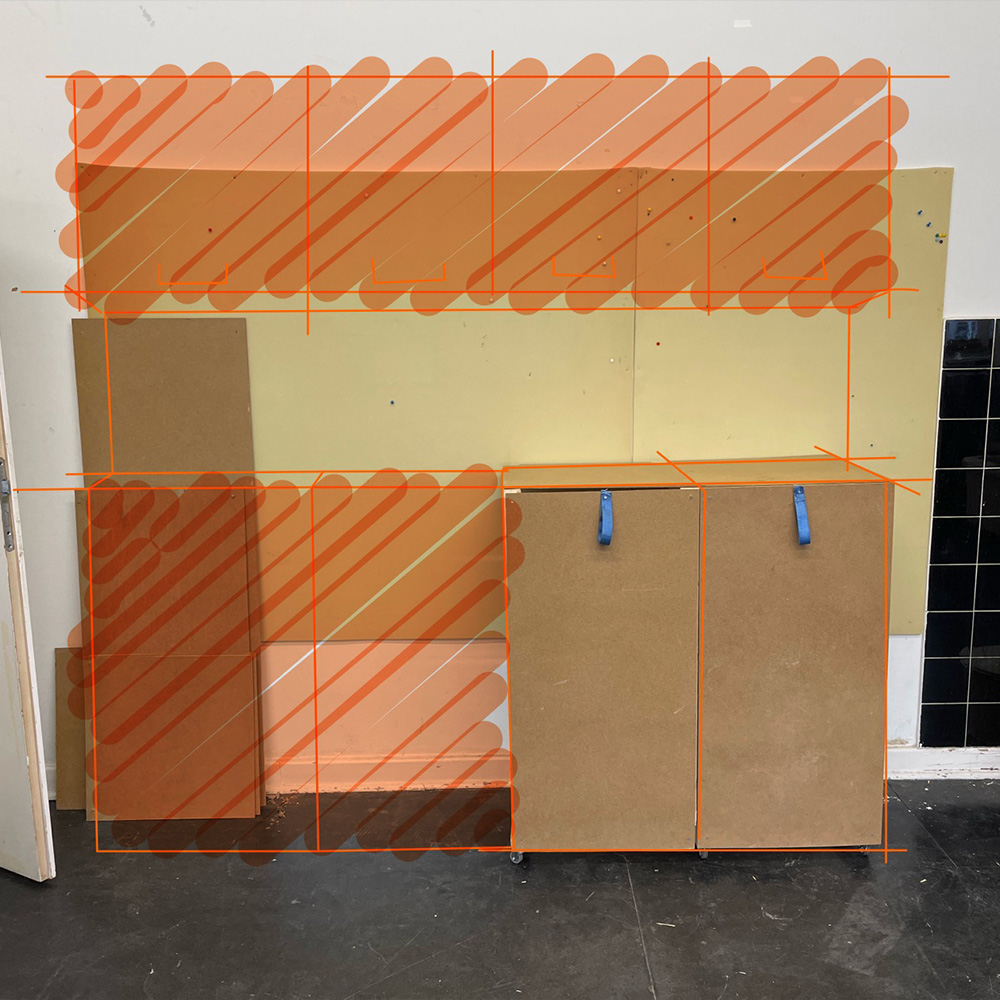
To Brick or Not To Brick is a modular open-source furniture system based on a customizable grid and a specially developed connection system. Through a digital configurator, users can design individual pieces that remain compatible with one another. Four unique pins ensure stability while allowing flexible extensions. The project is a contribution to democratic design: making design accessible, participatory, and adaptable for everyone.

Prozess

Betreut durch: Prof. Aeneas Stankowski, Prof. Holger Neumann, Dozent Lukas Henneberger

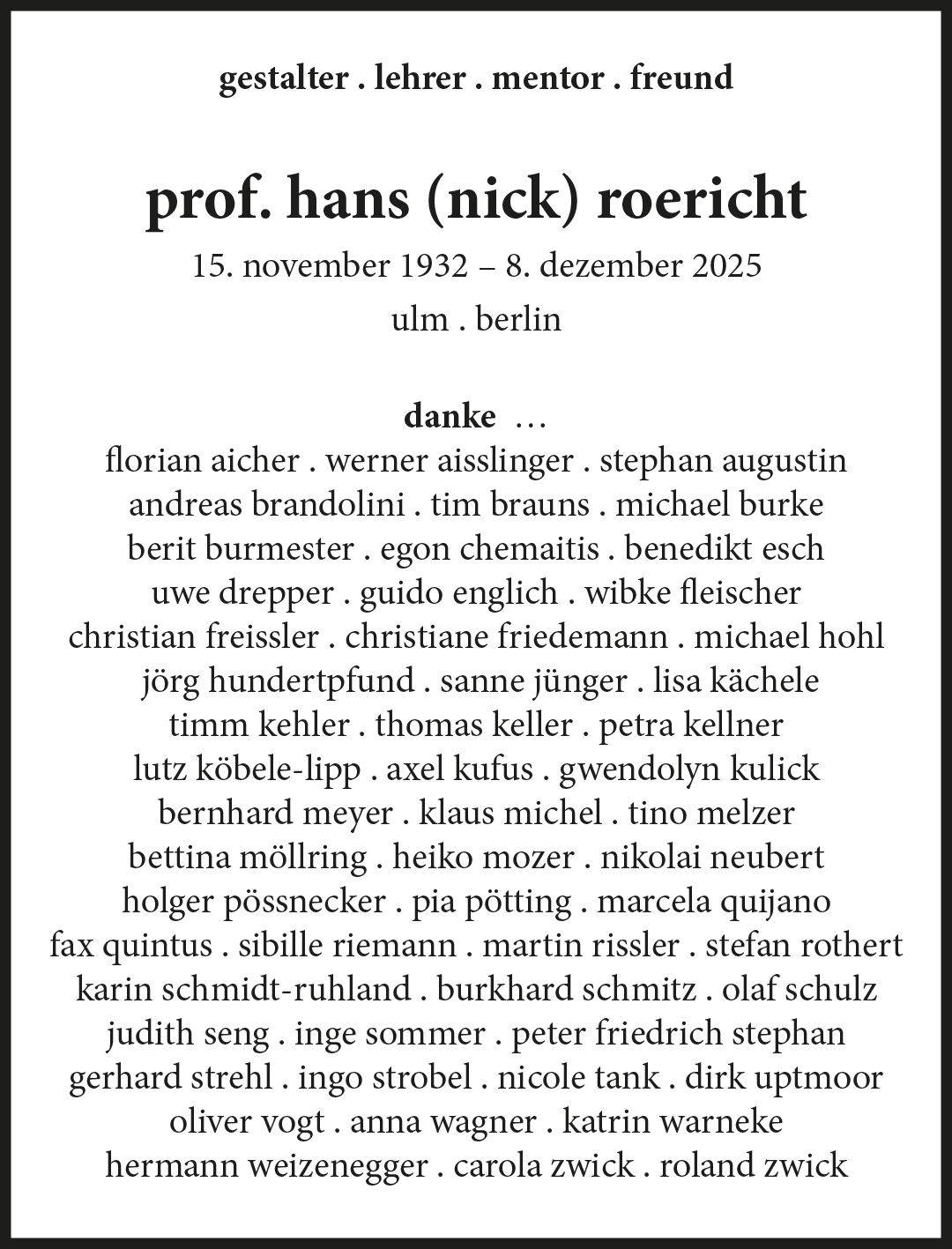
In memoriam Hans (Nick) Roericht (1932 – 2025)

Hans (Nick) Roericht ist am 8. Dezember 2025 verstorben. Mit ihm verliert die Designwelt einen der klarsten Denker des 20. Jahrhunderts – einen Gestalter, Lehrer und Mentor, der Gestaltung stets als gesellschaftliche Aufgabe verstand.

Nick Roericht war weit mehr als ein Designer. Früh geprägt durch seine Arbeit an der Hochschule für Gestaltung Ulm, wurde er international bekannt mit dem Stapelgeschirr TC 100 – einem Entwurf, der bis heute als Ikone funktionalen Designs gilt und unter anderem im Museum of Modern Art in New York vertreten ist. Dieses Werk steht exemplarisch für sein Verständnis von Gestaltung als präzise Verbindung aus Systemdenken, Funktion und formaler Konsequenz.

1973 folgte Roericht dem Ruf an die Universität der Künste Berlin (damals Hochschule der Künste), wo er bis zu seiner Emeritierung im Jahr 2002 als Professor für Produktgestaltung wirkte. Über nahezu drei Jahrzehnte leitete er die Gruppe Industriedesign IV und prägte Generationen von Gestalterinnen und Gestaltern. Ihm ging es nie um kurzlebige Produkte oder modische Effekte, sondern um Design als methodische Problemlösung – getragen von analytischer Strenge, Verantwortung und Weitblick.

Roericht lehrte weniger Antworten als das präzise Stellen von Fragen. Er verstand Design als ganzheitlichen Prozess, der soziale, ökologische und systemische Zusammenhänge berücksichtigt.

Projekte wie sein Produkt-Recycling-Projekt und seine frühen Arbeiten zum Systemdesign waren ihrer Zeit weit voraus. Die Welt erschien ihm nicht als Ansammlung einzelner Objekte, sondern als komplexes Geflecht miteinander verbundener Systeme.

Als Lehrer suchte er keine Nachahmer, sondern eigenständige, kritische Köpfe. Sein Einfluss wirkt bis heute fort – in der Arbeit zahlreicher Absolventinnen und Absolventen, die die akademische wie auch die praktische Designlandschaft maßgeblich mitgestalten.

Mit dem Tod von Nick Roericht verliert die Designwelt einen kritischen Geist, der das Überflüssige mied und das Essenzielle suchte. Seine Klarheit, sein feiner Humor und seine unermüdliche Neugier werden fehlen. Die Universität der Künste Berlin und seine ehemaligen Studierenden bewahren ihm ein ehrendes Andenken.

LINKS:
www.roericht.net
www.moma.org
Rat für Formgebung: in memoriam
Rat für Formgebung: zu seinem 90. Geburtstag

Hans (Nick) Roericht passed away on 8 December 2025. With this, the design world has lost one of the clearest thinkers of the 20th century – a designer, teacher and mentor who always understood design as a social responsibility.

Nick Roericht was much more than a designer. Influenced early on by his work at the Ulm School of Design, he became internationally known for his TC 100 stackable tableware – a design that is still considered an icon of functional design today and is represented in the Museum of Modern Art in New York, among other places. This work exemplifies his understanding of design as a precise combination of systems thinking, function and formal consistency.

In 1973, Roericht accepted a position at the Berlin University of the Arts (then the University of the Arts), where he worked as a professor of product design until his retirement in 2002. For almost three decades, he headed the Industrial Design IV group and influenced generations of designers. He was never interested in short-lived products or fashionable effects, but rather in design as a methodical problem-solving approach – underpinned by analytical rigour, responsibility and vision.

Roericht taught not so much how to find answers as how to ask precise questions. He understood design as a holistic process that takes social, ecological and systemic contexts into account.

Projects such as his product recycling project and his early work on system design were far ahead of their time. He did not see the world as a collection of individual objects, but as a complex network of interconnected systems.

As a teacher, he did not seek imitators, but independent, critical minds. His influence continues to this day – in the work of numerous graduates who are playing a key role in shaping the academic and practical design landscape.

With the death of Nick Roericht, the design world has lost a critical spirit who shunned the superfluous and sought the essential. His clarity, his subtle humour and his tireless curiosity will be sorely missed. The Berlin University of the Arts and his former students honour his memory.

LINKS:
www.roericht.net
www.moma.org
German Design Council: in memoriam
German Design Council: for his 90. Birthday

Photo’s:
top: Hans (Nick) Roericht in front of a selection of the TC 100 tableware (Roericht’s diploma thesis at the HfG) Photo: Claus Wille, 1960 © HfG-Archiv Ulm
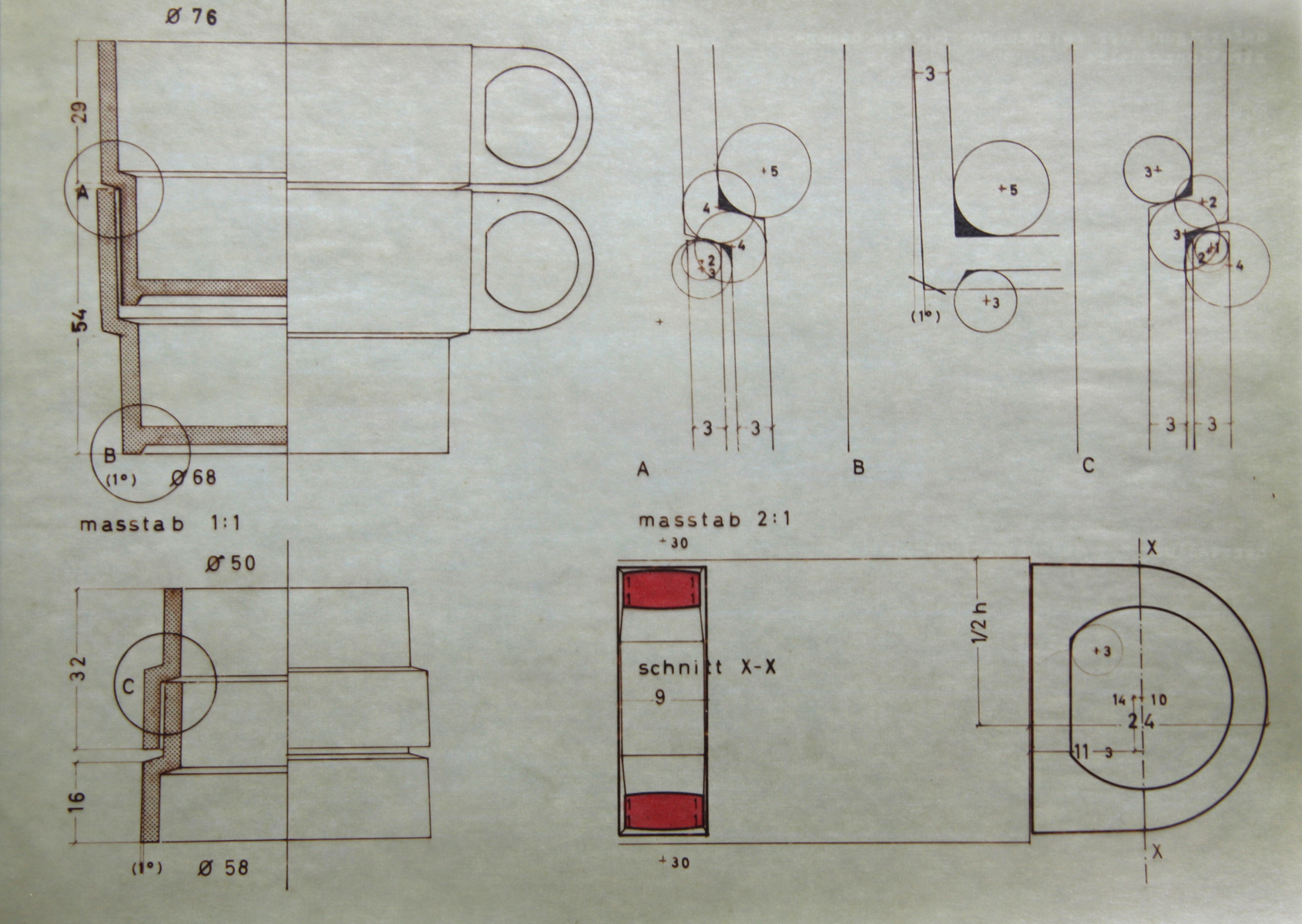
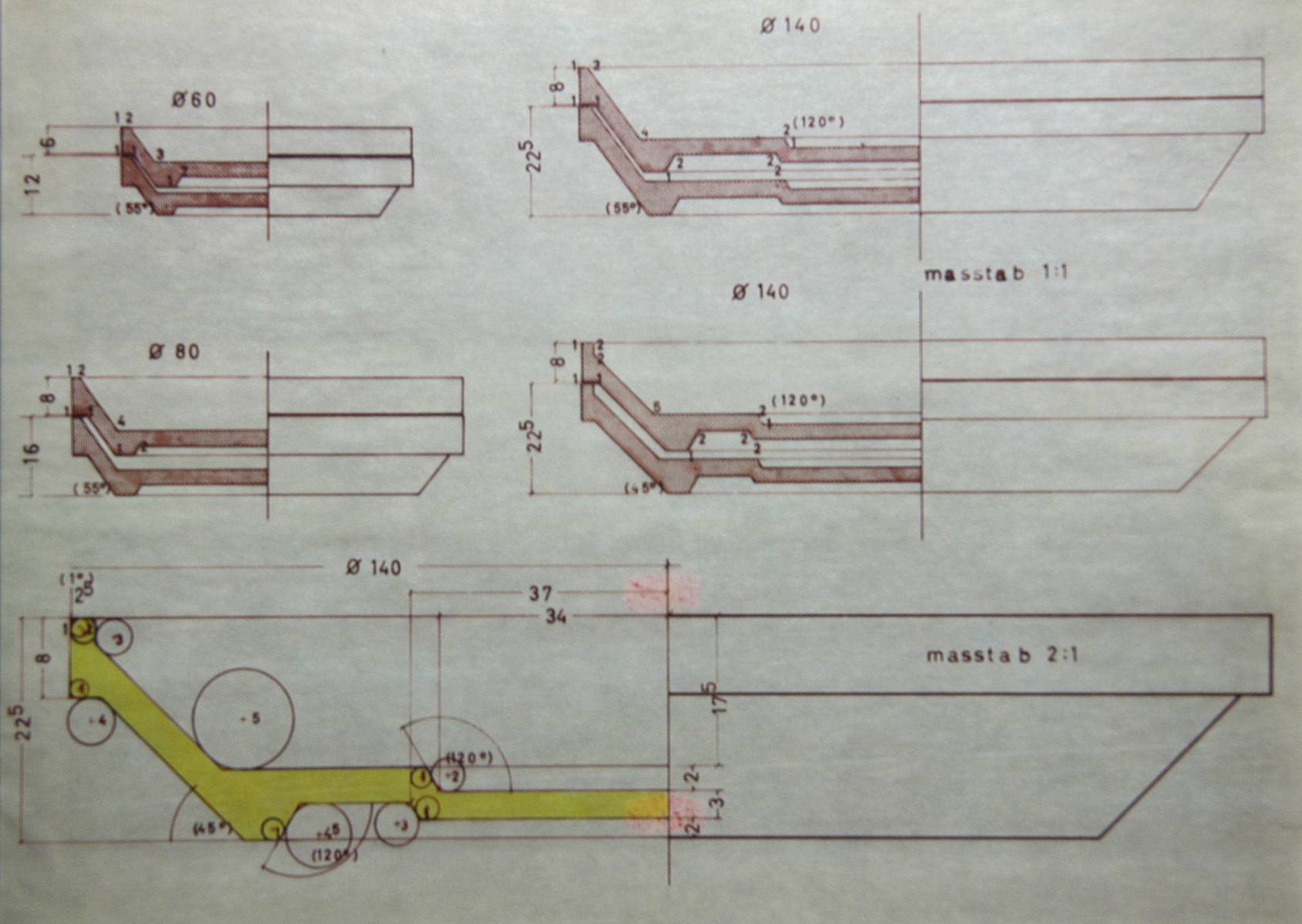
middle: Sketches from the documentation of graduation project TC100 at HfG-Ulm, © Roericht-Archiv
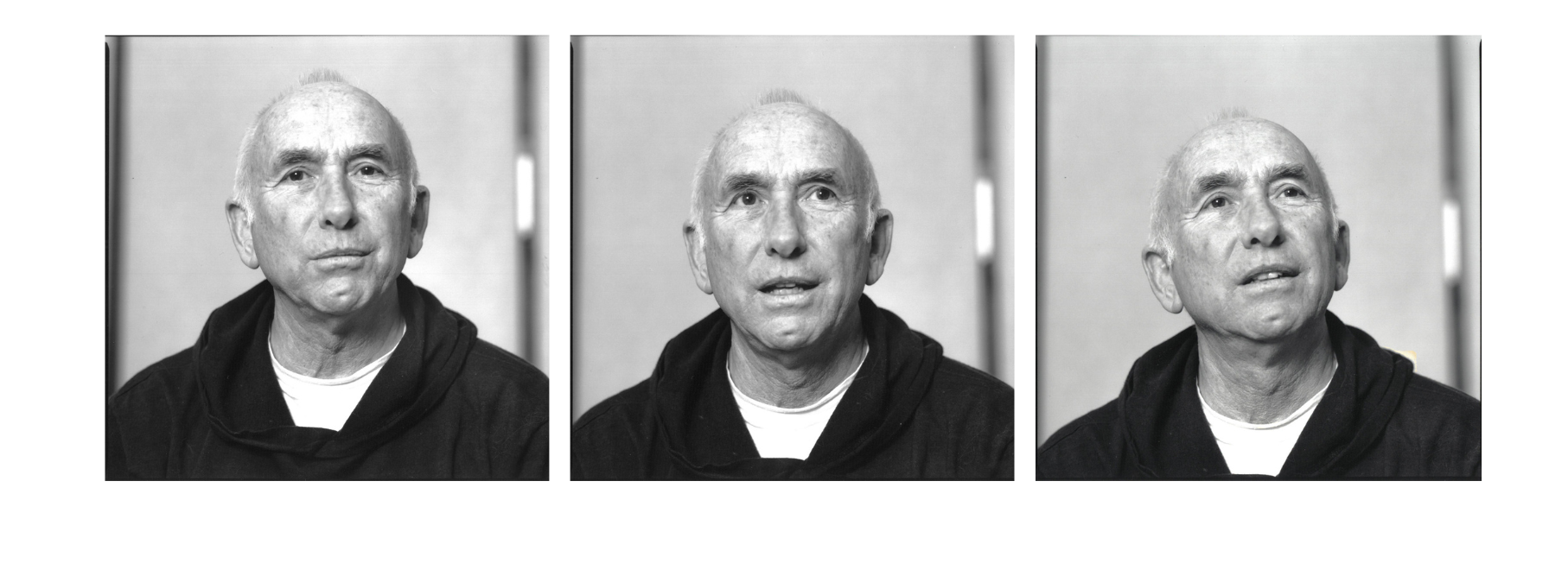
bottom: Nachdenken, reagieren, zustimmen – Hans (Nick) Roericht in Ulm, 2016 Foto: Bettina Strauss, © Roericht-Archiv, HfG-Archiv Ulm

INCLUSIVE MANUFACTURING IN THE SPOTLIGHTS

Perhaps interesting for Christmas and Christmas shopping:

In the summer semester of 2025, the Design & Social Context course featured the project: INCLUSIVE MANUFACTURING.
A collaboration with Architektur & Wohnen Magazine and the DIM workshops in Kreuzberg by U-S-E Berlin (Union of Social Institutions)

Students designed projects that are affordable and easy to manufacture in the pottery, brush-making, wood, metal and sewing workshops of U-S-E, but which also give pride and joy when making them.
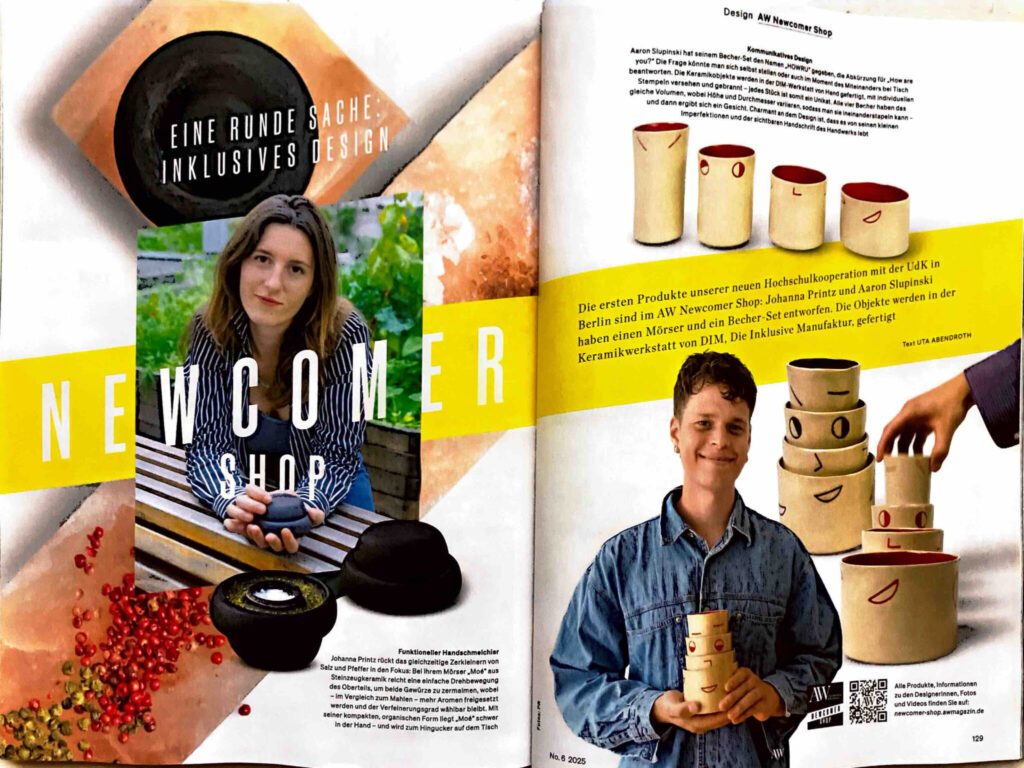
Nine projects have been selected for Architektur & Wohnen’s online Newcomer Shop and will be highlighted in the next issue of Architektur & Wohnen Magazine and available for purchase.

From 6 to 10 February, the projects will be exhibited at Ambiente (Messe Frankfurt) in the Talents section.

All dates and links at one glance:

Inclusive Manufacturing – Design & Social Context (Prof. Ineke Hans).
A cooperation project with Architektur & Wohnen Newcomer Shop and DIM / U-S-E Berlin, see

Starting now: December 2025
• AW Newcomershop: the first projects are available to purchase online NOW at AW Newcomershop, see
Architektur & Wohnen Magazine: featured in upcoming issues
– 25/6 (Nov/Dec) – now in stores!
– 26/1 (Jan/Feb)
– 26/2 (Mar/Apr)
and instagram: see intro,
see Aaronsee Johanna

6-10 February 2026
• Ambiente Trade Fair Frankfurt
Talents Hall 3.1 B60 + B61, see

Vielleicht interessant für weihnachten und weihnachtseinkäufen:

Im Sommersemester 2025 gab es bei Design & Social Context das Projekt: INCLUSIVE MANUFACTURING.
Ein kooperation mit Architektur & Wohnen Magazine und die DIM werkstätten in Kreuzberg von U-S-E Berlin (Union Sozialer Einrichtungen)

Studenten haben projekte gestaltet die bezahlbar und einfach herstellbar sind in die töpferei, bürstenmacherei, holz-, metall- und nähwerkstatten von U-S-E aber die auch Stolz und Freude geben beim machen.
Neun Projekte sind ausgewählt für Architektur & Wohnen’s online Newcomer Shop und werden in die nächste ausgaben von Architektur & Wohnen Magazine ‚ge-highlightet‘ und zu kaufen

Vom 6. bis 10. Februar werden die Projekte auf der Ambiente (Messe Frankfurt) im Bereich Talents ausgestellt.

Alle daten und links in einem blick:

Inclusive Manufacturing – Design & Social Context (Prof. Ineke Hans)
Ein Kooperations projekt mit Architektur & Wohnen Newcomer Shop und DIM / U-S-E Berlin, see

Ab jetzt: Dezember 2025
• AW NewcomershopDie erste Projekte sind ab JETZT online zu kaufen in AW Newcomershop, see
Architektur & Wohnen Magazine: sichtbar in AW hefte
– 25/6 (nov/dez) – jetzt im Laden!
– 26/1 (jan/feb)
– 26/2 mrz/april)
und instagram: see intro,
see Aaronsee Johanna

6-10 Februar 2026
• Ambiente Messe Frankfurt
Talente, Halle 3.1 B60 + B61, see

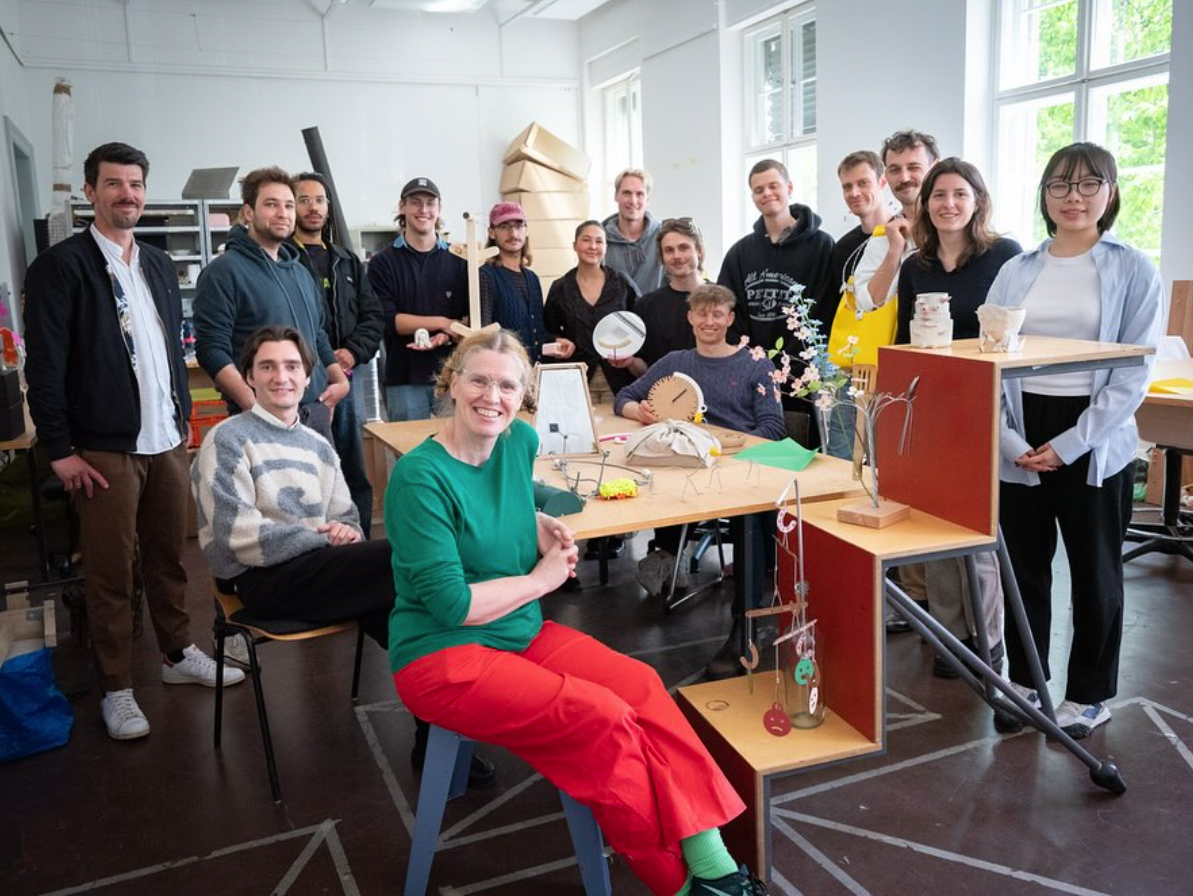
Inclusive Manufacturing Class – photo: Monika Schuerle / AW Architektur & Wohnen

TOMEO – Noelle Loke

TOMEO

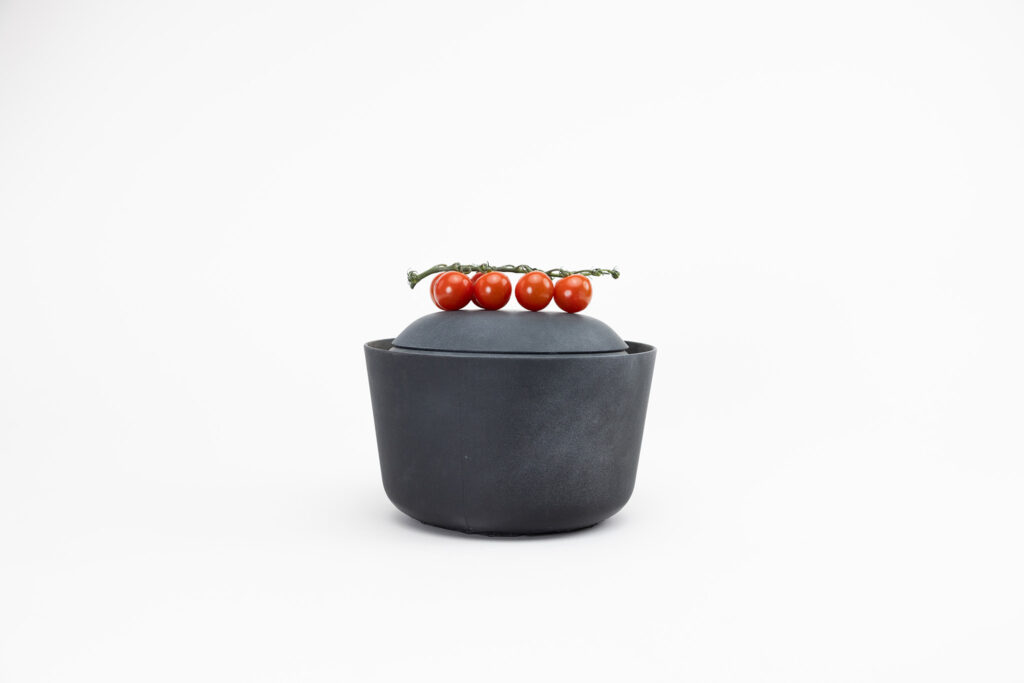
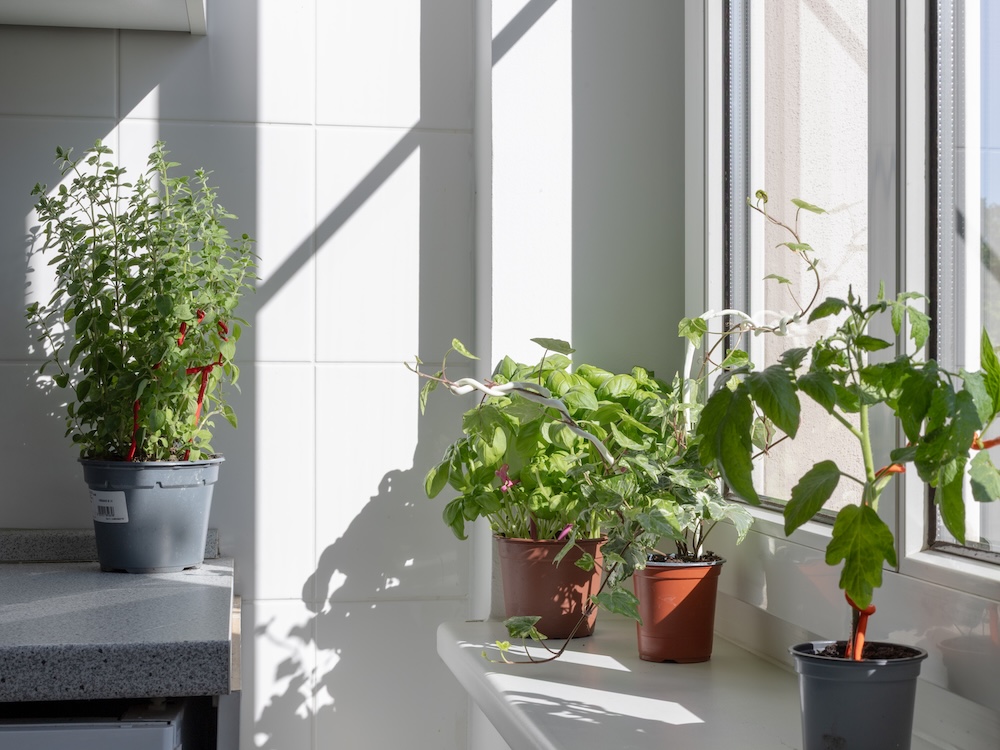
Eine nachhaltige Alternative aus Ton, um empfindliche Lebensmittel wie Tomaten ohne Strom frisch und kühl zu halten.

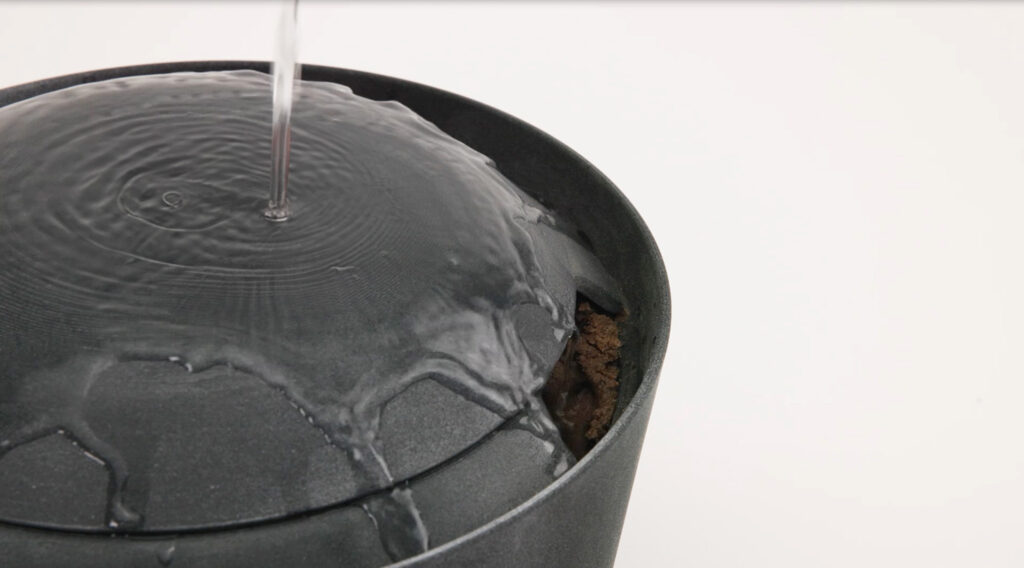
Tomeo ist ein Lebensmittelbehälter, der auf dem jahrhundertealten Prinzip der Verdunstungskühlung basiert. Inspiriert von traditionellen Tonkrug-Kühlern bewahrt Tomeo empfindliche Lebensmittel, insbesondere Tomaten, auf natürliche und stromfreie Weise. So bleiben Frische und Geschmack erhalten, ohne dass Kühlenergie benötigt wird. Durch die Verdunstung von Wasser in den porösen Tonwänden wird dem Inneren Wärme entzogen.

Die Temperatur sinkt dadurch auf etwa 13 bis 17 °C, perfekt für Lebensmittel, die unter Kälte leiden und im Kühlschrank schnell an Aroma verlieren.

A sustainable clay alternative for keeping delicate foods like tomatoes cool and fresh without electricity.

Tomeo is a food container based on the centuries-old principle of evaporative cooling. Inspired by traditional clay pot coolers, Tomeo stores delicate produce ,especially tomatoes, in a natural, electricity-free way. This helps preserve both freshness and flavor without relying on conventional refrigeration. As water evaporates through the breathable clay walls, it draws heat from the interior.

The temperature inside drops to approximately 13 to 17 °C ideal for foods sensitive to cold, such as tomatoes, which often lose flavor and texture in a refrigerator.

Prozess

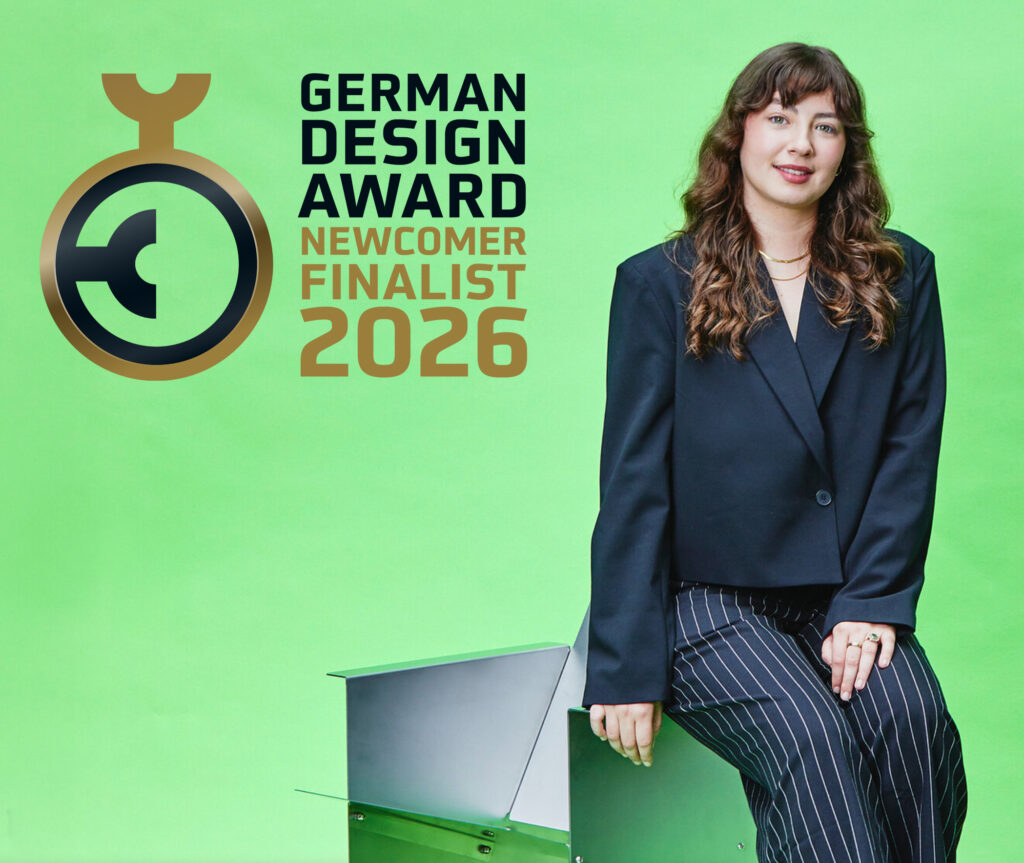
Marie Kurstjens among the 5 finalists for German Design Council Newcomer Award 2026

Frankfurt, 31. Oktober 2025
The jury of the German Design Award 2026 has selected the 5 finalists for the Newcomer Award. Among them Marie Kurstjens, Master-graduate Product design in September 2025.

The finalists of the German Design Award 2026 – Newcomer share a strong focus on sustainable, forward-thinking approaches and work at the intersection of technology, material research, and creativity. Whether through the development of circular materials, innovative architectural concepts, or the fusion of art and digital technologies, these emerging designers are committed to resource-conscious solutions and transformative design methods. Their work reflects a clear drive to tackle social and ecological challenges through creative, interdisciplinary projects.

Evaluation Criteria
The jury assesses the submitted portfolios with a focus on the unique stylistic identity of the work and its development potential. Criteria include:
– Conceptual quality
– Design quality
– Technical and formal originality
– Development
– potential Degree of innovation Symbolic and emotional depth
– Social relevance

Aspects such as sustainability and circularity, material and resource awareness, as well as relevance and future viability also play a key role in the evaluation process.

The nominees were introduced on 8.November, 2025 in Berlin in the Soho House on the occasion of the Design Gala of the German Design Council.
At the awards ceremony on 6. Feb. 2026 in Frankfurt one of them will be named Newcomer of the Year – a title that comes with a €15,000 prize. The other finalists each receive €2,500.

read the interview with Marie Kurstjens

READ MORE ABOUT THE NEWCOMER

Frankfurt, 31. Oktober 2025
Die Jury des German Design Award 2023 hat die 5 Finalist*innen für die Auszeichnung Newcomer ausgewählt. Unter ihnen Marie Kurstjens, Master-Absolventin Produktdesign im September 2025.

Die Finalist*innen des German Design Award 2026 – Newcomer eint ein Fokus auf nachhaltige, zukunftsorientierte Ansätze und das Arbeiten an der Schnittstelle von Technologie, Materialforschung und Kreativität. Ob durch die Entwicklung von kreislauffähigen Materialien, innovativen Architekturkonzepten oder die Verbindung von Kunst und digitalen Technologien: Die Nachwuchsdesigner*innen setzen auf ressourcenschonende Lösungen und transformative Gestaltungsmethoden. Ihre Arbeiten zeigen einen klaren Drang, gesellschaftliche und ökologische Herausforderungen durch kreative, interdisziplinäre Projekte zu adressieren.

Die Jury bewertet die eingereichten Portfolios im Hinblick auf die stilistische Eigenständigkeit des Designs und ihr Entwicklungspotenzial. Dabei werden u. a. folgende Bewertungskriterien angesetzt:
– konzeptionelle Qualität
– Gestaltungsqualität
– technische und formale Eigenständigkeit
– Entwicklungspotenzial
– Innovationsgrad
– symbolischer und emotionaler Gehalt
– gesellschaftlicher Anspruch

Zudem fließen Aspekte wie Nachhaltigkeit und Circularity, Material- und Ressourcenbewusstsein sowie die Relevanz und Zukunftsfähigkeit der eingereichten Arbeiten in die Beurteilung ein.

Die Nominierten wurden am 8. November 2025 in Berlin im Soho  House anlässlich der Design Gala des Rat für Formgebung vorgestellt.
Auf der Preisverleihung am 6. Feb. 2026 in Frankfurt wird eine Gewinnerin oder ein Gewinner mit der Auszeichnung Newcomer of the Year gekürt, die mit einer Dotierung in Höhe von 15.000 Euro verbunden ist. Die übrigen Finalistinnen und Finalisten erhalten jeweils 2.500 Euro.

lese das Interview mit Marie Kurstjens

LESE MEHR ÜBER DIE NEWCOMER

BEYOND THE MAP – Inhwan Oh | BA 2025

BEYOND THE MAP

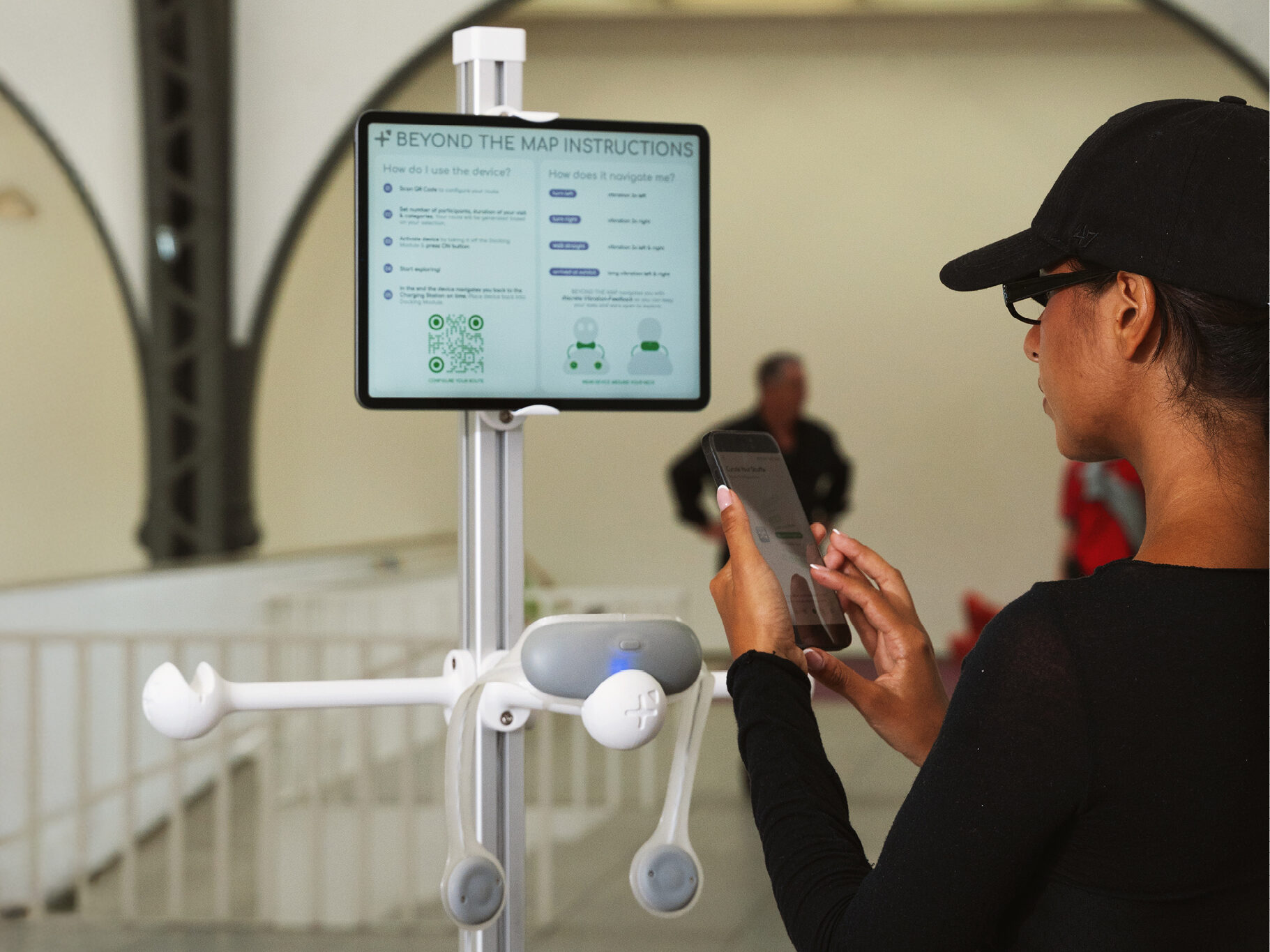
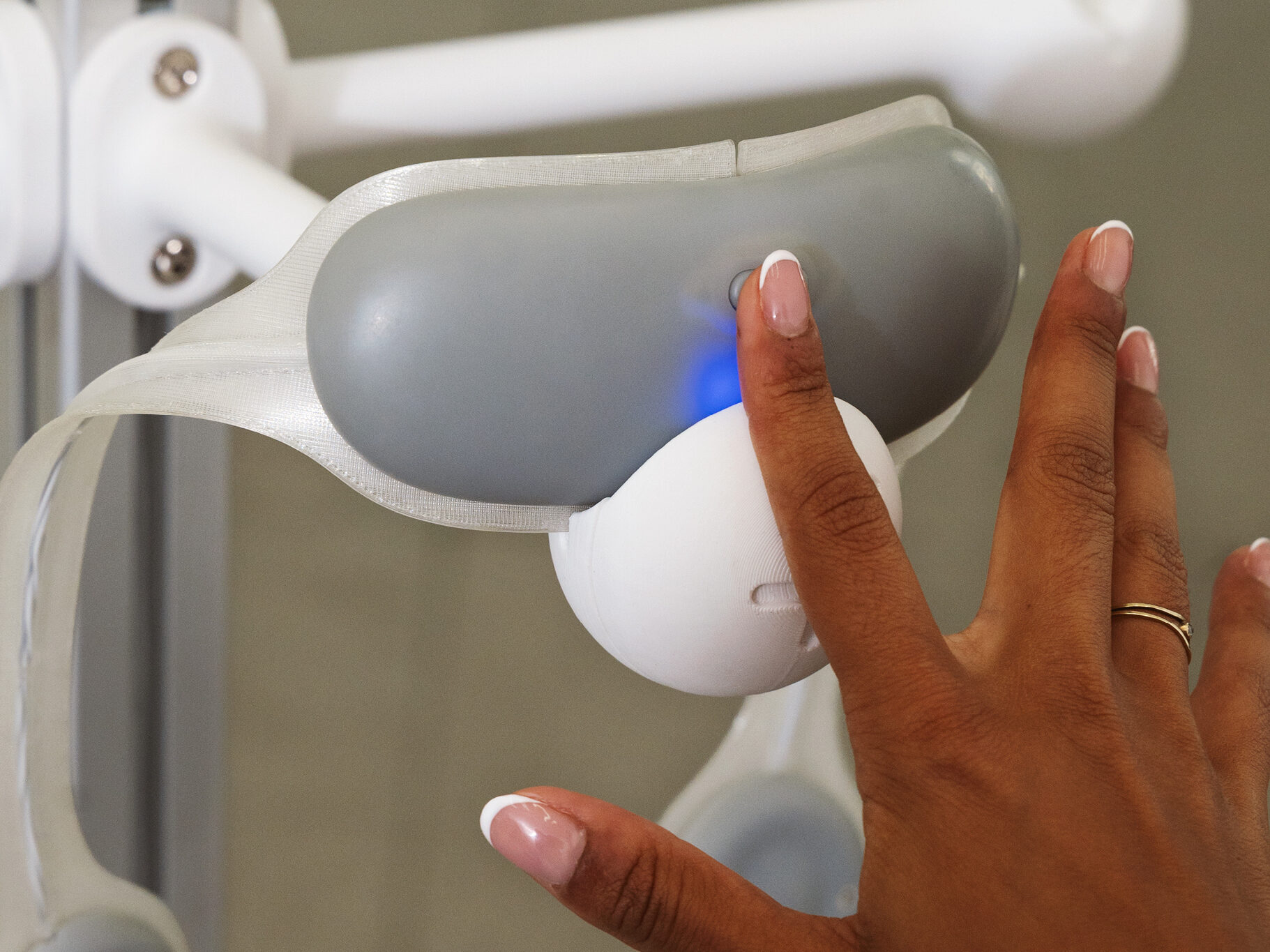
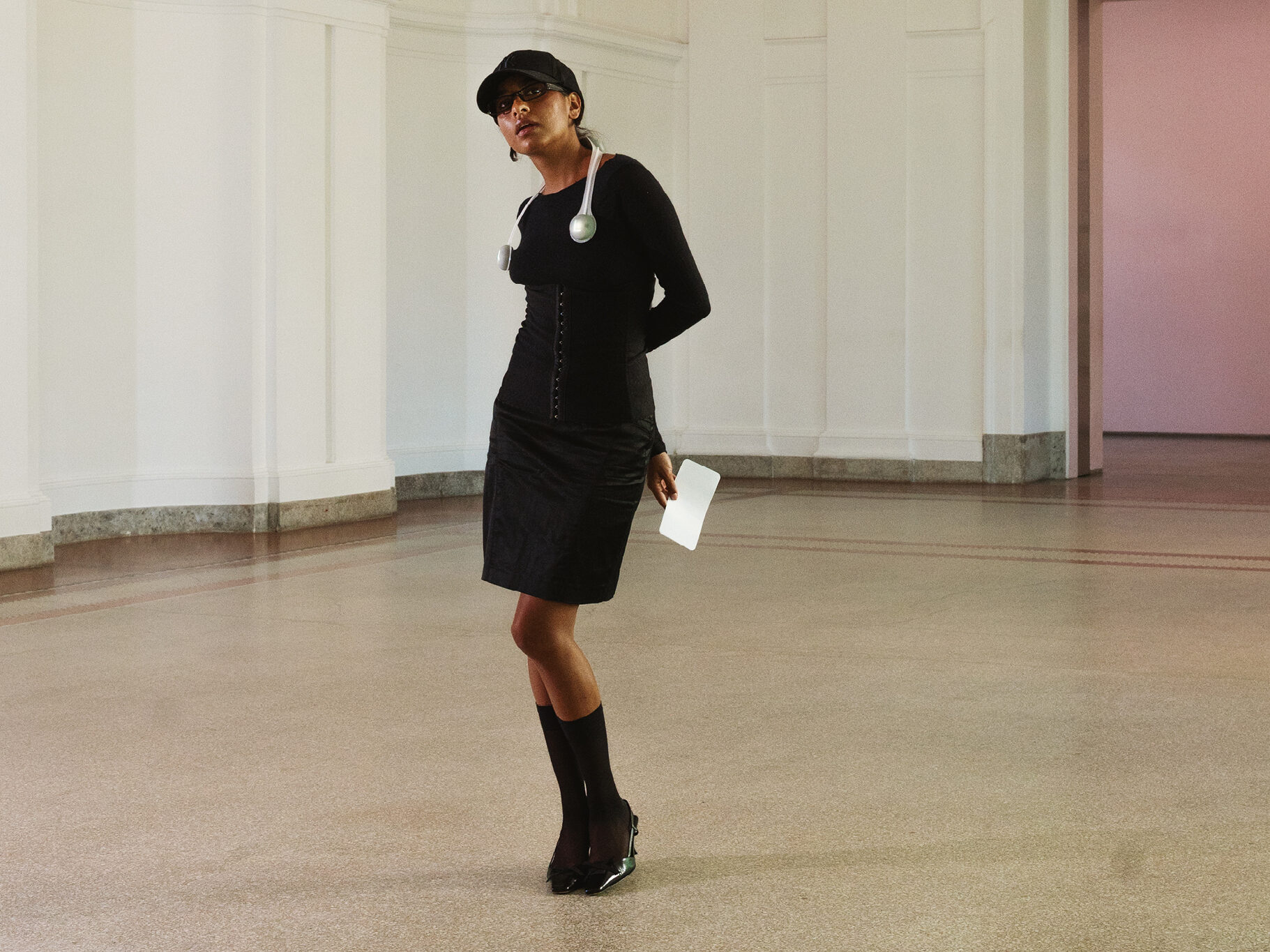
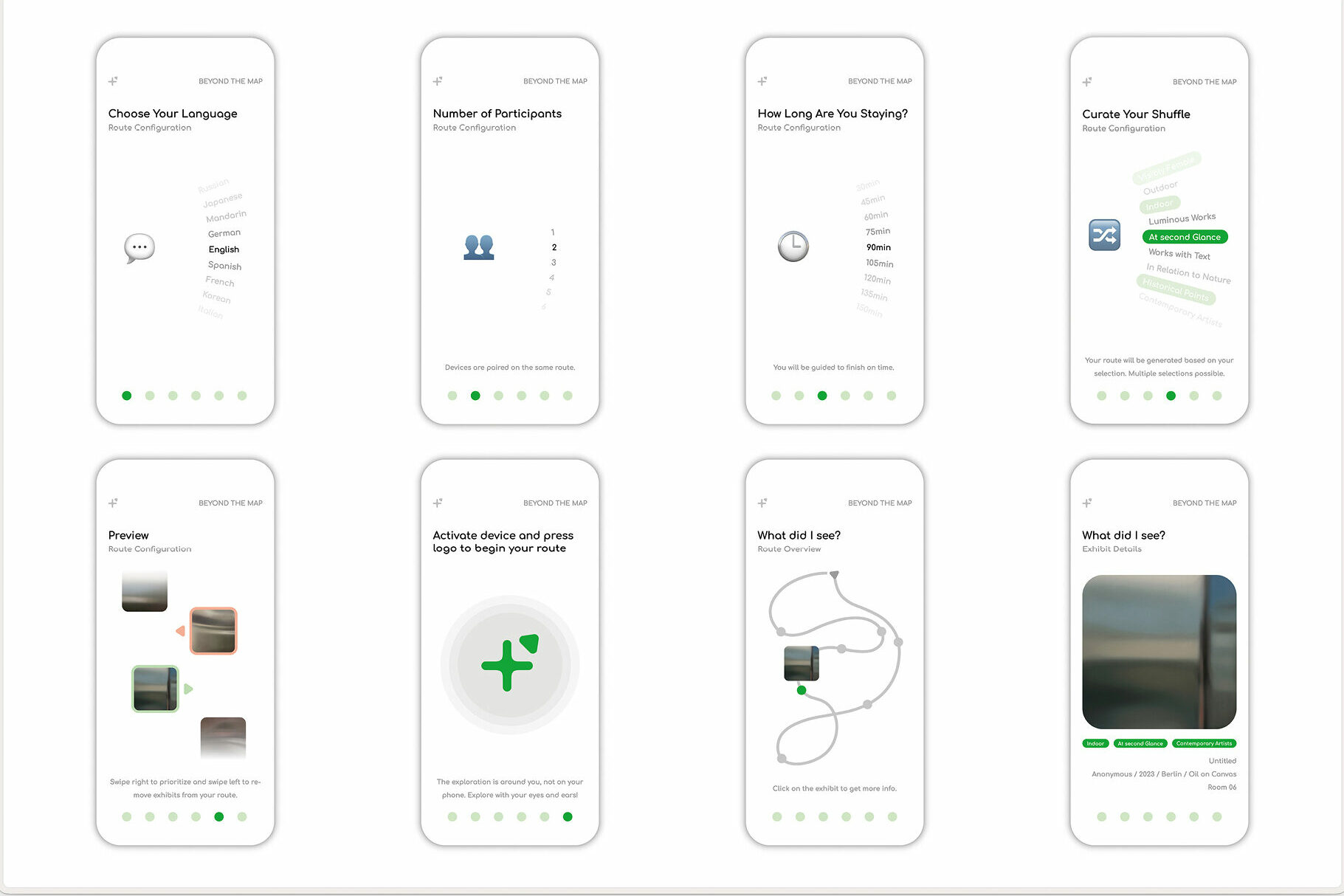
Die Entwicklung einer taktilen Navigationsform für den musealen Kontext – BEYOND THE MAP konzentriert sich darauf, eine Feedbackform zu erforschen, die nicht auf visuelle oder auditive Modalitäten angewiesen ist und den Museumsbesuch stärker als ganzheitliches Erlebnis in den Mittelpunkt stellt.

Das Ergebnis ist ein Navigationssystem, das das Museum als sozialen Raum begreift und sowohl Interaktionen zwischen Besucher*innen als auch individuell zugeschnittene Entdeckungen ermöglicht.

The development of a tactile navigation method for the museum context – BEYOND THE MAP focuses on exploring a form of feedback that does not rely on visual or auditory modalities, aiming to center the museum visit on the overall experience.

The result is a navigation system that views the museum as a social space, enabling both interaction among visitors and individually tailored discoveries.

Prozess

Betreut durch: I. Hans, H.Neumann, L.Henneberger

BEYOND THE SURFACE – Skarlett Balta | BA 2025

BEYOND THE SURFACE – from damage to transformation.

Von Bäumen inspiriertes Geschirr, entworfen, um sich zu verändern. Brüche und Absplitterungen zeigen jahresringähnliche Muster und fügen gezielte Schönheit hinzu.

Statt wegzuwerfen werden Kanten mit Diamantwerkzeugen geschliffen – für sichere, glatte Nutzung. Die Funktion bleibt erhalten, während sich das Erscheinungsbild durch täglichen Gebrauch wandelt.

Das Projekt versteht Schaden als Kreislaufpraxis: Lebensdauer verlängern, Abfall reduzieren, Pflege belohnen. Gebrochene Stücke bleiben funktional, lassen sich sicher reparieren und werden persönlicher, wenn ihre Ringe sichtbar werden

Tableware inspired by trees, designed to evolve. Breaks and chips reveal tree ring-like patterns that add intentional beauty.

Rather than discard, edges are sanded with diamond tools for safe, smooth use. Function stays intact as appearance changes through everyday handling.

The project reframes damage as circular practice: extend lifespan, reduce waste, reward care. Brocken pieces remains functional and can be safely repaired becoming more personal as its rings emerge.

Prozess

Betreut durch: M. Hahn, H.Neumann, J. Ribler

IN TOUCH – Lea Dekara | BA 2025

IN TOUCH

In Touch ist ein Designobjekt, das durch Materialität und Haptik einen nichtsprachlichen Zugang zu Emotionen eröffnet.

Die abstrakte Formensprache lädt zur freien Assoziation ein und macht Gefühle, Beziehungen und innere Anteile spürbar.

Im therapeutischen Kontext dient es als offenes Werkzeug zur Unterstützung von Kommunikation und Ausdruck.

Als Erweiterung des Systembretts ermöglicht es neue Zugänge, indem Emotionen nicht festgelegt, sondern individuell erlebt, berührt und bewegt werden können.

In Touch is a design object that opens a non-verbal access to emotions through materiality and haptics.

The abstract language of form invites free association and makes feelings, relationships, and inner parts palpable.

In a therapeutic context, it serves as an open tool to support communication and expression.

As an extension of the system board, it allows new access points by enabling emotions to be experienced, touched, and moved individually, rather than being fixed.

Prozess

Betreut durch: A. Stankowski, H. Neumann, A. Engelmann

HA AN SU UM – Mingyu Kim | BA 2025

Ha An Su Um

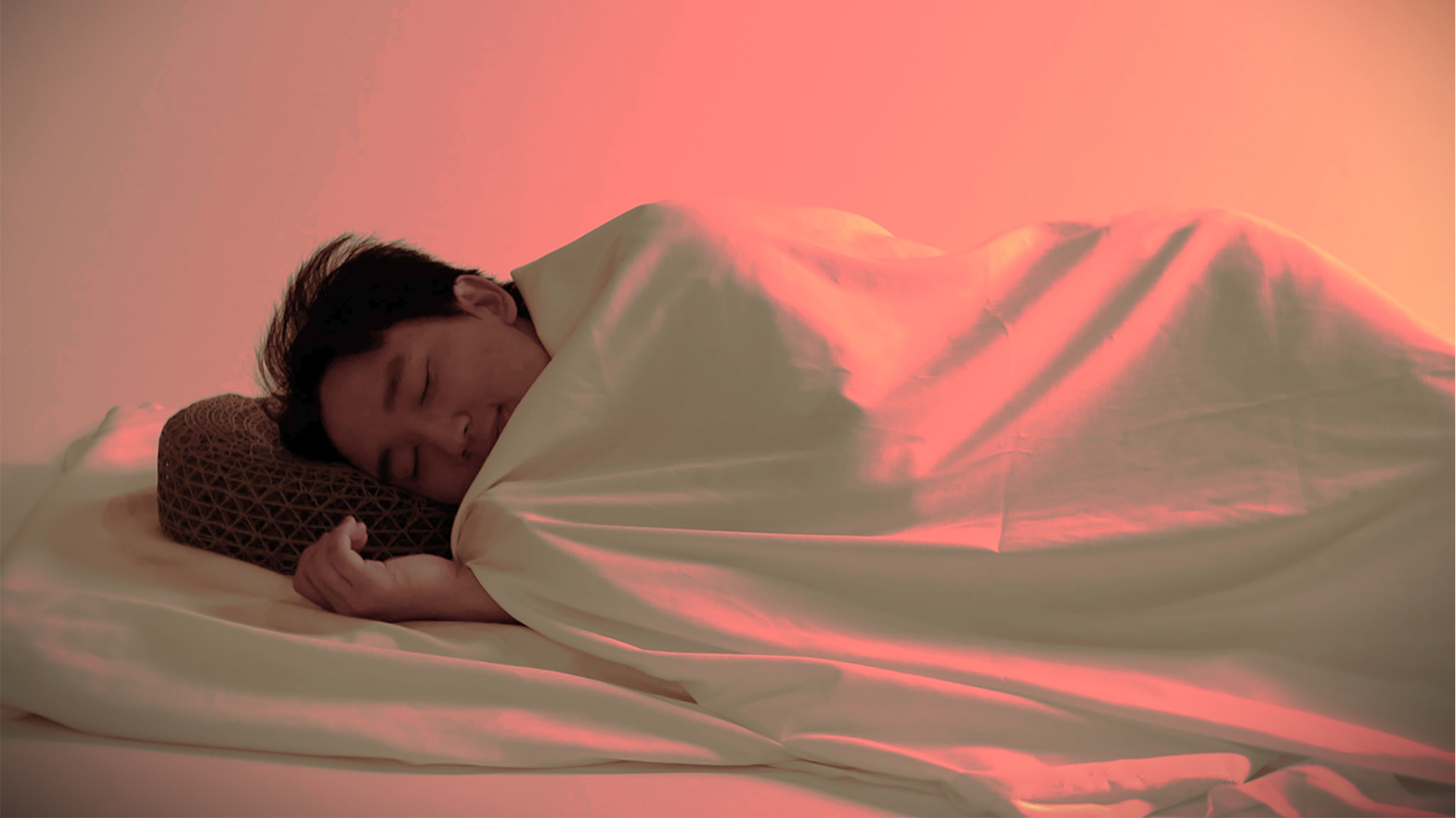
„Ha: An: Su: Um:“ leitet sich vom koreanischen Wort für „Seufzer“ ab – dem leisen Atemzug, den wir am Ende eines langen Tages ausstoßen.

Dieses Projekt entstand als Gefäß für genau diesen Moment: ein kleines Objekt der Erholung von den Belastungen des Alltags.

Beschwerden aufgrund einer schlechten Körperhaltung entstehen oft durch gewohnheitsmäßige Fehlhaltungen – den Blick auf Smartphones, das Vorbeugen am Schreibtisch oder das stundenlange Verharren in derselben Position. Diese täglichen Routinen äußern sich allmählich in Beschwerden wie einer nach vorne geneigten Kopfhaltung, Steifheit und chronischer Müdigkeit. Dabei verbringen wir fast ein Drittel unseres Lebens im Schlaf, und gerade in dieser Zeit findet der Körper zu neuem Gleichgewicht und Kraft zurück.

Das Kissen wird somit mehr als nur ein einfacher Haushaltsgegenstand: Es wird zu einem Werkzeug der Heilung und Regeneration.

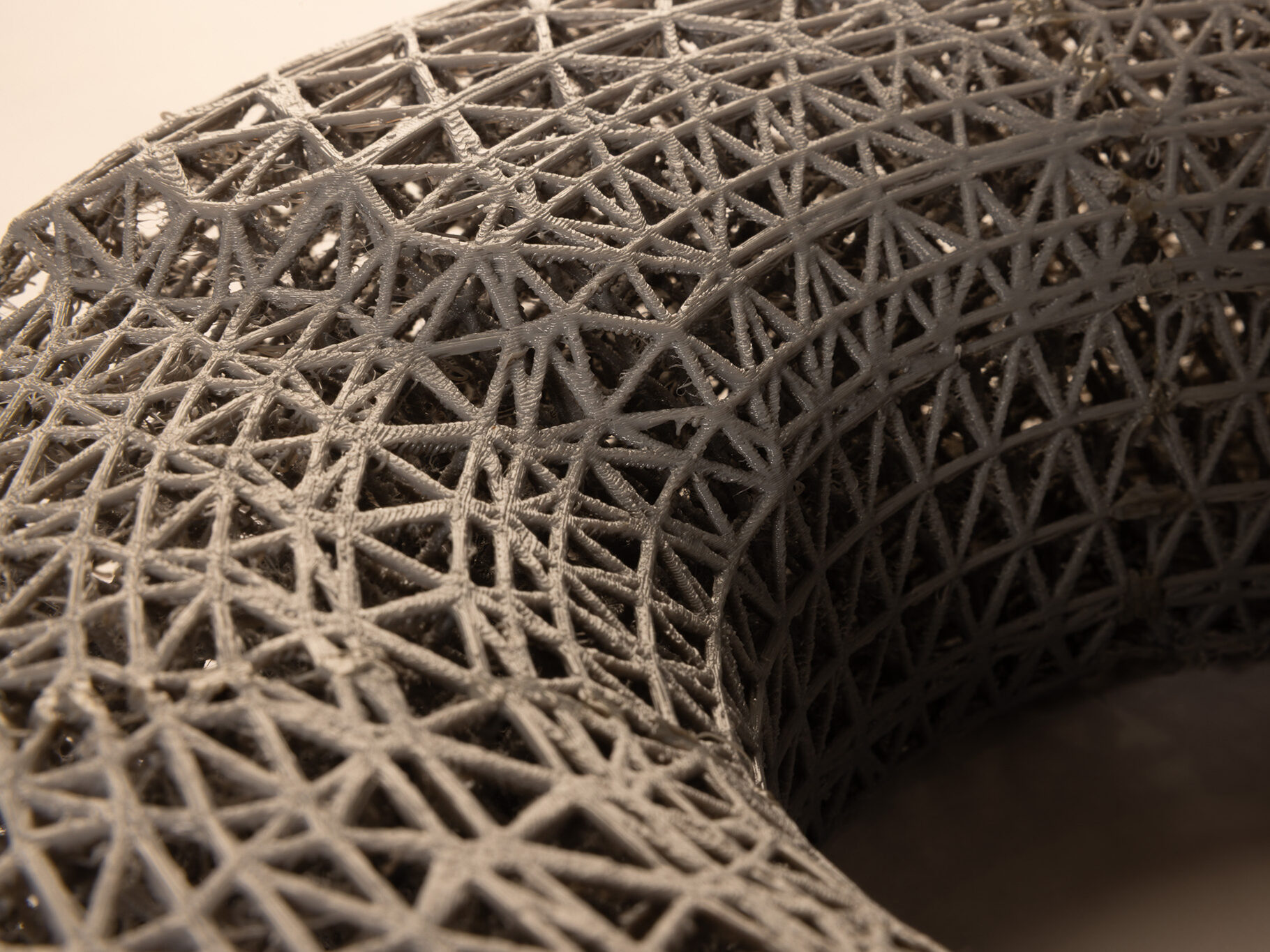
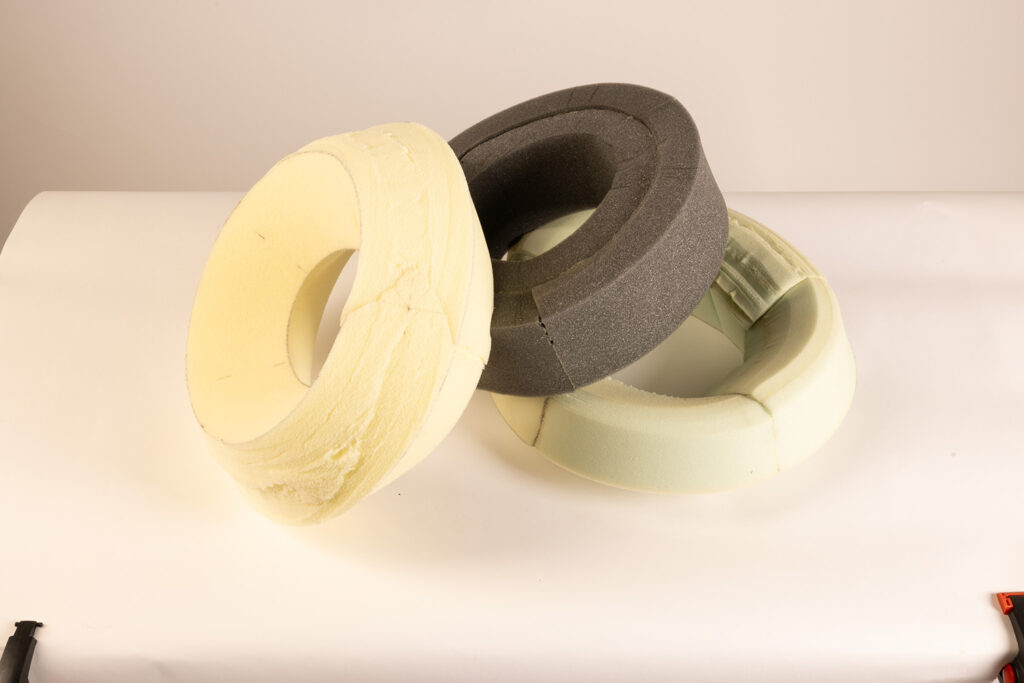
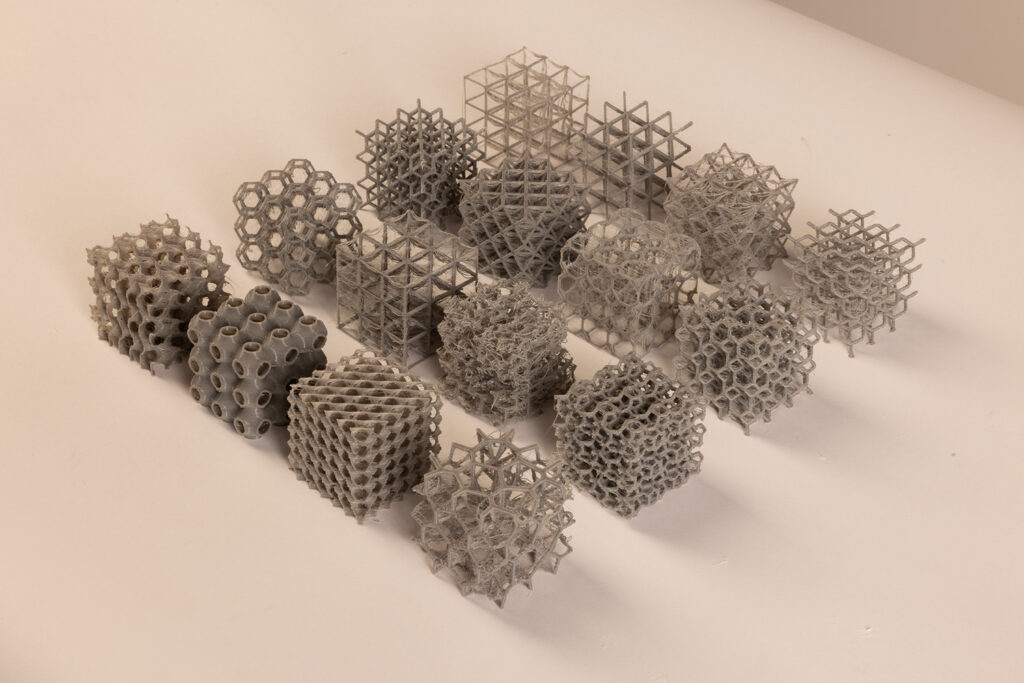
Das Kissen Ha: An: Su: Um: verkörpert diese Idee. Seine Struktur ist von der Gitterstruktur von Fluorit inspiriert und wurde mithilfe additiver Fertigung umgesetzt. Durch die Nutzung der einzigartigen Vorteile des 3D-Drucks erreicht das Design maximale Stabilität bei minimalem Materialeinsatz, während seine poröse Geometrie für natürliche Luftzirkulation und Atmungsaktivität sorgt.

Das gewählte Material TPU verstärkt diese Funktion. Es ist flexibel und dennoch strapazierfähig, feuchtigkeitsabweisend, leicht zu waschen und trocknet schnell – für Hygiene und lange Nutzungsdauer.

Letztendlich verkörpert dieses Kissen die Verbindung von technologischer Experimentierfreude und formaler Erkundung. Es möchte die oft übersehene Geste des Seufzens in einen bedeutungsvollen Moment der Ruhe verwandeln und bietet so eine Designintervention, die Körper und Geist gleichermaßen regeneriert.

“Ha: An: Su: Um:” derives from the Korean word for “a sigh” — the quiet breath we release at the end of a long day.
This project was conceived as a vessel for that moment: a small object of recovery from the strains of everyday life.

Modern posture-related discomforts often arise from habitual misalignments — looking down at smartphones, leaning forward at desks, or maintaining static positions for hours. These daily routines gradually manifest in conditions such as forward head posture, stiffness, and chronic fatigue. Yet, we spend nearly one-third of our lives asleep, and it is during this time that the body regains balance and strength.
The pillow, therefore, becomes more than a simple household object: it is a tool for healing and restoration.

The pillow Ha: An: Su: Um: embodies this idea. Its structure draws inspiration from the lattice fluorite, translated through additive manufacturing. By exploiting the unique advantages of 3D printing, the design achieves maximum stability with minimal material use, while its porous geometry promotes natural airflow and breathability.

The chosen material, TPU, enhances this function. Flexible yet durable, it resists moisture, allows for effortless washing, and dries quickly — ensuring hygiene and long-term usability.

Ultimately, this pillow represents the convergence of technological experimentation and formal exploration.
It seeks to transform the overlooked gesture of a sigh into a meaningful moment of rest, offering a design intervention that restores both body and mind.

Prozess

Betreut durch: R. Scheipner, H.Neumann, J. Ribler

THANX – Petra Gaspar | BA 2025

ThanX

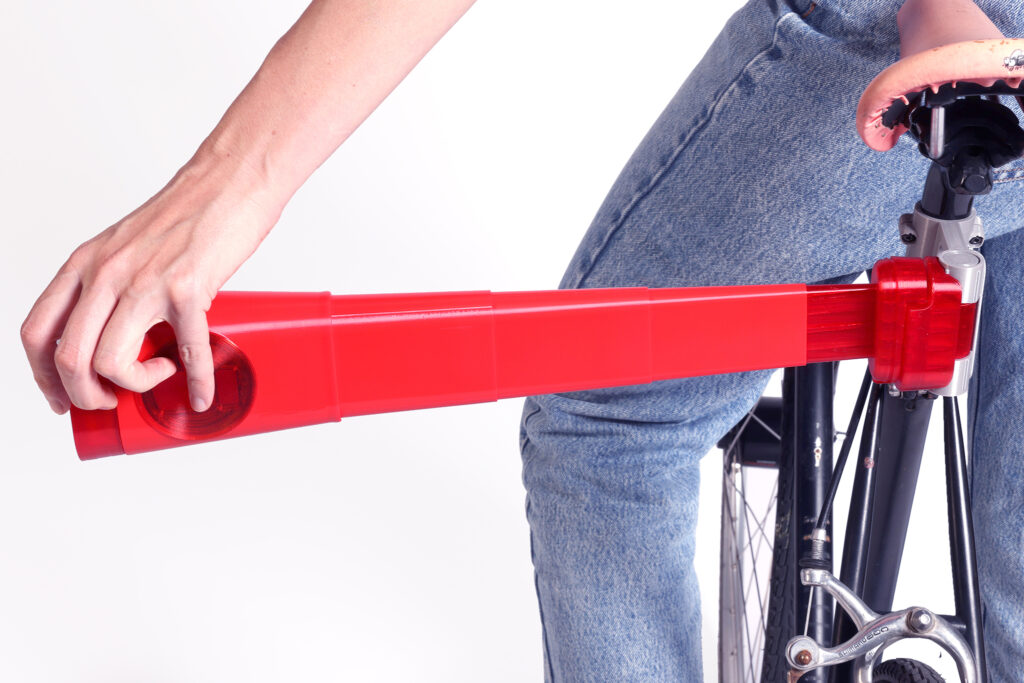
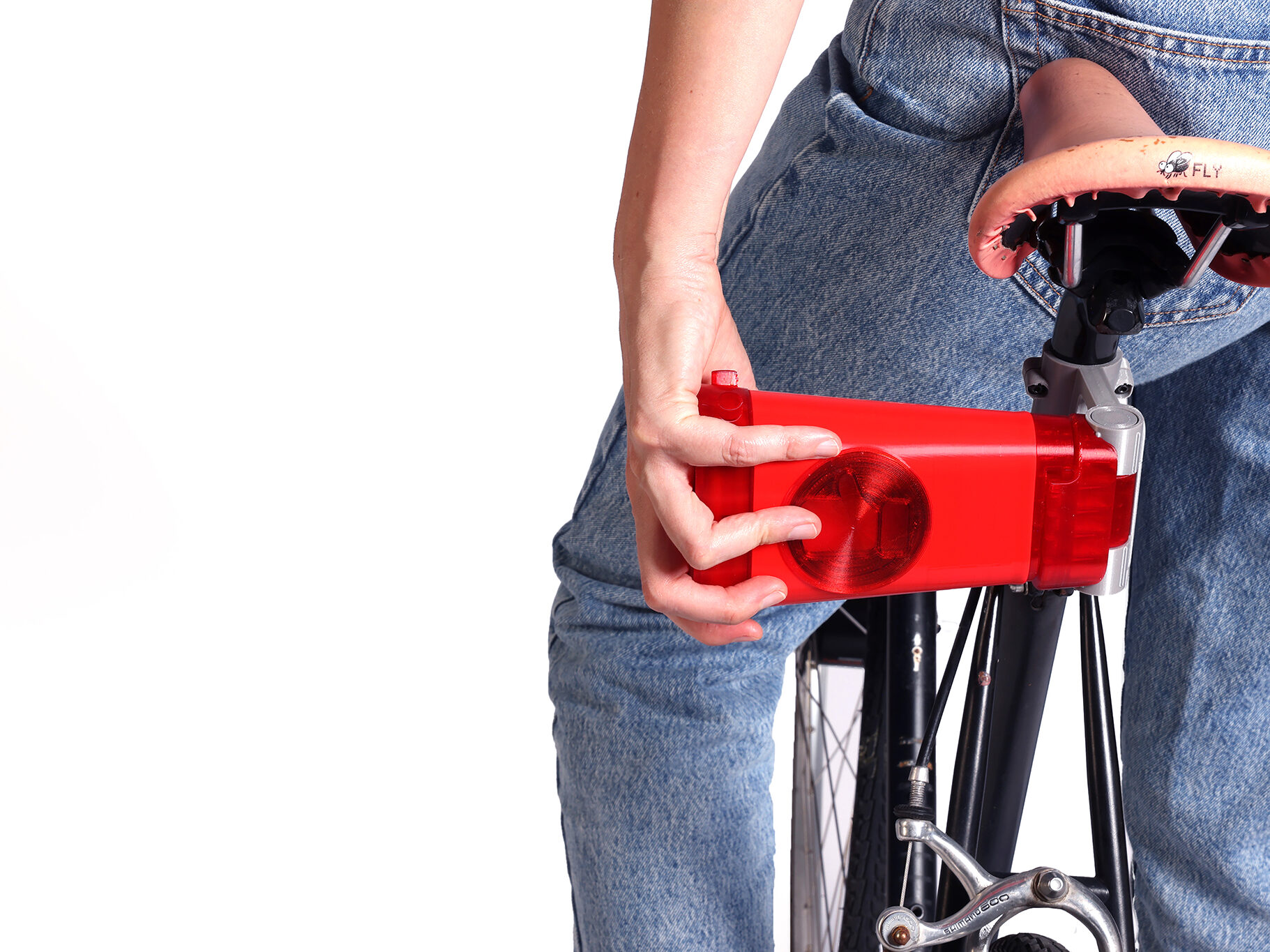
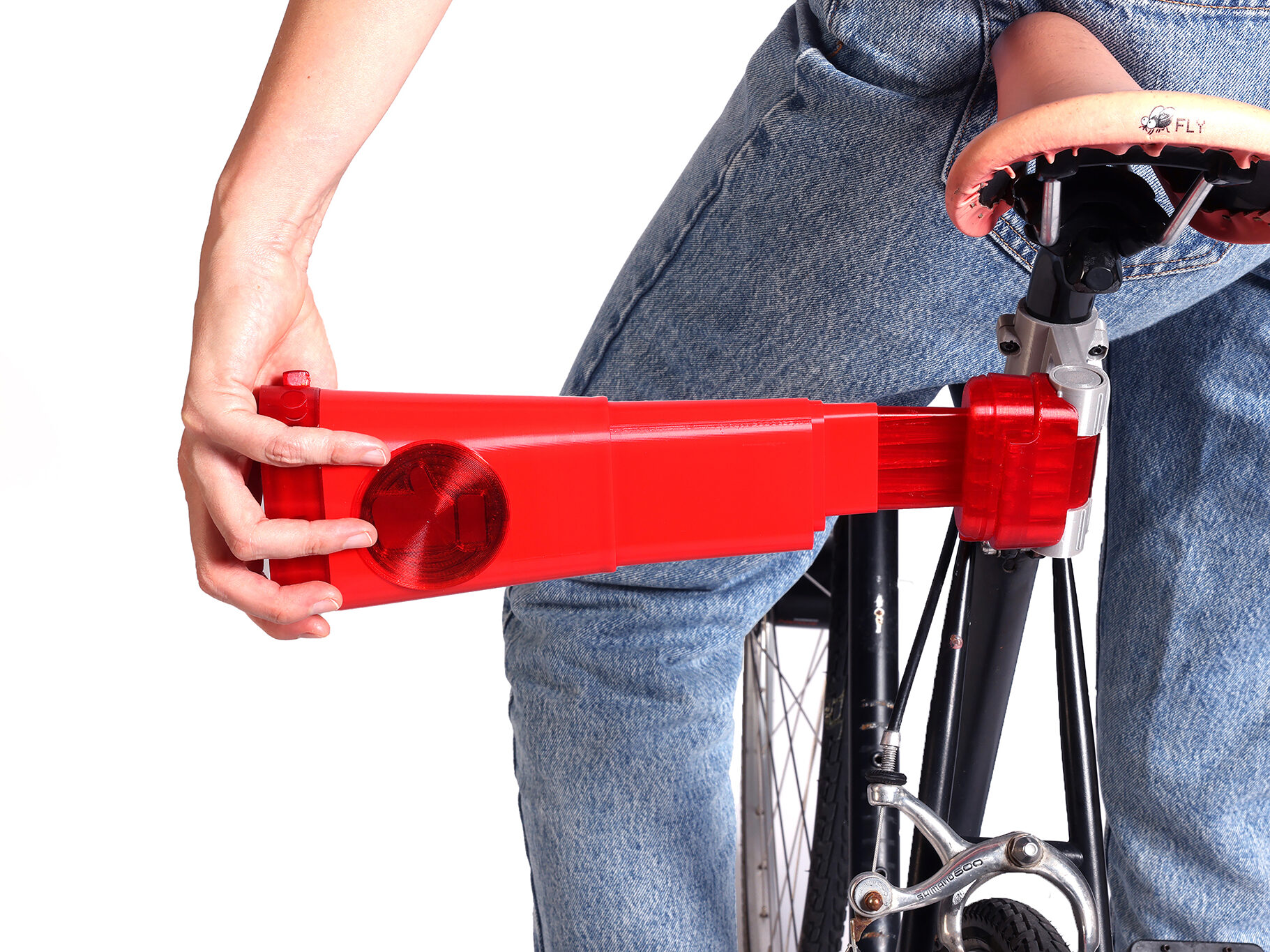
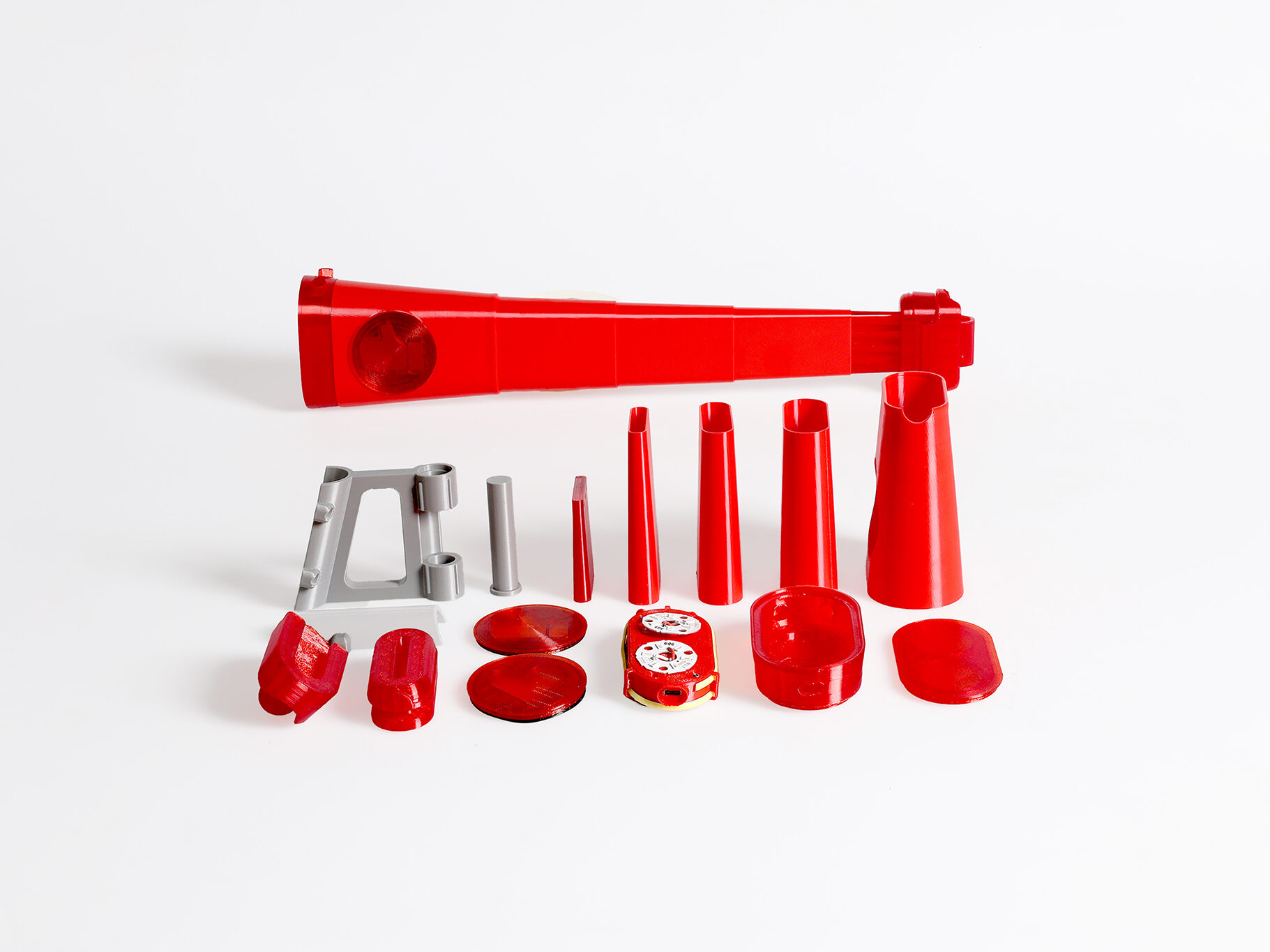
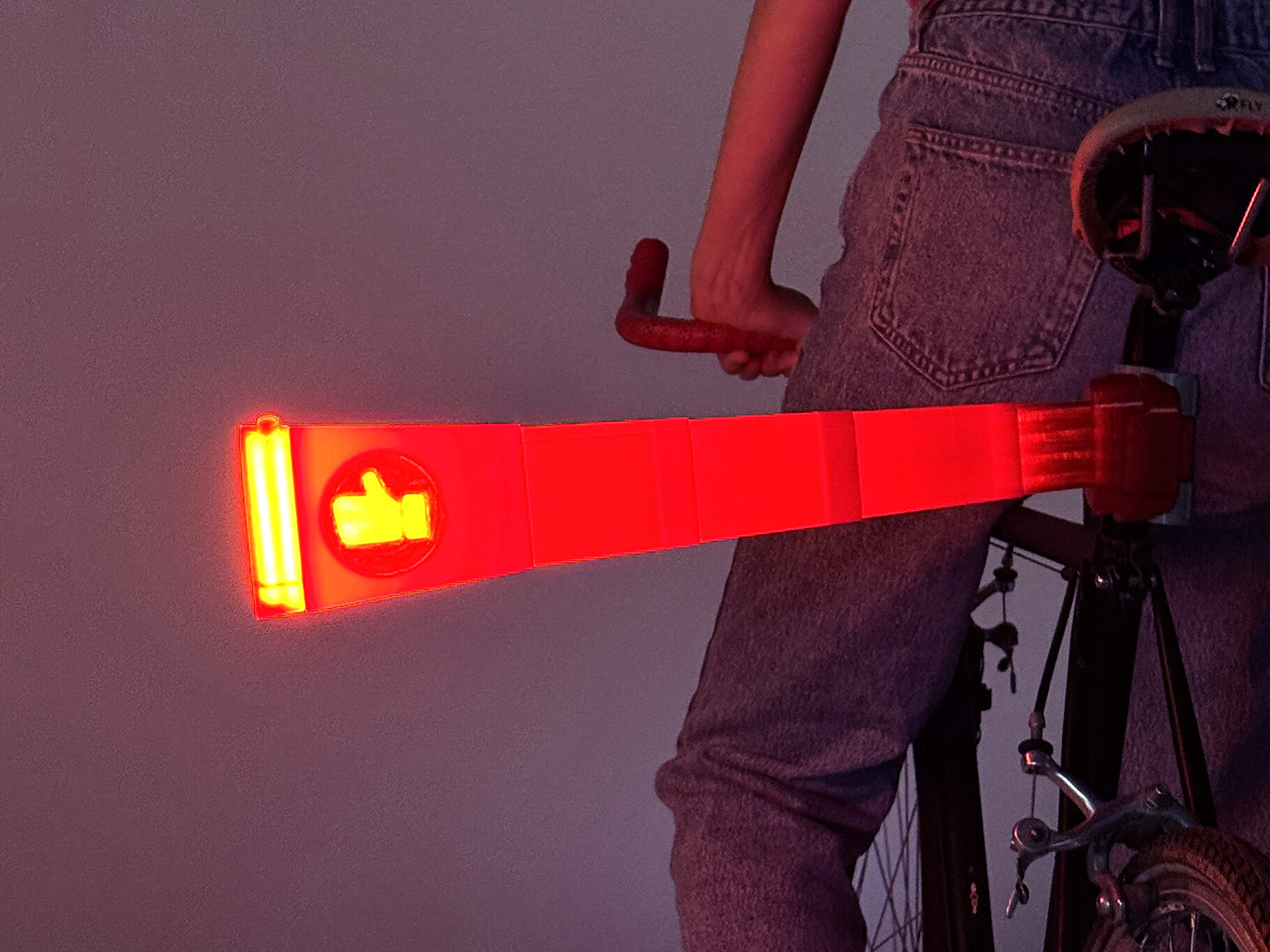
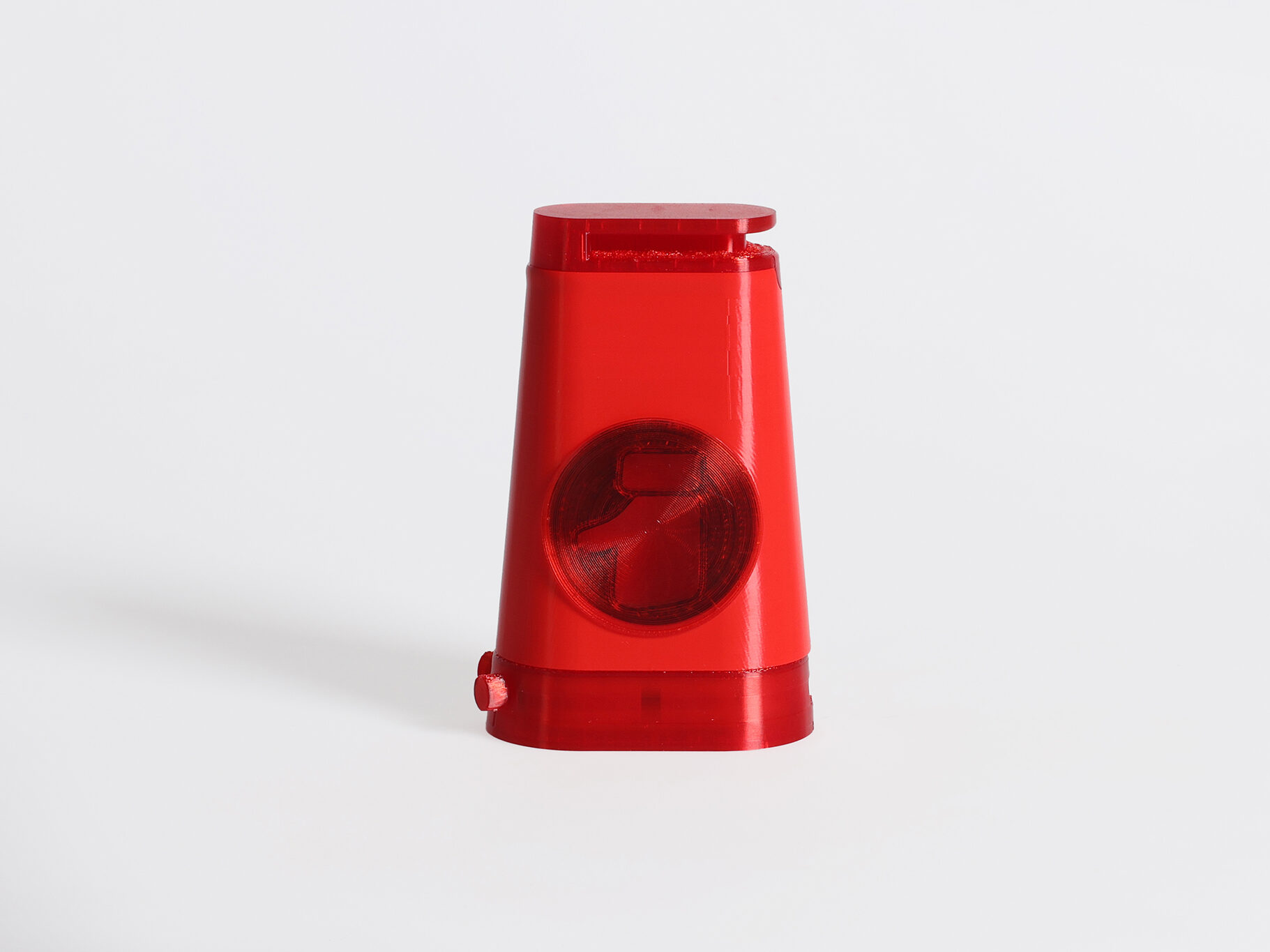
ThanX ist eine innovative Fahrradlampe mit integriertem Abstandhalter, die Sicherheit und positive Kommunikation beim Radfahren vereint.

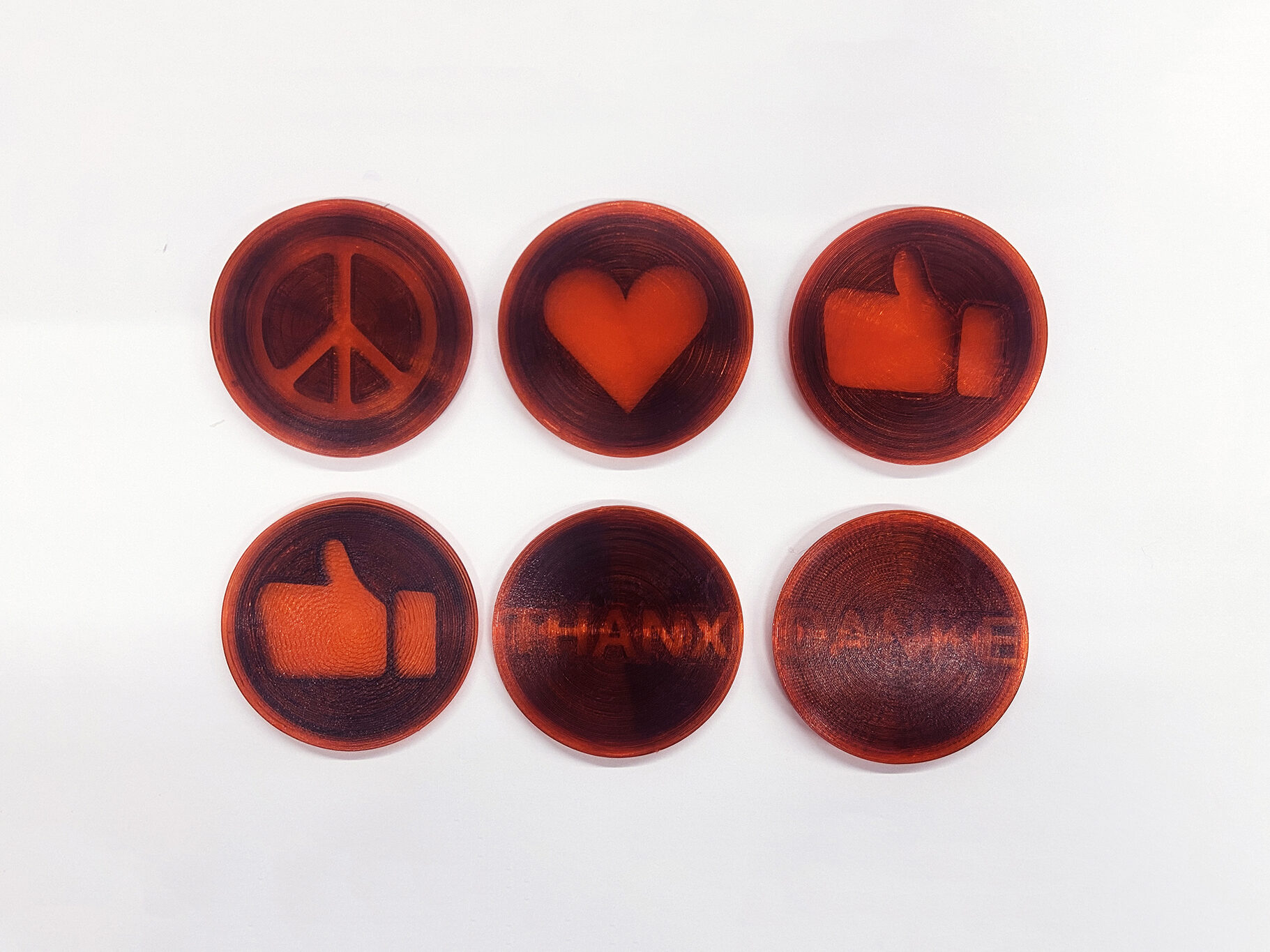
Beim Ausziehen nach links erscheint eine austauschbare Grafik – Herz, Peace, Like, „DANKE“ oder „ThanX“ – um Autofahrenden Dankbarkeit zu zeigen und sie daran zu erinnern, Radfahrende mit sicherem Abstand zu überholen.

Entwickelt wurde das Objekt, um das Sicherheitsgefühl zu stärken, da sich 77 % der regelmäßig Radfahrenden in Deutschland beim Überholen unsicher fühlen.

ThanX verbindet Funktionalität mit positiver Interaktion im Straßenverkehr.

ThanX is an innovative bicycle light with an integrated distance spacer that combines safety and positive communication while cycling.

When extended to the left, it reveals an interchangeable graphic – a heart, peace sign, thumbs-up, “THANK YOU,” or “ThanX” – to express gratitude to drivers and remind them to overtake cyclists at a safe distance.

The product was developed to strengthen cyclists’ sense of safety, as 77% of regular cyclists in Germany report feeling unsafe when being overtaken.

ThanX merges functionality with positive interaction in road traffic.

Betreut durch: M. Hahn, H.Neumann, J. Ribler

SALUTO – Roya Haupt | BA 2025

SALUTO

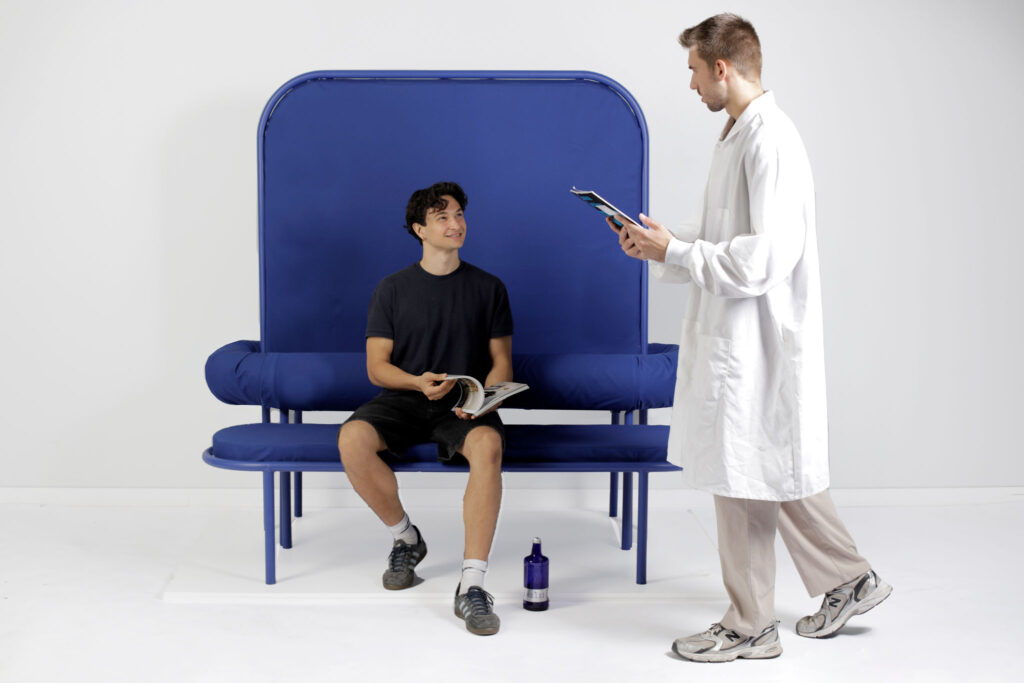
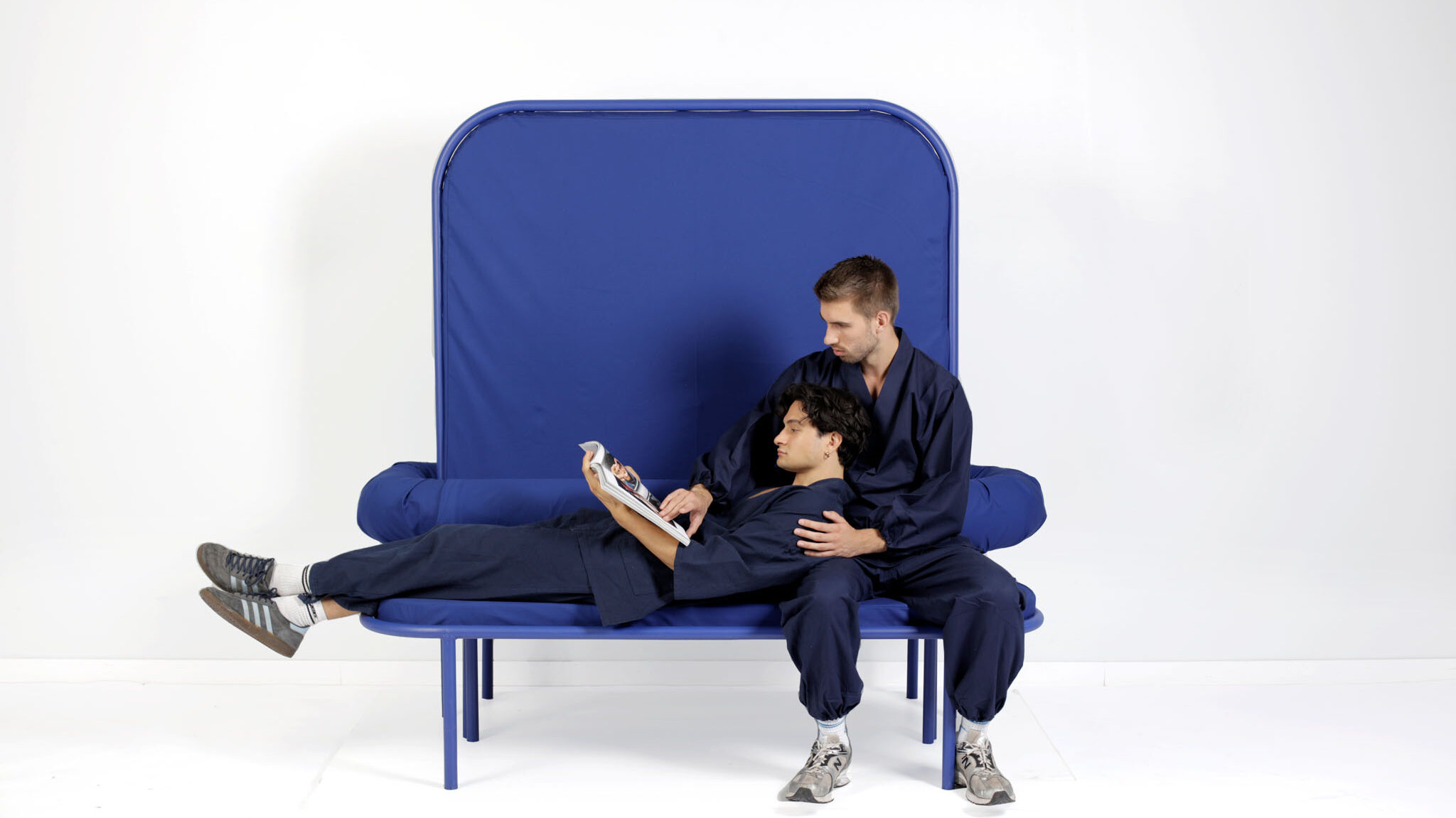
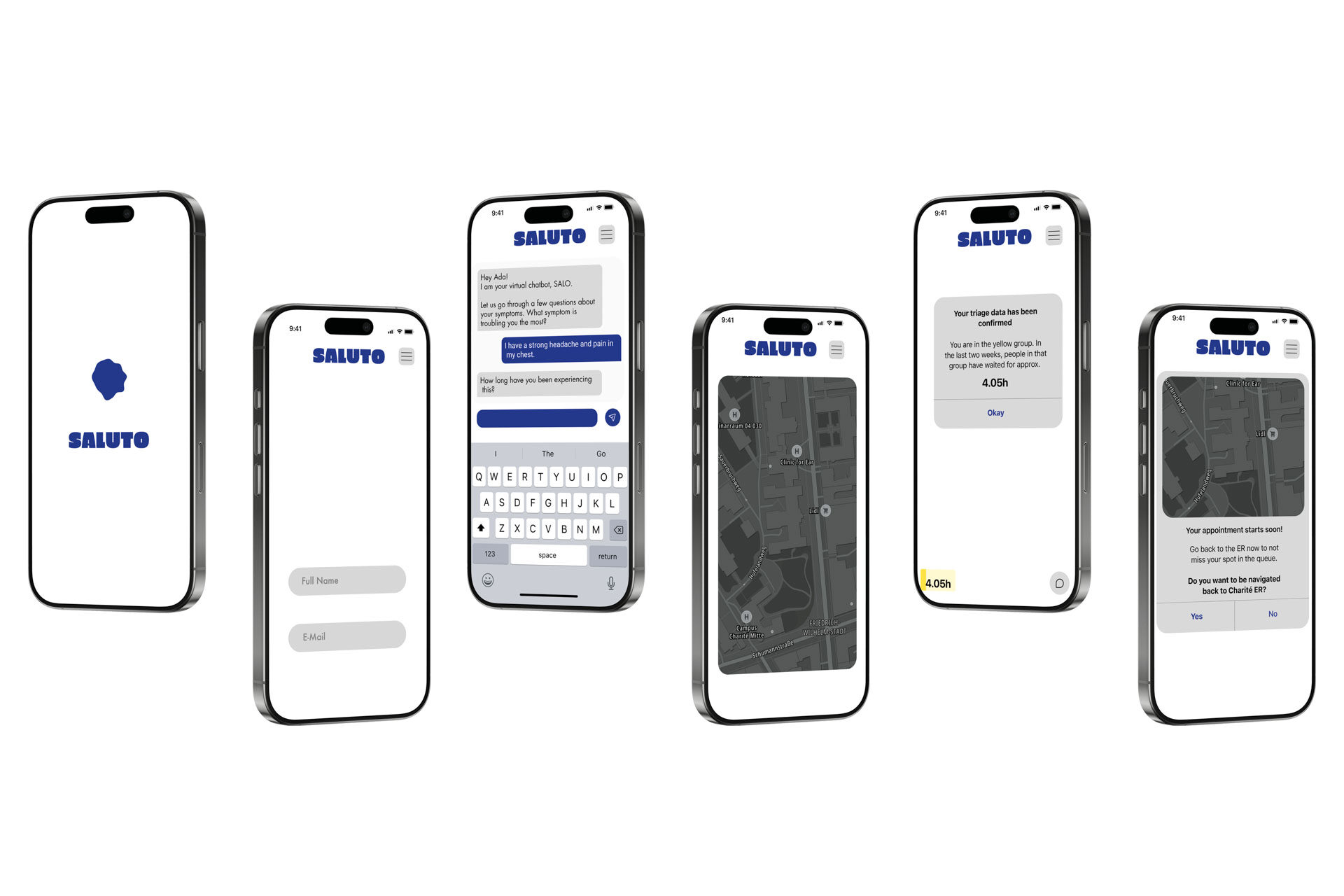
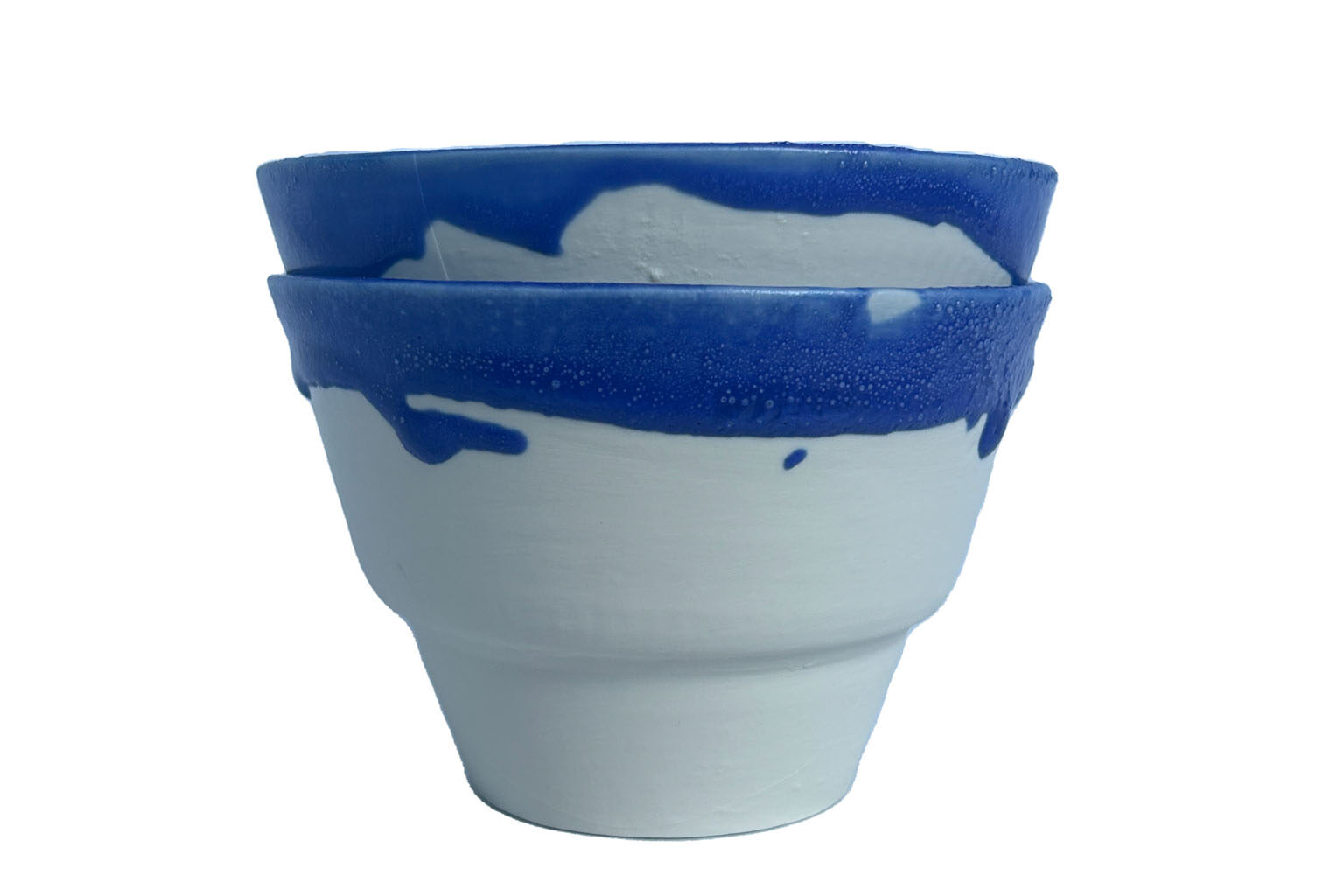
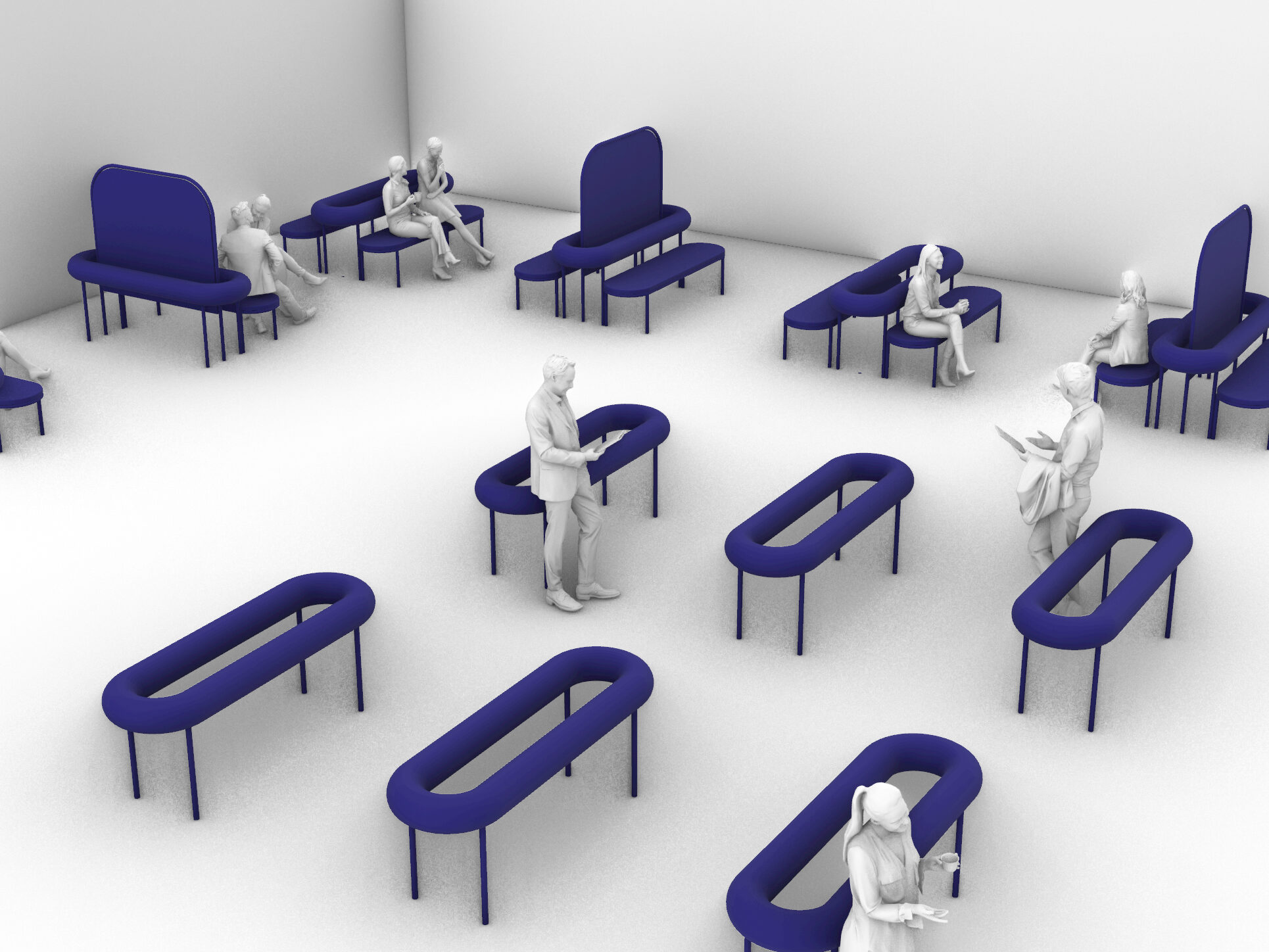
SALUTO ist eine spekulative Lösung für das deutsche Krankenhaussystem in drei Teilen:

Die App leitet Patient:innen durch die Anamnese, Wartezeit und Krankenhausaufenthalt, verwaltet ihre Gesundheitsdaten und informiert transparent. Durch integrierte KI-Tools sparen Behandelnde Zeit und Nerven und marginalisierte Gruppen erhalten bessere Gesundheitsversorgung. 

Die Möbelserie steht im Wartezimmer der Notaufnahme, ist auf verschiedenste Bedürfnisse angepasst, modular und konfigurierbar. 

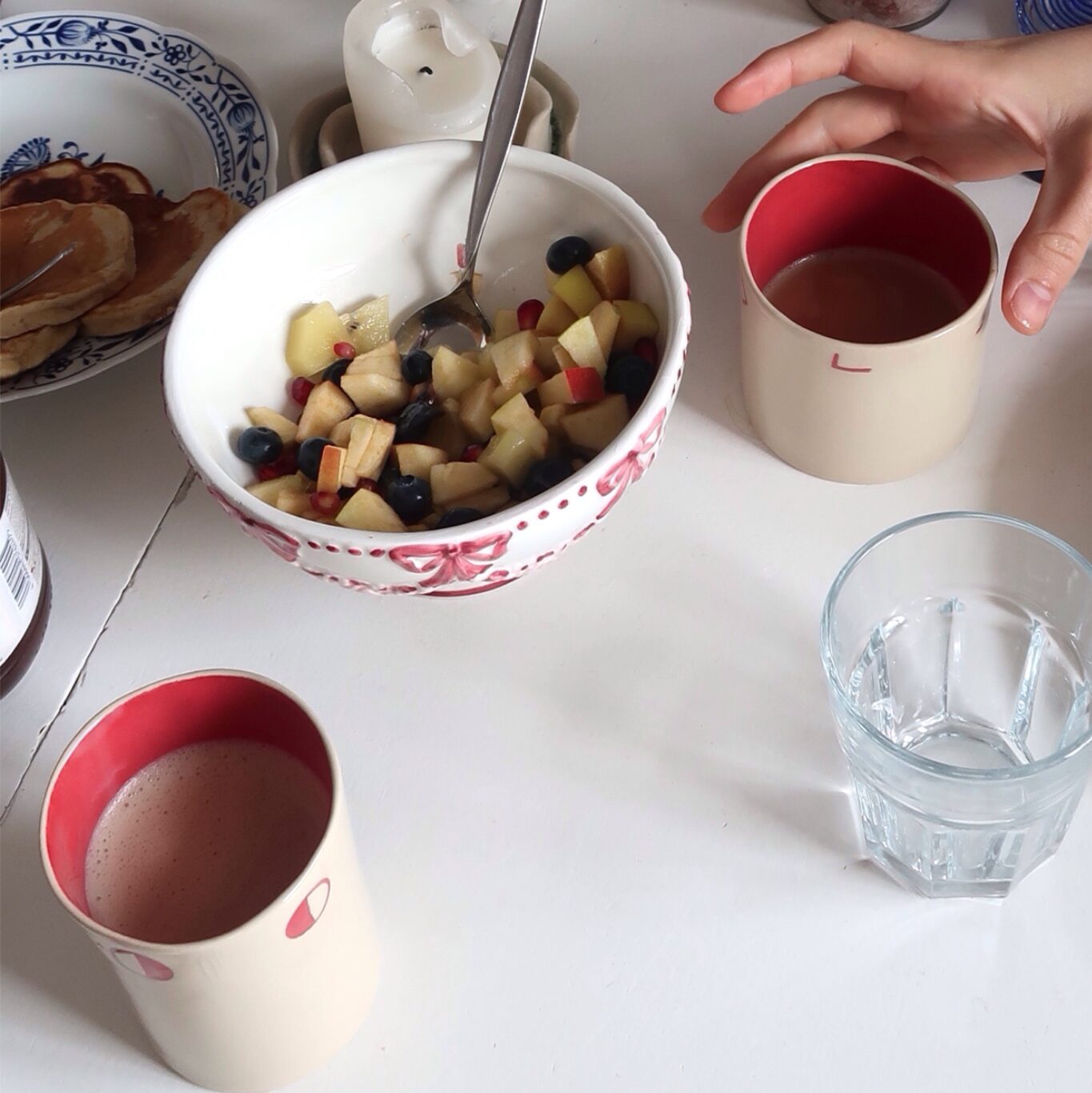
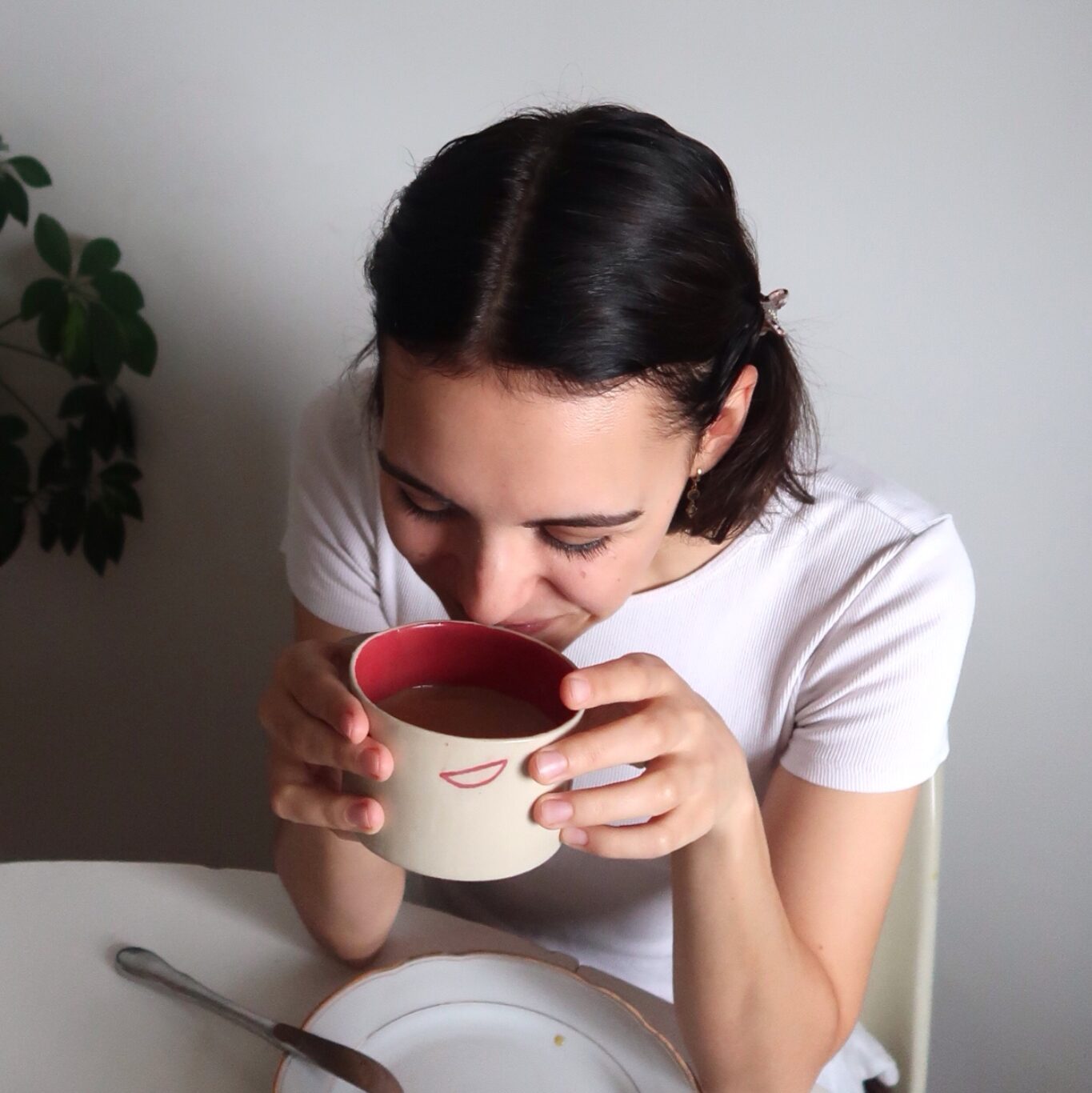
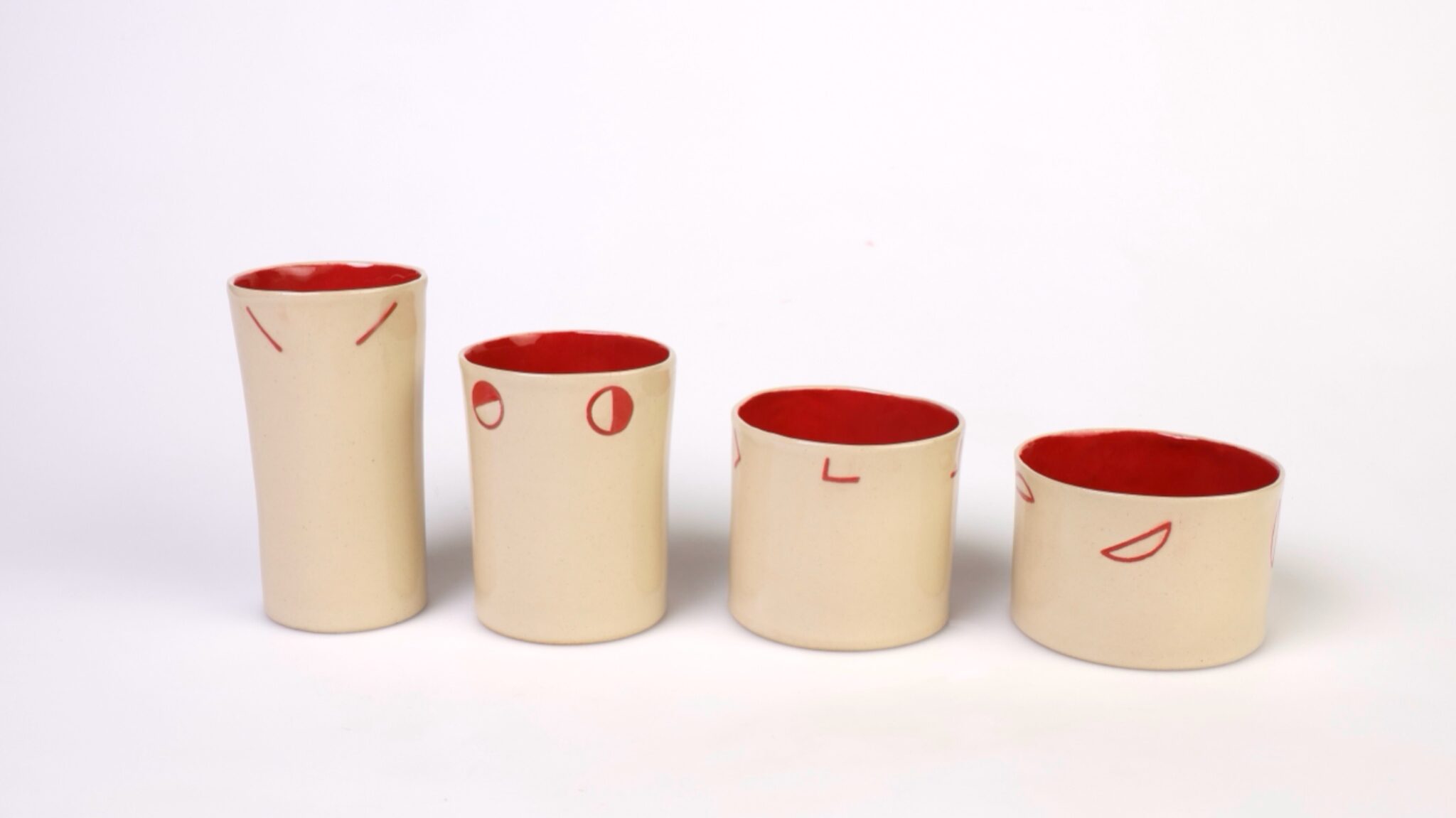
Eine komplementäre Keramikserie gibt Wartenden Selbstwirksamkeit und Würde, indem sie selbstständig Heißgetränke zubereiten können. 

SALUTO is a speculative solution for the German hospital system in three parts:

The app guides patients through their hospital stay,  communicates the waiting time, collects and manages their health data, and provides transparent information. Integrated AI tools save caregivers time and stress, through which marginalized groups receive better healthcare. 

The furniture series is made for the emergency waiting room. It is adapted to a wide range of needs, modular and adapts to different departments. 

A complementary ceramic series gives those waiting self-efficacy and dignity by allowing them to prepare hot drinks on their own. 

Prozess

Betreut durch: M.Hahn, H.Neumann, L. Henneberger

IM (PERFEKT) | JONAS SPIEKER | MA 2025

IM (PERFEKT) | JONAS SPIEKER | MA 2025


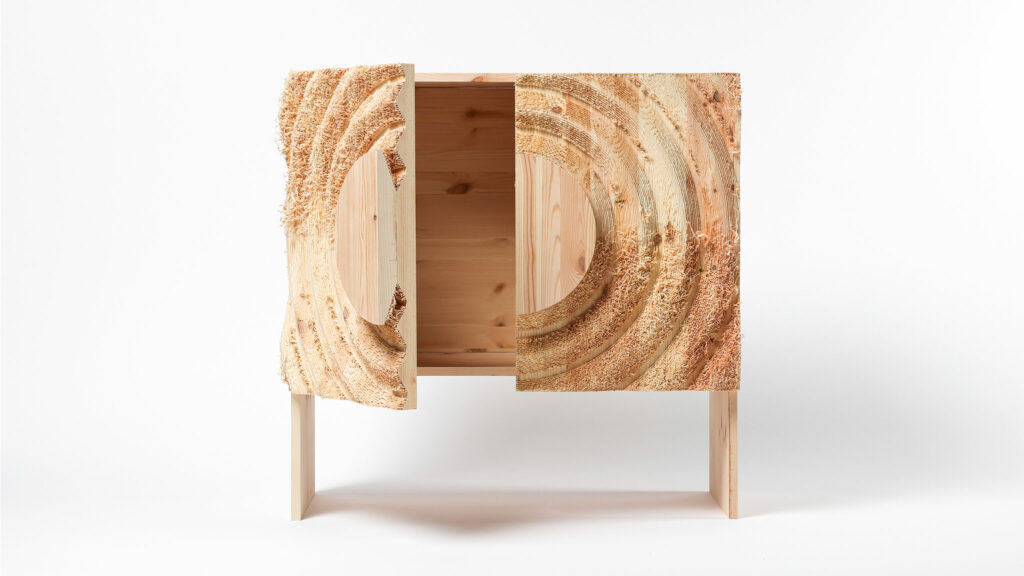
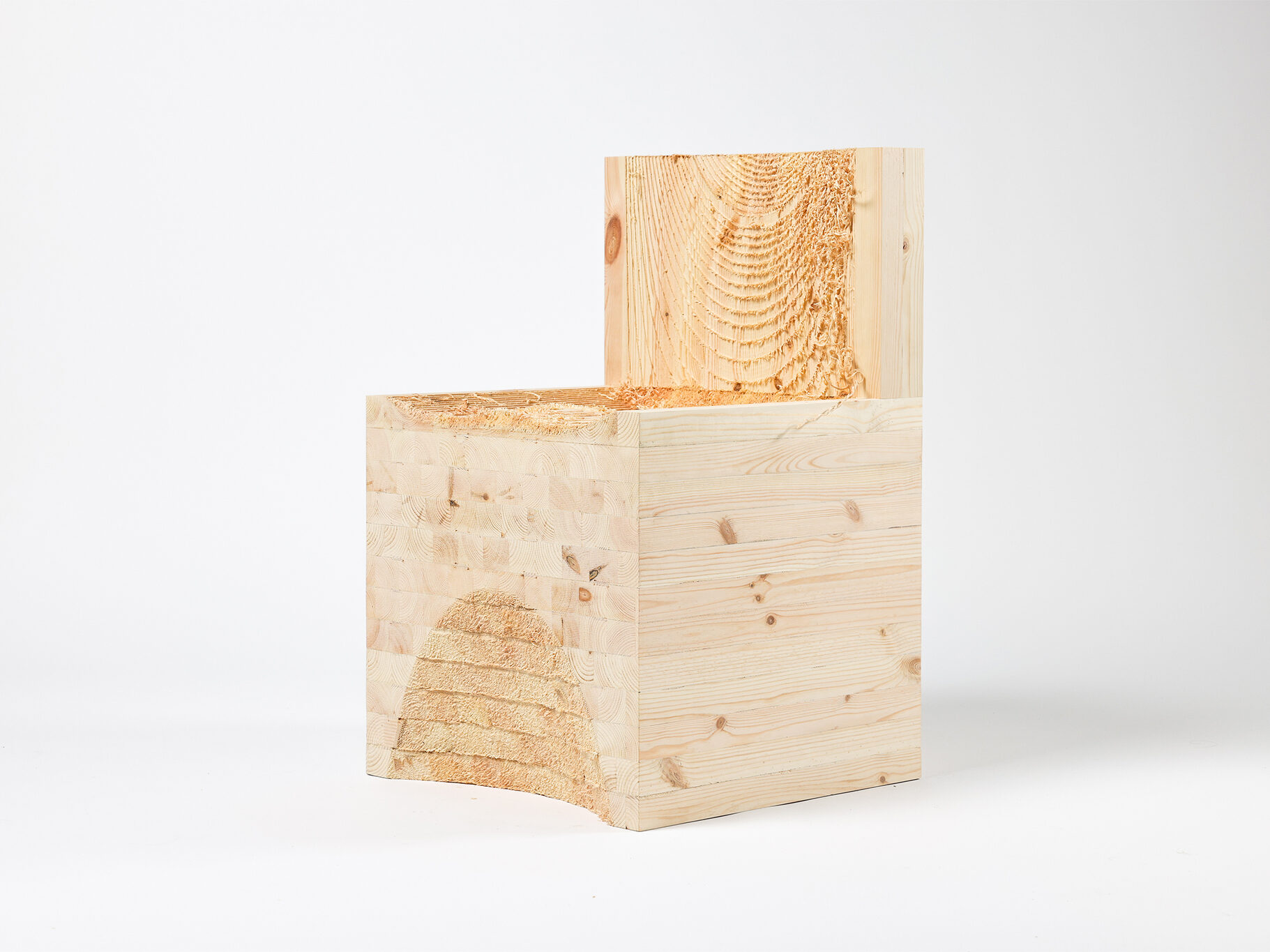
Die Arbeit „(Im) Perfekt“ untersucht, wie Imperfektion gezielt im industriellen Prozess eingesetzt werden kann.

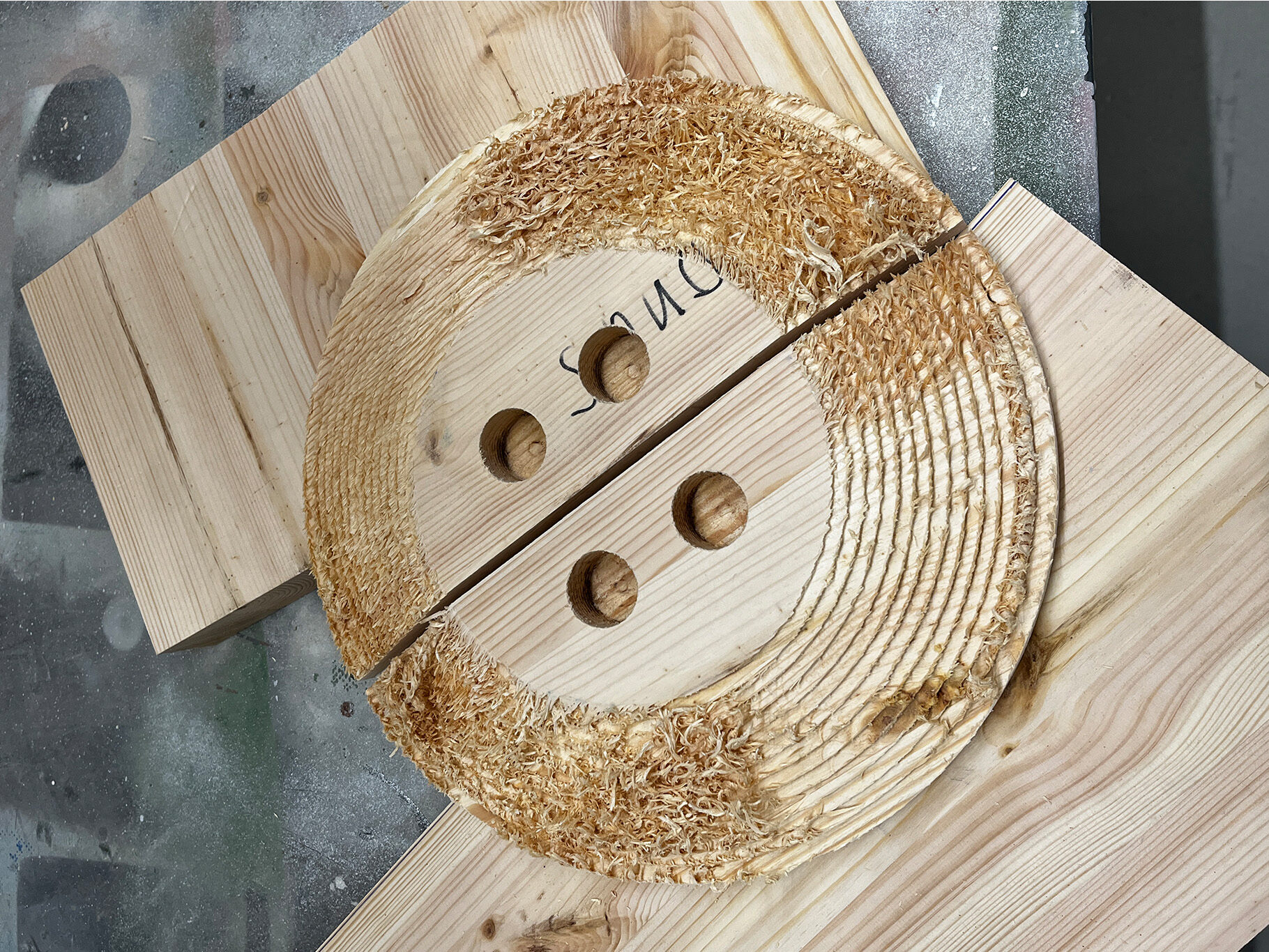
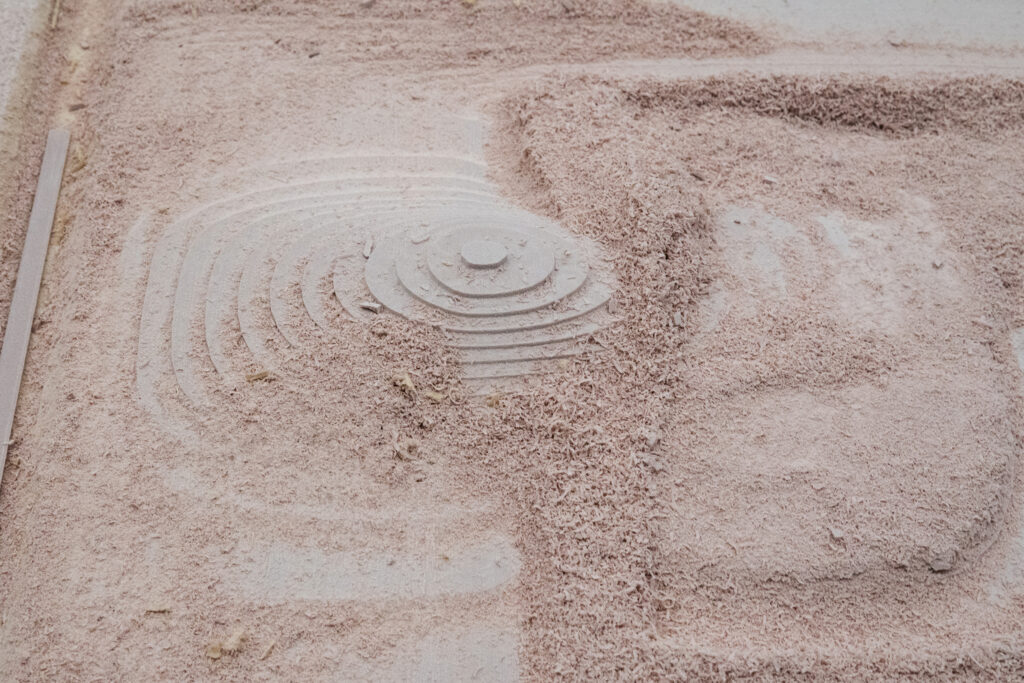
Statt perfekter, austauschbarer Oberflächen Nutzt das Projekt die Eigenheiten des CNC Fräsen und macht den Herstellungsprozess sichtbar. Das übliche Schlichten entfällt, sodass eine fransenartige Textur des nur geschruppten Fichtenholzes bleibt. Entstanden sind drei Objekte: ein Sideboard mit großen Flächen und haptischen Griffen, ein Beistelltisch mit wellenförmigem Sockel und ein Stuhl, dessen funktionale Flächen bewusst unvollkommen bleiben. So entstehet eine neue Ästhetik die die Erwartungshaltung an perfekte, industriell gefertigte Objekte hinterfragt

The project „(Im) Perfekt“ explores how imperfection can be deliberately integrated into industrial
production.

Instead of creating perfect, interchangeable surfaces, it uses the specific qualities of CNC milling to make the manufacturing process visible. The usual finishing step i s omitted, leaving a fringed texture of roughly milled spruce wood. The result is three objects: a sideboard with large surfaces and tactile handles, a side table with a wave shaped base, and a chair whose functional areas intentionally remain imperfect. This creates a new aesthetic that challenges expectations of perfect, industrially produced objects.


Prüfer*innen
I.Hans, H.Neumann, L Henneberger

Prozess


BLAUMANN | BENCE RIDDER | MA 2025

BLAUMANN | BENCE RIDDER | MA 2025


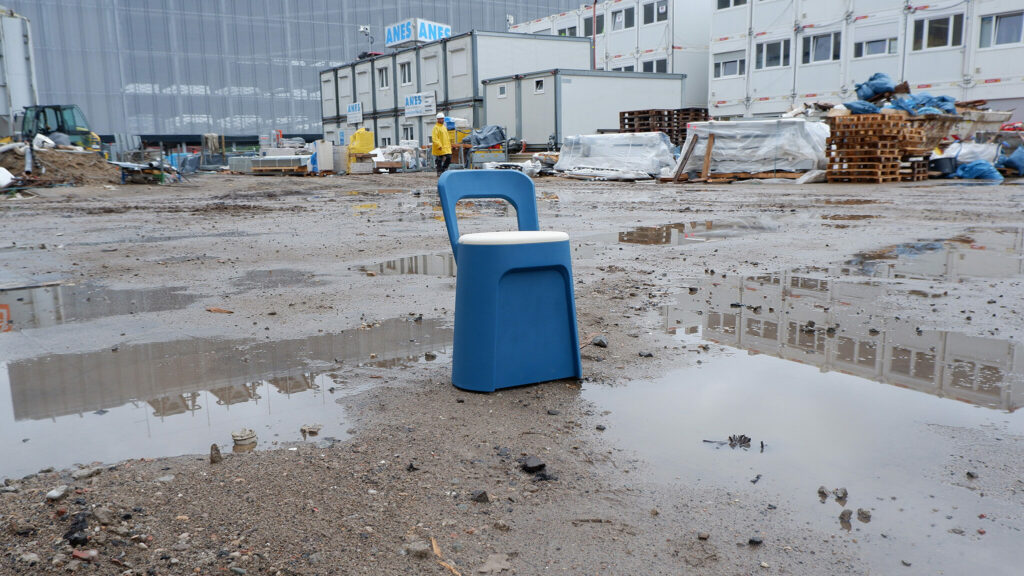
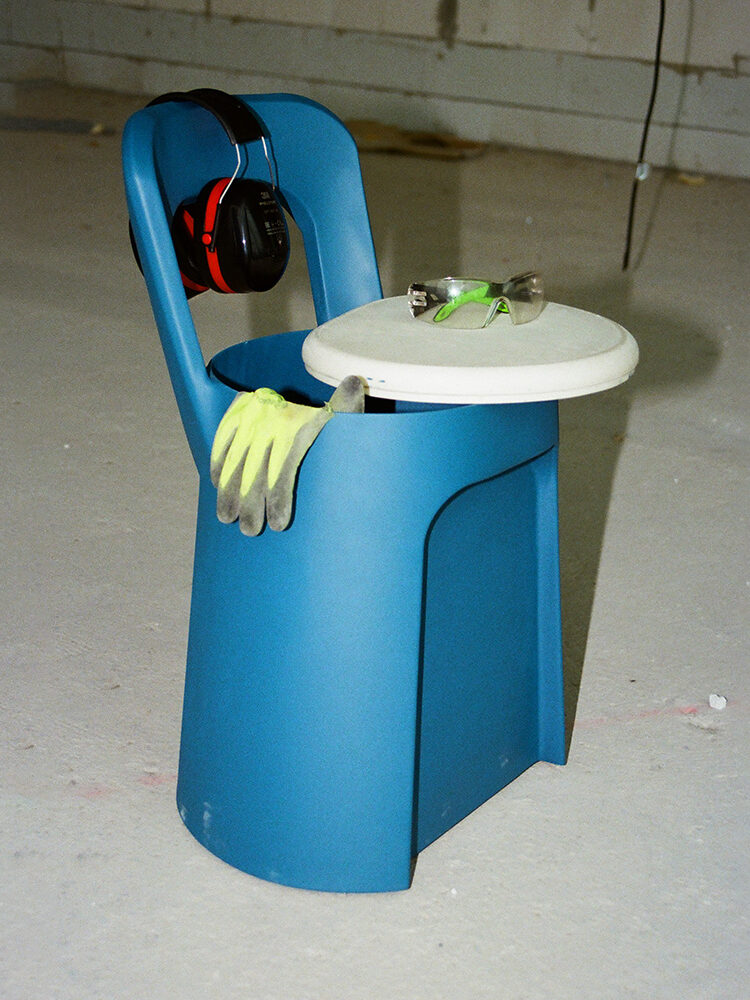
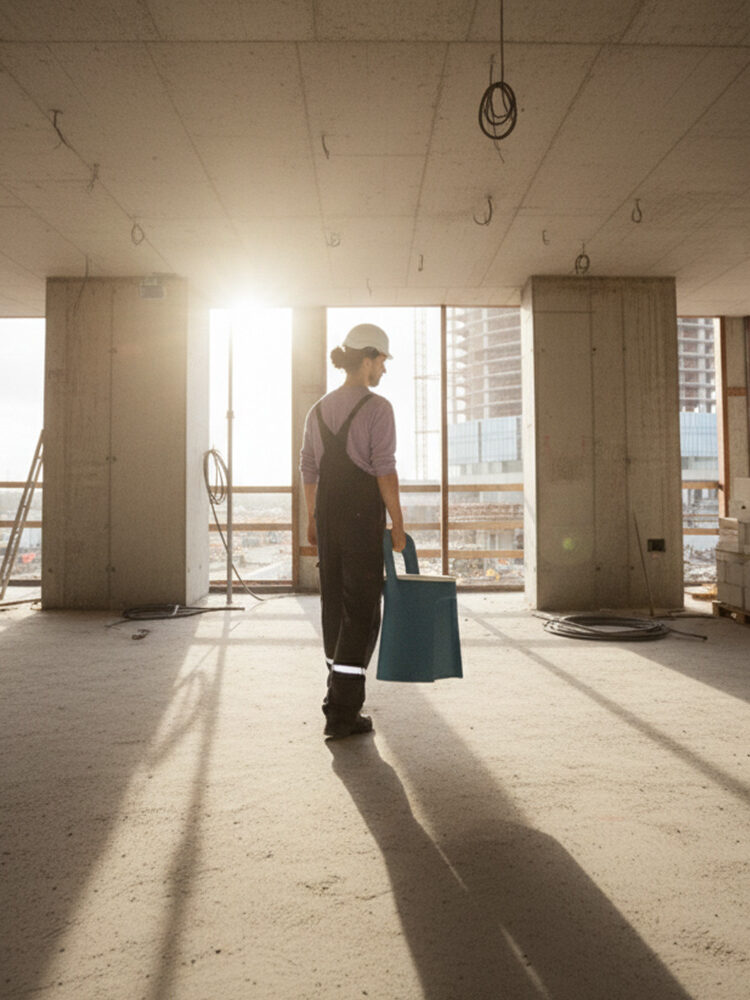
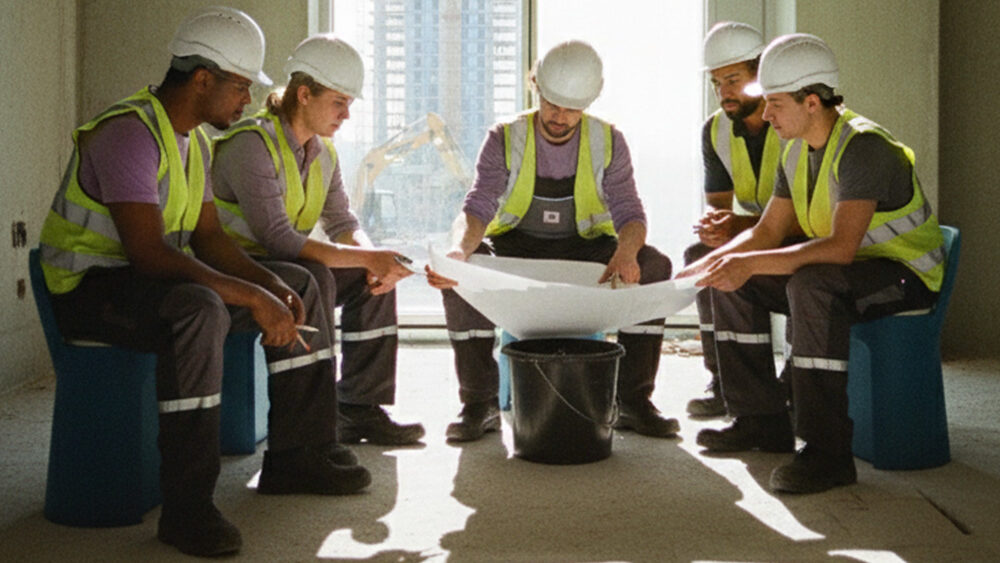
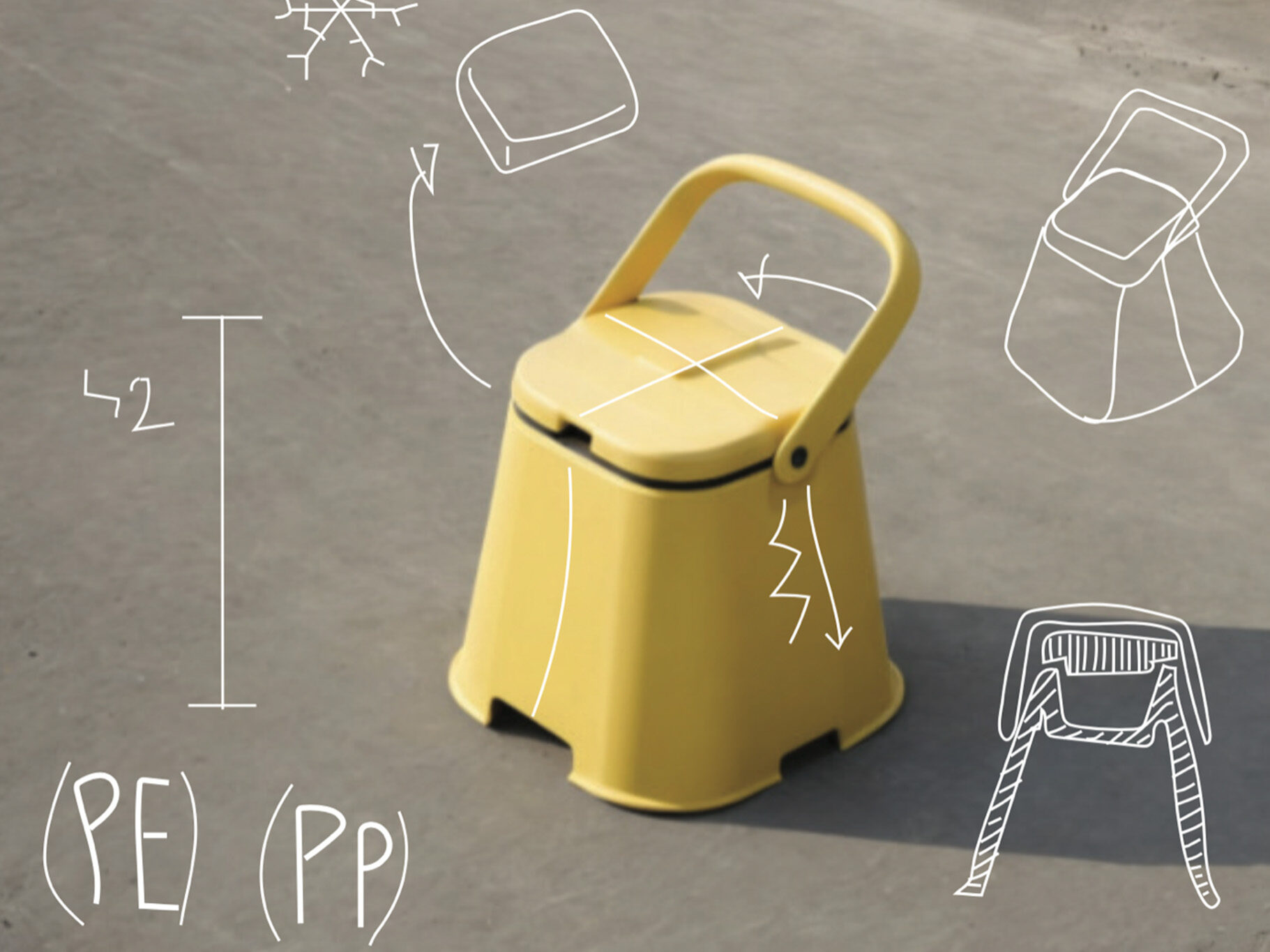
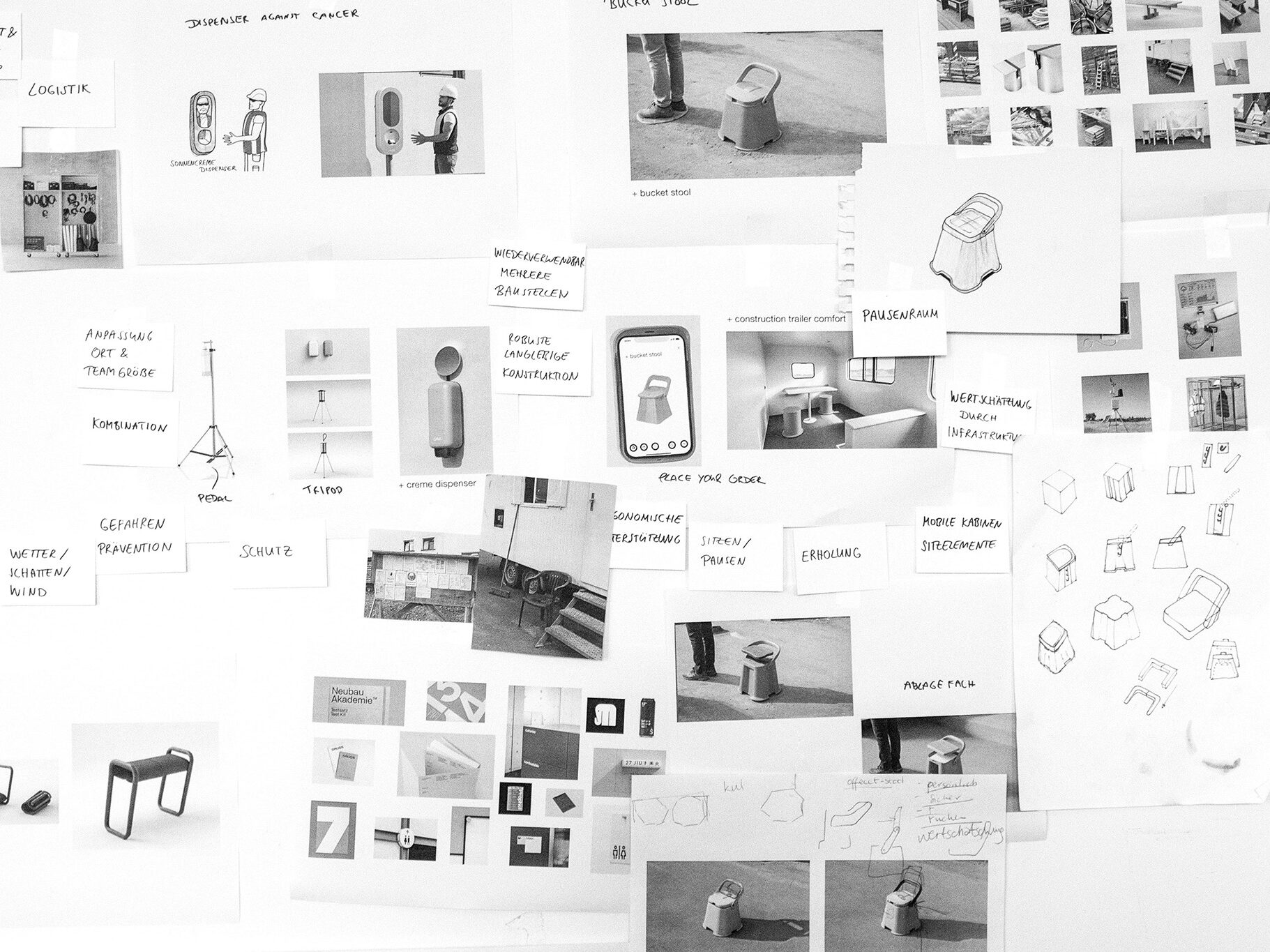
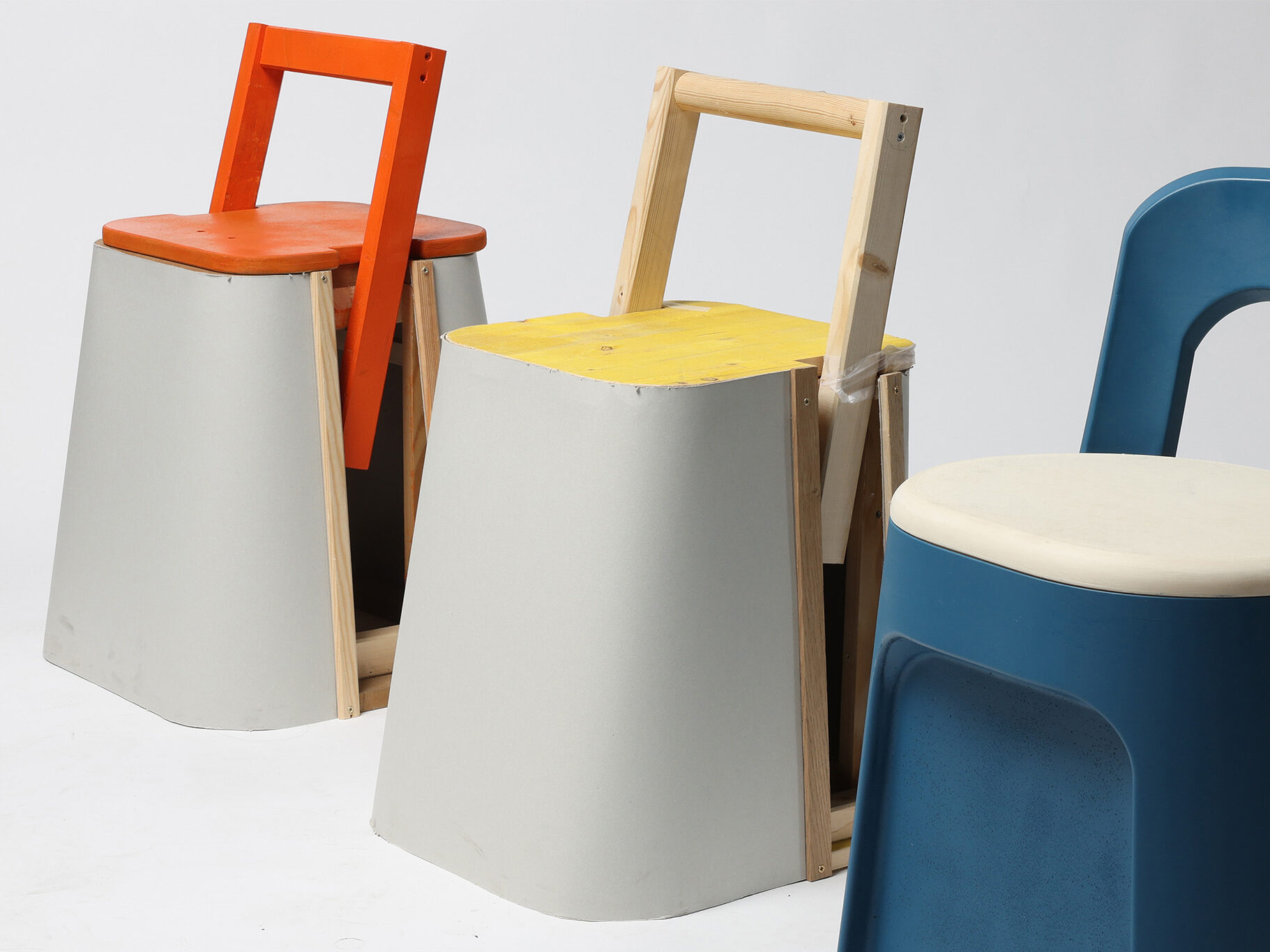
Der Hocker „Blaumann“: Design für die humane Baustelle.

Die Masterarbeit analysiert, inwiefern Design zur Humanisierung von Baustellen beitragen kann. Unter Berücksichtigung eines europäischen Bezugsrahmens und spezifischer deutscher Fallstudien wird festgestellt, dass das Wohl der Arbeiter im rauen Arbeitsumfeld häufig außer Acht gelassen wird.

Als Lösung wurde der „Blaumann“, ein multifunktionales Sitzmöbel, entwickelt. Dieser verbindet Bequemlichkeit mit Funktionalität und demonstriert somit, wie Design eine neue, menschenzentrierte Kultur fördern kann.

The „Blaumann“ Stool: Design for a Humane Construction Site.
The master’s thesis examines how design can make construction sites more humane. Drawing on a European context and specific German case studies, it notes that worker well-being is often neglected in the tough working environment.

As a solution, the „Blaumann“ was developed, a multifunctional stool. It combines comfort and function, showing how design can foster a new culture that puts people at its center.


Prüfer*innen
I.Hans, M. Hahn, J.Ribler

Prozess


SCHTÛBAT | NIKLAS RECHFELDEN | MA 2025

SCHTÛBAT | NIKLAS RECHFELDEN | MA 2025

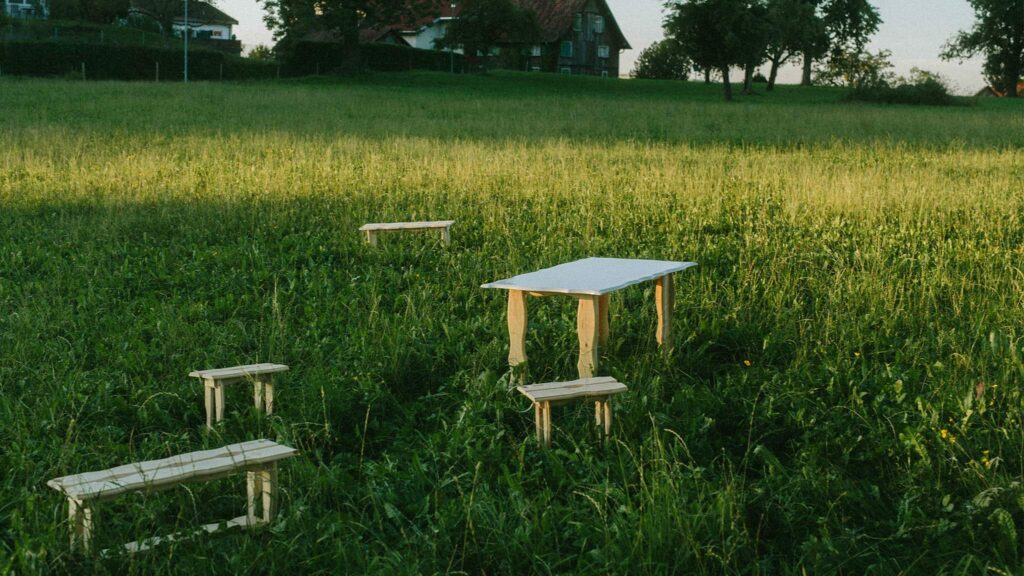
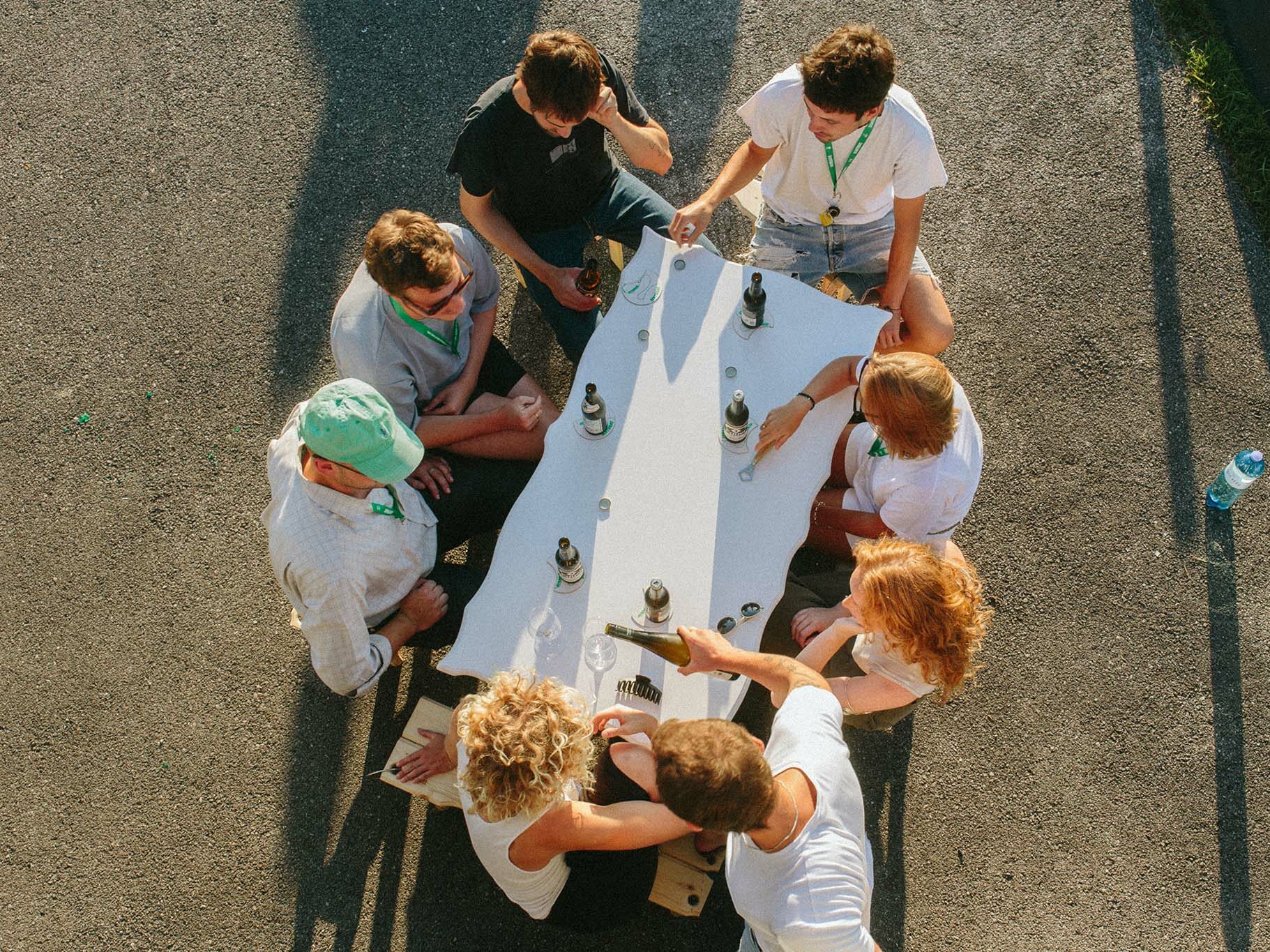
Mit SCHTÛBAT setzt sich Niklas Rechfelden mit der Tradition des Stammtischs auseinander, einer Kultur, die eng mit dem Gasthaus verbunden ist. Gasthäuser waren über Generationen das Herz vieler Dörfer – Orte für Gemeinschaft, Austausch und Politik.

Heute verschwinden sie zunehmend, und mit ihnen der Stammtisch. Für Rechfelden war das Gasthaus immer mehr als ein Ort zum Essen; es war Raum für Begegnung, Diskussion, Streit und ungezwungenes
Zusammensein. Studien zeigen, dass nur noch 18 % der Deutschen sich wöchentlich mit Freund:innen treffen, besonders unter 35-Jährigen, während
zwei Drittel mehr reale Begegnungen wünschen. Lukas Mraz beschreibt das Wirtshaus als demokratischen Ort zwischen sozialer Notwendigkeit, kulturellem Auftrag und ökonomischen Zwängen. Heidi Reichinnek betont den Wert von Orten, an denen Debatten geführt und Gemeinschaft erlebt werden kann.
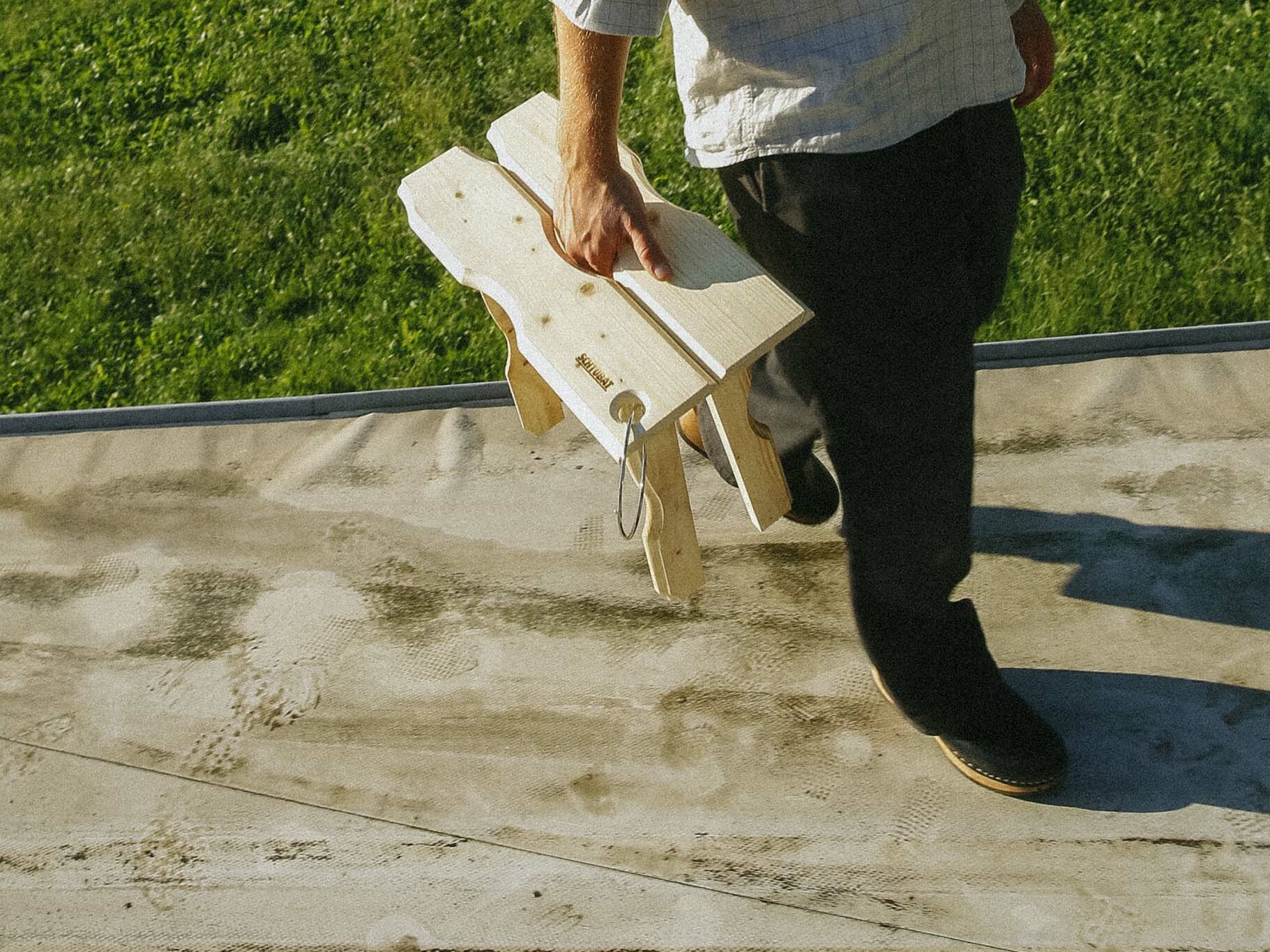
SCHTÛBAT reagiert auf diese gesellschaftliche Notwendigkeit.Die Möbel übersetzen diese Idee: Bänke, Hocker und Tische sind flexibel kombinierbar
und ermöglichen unterschiedliche Szenarien des Zusammensitzens. Die „Dazuhock-Botschaft“ erlaubt jederzeit, „dazuzuhocken“ und Teil der
Gemeinschaft zu werden.

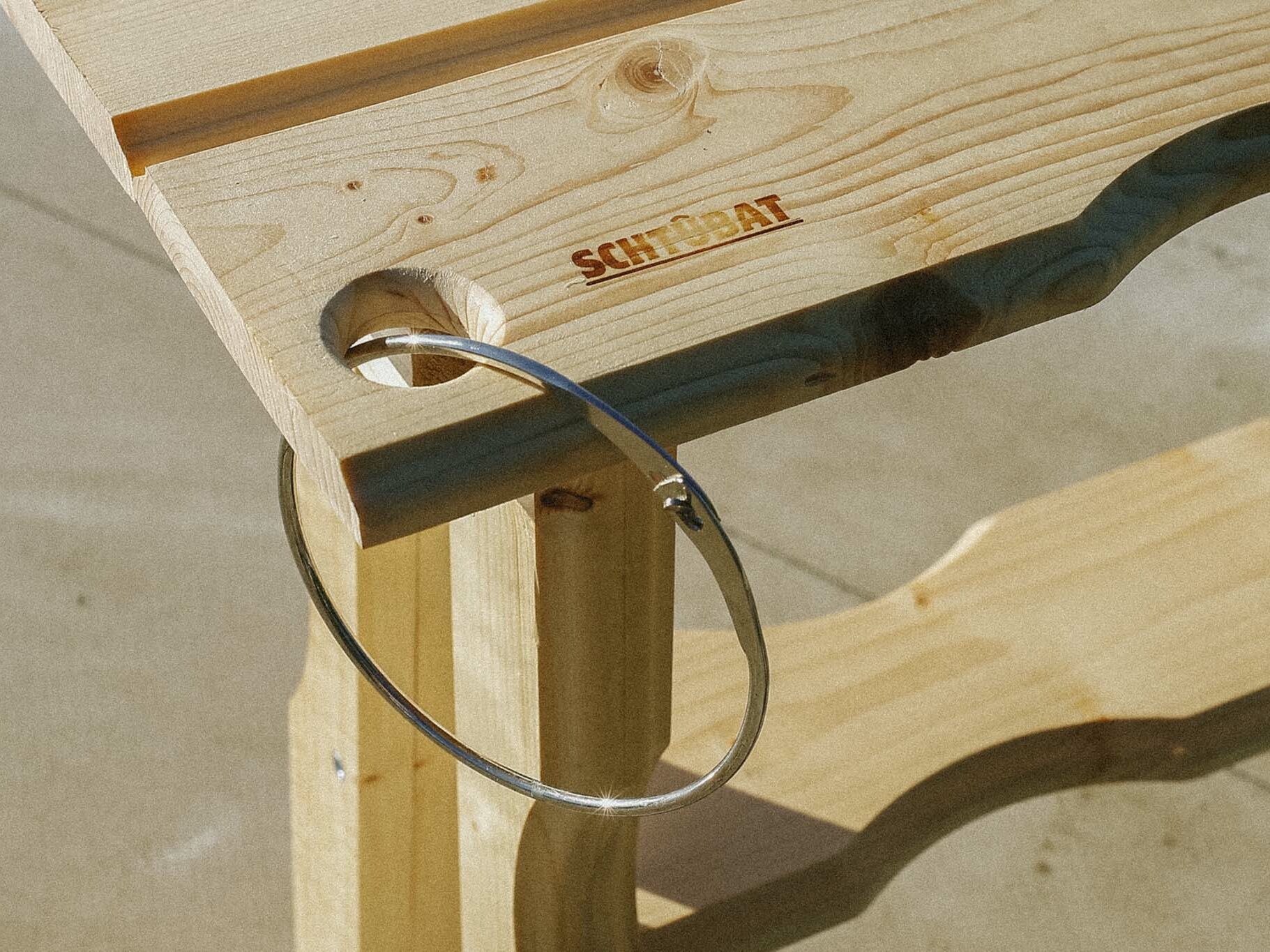
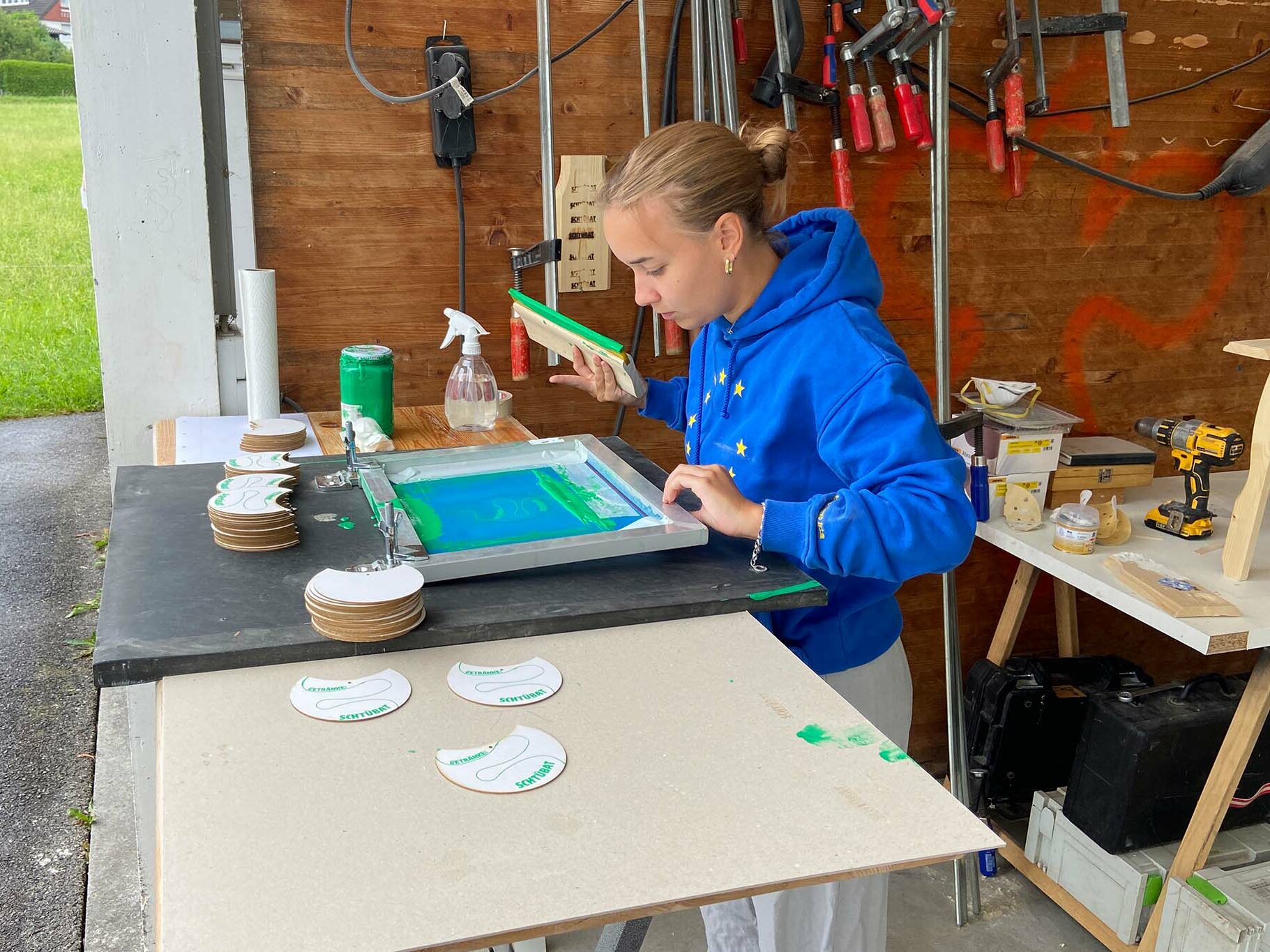
Die Materialwahl unterstreicht die Ortsgebundenheit. Rechfelden arbeitet mit Balkonbrettern aus Fichte, die im deutschsprachigen
Raum überall als Halbzeug erhältlich sind. Für die Möbel wählte er Bretter aus Berlin und Vorarlberg, deren Formen regionale Charakteristika widerspiegeln.
Die Balkonbretter inspiriert die Gestaltung und verleiht den Möbeln lokale Identität. SCHTÛBAT ist mehr als Möbel: Es ist Konzept und Werkzeug zugleich, schafft Räume für Begegnung, Austausch und Reibung, macht Unterschiede
sichtbar und bietet ein analoges Gegenmodell zur digitalen Filterblase.

With SCHTÛBAT, Niklas Rechfelden explores the tradition of the Stammtisch, a culture closely linked to the inn. For generations, inns were the heart of many villages—places for community, exchange, and politics. Today, they are increasingly disappearing, and with them the Stammtisch. For Rechfelden, the inn was always more than just a place to eat; it was a space for encounters,
discussion, debate, and informal get-togethers. Studies show that only 18% of Germans still meet up with friends on a weekly basis, especially those under 35, while two-thirds would like to have more real-life encounters. Lukas Mraz describes the tavern as a democratic place between social necessity, cultural mission, and economic constraints. Heidi Reichinnek emphasizes the value of places where debates can be held and community can be experienced.
SCHTÛBAT responds to this social necessity. The furniture translates this idea:
benches, stools, and tables can be flexibly combined to enable different scenarios for sitting together. The “Dazuhock-Botschaft” (sit-down message)
allows people to “sit down” at any time and become part of the community.

The choice of materials underlines the local character. Rechfelden works with spruce balcony boards, which are widely available as semi-finished products in German-speaking countries. For the furniture, he chose boards from Berlin and
Vorarlberg, whose shapes reflect regional characteristics. The balcony boards inspire the design and give the furniture a local identity. SCHTÛBAT is more than just furniture: it is both a concept and a tool, creating spaces for
encounter, exchange, and friction, making differences visible, and offering an analog counter-model to the digital filter bubble.


Prüfer*innen
I.Hans, H.Neumann, L.Henneberger

Prozess


BEGINING | TIENLIANG CHOU | MA 2025

BEGINING | TIENLIANG CHOU | MA 2025

KLEINE BEWEGUNG, GROSSE WIRKUNG.
BEGINING hilft Menschen mit altersbedingtem Muskelabbau und sitzender Lebensweise, einfache, nachhaltige Mikroübungen in den Alltag zu integrieren.

Ein temperaturempfindlicher Sitzbezug erinnert die Nutzer*innen daran, sich zu bewegen, ein klappbares Holzmodul ermöglicht Liegestütze und Dehnübungen, und ein Aufklebersystem dokumentiert den Fortschritt.

Durch kleine, leicht umsetzbare Schritte werden Barrieren reduziert, Selbstvertrauen aufgebaut und die Bewegungshabitualisierung gefördert, wodurch die Grundlage für langfristige Gesundheit und eine nachhaltige Trainingsroutine geschaffen wird.

SMALL MOVEMENT MATTERS
BEGINING helps people with age-related muscle loss and sedentary lifestyles integrate simple, sustainable micro-exercises into daily life.

A temperature-sensitive seat cover reminds users to move, a foldable wooden module enables push-ups and stretches, and a sticker system tracks progress.

Through small, manageable actions, it reduces barriers, builds confidence, and fosters the habit of moving, laying the foundation for long-term health and a consistent exercise routine.

Prüfer*innen
M. Hahn, H.Neumann, J. Hille

Prozess

DESIGNING DIGNITY | MARIE KURSTJENS | MA 2025

DESIGNING DIGNITY | MARIE KURSTJENS | MA 2025

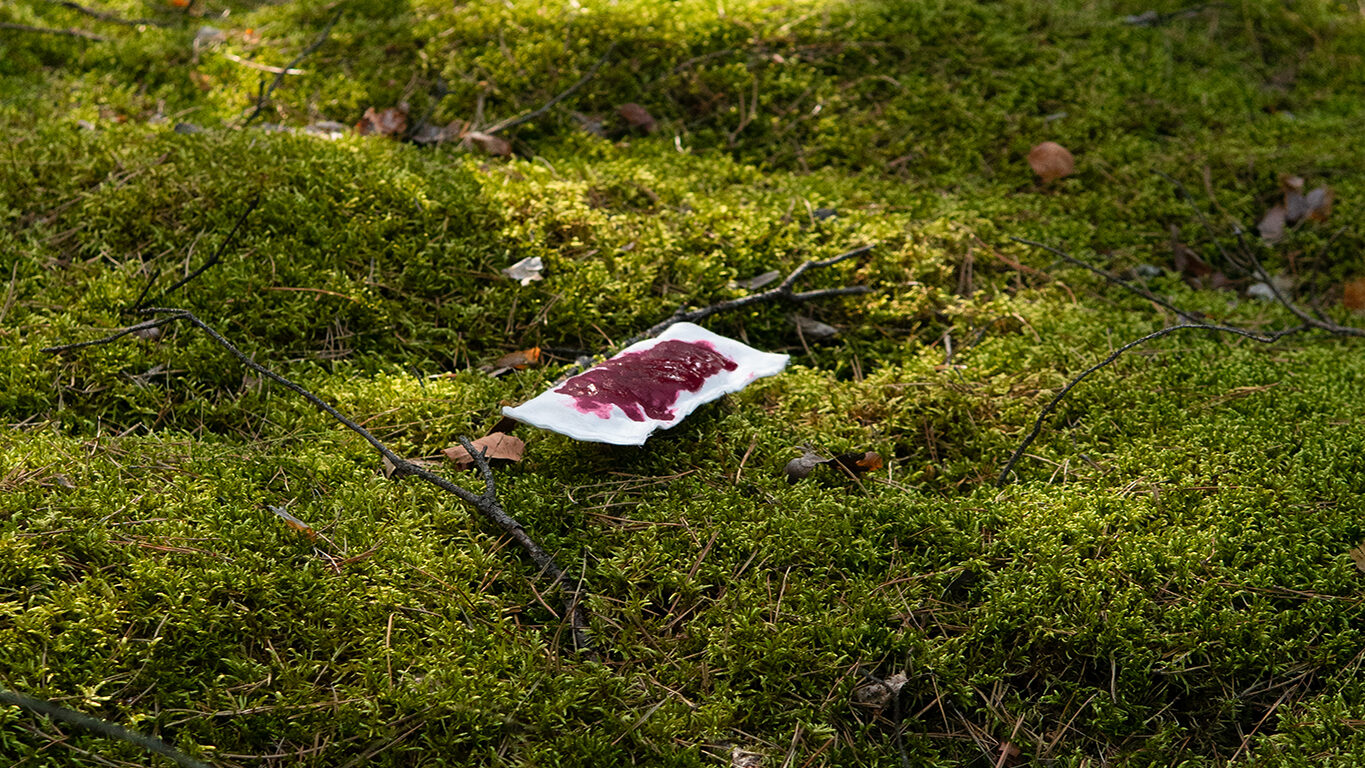
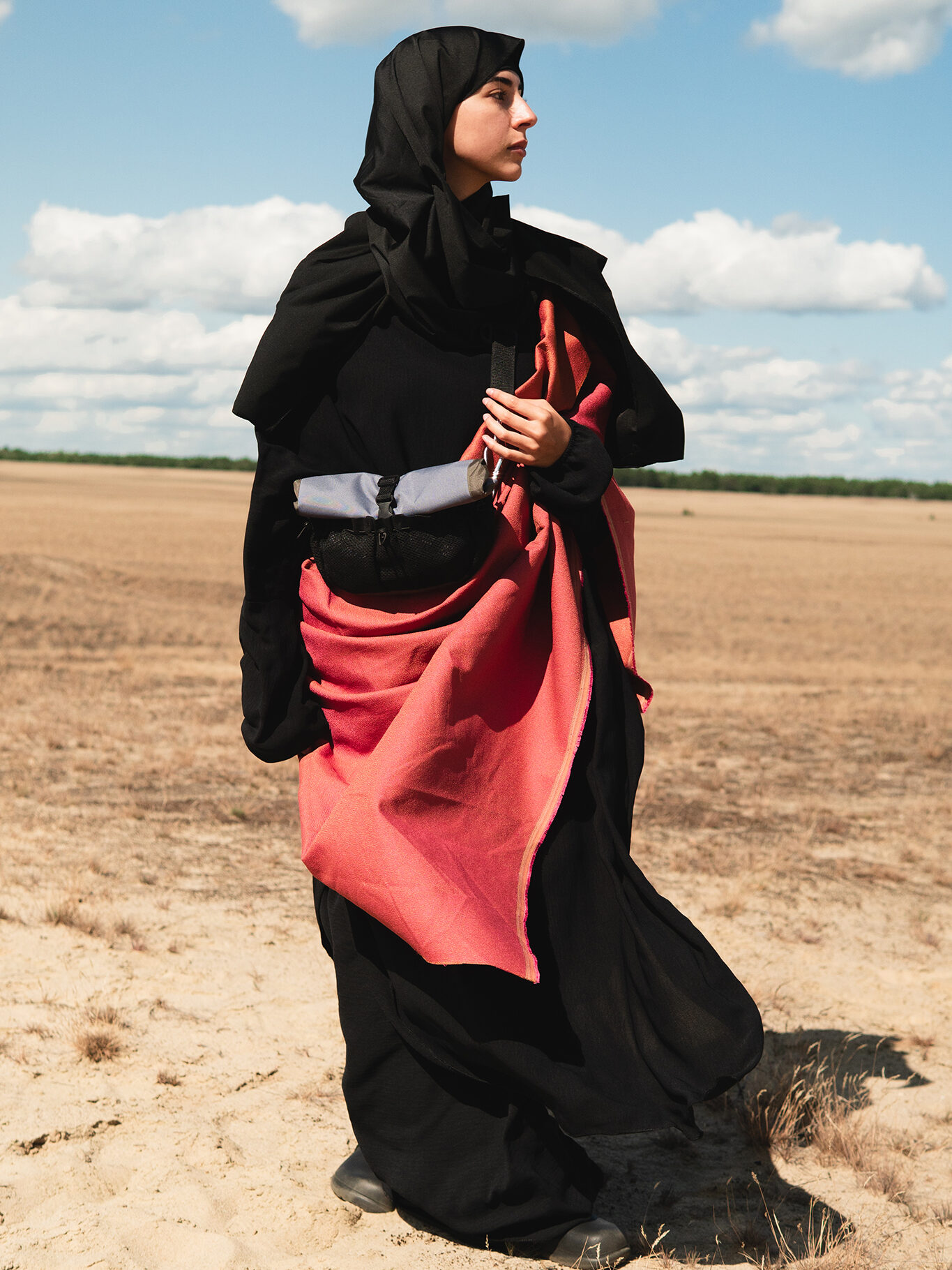
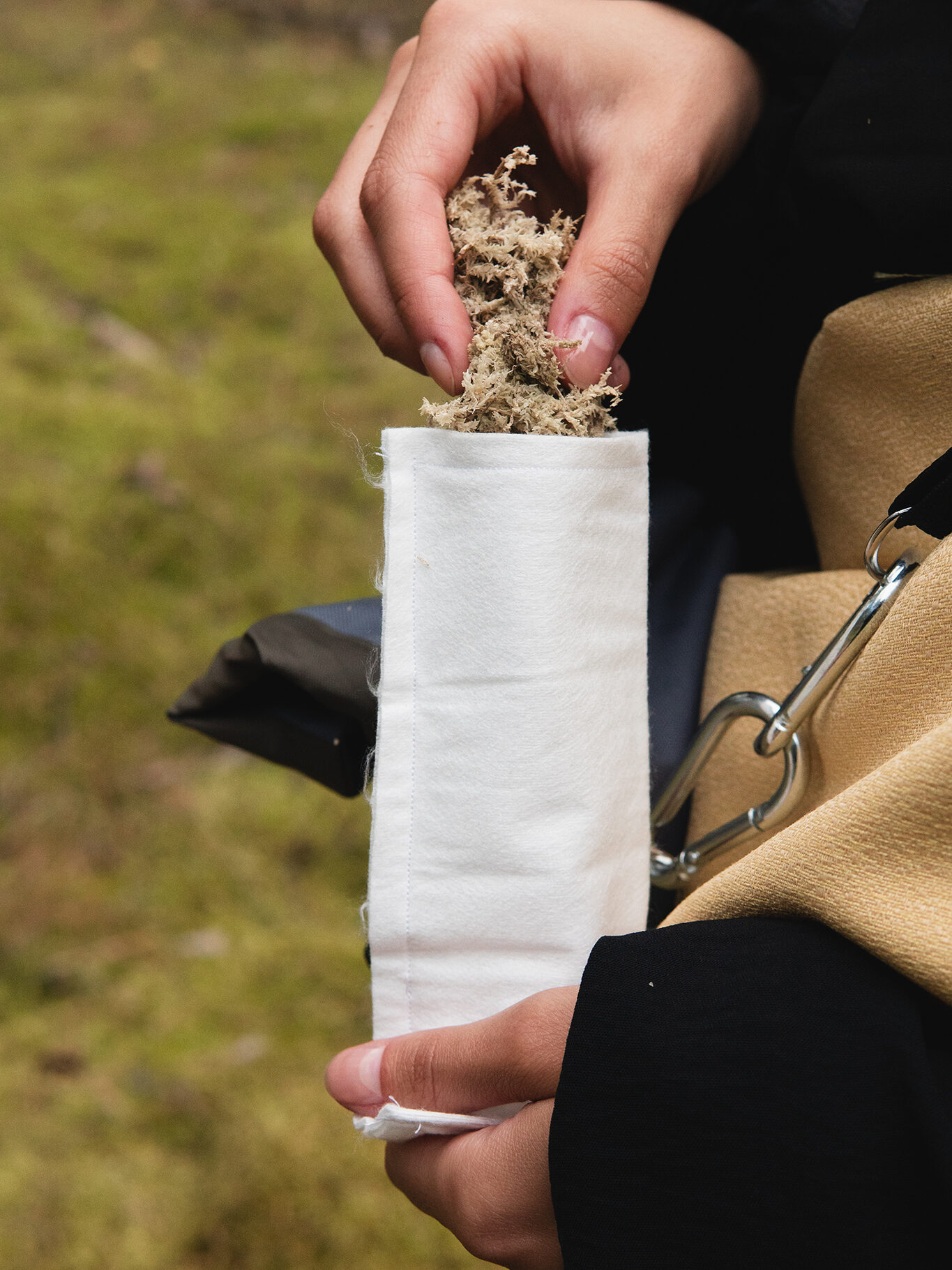
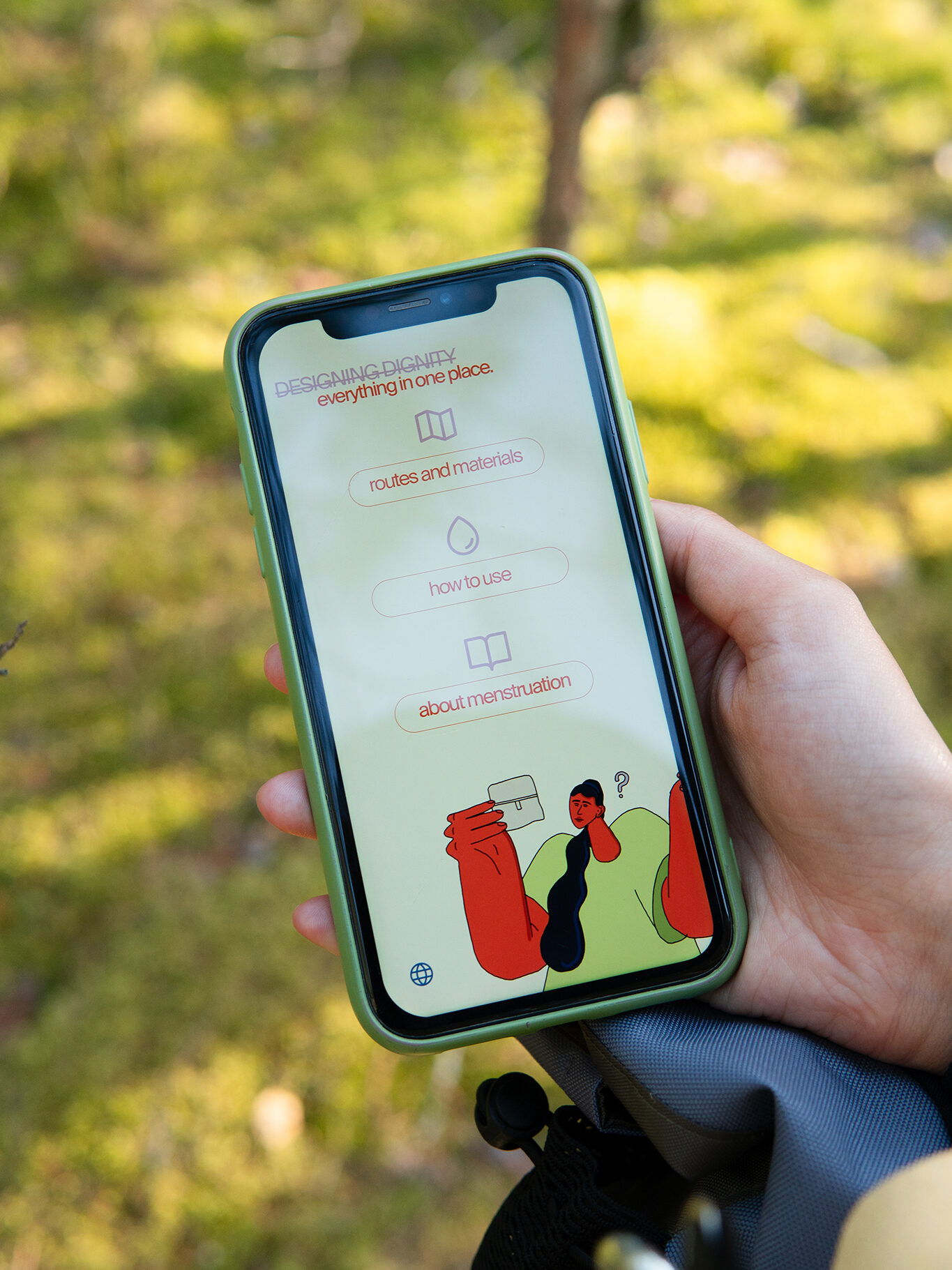
Das Menstruationskit ist ein modular entwickeltes System für menstruierende Personen auf der Flucht. Es vereint eine vielseitig nutzbare Binde, eine speziell konstruierte Reinigungstasche, eine robuste Organisationstasche und eine begleitende App mit Anleitungen, Karten und Aufklärung.

Gemeinsam ermöglichen die Elemente einen sicheren, hygienischen und selbstbestimmten Umgang mit der Menstruation auch unter extremen Bedingungen.

The menstruation kit is a modular system designed for menstruating people who are refugees.

It combines a versatile sanitary pad, a specially designed cleaning bag, a sturdy organisation bag and an accompanying app with instructions, maps and information.

Together, these elements enable safe, hygienic and self-determined menstruation management, even under extreme conditions.

Prüfer*innen
A. Stankowski, A. Engelmann, H. Neumann

Prozess

SAVEIT | YERIN KIM | MA 2025

SAVEIT | YERIN KIM | MA 2025

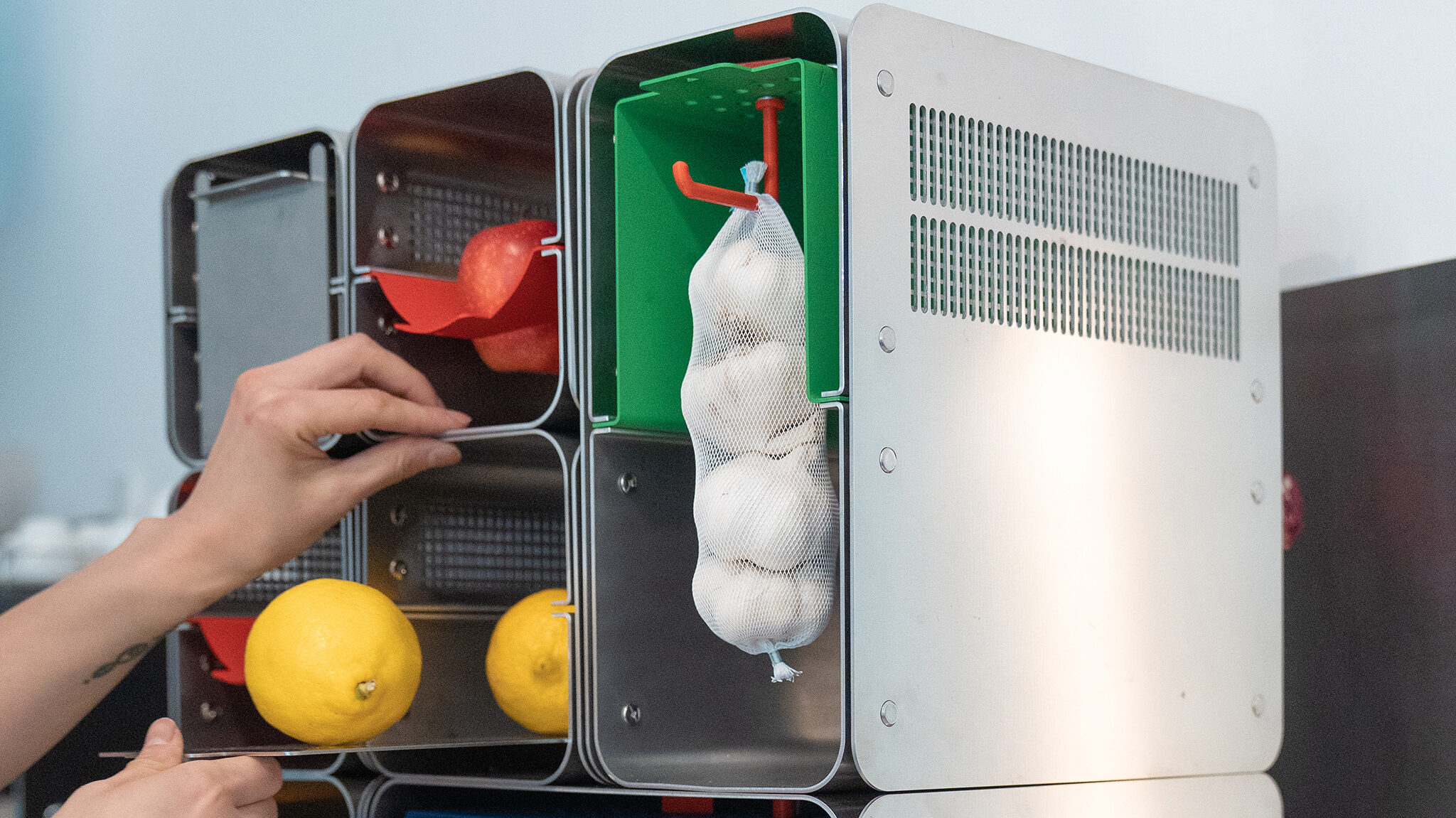
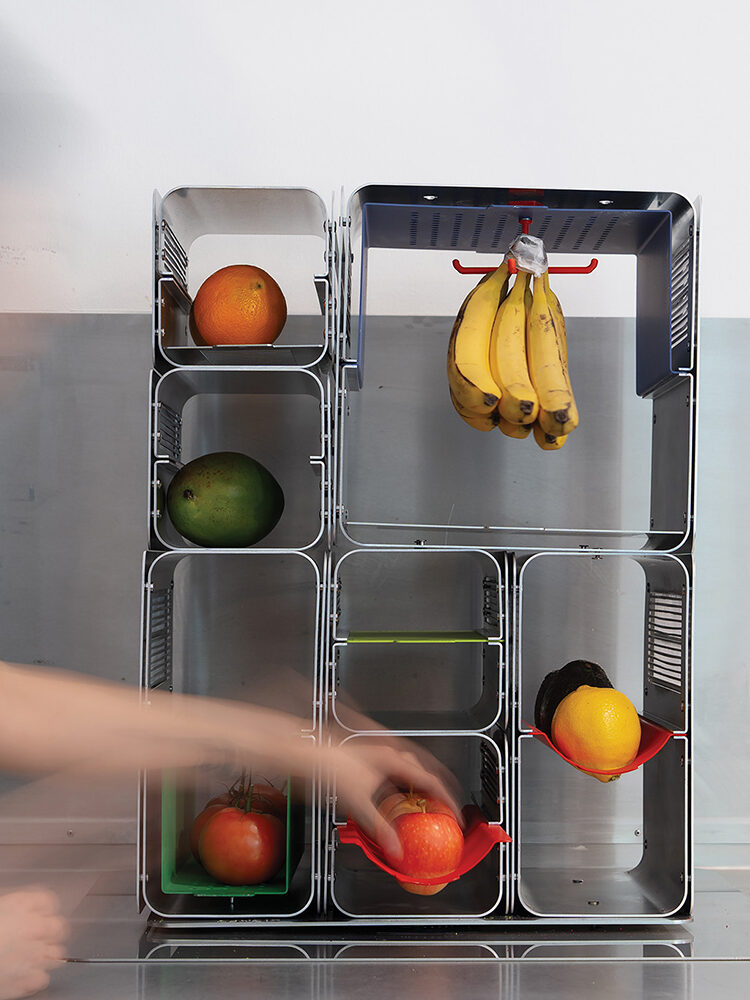
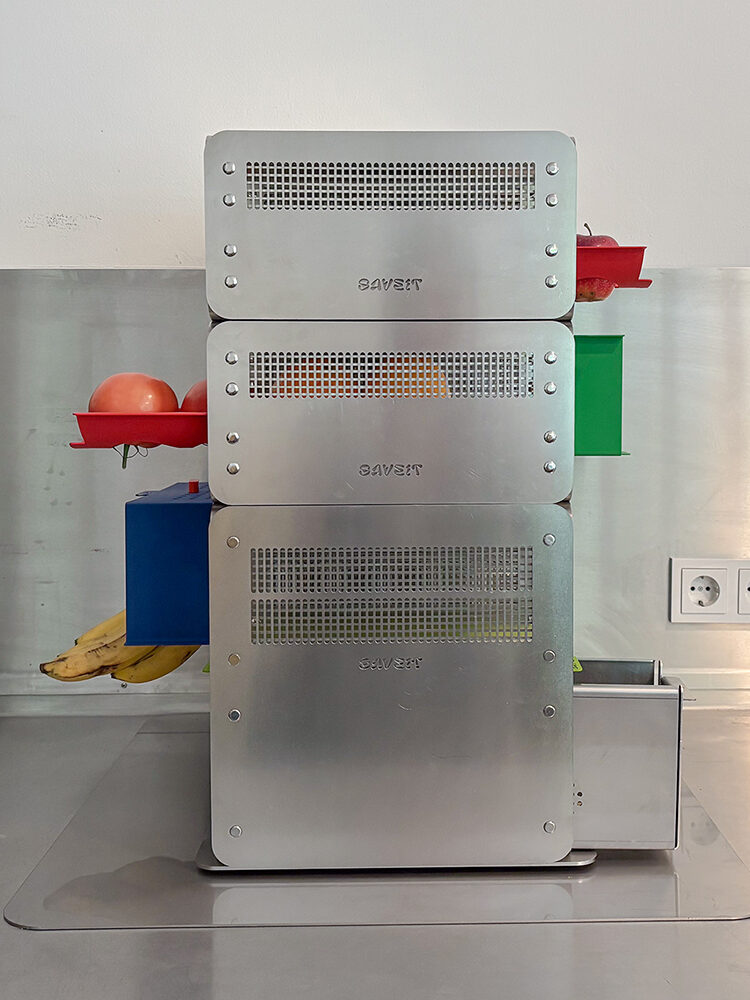
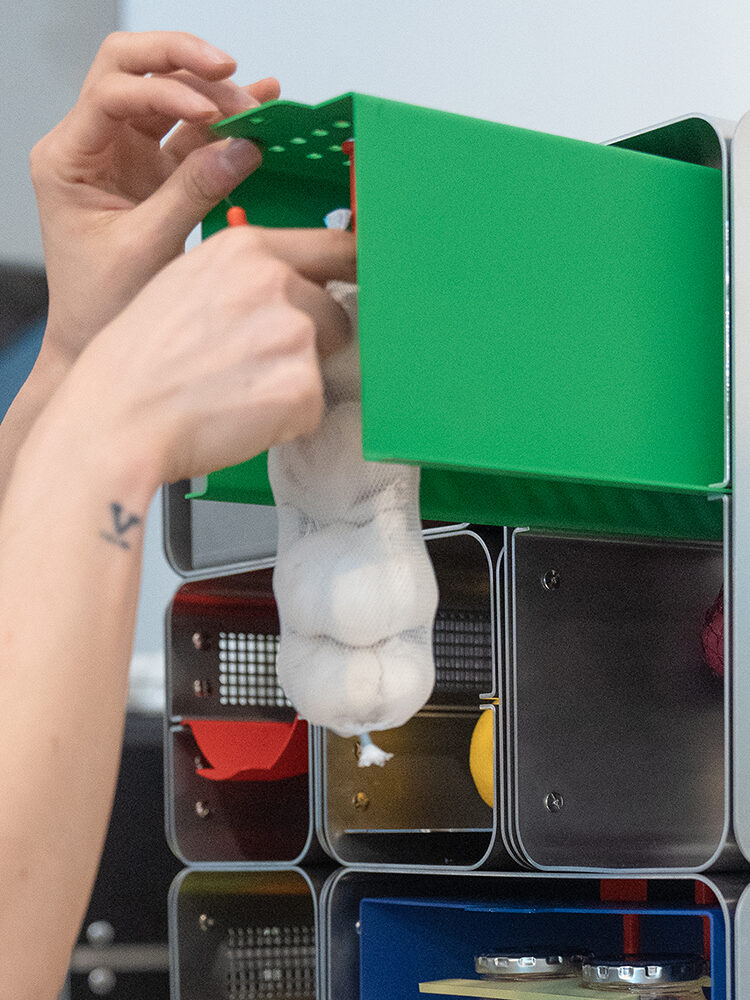
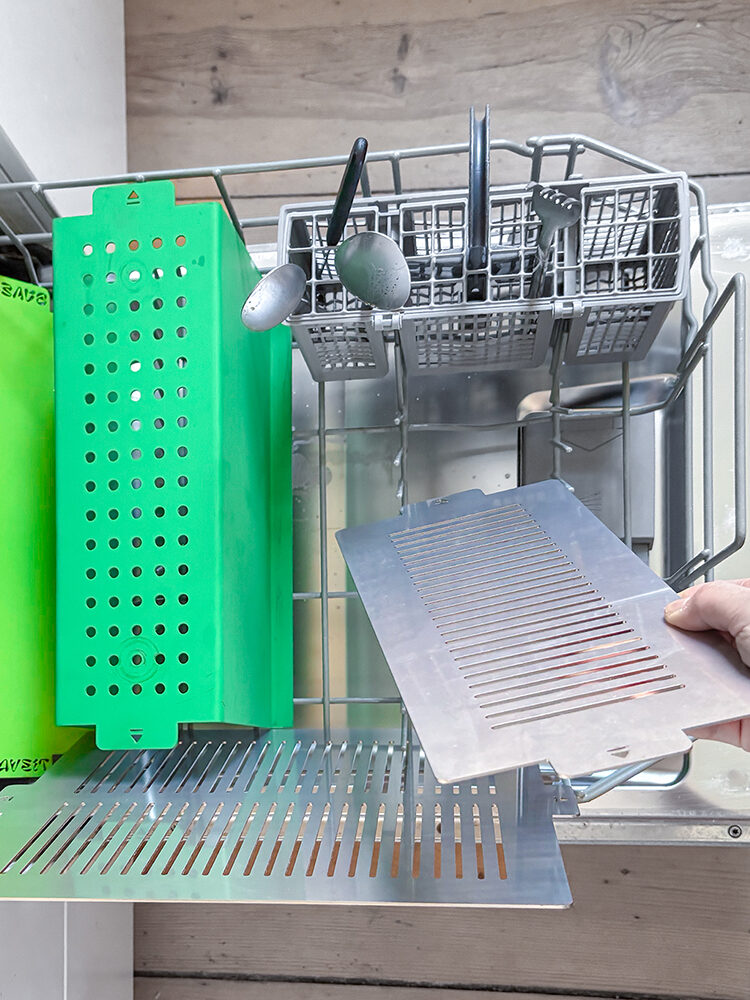
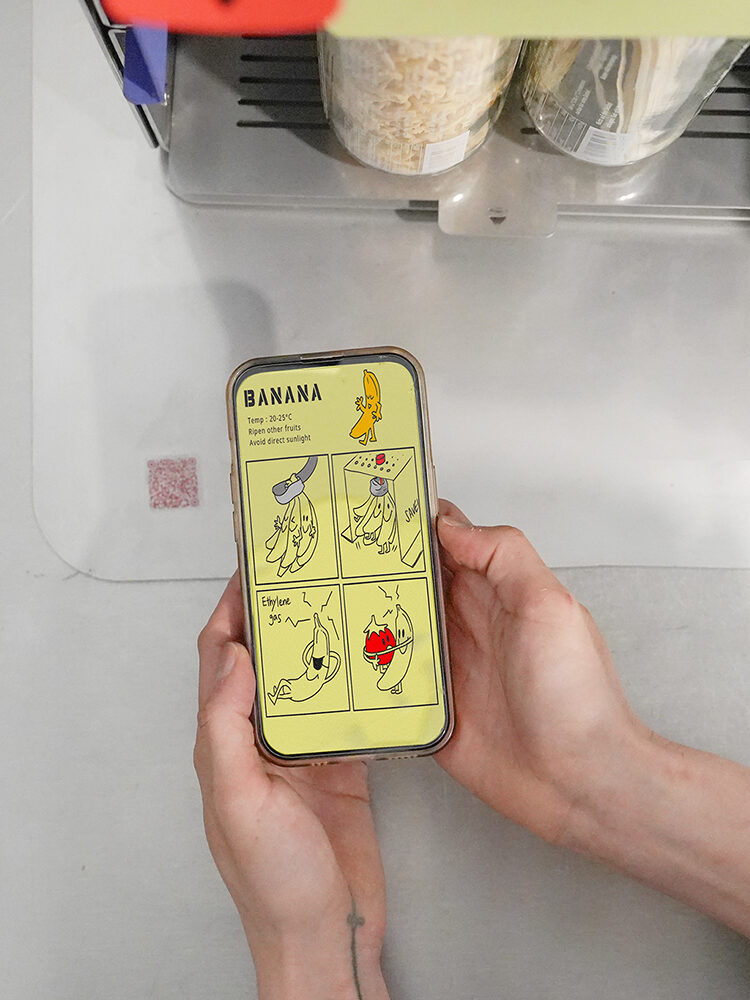
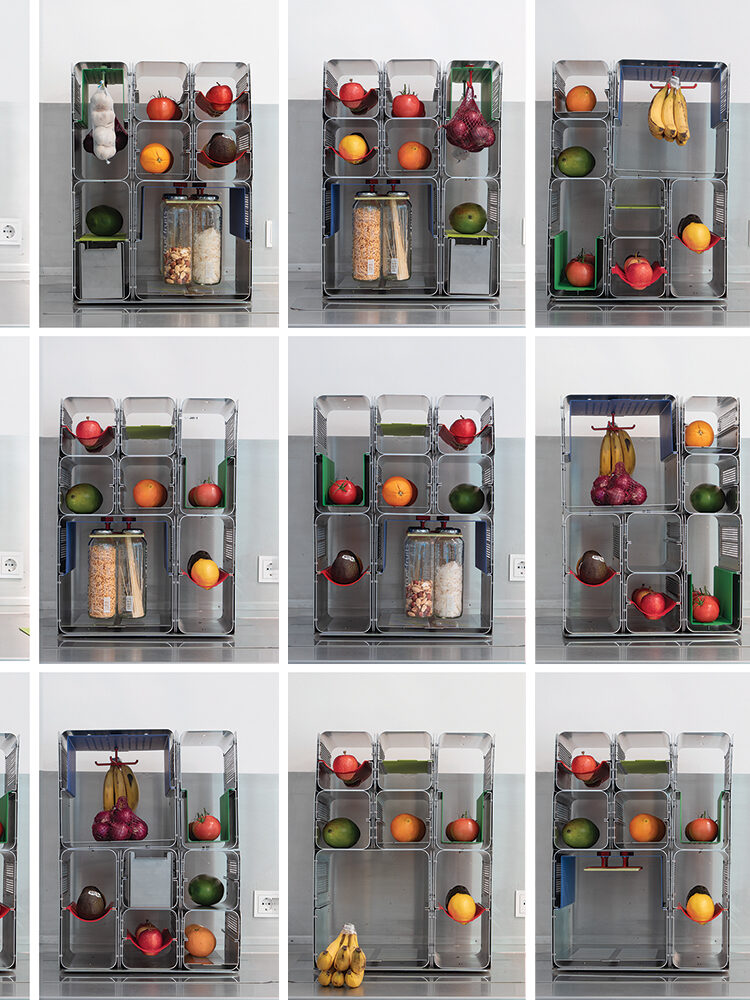
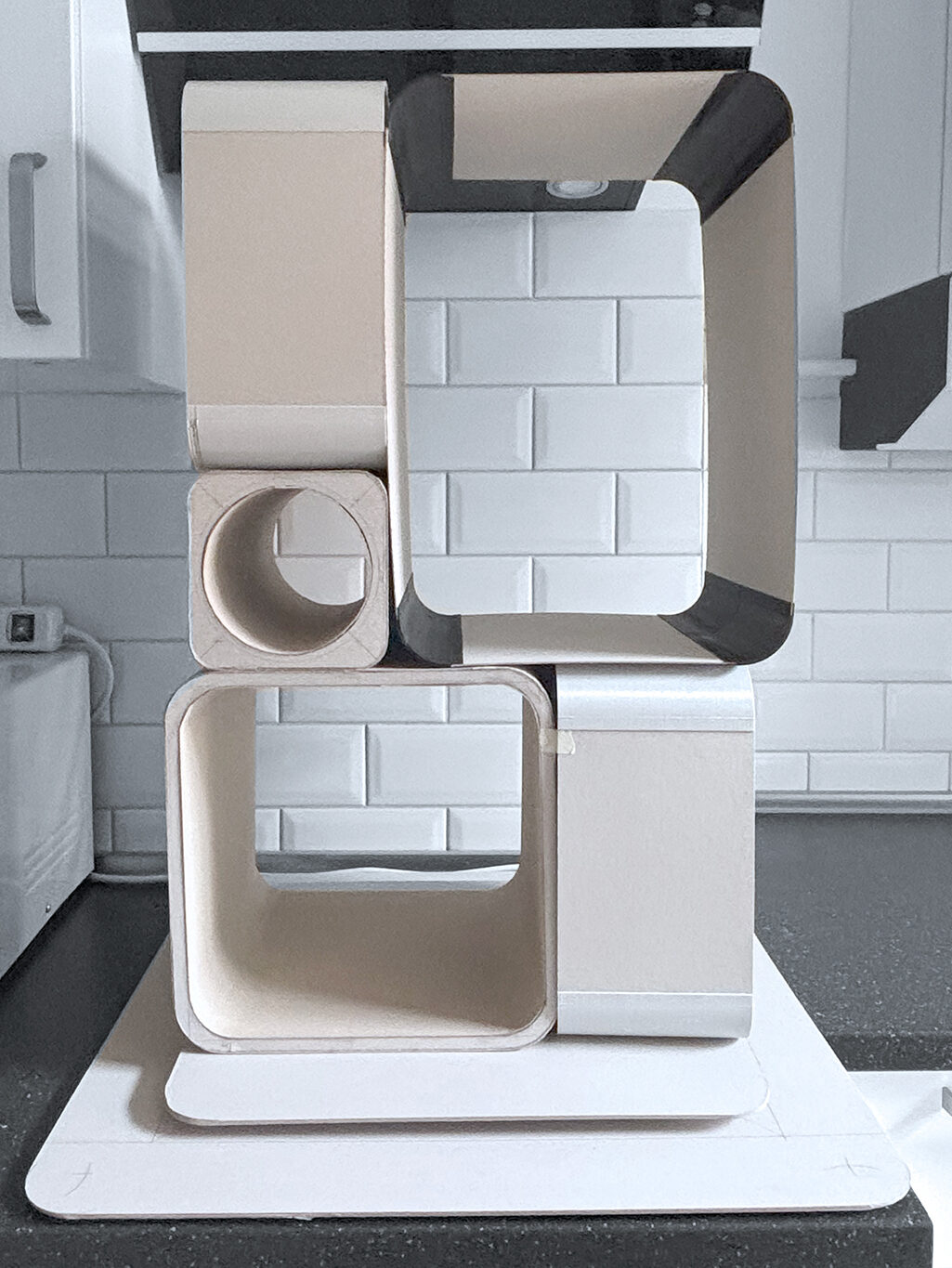
SAVEIT ist ein innovatives Aufbewahrungssystem, das Lebensmittel effizient organisiert und Abfall reduziert. Dank der drehbaren Zwei-Wege-Struktur ermöglicht es eine einfache Entnahme nach dem FIFO-Prinzip.

Modulare Ebenen und Zusatzkomponenten passen sich flexibel an unterschiedliche Lebensmittel sowie Familien- und Verbraucherbedürfnisse an.

Die verschiebbare, abnehmbare Konstruktion erleichtert Reinigung und Wartung. SAVEIT ist damit mehr als nur Lagerung – es bietet eine nachhaltige Lösung, um Lebensmittel optimal zu nutzen, Verschwendung zu vermeiden und bewusster zu konsumieren.

SAVEIT is an innovative storage system that efficiently organizes food and reduces waste.

Thanks to its rotating two-way structure, it allows for easy removal according to the FIFO principle. Its modular structure and additional components can be flexibly adapted to different foods and family and consumer needs.

The sliding, removable design makes cleaning and maintenance easy.
SAVEIT is more than just storage—it offers a sustainable solution for making optimal use of food, avoiding waste, and consuming more consciously.

Prüfer*innen
M. Hahn, A.Stankowski, J.Ribler

Prozess

HOMMAGE AN DIE KATZENWÄSCHE | MIA PAHL | MA 2025


HOMMAGE AN DIE KATZENWÄSCHE | MIA PAHL | MA 2025

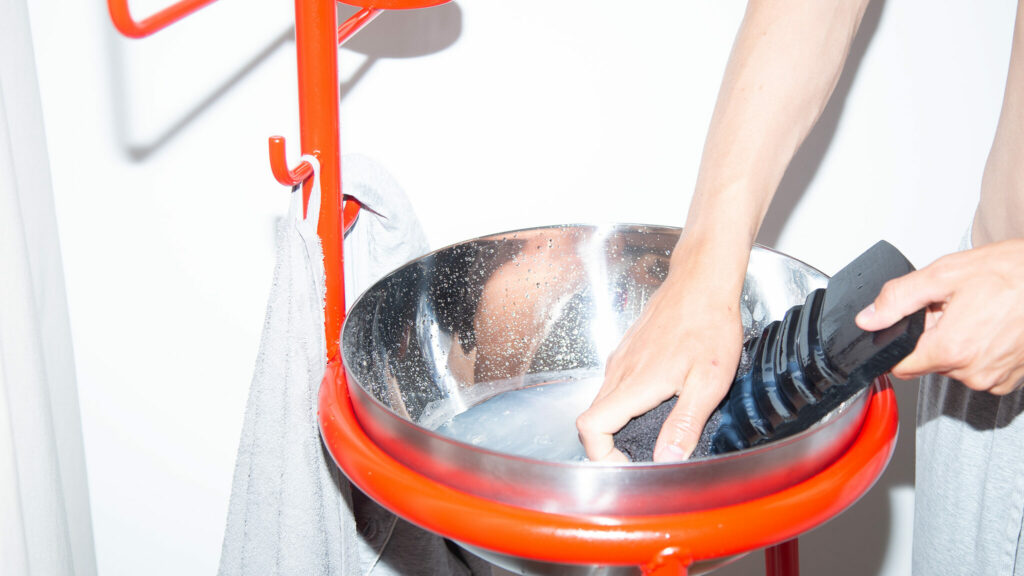
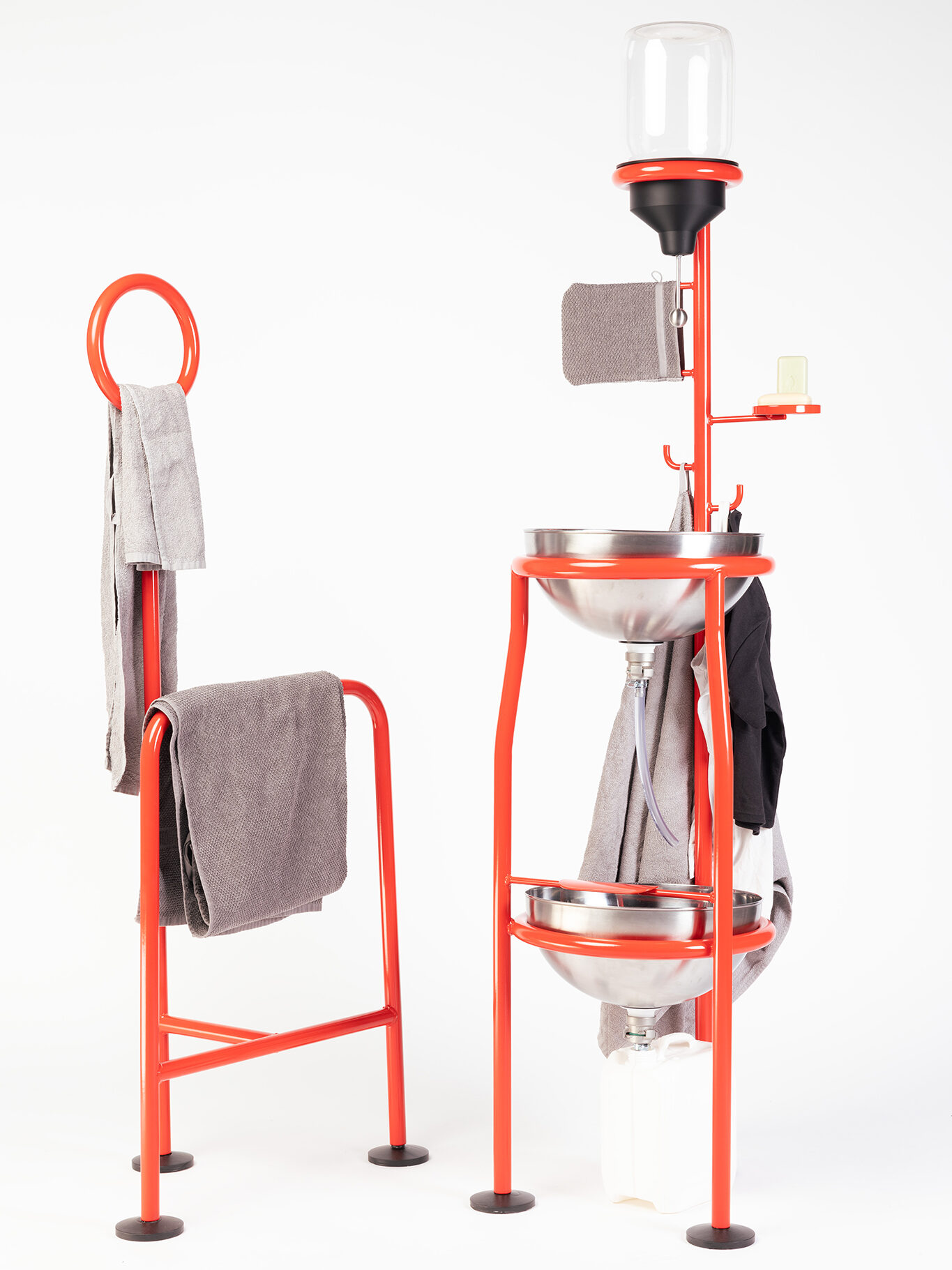
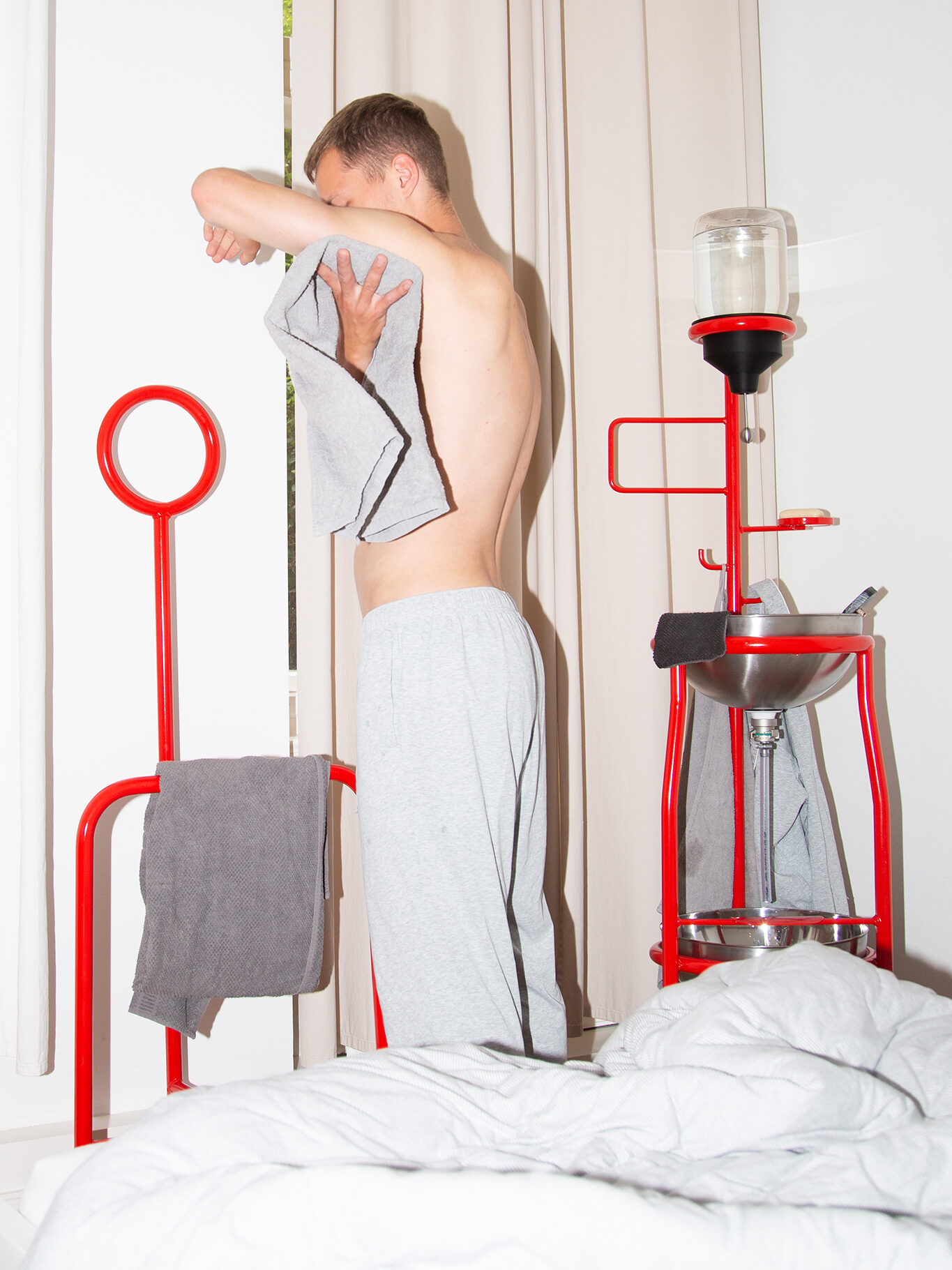
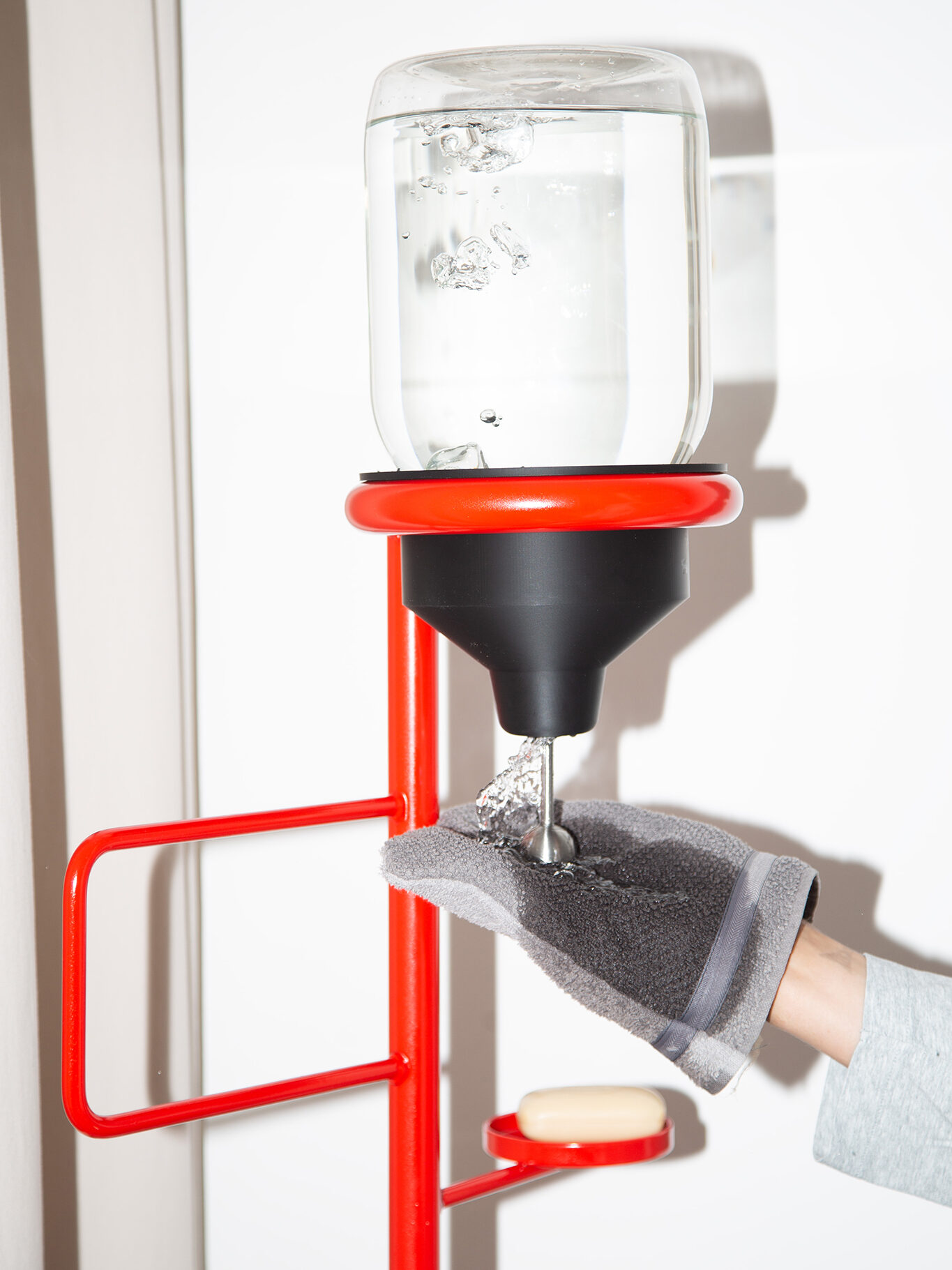
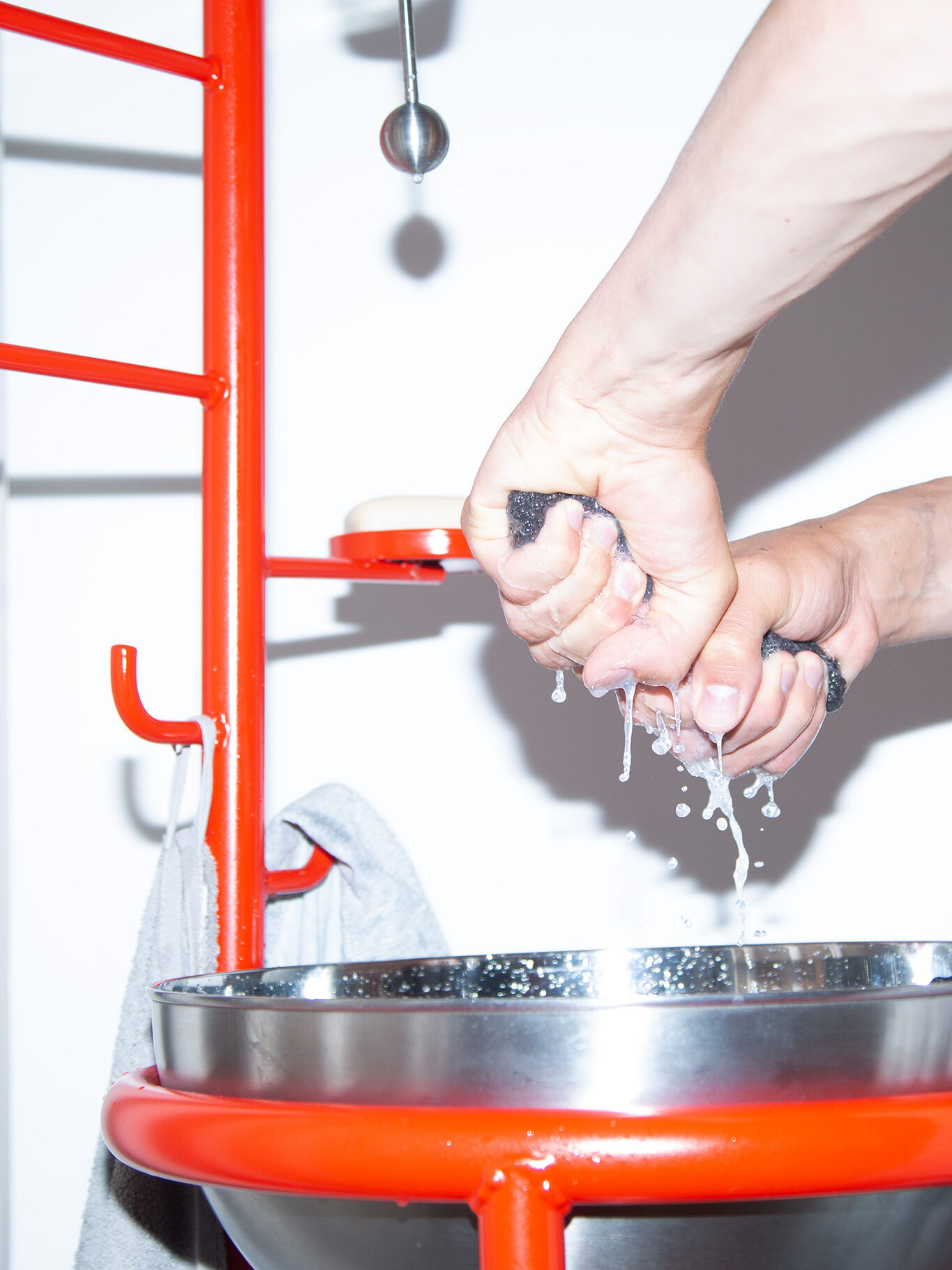
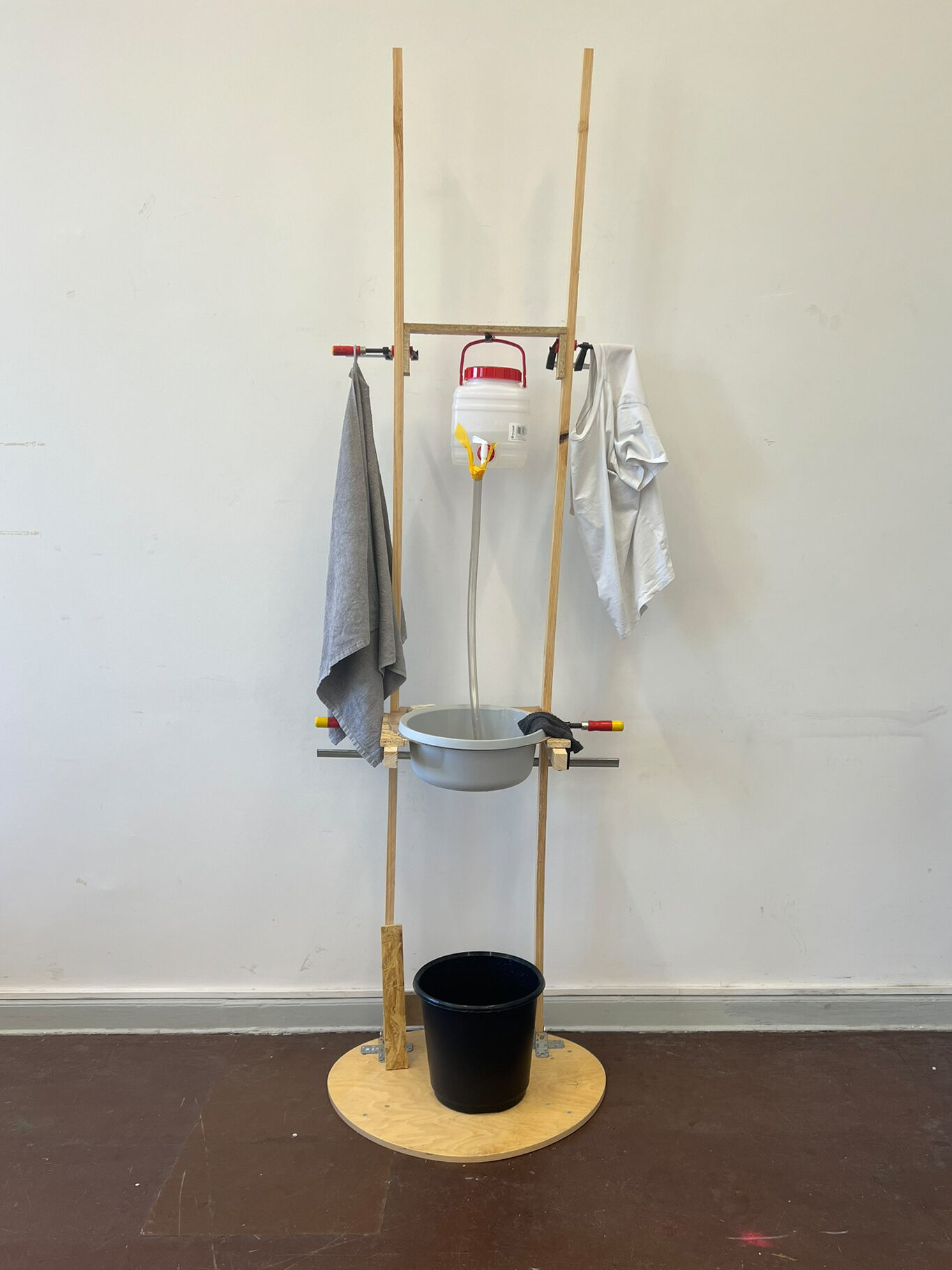
„Hommage an die Katzenwäsche“ zelebriert die Katzenwäsche als zeitgemäße, ressourcenschonende Alternative zum Duschen.

Statt 176 Litern Wasser werden nur 2 Liter benötigt. Entstanden ist eine Waschstation und ein stummer Diener, die ein neues Ritual der Körperpflege ermöglichen.

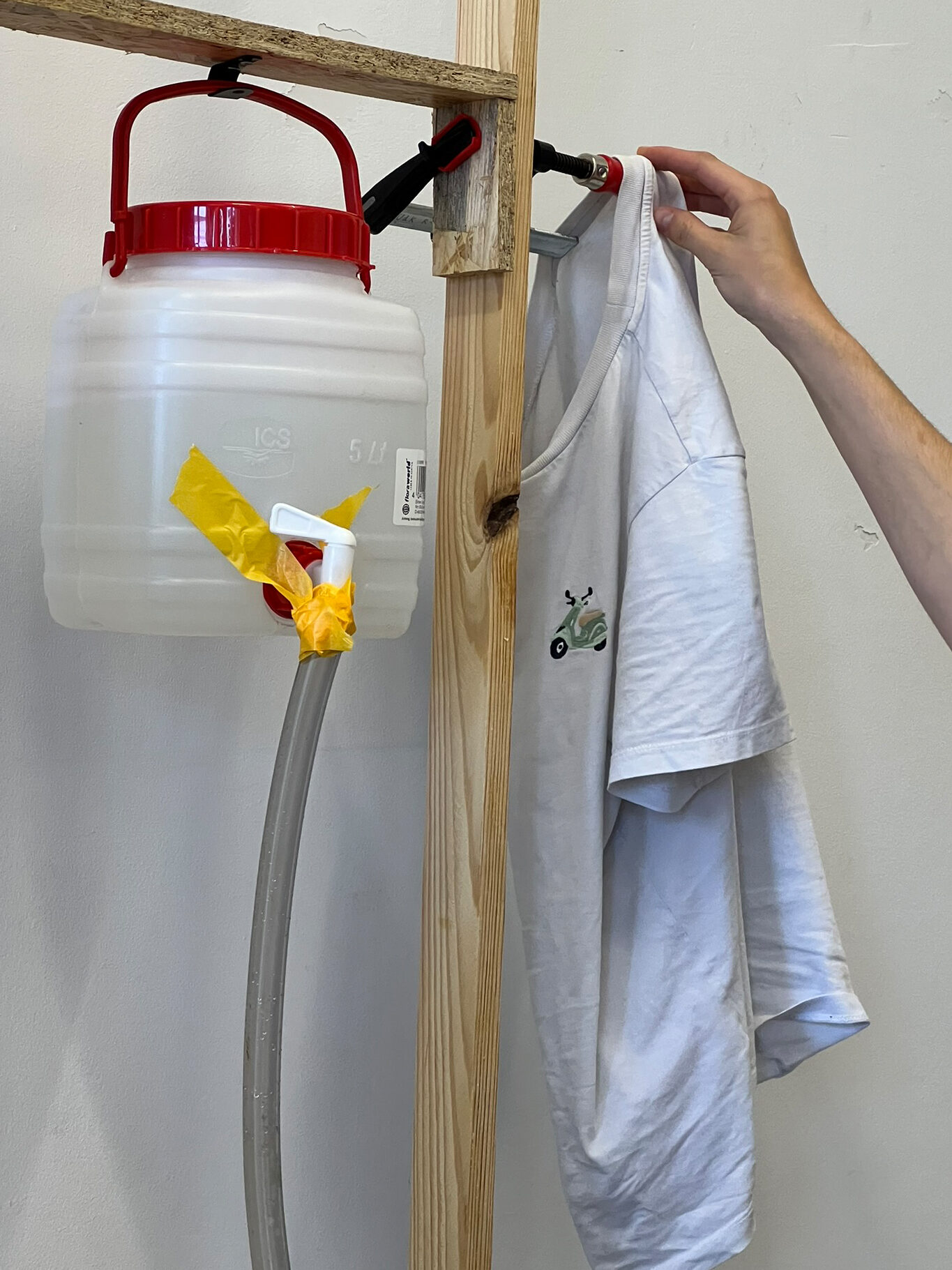
Die Waschstation erlaubt die Reinigung der wichtigsten Körperzonen, bietet Platz für Waschlappen, Seife und Handtuch und verfügt über eine Waschreibe zum Auswaschen der Waschlappen. Das Restwasser wird aufgefangen und kann wiederverwendet werden.

Der stumme Diener hält Handtücher bereit. So entsteht ein ganzheitliches und nachhaltiges Pflege-Ritual.

„Hommage an die Katzenwäsche“ celebrates this traditional practice as a contemporary, resourcesaving alternative to showering.

Instead of 176 liters of water, it requires only 2 liters. The result is a wash station and a valet stand, designed to enable a new ritual of personal care. The wash station allows for the targeted cleaning of key body areas, offers space for washcloth, soap, and towel, and includes a built-in washboard for rinsing.

Remaining water is collected and can be reused. The valet stand holds towels at the ready. Together, they create a holistic and sustainable ritual of care.


Prüfer*innen
I.Hans, H.Neumann, L Henneberger

Prozess

KLOLYMPIA | LOU-ANNE GELLERT | MA 2025


KLOLYMPIA | LOU-ANNE GELLERT | MA 2025

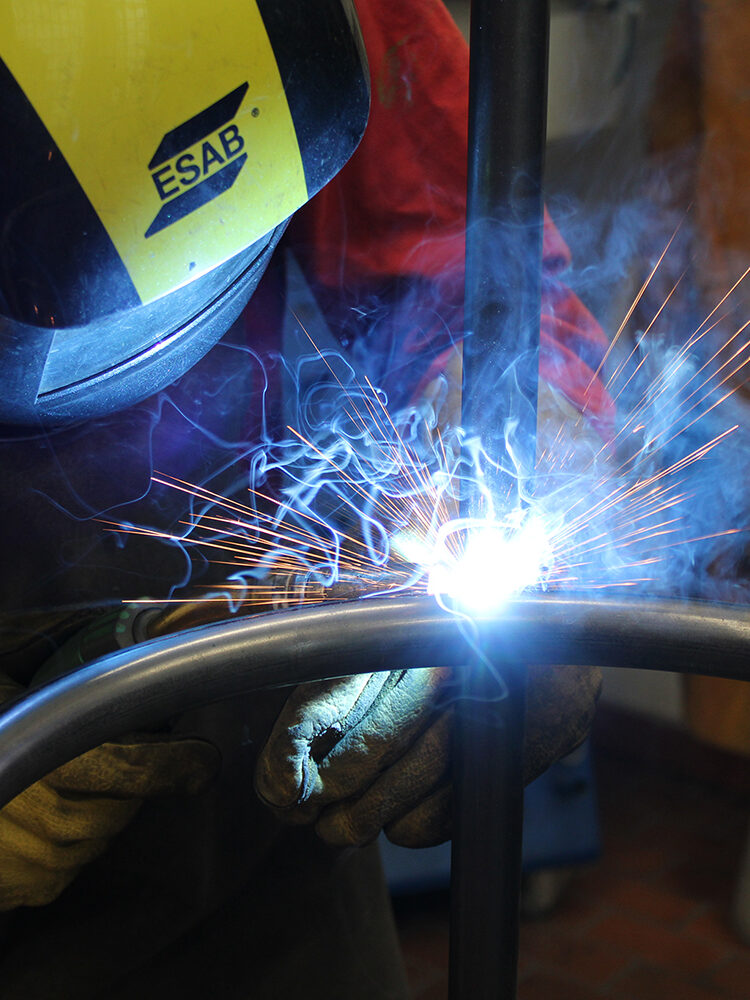
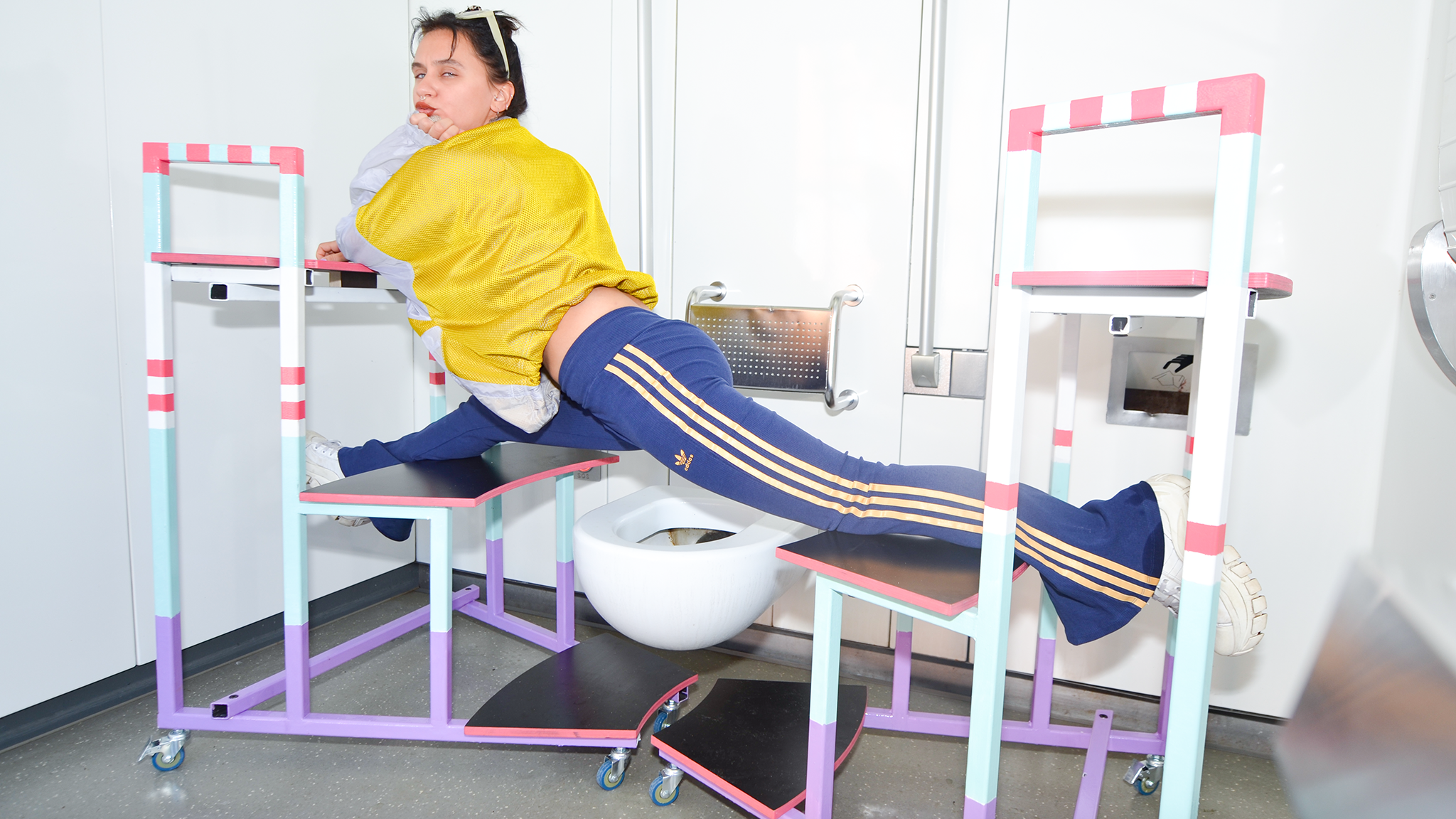
Dieses Projekt ist eine kritische Antwort auf die fehlende Vielfalt im Toilettendesign und die unzureichende Akzeptanz unterschiedlicher Körperformen und Bedürfnisse in der öffentlichen Sanitärversorgung. Indem es auf das aufmerksam macht, was gewöhnlich übersehen oder als selbstverständlich betrachtet wird, stellt das Projekt die Annahme infrage, dass „one size fits all“ beim Design und bei der Zugänglichkeit gelten könne.

Anstatt ein einfaches Redesign oder eine technische Lösung vorzuschlagen, nähert sich Klolympia dem Thema durch spielerische und zugleich provokative Interventionen. Diese temporären, mobilen Provokationen finden in den öffentlichen Toiletten Berlins statt, wo sie vertraute Routinen aufbrechen und die Barrieren sichtbar machen, mit denen viele Körper konfrontiert sind. Gleichzeitig eröffnen sie den Raum für Humor, Bewegung und kollektive Reflexion, indem sie die Toilette von einer privaten Notwendigkeit in einen Ort öffentlicher Diskussion verwandeln.

Das Projekt entfaltet sich im narrativen Rahmen einer „Olympiade“. Alltägliche Toilettengänge werden als performative Disziplinen neu inszeniert und bedienen sich der Bildsprache von Sport und Wettbewerb, um eine neue Art kritisches Spektakel zu erschaffen. Durch diesen Rahmen gelingt es Klolympia, körperliche Aktivität, Gesellschaftskritik und kulturelle Imagination auf eine Weise zu verbinden und zum Nachdenken anregt.

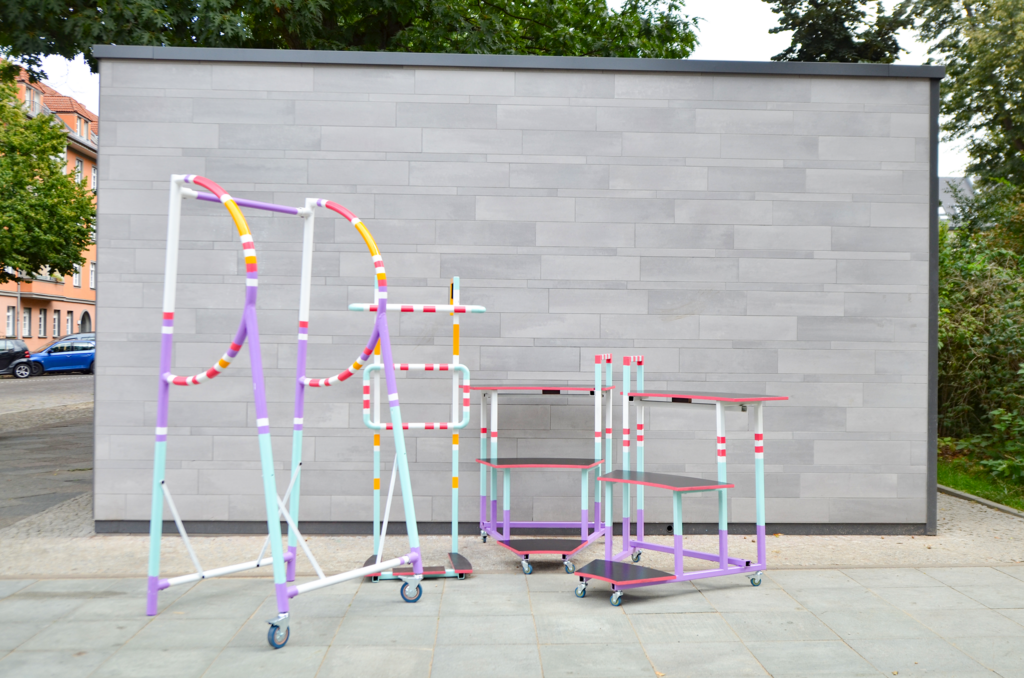
Die Klolympia 2025 umfasst drei Provocationen:

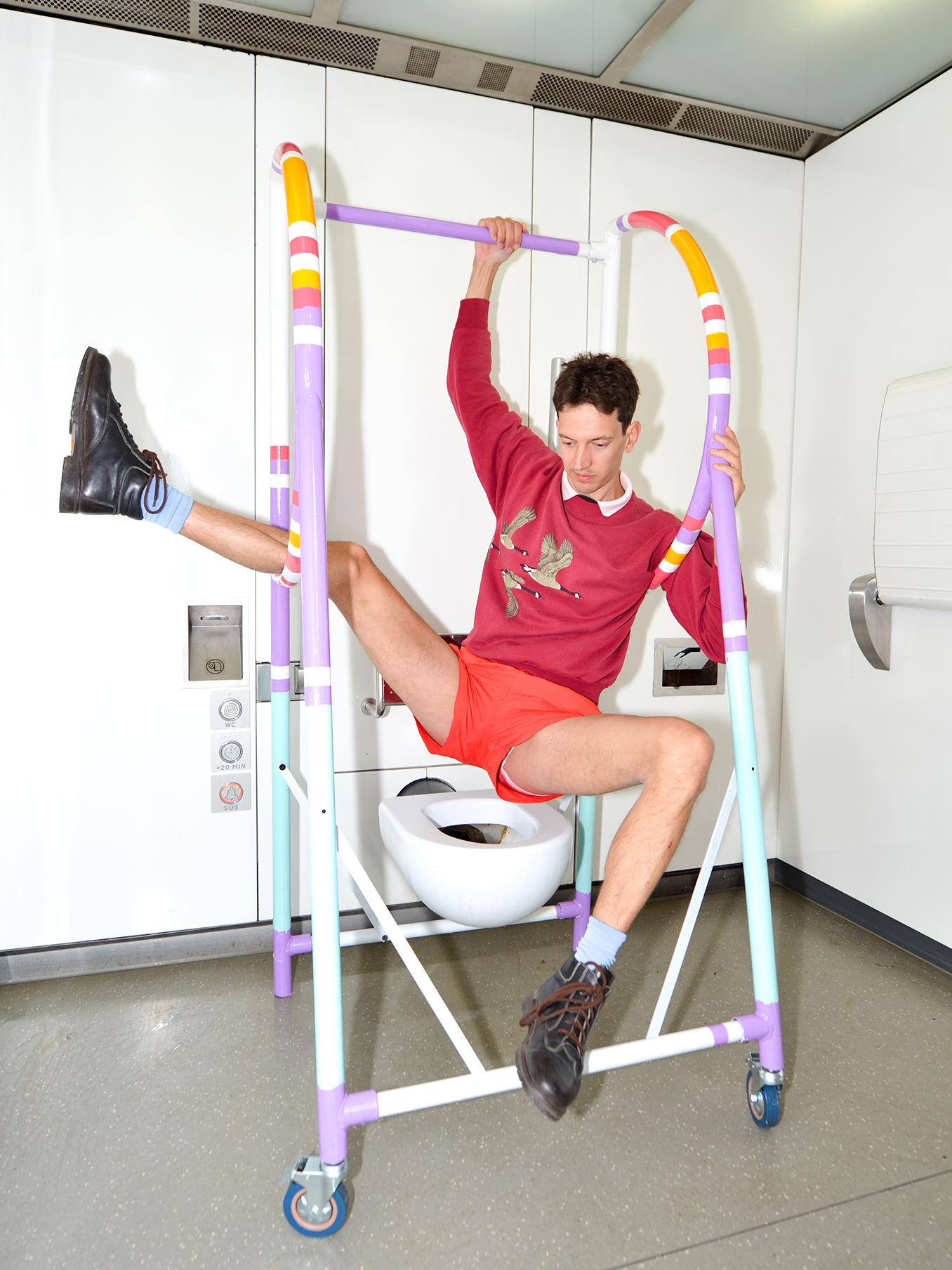
  • Phi: Die Sitztoilette wird zum Hindernisparcours. Teilnehmende bewegen sich darum herum, ohne sie zu berühren, und machen so deutlich, wie mangelnde Barrierefreiheit und Designgrenzen viele Nutzer:innen ausschließen.
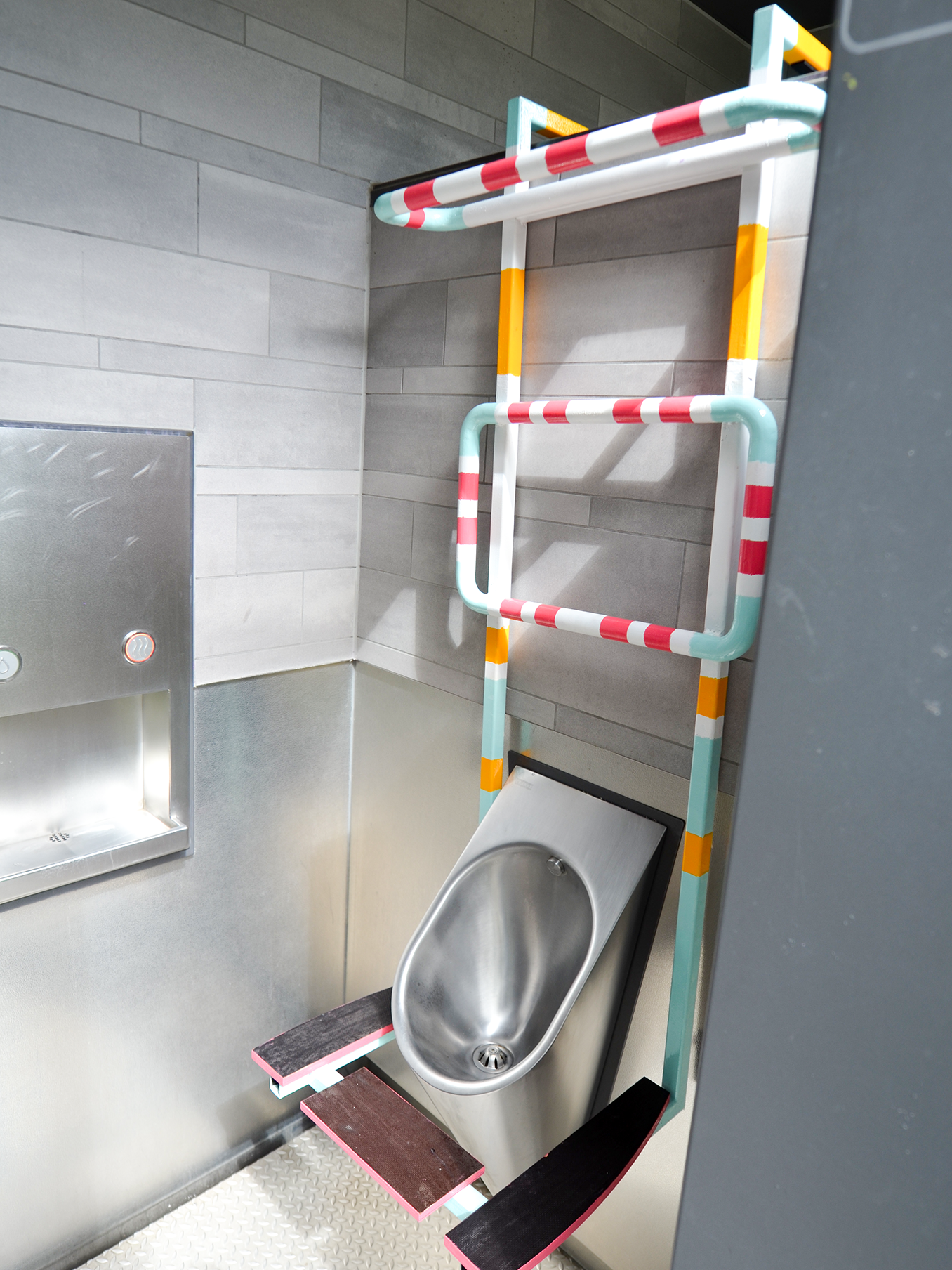
  • Chi: Eine Kletterkonstruktion umgibt das Urinal, macht es für neue Nutzer:innengruppen zugänglich und stellt die tief verwurzelten Ungleichheiten im Sanitärdesign infrage.
  • Psi: Tribünen verwandeln den Toilettengang in eine inszenierte Performance und regen dazu an, über Scham, Privatsphäre und die sozialen Rituale rund um Körperfunktionen nachzudenken.

Weit davon entfernt, nur verspielte oder exzentrische Gesten zu sein, fungieren diese Interventionen als kritische Handreichung, die zur weiteren Auseinandersetzung einlädt. Klolympia ermutigt Teilnehmende und Publikum, das Narrativ zu erweitern, neue Perspektiven zu erfinden und zusätzliche Disziplinen – auch absurde oder ungewöhnliche – zu imaginieren. Indem Toiletten als Räume von Wettbewerb, Performance und Kreativität neu gedacht werden, lenkt das Projekt den Blick auf grundlegende Fragen von Privilegien, Ausschlüssen und auf die zentrale Rolle von Infrastruktur bei der Gestaltung unseres Zusammenlebens im öffentlichen Raum.

This project is a critical response to the lack of variety in toilet design and the insufficient acceptance of different body types and needs in public sanitation. By drawing attention to what is usually overlooked or taken for granted, the project challenges the assumption that “one size fits all” when it comes to design and accessibility.

Rather than offering a simple redesign or technical fix, Klolympia approaches the topic through playful yet provocative interventions. These temporary, mobile actions are staged in Berlin’s public toilets, where they disrupt familiar routines and make visible the barriers that many body types face. At the same time, they create opportunities for humor, movement, and collective reflection, transforming the toilet from a private necessity into a site of public discussion.

The project unfolds within the narrative framework of an “Olympia.” Everyday toilet visits are reimagined as performative disciplines, borrowing from the imagery of athleticism and competition to create a new kind of critical spectacle. This framing allows Klolympia to connect physical activity, social critique, and cultural imagination in a way that is both entertaining and thought-provoking.

Klolympia 2025 consists of three main disciplines:

  • Phi: The sitting toilet becomes an obstacle course. Participants navigate around it without touching it, highlighting how inaccessibility and design limitations exclude many users.
  • Chi: A climbing structure surrounds the urinal, opening it up to new user groups and questioning the entrenched inequalities embedded in sanitation design.
  • Psi: Grandstands transform the toilet visit into a staged performance, encouraging reflection on shame, privacy, and the social rituals associated with bodily functions.

Far from being just playful or eccentric gestures, these interventions serve as a critical handbook that invites further exploration. Klolympia encourages participants and audiences to expand the narrative, invent new perspectives, and imagine additional disciplines—even bizarre or absurd ones. By reframing toilets as spaces of contest, performance, and creativity, the project draws attention to broader questions of privilege, exclusion, and the essential role of infrastructure in shaping how we live together in public space.


Prüfer*innen
A. Stankowski, A. Engelmann, Z. Dumicic

Prozess

Sinn und Unsinn, 2025

Abschlussvorstellung Designgrundlagen 1. Semester, WiSe 19/10

Abschlusvorstellung Designgrundlagen 1. Semester
Studiengang Produkt- und Mode-Design
Universität der Künste Berlin
11.02.2025

In dem Kurs Designgrundlagen für die Studienschwerpunkte Produkt- und Modedesign handelt es sich um die Einführung in den Entwurf als dialogischer mehrdimensionaler Prozeß unter dem diesjährigen Titel „Von Sinnen“.

Von Oktober bis Dezember 2024 gab es 1-2 wöchige Aufgaben zu bearbeiten und dabei einen Entwurfsprozeß über die Arbeit mit verschiedenen Methoden insbesondere die Benutzung und Entwicklung unterschiedlicher Modellformen kennenzulernen und zu üben: Aufgabe Sehen – eye catcher / Aufgabe Tasten – individual touch / Aufgabe – Riechen – mmmmmmmmh!?, bah … aaahja, nee? … / Hören und Schmecken – Das W-Fest

Ab Januar 2026 ging es um das Thema „Sinn und Unsinn“, Handlung mit Objekt(en). Gestartet wurde mit Improvisationsmodellen, dann folgte die Entwicklung über Prozessmodelle und Testmodelle (Veränderungen von Woche zu Woche und jedes Mal vorgeführt). Ziel ist eine finale inszenierte Vorführung (der Prototypen) vor Publikum.

Diese fand am 11. Februar 2025 in der Aula im 3D-Haus Straße des 17. Juni 118 von 18.00 Uhr bis 19.30 Uhr statt.

……………………………………………………………………………………………………………………….

basislabor design

Designgrundlagen

Prof. Robert Scheipner
KM-Vertretung Nina Birri

Studiengang Design
Fakultät Gestaltung
Universität der Künste Berlin
1485/5000
Thumbnail

Designgrundlagen

forms, fellows, functions

Einführung in den Entwurf für die Erstsemester in Mode- und Produktdesign über verschiedene kurzfristige Gestaltungs- und Entwurfsübungen, die verschiedene ausgesuchte Aspekte von Beobachtung, Wahrnehmung, Findung und Formung über Methodik, Strategie, Reflexion und Diskussion, bis zu Dokumentation, Darstellung, Präsentation und Vorführung integrieren. Es werden unterschiedliche Aufgabentypen eingesetzt, sowie verschiedene Formate des Inputs, der Besprechung und der Diskussion.

formsFormung über Abwicklung / Formentwicklung über die Auseinandersetzung mit Formfamilien in 2D und in 3D / fellows: Eigenwahrnehmung – Fremdwahrnehmung – Identifikation (Duftmarke) / „Wie ist mir der Schnabel gewachsen?“ (Kopfobjekt) / „foodwear“ (W-Fest) / „hoch hinaus“ Handlungen mit Objekt (Show, Aula) / functions: jedes Kurzprojekt ist mit einer spezifischen Werkstatteinführung verbunden (Stoff, Holz, Metall, Kunststoff) und wird mit der entsprechenden Technik respektive Material realisiert.

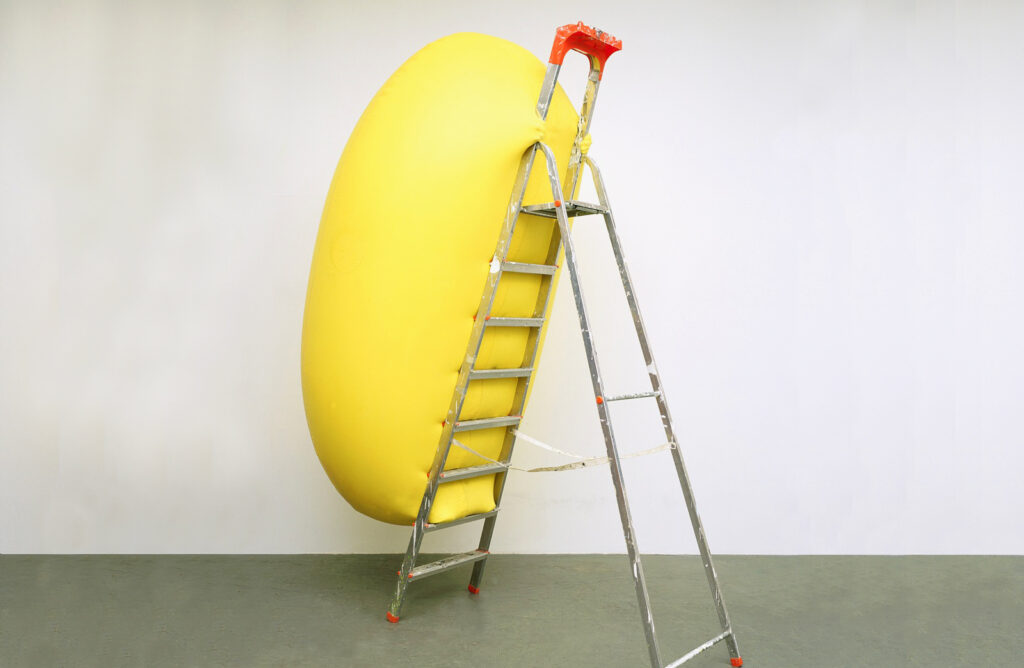
[Abbildung: © Hans Hemmert, (yellow sculpture fitting to ladder), 1998, latexballoon/ air/ artist/ ladder]


basislabor design

Prof. Robert Scheipner, LB Luisa Kahlfeldt

1. Semester BA Mode- und Produktdesign, Winter 2005/2006

Kursnummer 9010101

R008, montags 9.00 bis 15.00 Uhr, dienstags 9.00 bis 13.00 Uhr

Start Montag, den 13.10.2025 R008 13.30 Uhr

Gloriana Valverde shows at Forward Furniture expo – DDW Eindhoven


Forward Furniture

Gloriana Valverde is selected with her Graduation work Standard non Standard for the Forward Furniture expo, a bold exhibition exploring the experimental future of collectible and signature furniture. Over 100 designer studios present new works that push the boundaries of form and material, while staying rooted in use.

The Next Chapter in Furniture Design
The presentation in Conceived and curated by Liv Vaisberg, Forward Furniture invited designers to showcase at least three realised works, from signature pieces to experimental editions. Together, these works offer an inspiring glimpse into the next chapter of furniture design.

Signature and Collectible Objects
Visitors can explore a wide range of groundbreaking designs, including the delicate Soft Ply lamps by Sheyang Li, Rutger de Regt’s innovative Stretched Thin series, Dirk van der Kooij’s Meltingpot tables, and Pierre Castignola’s playful sculptural objects. From experimental lighting and lounge chairs to repurposed materials transformed into expressive furniture, Forward Furniture offers a unique combination of craftsmanship, innovation, and vision.

Forward Furniture @ Dutch Design Week
CAMPINA milkfactory, 18–26 October 2025, Eindhoven
read and see more
Gloriana Valverde (BA 2025) – insta


Luca & Paul bei German Design Graduates expo – DDW Eindhoven 2025

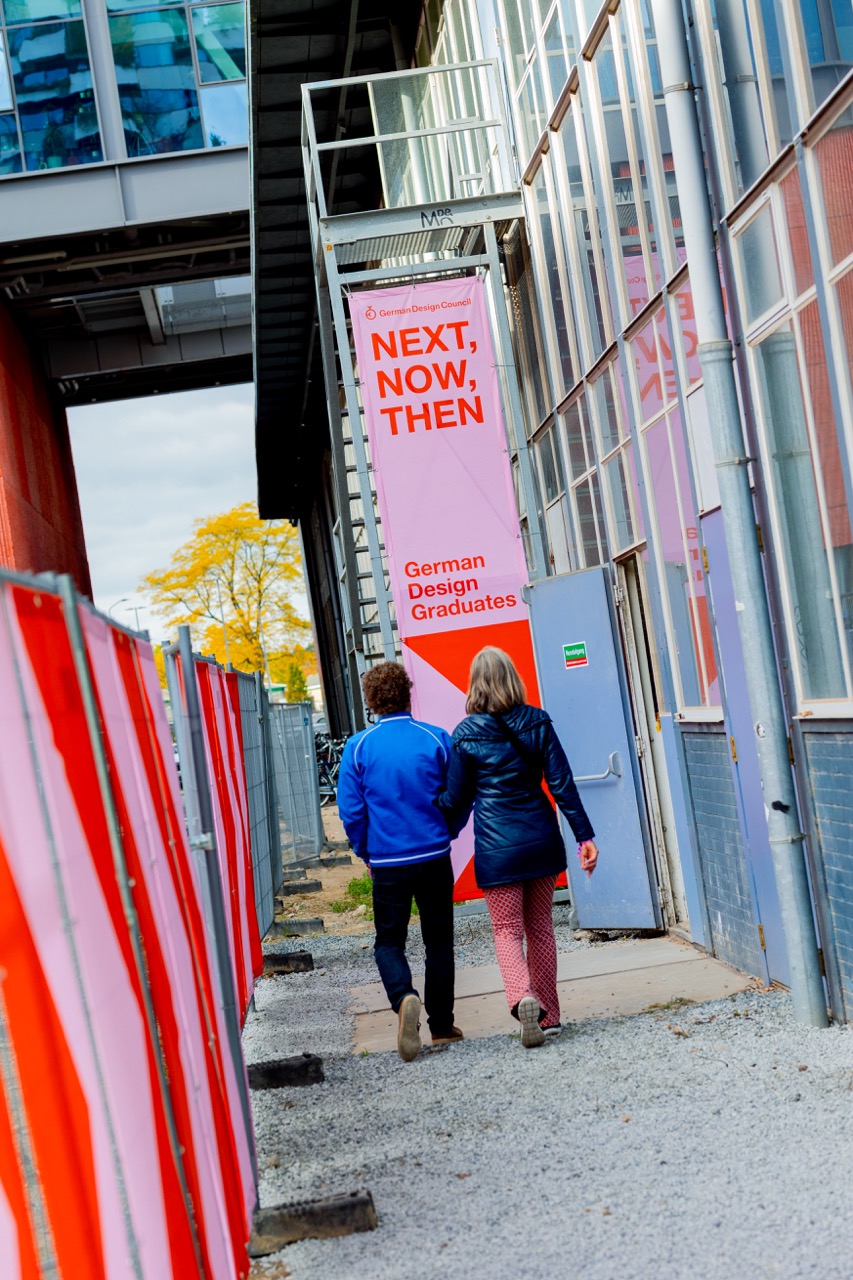
NEXT, NOW, THEN
LOOKING BACK AND THINKING AHEAD

Luca Ortmann and Paul Krüger are one of the 24 graduates selected for the annual festival presentation of German Design Graduates.
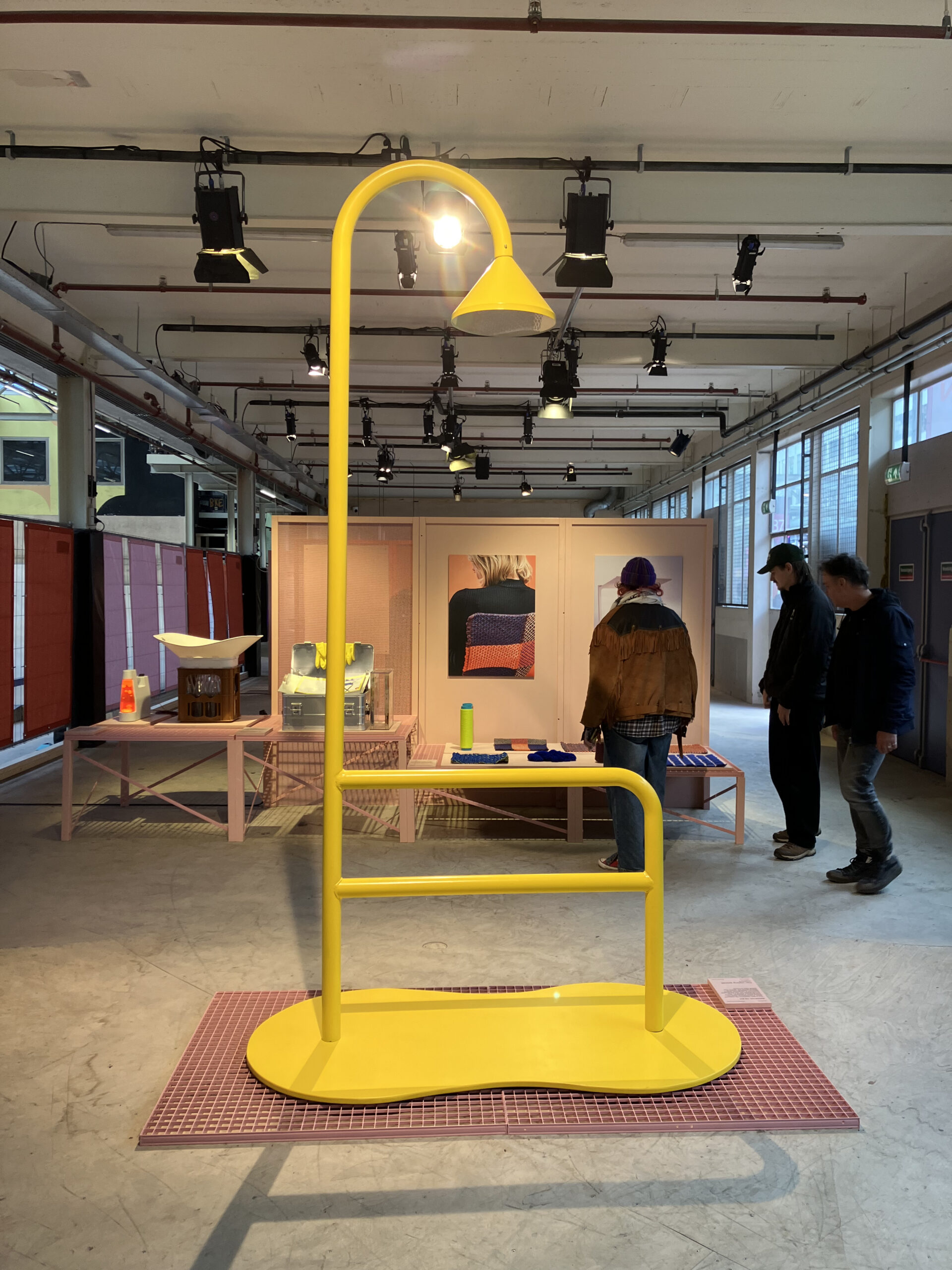
The initiative German Design Graduates presents outstanding graduation projects from design schools across Germany. The exhibition Next, Now, Then explores how emerging talents reinterpret the past, question the present, and imagine futures. It reveals time as a medium for creative practice.

Projection of the Past & Facility of the Present
What if superstition shaped our choices? What if nature were our teacher? Several projects draw on cultural memory and reinterpret forgotten practices as tools for the present day. Others address the immediate conditions of daily life: How can public transport be improved? How can we feel safe? Together, they show how design can translate the wisdom of the past, connect it with the urgency of the present, and turn it into tangible interventions.

Memory of the Future & Transition of the Now
Did we use so much plastic? Did we really treat animals that way? Were there wars that we ignored? Projects require us to view the present through the eyes of tomorrow, where today’s choices will be remembered as responsibility or neglect. Alongside this speculative lens, other works investigate the threshold we currently cross: Can we optimise ourselves, can artificial intelligence reshape our work? Emerging practices explore digital tools, hybrid workflows and new forms of making that blur the line between humans and machines. Combined, these perspectives reveal how design anticipates consequences, navigates transition and opens paths for societies yet to come.

Form Follows Friendship
The exhibition also extends into dialogue. On Sunday, 19 October 2025, a networking breakfast in Eindhoven will bring together emerging graduates and professionals from Germany and the Netherlands. Under the title “Form follows Friendship”, the encounter highlights collaboration as a driving force in contemporary practice.

The Form Follows Friendship event is being organised for the third time by German Design Graduates and hosted by the German Design Graduates organisiert und vom German Design Council in collaboration with the Dutch Consulate General in Düsseldorf and the Embassy of the Kingdom of the Netherlands in Berlin.

German design graduates @ Dutch Design Week
Aera 51, 18–26 October 2025, Eindhoven
read and see more
Luca Ortmann (BA 2025) – insta
Paul Krüger (BA 2025) – insta


fön 4 eva – Moritz Seifert

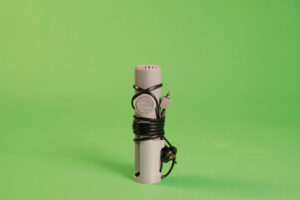
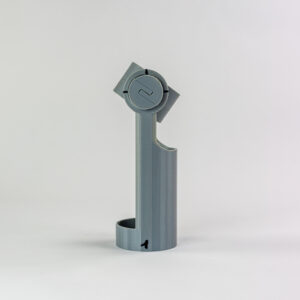
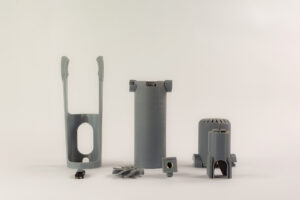
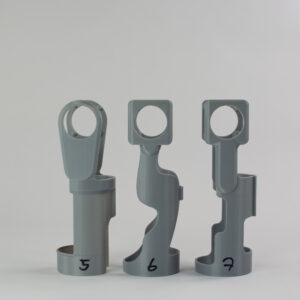
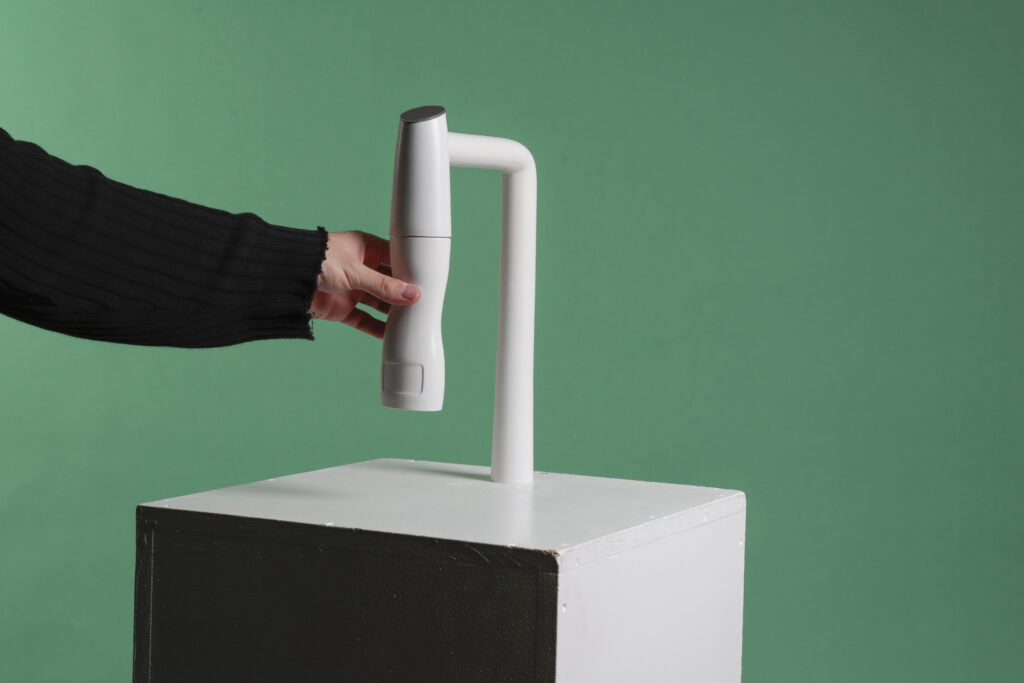
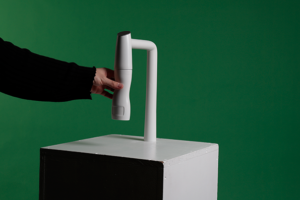
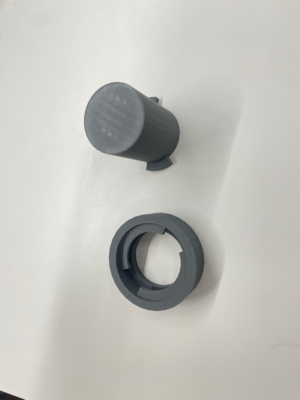
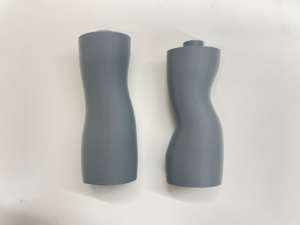
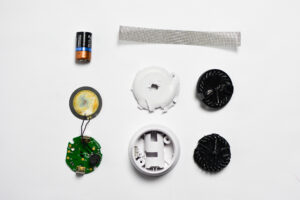
This hairdryer is designed as part of a large recycling system. All parts of the housing are made from the same recycled plastic and can be recycled together. The housing parts are slotted into each other, rotated and connected by the handle. This makes it possible to open the appliance without tools to replace defective parts.

Dieser Haartrockner ist als Teil eines großen Recyclingsystems konzipiert. Alle Teile des Gehäuses bestehen aus dem gleichen recycelten Kunststoff und können gemeinsam recycelt werden. Die Gehäuseteile werden ineinander gesteckt, gedreht und durch den Griff miteinander verbunden. Dadurch lässt sich das Gerät ohne Werkzeug öffnen, um defekte Teile auszutauschen.

The project:

The process:


DÉJÀ VU – Philine Lüttel

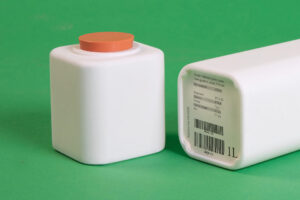
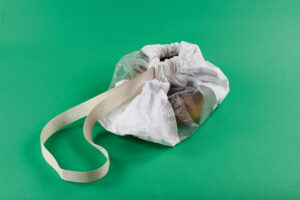
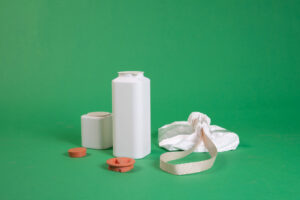
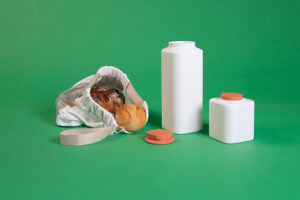
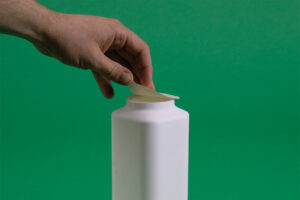
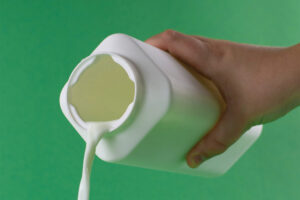
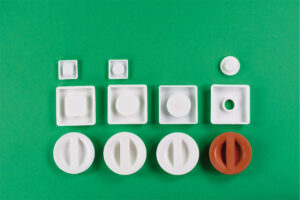
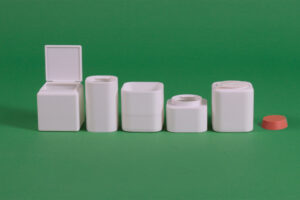
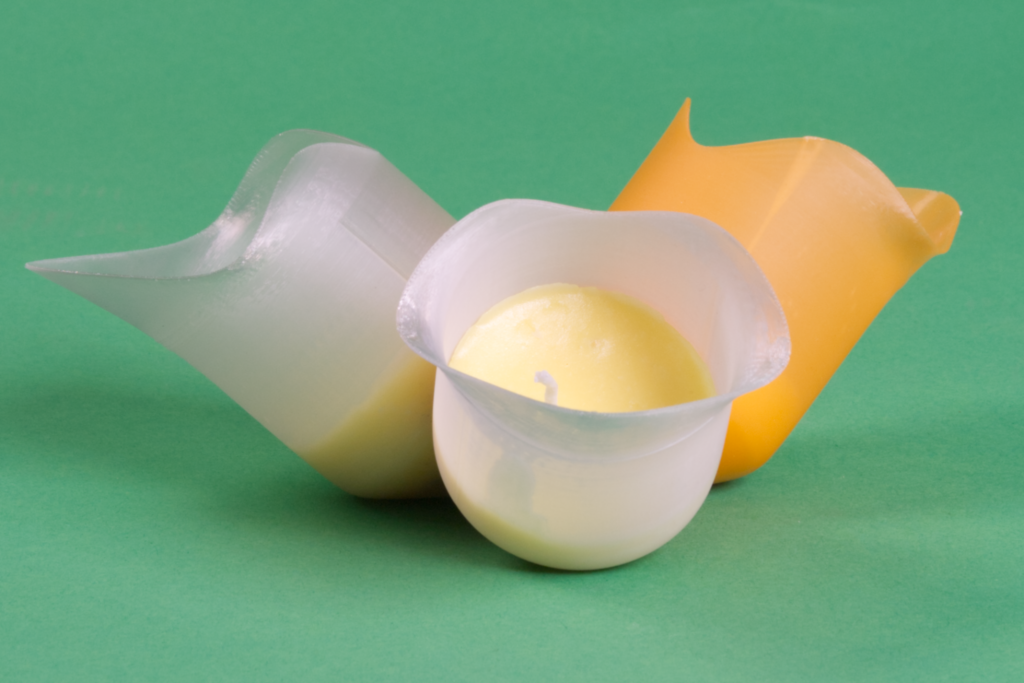
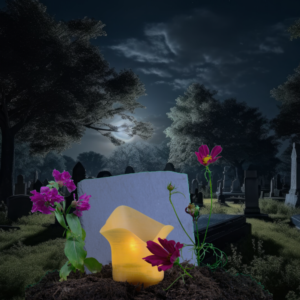
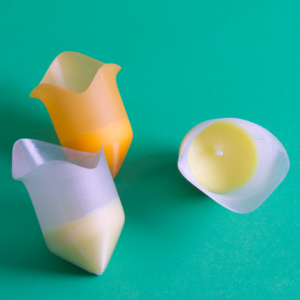
Milk. Tea. Bread. For a long time, food was transported in containers that were circulated: jugs, bowls, bags—reusable items were part of everyday life. It was the plastics industry that made disposable the norm and taught people to throw things away. DÉJÀ VU reminds us of what has been lost: three containers – made of plastic – show what archetypal forms can look like in a deposit system. The material enables what used to be more complicated: durable, lightweight, and hygienic packaging. What might a future look like in which we have learned to keep things again?

Milch. Tee. Brot. Lange Zeit wurden Lebensmittel in Gefäßen transportiert, die zirkulierten: Kannen, Schalen, Beutel – Mehrweg war Alltag. Erst die Kunststoffindustrie machte Einweg zur Norm und brachte den Menschen bei, Dinge wegzuwerfen. DÉJÀ VU erinnert daran, was verloren ging: Drei Gefäße – aus Kunststoff gefertigt – zeigen, wie archetypische Formen in einem Pfandsystem aussehen können. Das Material macht möglich, was früher komplizierter war: langlebige, leichte und hygienische Verpackung. Wie könnte eine Zukunft aussehen, in der wir wieder gelernt haben, Dinge zu behalten?

The project:

The process:


six Graduates at class of 25 – DDW Eindhoven

Tools for Tomorrow AT DDW

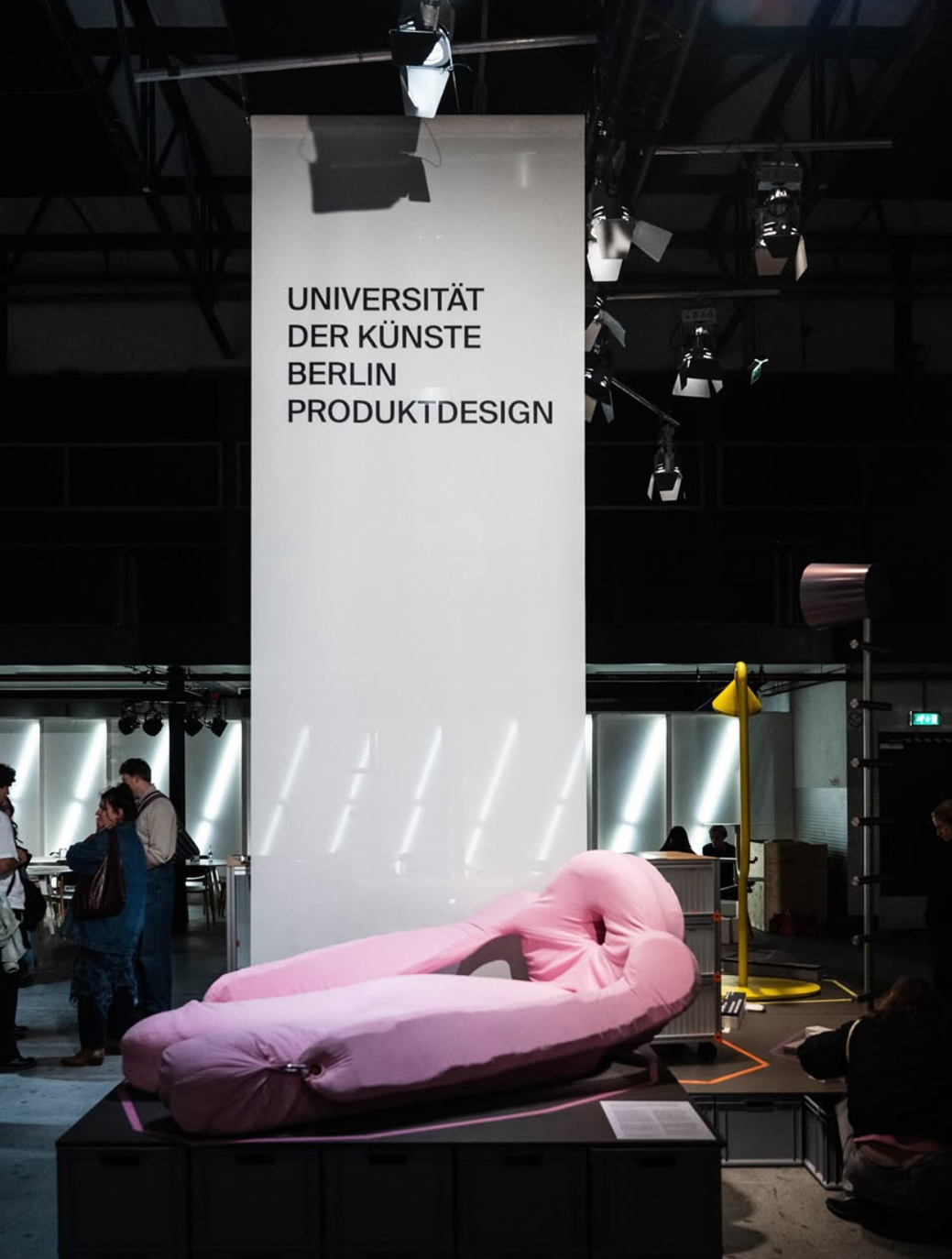
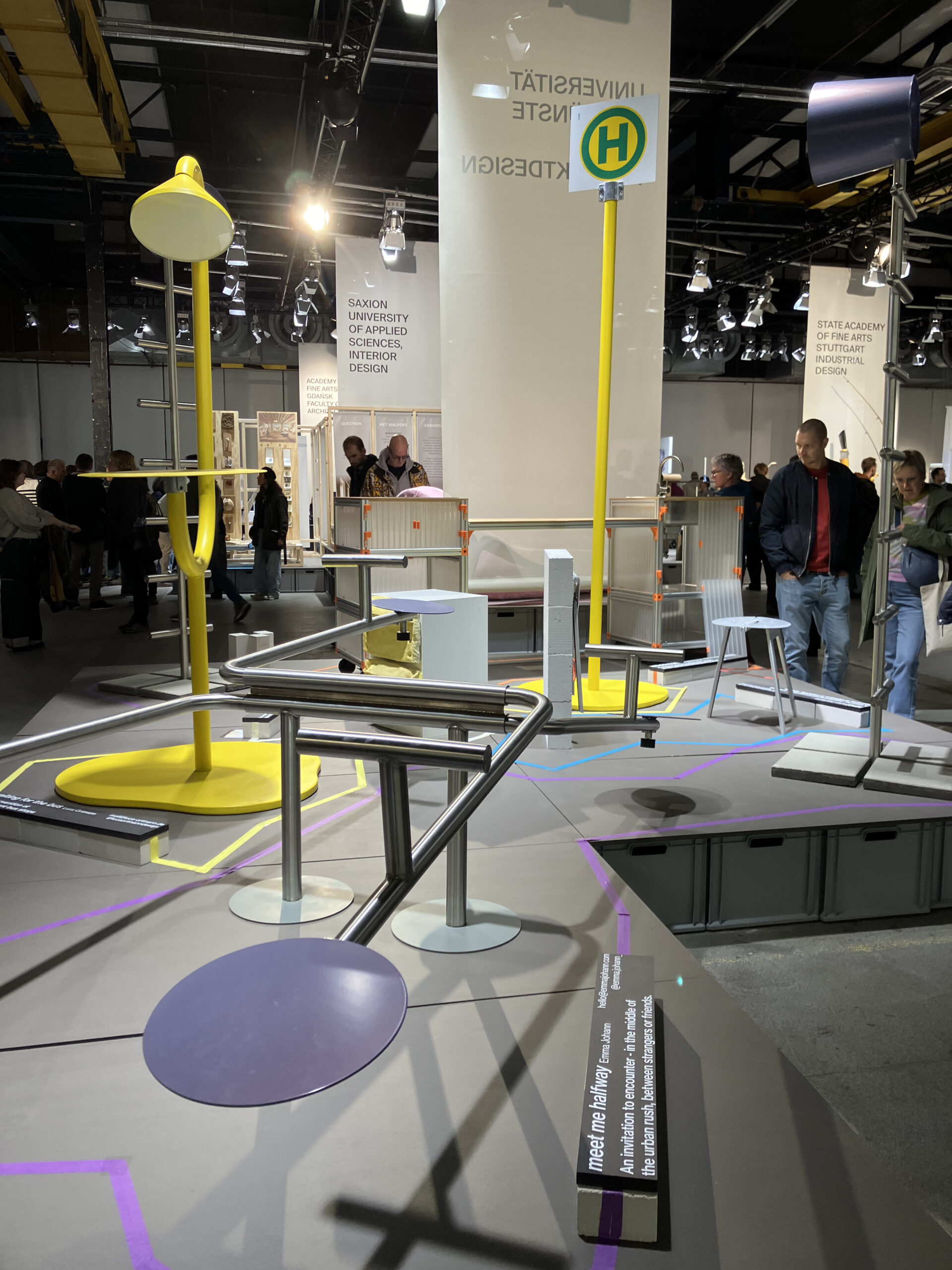
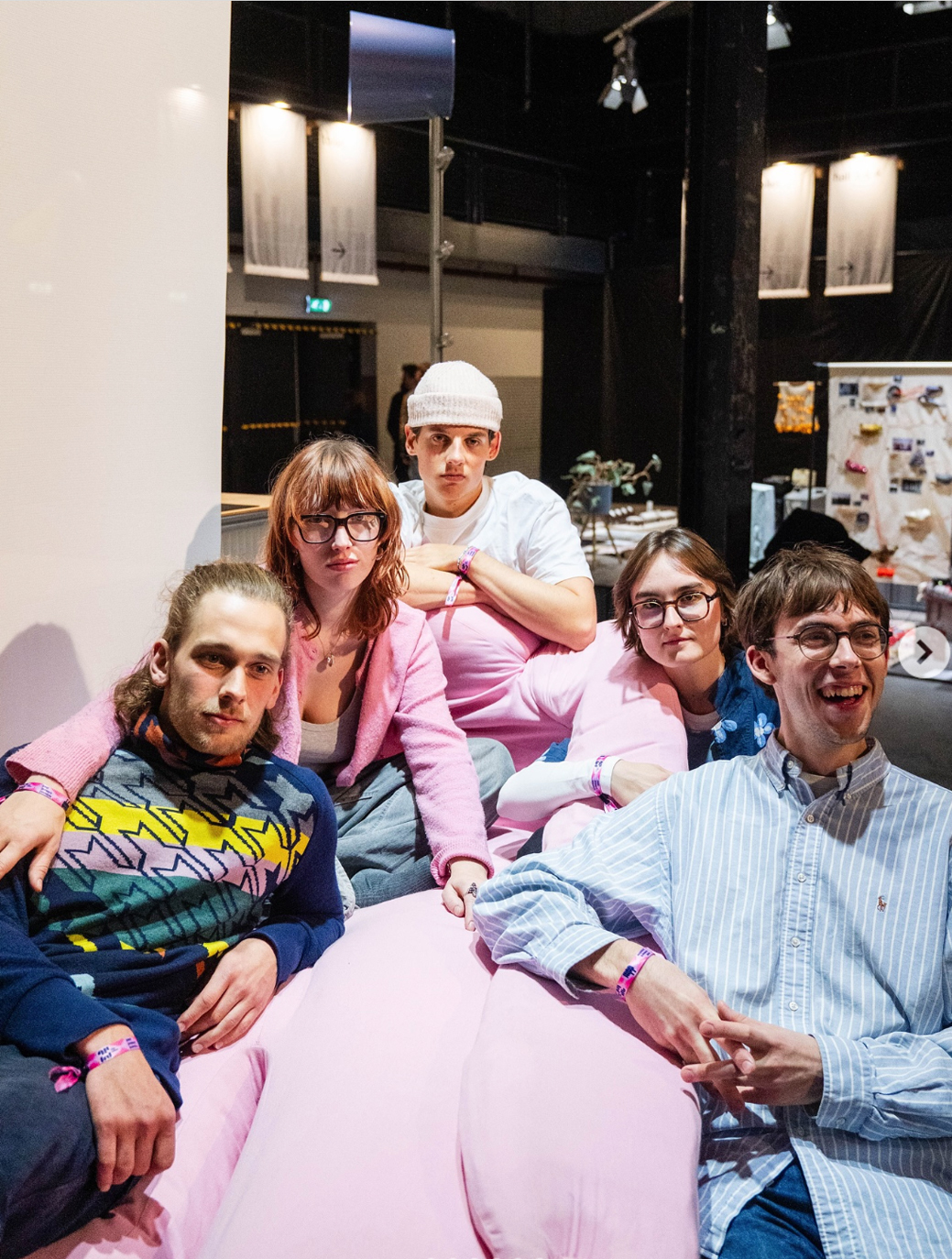
Under the title Tools for Tomorrow, five BA  graduates from last year’s Institute for Product and Process Design present their projects at Dutch Design Week 2025 in Eindhoven:  18. till 26. October

How can we shape our future environment and make positive contributions through the assets we have as designers?
What role can material, cultural, and technical solutions, as well as social, artistic and personal impulses, play in the way we design for our future environments?
Six graduates from UdK Berlin present their approaches.

The exhibitors are:

Emma Johann (BA 2025) – insta
Emma Mende (BA 2025) – insta
Anton Oberländer (BA 2025) – insta
Luca Ortmann (BA 2025) – insta
Paul Krüger (BA 2025) – insta
Friedrich Kreppel (BA 2025) – insta

The exhibition is part of the Class of 25 in the much valued Klokgebouw at Strijp S and . See and read more


forms, fellows, functions, 2025

Designgrundlagen

Einführung in den Entwurf für die Erstsemester in Mode- und Produktdesign über verschiedene kurzfristige Gestaltungs- und Entwurfsübungen, die verschiedene ausgesuchte Aspekte von Beobachtung, Wahrnehmung, Findung und Formung über Methodik, Strategie, Reflexion und Diskussion, bis zu Dokumentation, Darstellung, Präsentation und Vorführung integrieren. Es werden unterschiedliche Aufgabentypen eingesetzt, sowie verschiedene Formate des Inputs, der Besprechung und der Diskussion.

formsFormung über Abwicklung / Formentwicklung über die Auseinandersetzung mit Formfamilien in 2D und in 3D / fellows: Eigenwahrnehmung – Fremdwahrnehmung – Identifikation (Duftmarke) / „Wie ist mir der Schnabel gewachsen?“ (Kopfobjekt) / „foodwear“ (W-Fest) / „hoch hinaus“ Handlungen mit Objekt (Show, Aula) / functions: jedes Kurzprojekt ist mit einer spezifischen Werkstatteinführung verbunden (Stoff, Holz, Metall, Kunststoff) und wird mit der entsprechenden Technik respektive Material realisiert.

Abbildung © Hans Hemmert, (yellow sculpture fitting to ladder), 1998, latexballoon/ air/ artist/ ladder

………………………………………………………………………………………………………………………………………………………….

.
Prof. Robert Scheipner
LA Luisa Kahlfeldt
Tutor Lorenz Ni
.
basislabor design
R008 und nach Aushang
montags 09.00 Uhr bis 15.00 Uhr
dienstags 09.00 Uhr bis 13.00 Uhr
Start Montag 13.10.2025

Kursnummer 9010101


GRIPP – Layla Jordan

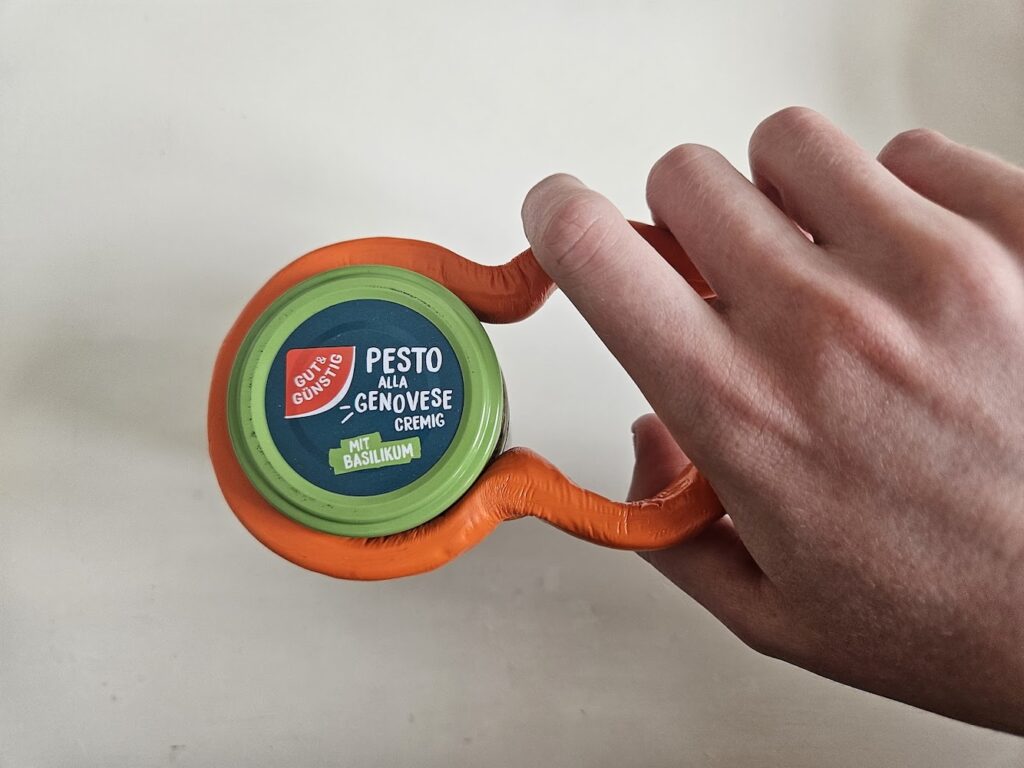
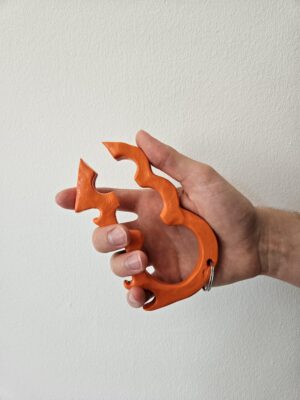
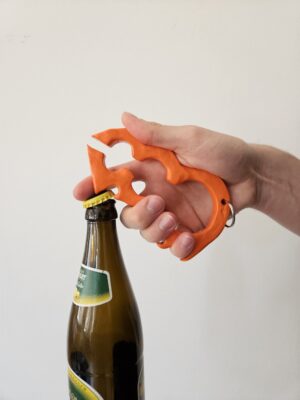
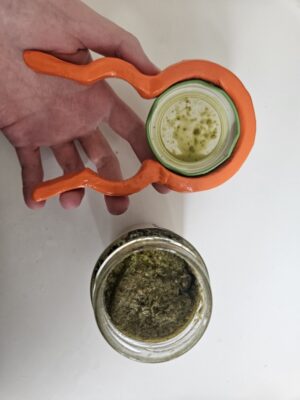
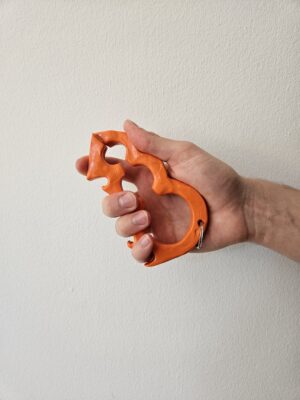
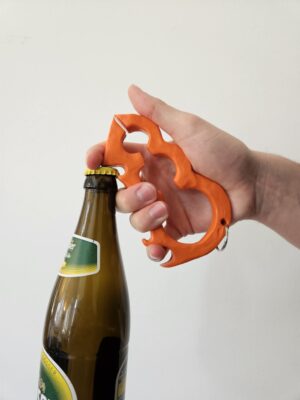
GRIPP is a helpful multitool designed for people with weak grip strength, to aid in the opening of cans, bottles and jars. Three openings of varying sizes can grip around the lids of jars or screw-cap bottles, providing a large handle with leverage to hold onto. A bottle opener and a ring-pull can opener are integrated in the sides of the tool, and the tweezer-like tip of the tool can be used to pick up food without getting your hands dirty. Due to the very strong and flexible nature of Formcard, the tool is not misshapen through repeated use and can be stretched around jar lids with a diameter of up to 10 cm.


Nutzungsmöglichkeiten – John Lörinci

In der Ausseinandersetzung mit Formcard und seiner Materialität habe ich im Verlauf des Projekts viel mit Konzeptideen herum gespielt um dem Material gerecht zu werden und dessen Potenzial der stetigen Verformbarkeit nutzen zuzuschreiben. In diesem Zusammenhang habe ich mich nicht auf die bisherige Formgröße von Formcard beschränkt sondern versucht Nutzungsmöglichkeiten zu entwickeln die einen spezifischeren Nutzen verfolgen.

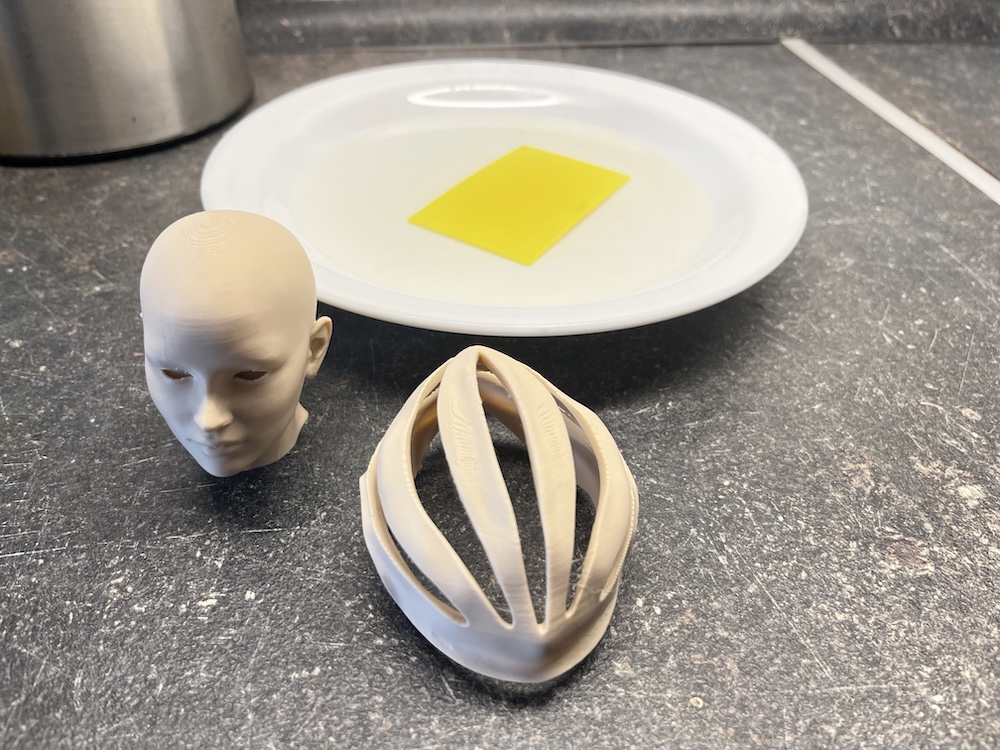
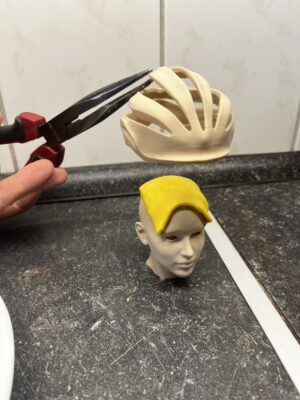
Mein Finales Konzept beschreibt eine Individuelle und Angepasste Nutzung von Form und Geometrie die von jedem Nutzer spiezialisiert werden kann. Man erstellt also je nach Nutzungsgebiet simple Grundkörper die einfach aus dem selben Material wie die Formcards spritzgegossen werden können und dessen Endform durch verformung komplett vom Endnutzer bestimmt wird. Beispielsweise Stühle/ Hocker die als Grundobjekt als simpler Kubus verkauft werden können, doch aufgrund seiner Materialität vom Endbenutzer perfekt an das Gesäß angepasst sein können oder aufgrund der Möglichkeit von Verformung einen ganz bestimmten engen Platz in der Wohnung einnehmen, in die herkömmliche Sitzobjekte nicht passen. Wenn man diesen Ansatz weiter denkt, wäre es auch sehr interressant sich damit auf Objekte zu spezialisieren, bei denen eine hohe Anpassungsgenauigkeit und Individualisierung dessen Funktionalität verstärkt. Beispielsweise einen Einleger als Innenfutter eines Fahrradhelms, der aufgrund der stetigen Verformbarkeit perfekt an die Kopfform und Größe anpasst werden kann und somit eine bessere Passgenauigkeit für besseren Schutz bietet. Ein weiteres Beispiel sind potenzielle Anwendungen bei Knochenbrüchen als Ersatz von herkömmlichen Gips-Verbänden aufgrund der einfachen Handhabung, Wasserresistenz und Shorehärte.

Ich sehe viel Potenzial in Anwendungsmöglichkeiten des Polymorph Materials (Polymilchsäure), da es aufgrund seiner leichten Verarbeitung und vereinfachten Individualisierung Optionen bietet die spezifizierte Anwendung durch den Endbenutzer ermöglichen.


MELT TREE – Gustav Sundberg

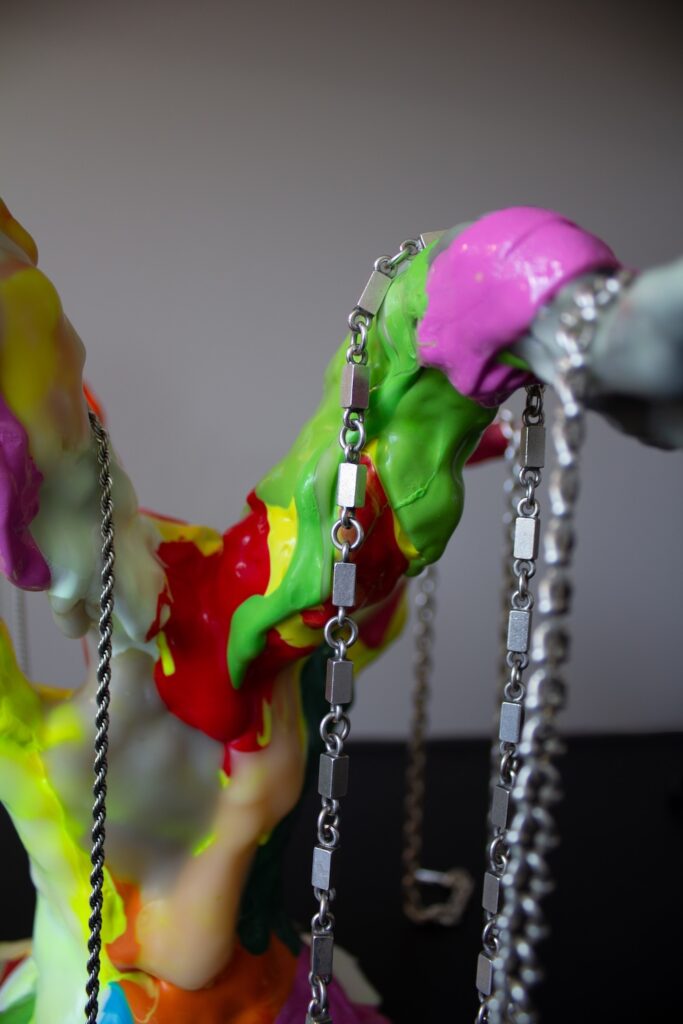
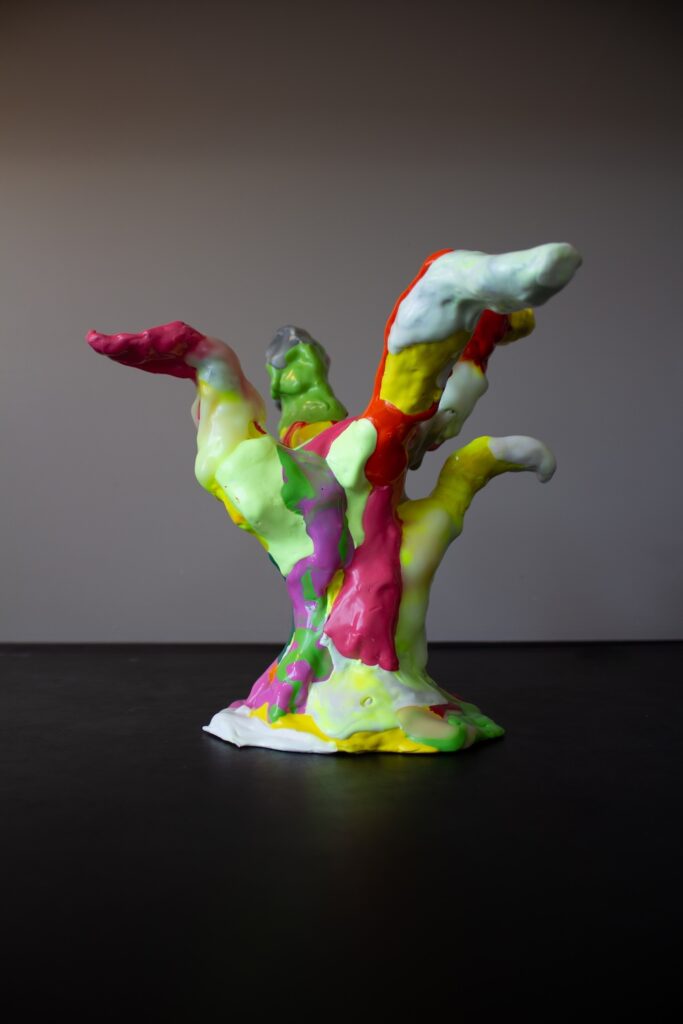
The Melt Tree is a decorative object that can be enjoyed just as it is, as a jewelry tree or for hanging small objects on. It has been made by covering an inner construction made from aluminium foil with melted form cards. The aluminum does not contribute with much support itself and the strength of the tree is first achieved when the melted cards cool down.

The first step of the tree was to create the aluminum core. After that cards were melted and rolled out thinly before applied on the aluminum. Some cards were mixed or fully blended to achieve effects and new colors. The process continued until the aluminum was completely covered. As a final step, to achieve its melted and shiny look, the whole tree was re-melted in hot water until the desired look and shape was achieved.


Things – ChihYun Cheng

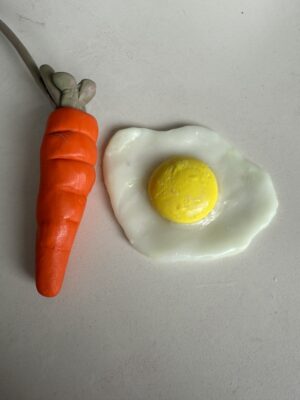
Formcard is similar to clay in that it can be freely molded into various shapes, but what more special is that it hardens after cooling, offering both flexibility and durability. It’s perfect for creative expression and integrating into everyday items. Some of the desk accessories created include a carrot- pen, a Traffic cone-shaped hair tie holder, and a fried egg-shaped corner protector. These items showcase the fusion of organic forms with practical functionality, turning imaginative designs into useful objects.


FORMCARD EXPERIMENT – Jul Gross

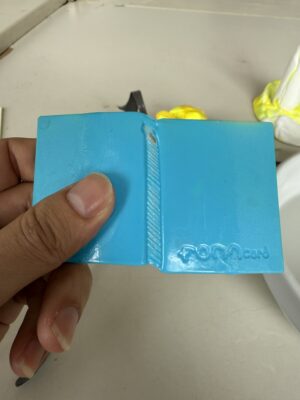
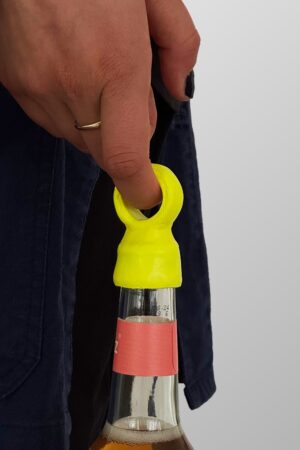
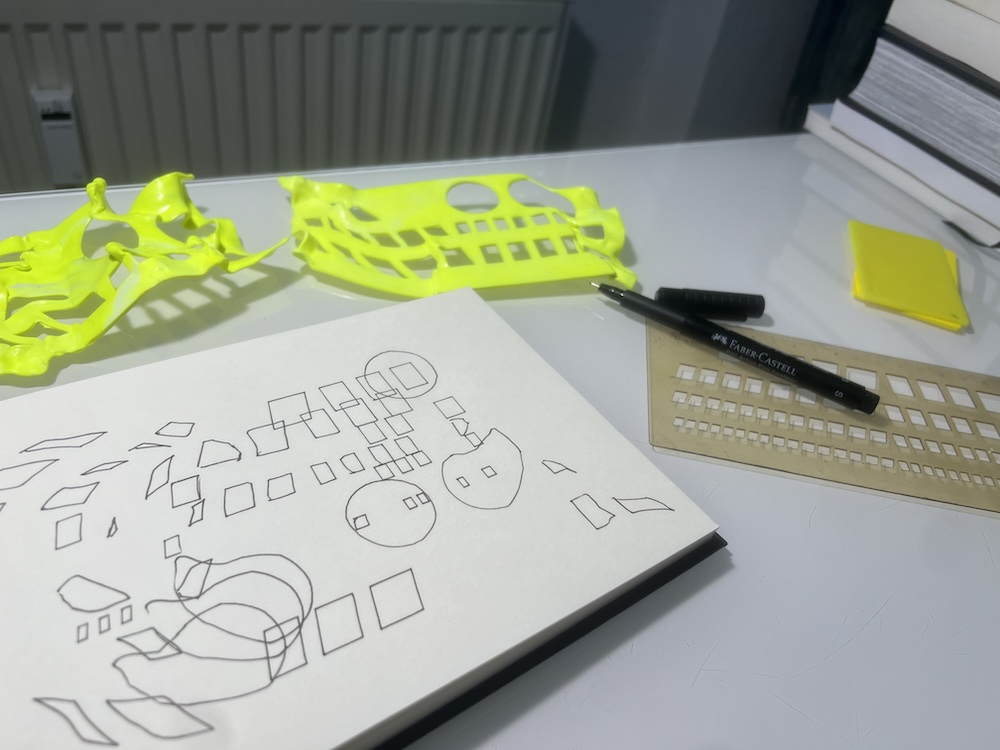
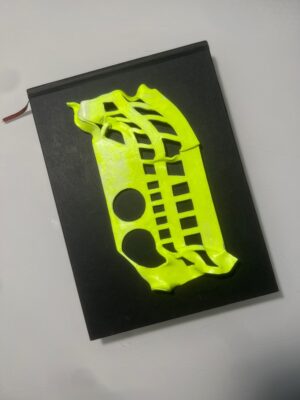
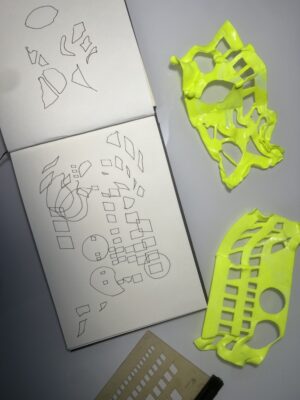
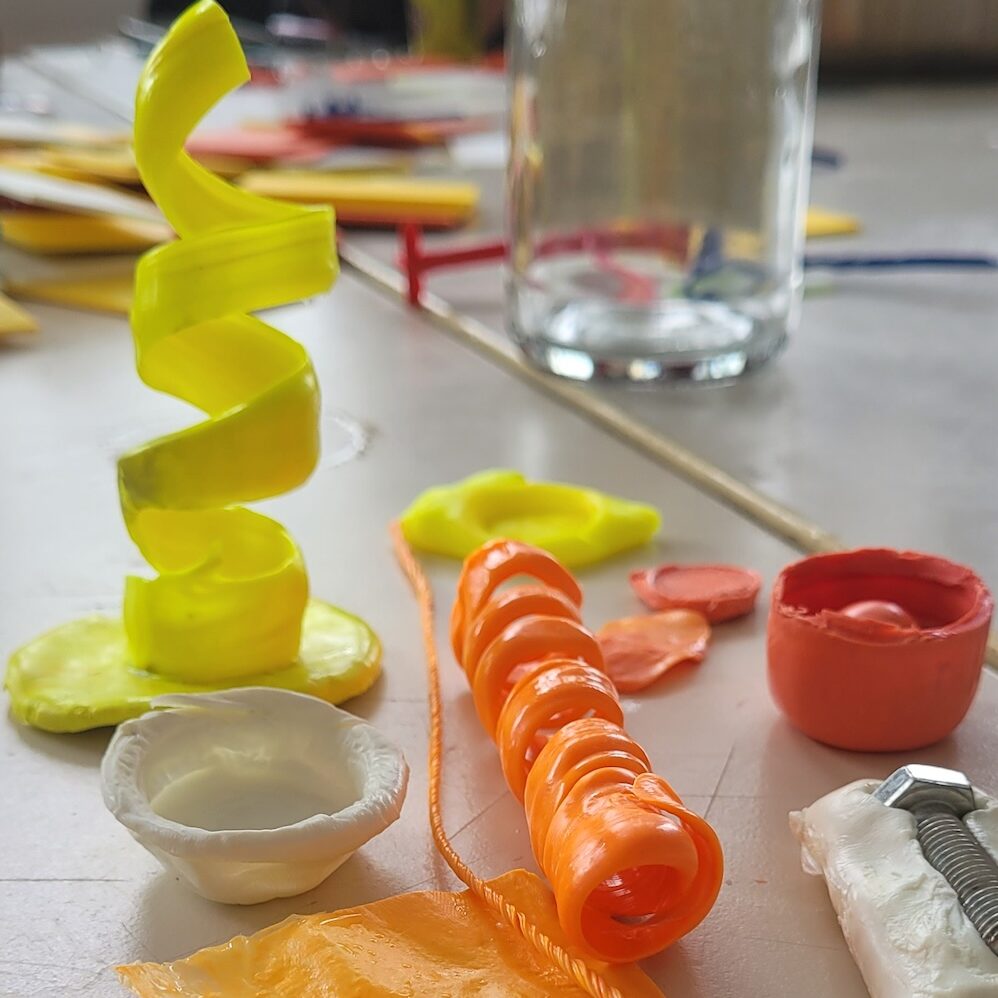
During an intense one-week project, we evaluated a product called FORMcard—a credit-card–sized piece of bioplastic that becomes malleable when submerged in hot water for a few seconds, then hardens again as it cools.

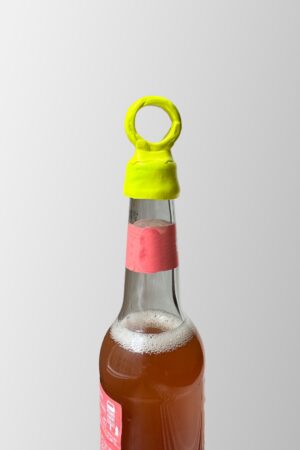
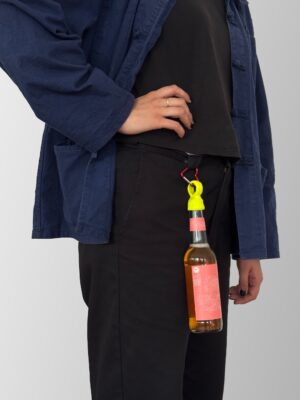
This experiment showcased FORMcard’s ability to create instant, perfect negative molds of existing objects and highlighted its lasting elastic properties. The result is a reusable cap for crown-cork bottles. The cap lets you reseal your beverage, protecting it from insects and providing peace of mind against tampering. A loop on top makes it easy to carry on a keychain or to hang your bottle from a belt loop or backpack.


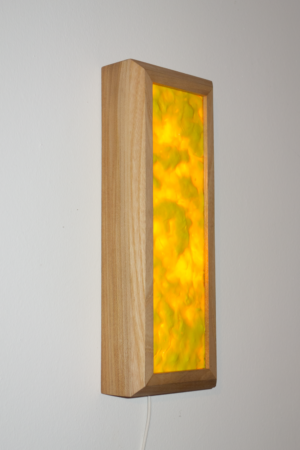
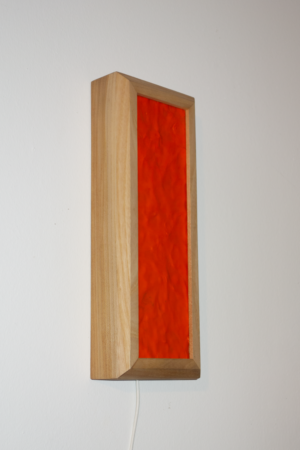
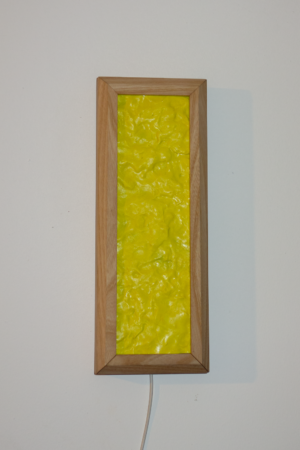
Moodshapes – Moritz Glatte

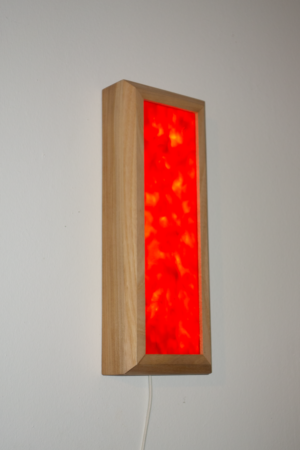
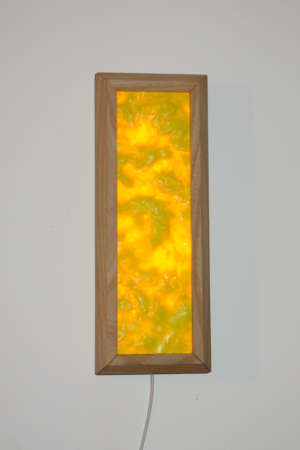
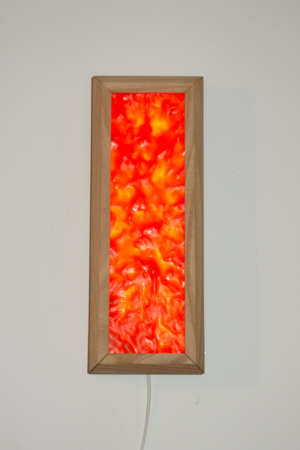
My approach to working with FORMCARD was to seek out high-quality surfaces and to avoid the automatic DIY aesthetic.
After extensive experimentation, I discovered the dynamic transparency of stretched and thinned material. This discovery enabled me to achieve my objective by intentionally utilising the DIY characteristics and providing them with a new context. The concept of a mood lamp was created.

Through the technique of stretching and pushing the material on a hot surface, I was able to create large and thin sheets with a changing transparency.

These sheets were cut into rectangles and subsequently used as the lampshades.
The housing for the lamp was constructed from wood and consisted of two parts.
The first part was mounted on the wall, serving as the base and housing the light source. The second part holds the lamp sheets and can slide easily onto the base.

The main idea is to buy the skeleton of a lamp and create the lampshades independently in personal process using FORMCARD. This approach provides the object with an infinite range of aesthetics and creates a strong emotional connection to the owner.
Once a shade becomes boring, a new one can be created and exchanged easily.


THE MELTED TACTICAL RULER – Nicole Bedeker

The idea for the melted tactical ruler was inspired by Formcards material properties.I wanted to emphasize its ability for contrast and let it be seen in one object.Meaning I needed an object that reflects a very specific standard and looks very straight and clean, perhaps manufactured.After I was inspired by my own tactical ruler I recreated one out of Formcard.The next step was to let the material do its thing and deform.Now one can not use the tactical ruler as meant, but new shapes and possibilities are unlocked.


FORMPlant – Noga Kassif

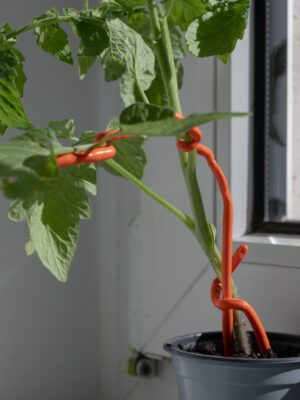
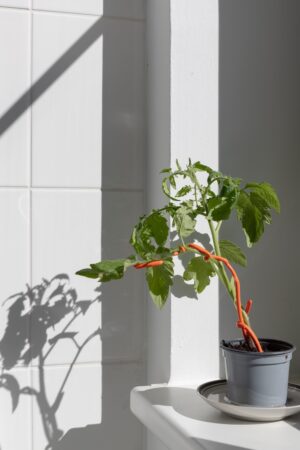
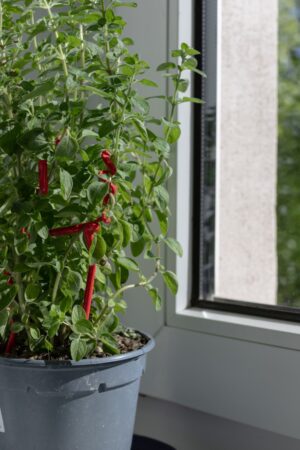
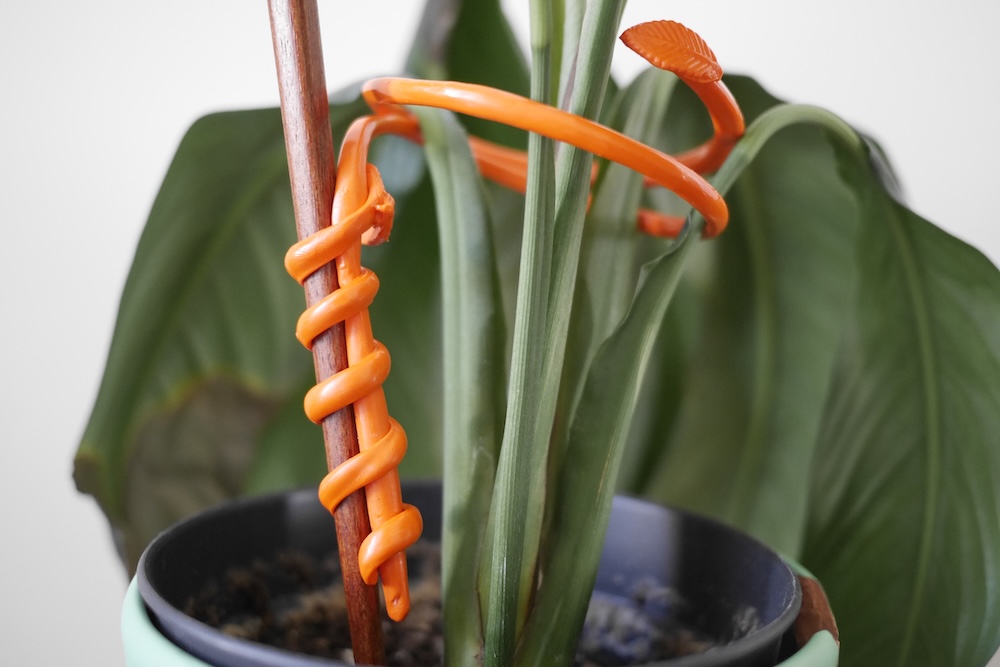
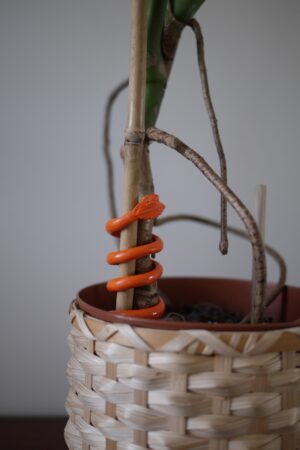
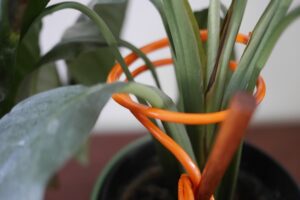
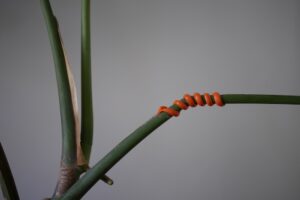
FORMPlant harnesses the unique properties and accessibility of FORMCard — a moldable, reusable bioplastic — to create a modular support system and shaping tool for home plant growers.

The process begins with a simple transformation: the user heats and forms the flat card into a rod. This method is intuitive and easy to perform, while yielding an aesthetically clean and smooth result. The rods can vary in color, diameter, and length, allowing users to adapt the tool to their plant’s specific needs.

In the next stage, a portion of the rod is reheated in water and gently reshaped to support the plant in the desired position or posture. This hands-on process enables a direct, personal interaction with both the material and the plant.

Project Highlights:

  • Custom-fit design: Every plant grows differently — in shape, size, and movement. FORM PLANT offers a way to create a tailored support system in form and color that respects each plant’s individuality.
  • Sustainable, reconfigurable, and compostable: Made from bio-based plastic, the support can be reshaped and reused multiple times as the plant develops. Eventually, the material naturally biodegrades and can be composted, returning to the soil and nourishing the very plant it once supported — completing a thoughtful, closed-loop cycle.
  • Support wraps the plant — not the other way around: Unlike traditional plant stakes or ties, FORM PLANT encourages a new relationship where the support responds to the plant’s growth rather than restricting it.


DÜBEL – Emily Lechaux

Wenn der passende Dübel fehlt, bietet DÜBEL aus formcard die Lösung: Ein individuell anpassbares System, das sich schnell auf jede Schraube abstimmen lässt – sofort bereit für den Einsatz.


Hang’n’store – Amelie Wissels

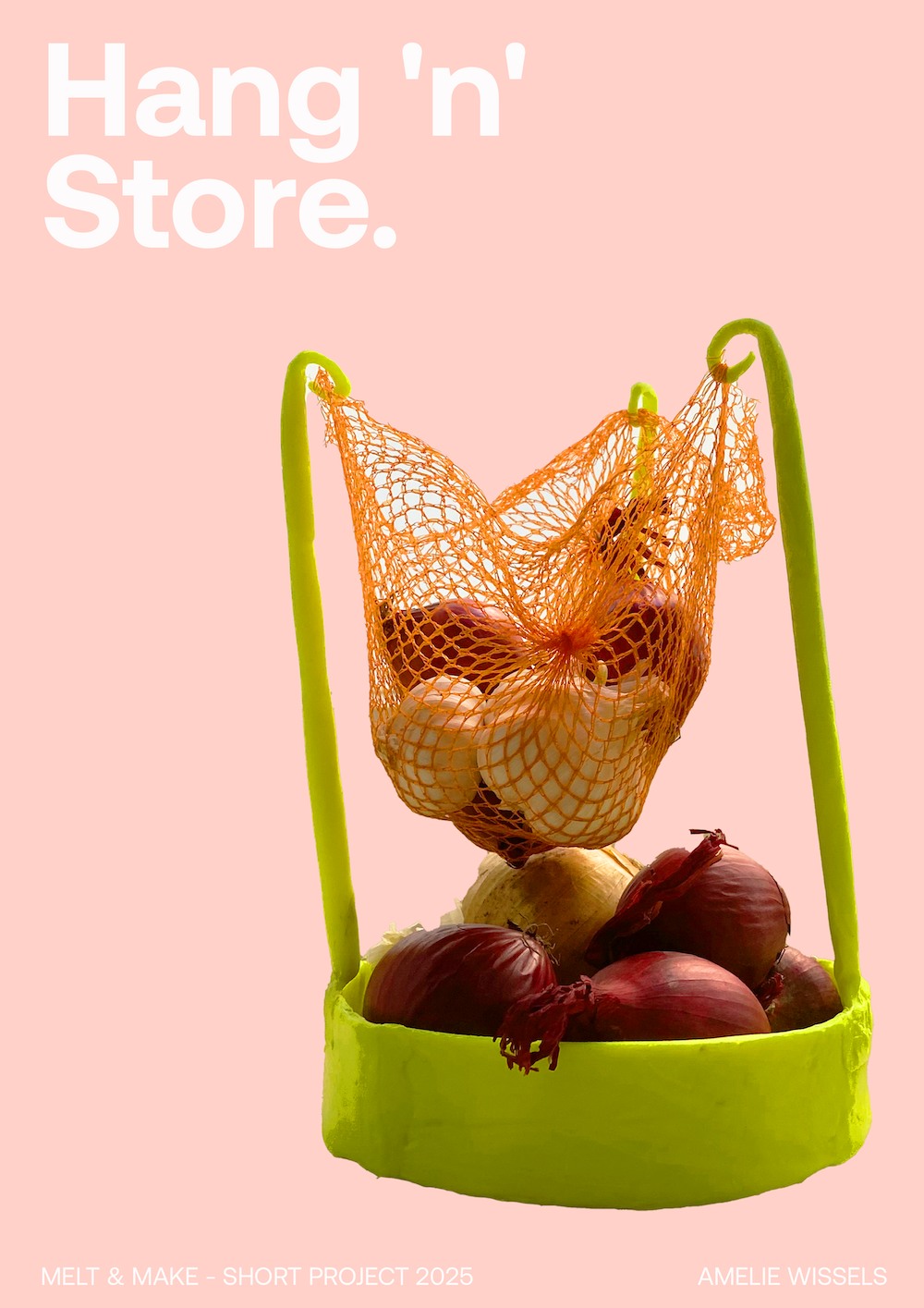
For the short project, the goal was to design something using plastic cards that would simplify our daily lives. I chose to focus on food packaging and storage, especially since I’m currently on Erasmus and have very limited kitchen facilities. For example, I only have three bowls, and I dedicate one of them just for storing onions and garlic.
I wanted to take advantage of the material’s key properties—particularly its elasticity and flexibility. Thanks to the flexible rods (or tubes), each bag is held under tension, making it easy to stretch a bag for garlic just as well as for onions.
This product is built around what’s already available. For instance, onions are often sold in mesh bags, so I used that as my starting point. During the prototyping phase, I quickly realized that the base needed to be weighted for stability. Since I didn’t have many materials at home, I used other onions, fruits, or vegetables to weigh down the bottom. This solution not only stabilizes the structure but also provides extra storage—a win-win: fewer materials used, and more storage space for me.
I experimented with a range of techniques and tools—using a lighter, a hairdryer, and even an ice bath. The final finish isn’t perfect, as I had some difficulty getting the bottom tubes to the right level of elasticity and securing them properly to the bowl.
But in the end, the assignment was about creating something that improves your daily life. And with this bright yellow design, I can now store my onions and garlic in a fun and practical way!

MELT & MAKE – Aaron Bigos

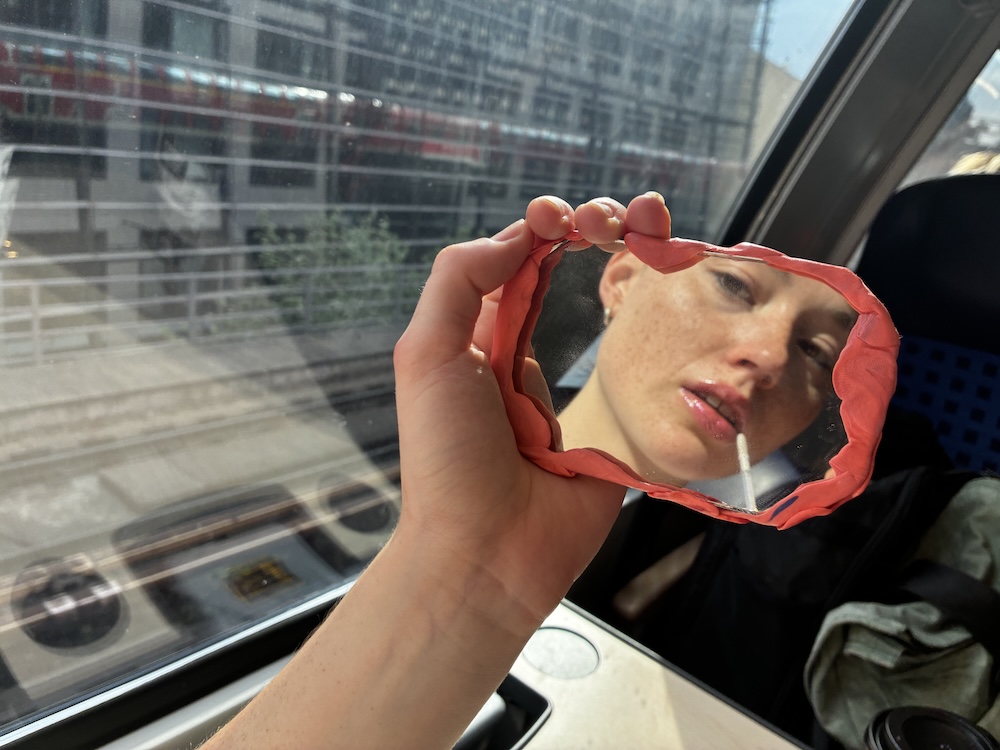
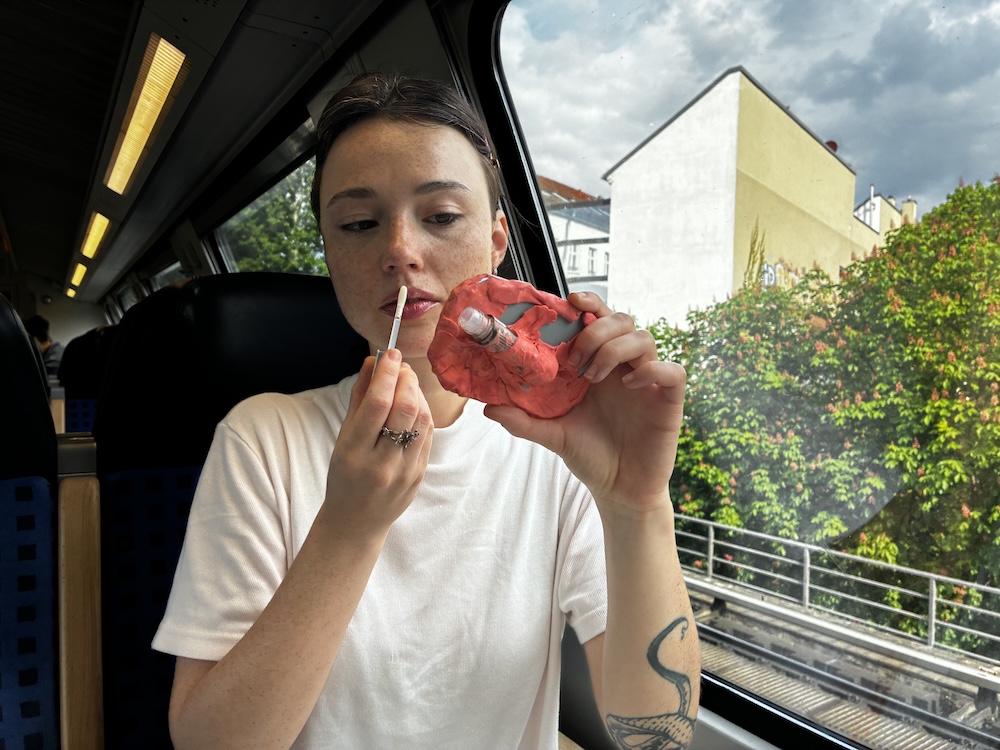
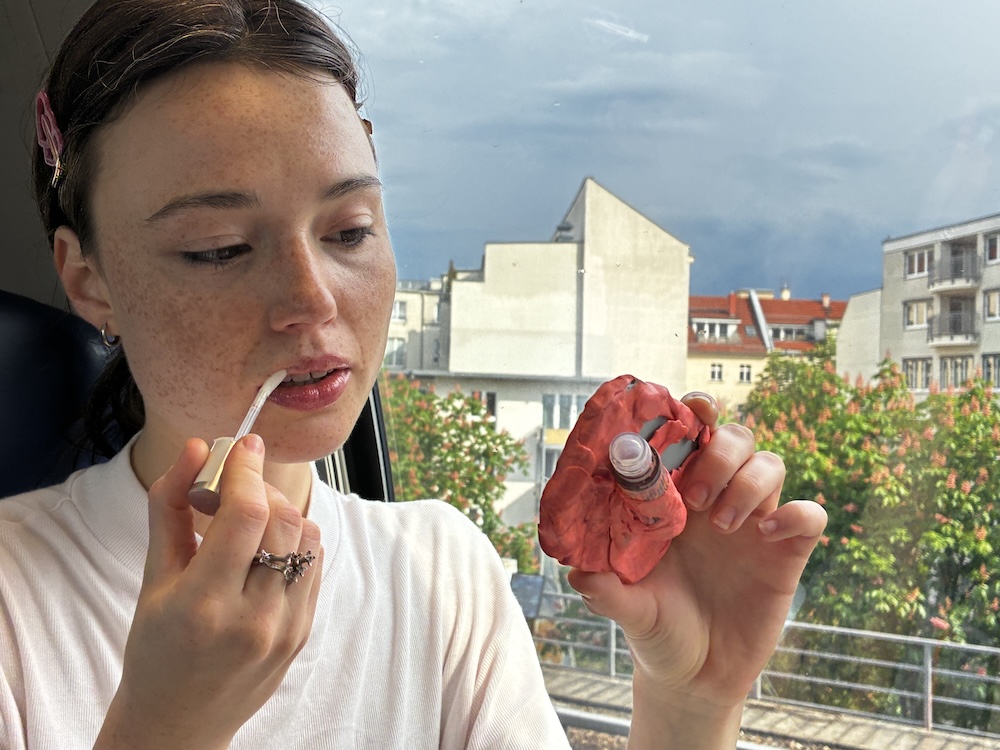
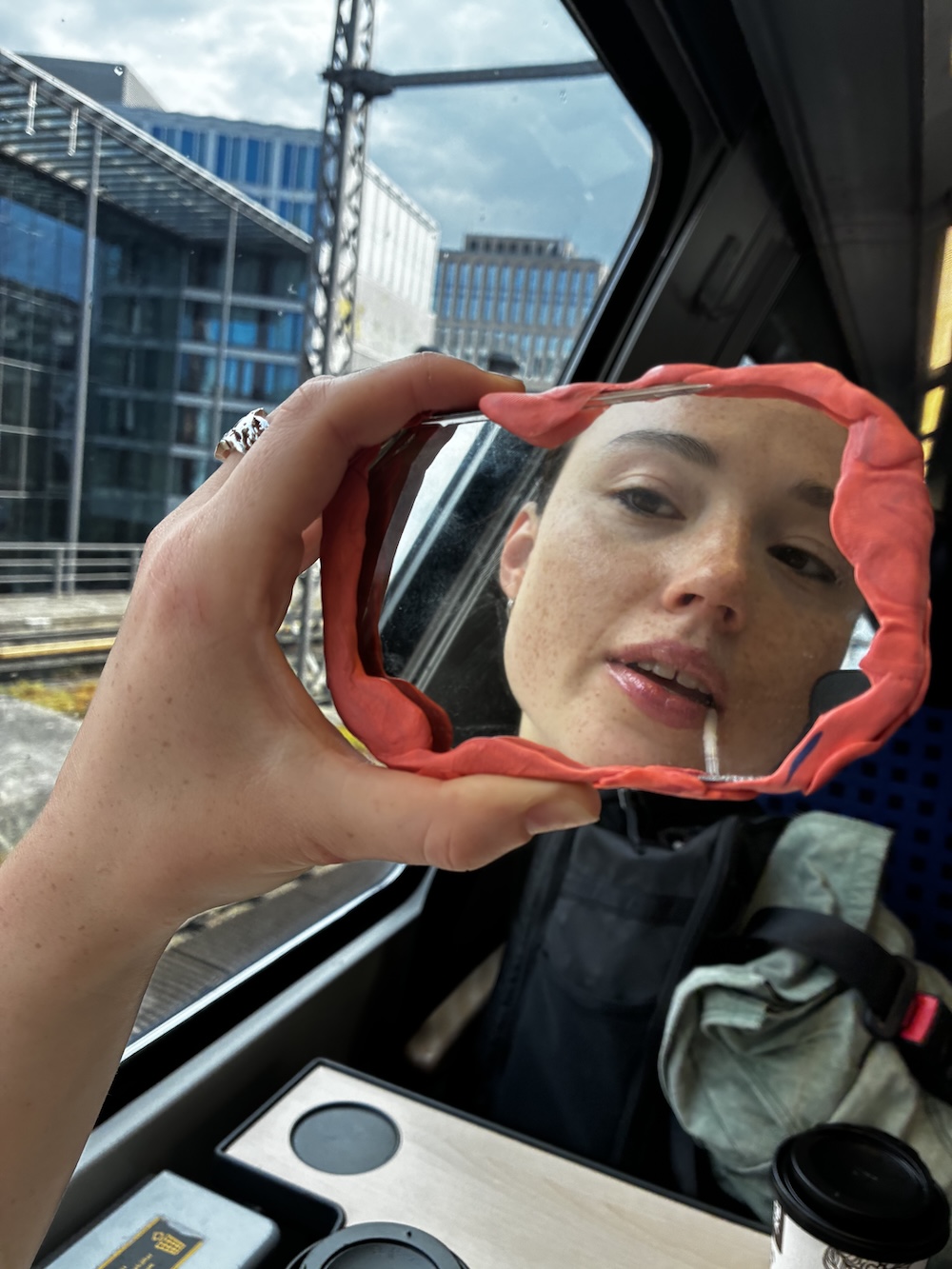
The object I created during the short project “melt & make” is a little pocket mirror which allows you to carry your make up utensils with you. The smartphone like shape makes it blend in seamlessly, while the formcard frame gives it an individualistic touch and makes it an unique object. The possibility to change the attached utensils enables the user to mount all different sizes of equipment and makes it customizable with different shapes and colors.


GreenGrip – Alessa Schubert

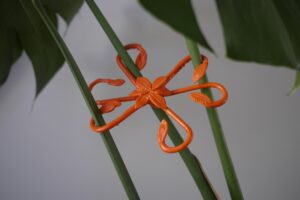
GreenGrip was created from the bio-based Formcard material – an innovative product family of compostable plant holders for indoors and outdoors. Whether SpiralFix (climbing spiral for fixing to rods), LeafClips (clips for trellises), FlexRing (centerable spiral holder) or BranchHub (branch connector): All are stable, flexible, knot-free and leave no plastic waste behind – ideal for vegetable and ornamental plants.


Emily Lechaux nominated for VDID Newcomer Award

In the project Plastology Emily Lechaux developed ‚UFO‘ a designed for being durable, recyclable and repairable. The project is nominated for a VDID New Talents Award!

The VDID (Verband Deutscher Industrie Designer) DID supports young designers who solve relevant problems with well-thought-out, innovative ideas, questioning the status quo and seeking systemic answers. Projects that recognise complexity yet develop tangible solutions. They are not primarily concerned with technical perfection and aesthetics – what matters is the will to bring about positive change.

An expert jury, consisting of 10 VDID members with a wide range of expertise, has selected ten projects for the shortlist from over 120 submissions that are nominated for the VDID New Talents Award 2025. The winners will be announced and honoured at the award ceremony on 26 October.

Read more HERE

See more:
Verband Deutscher Industrie Designer
VDID Awards
Emily’s project in sose 2025

Johannes Lutz nominated for Bundespreis Ecodesign ‚Nachwuchs‘ 2025 !

In the project Loved Ones (objects to keep) Johannes Lutz developed ’04IN‘, headphones designed for being durable, recyclable and repairable. The project is nominated for a Bundespreis Ecodesign in the category nachwuchs!

All projects admitted to the jury meeting – including this year’s nominees – will be on display in an exhibition at the Metropolenhaus Berlin from 20 to 23 September, daily from 12 noon to 4 p.m. The vernissage will take place on 19 September at 6 p.m.
Further details and an online gallery featuring all nominees can be found on the website of the Federal Ecodesign Award.
Read more HERE

See more:
Bundespreis Ecodesign 2025
Johannes‘ UdK project in wise 2024/25

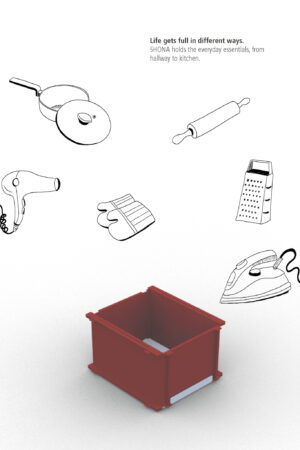
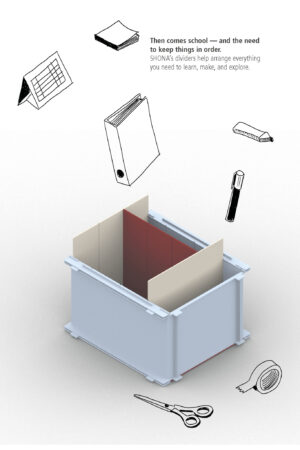
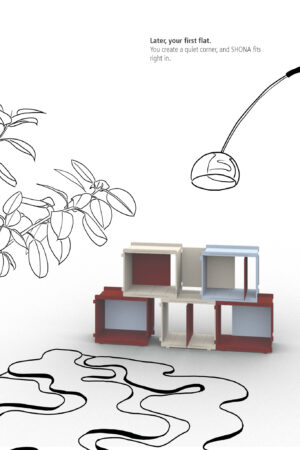
SHONA – Zhiyuan Peng

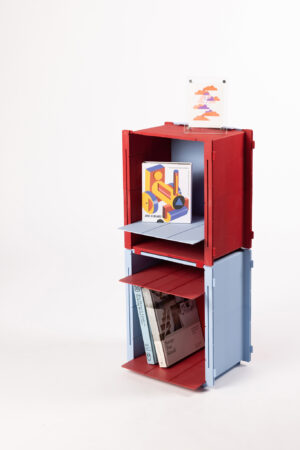
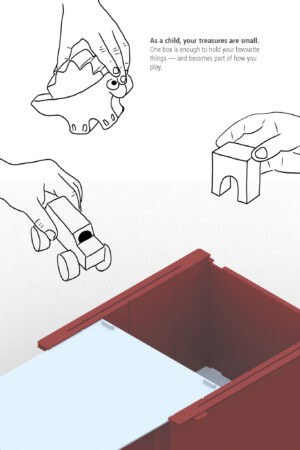
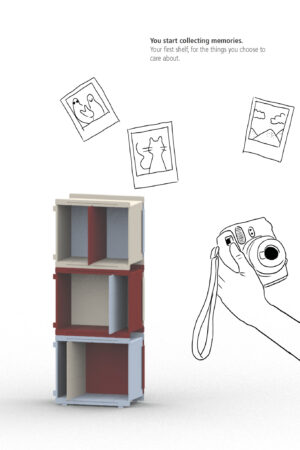
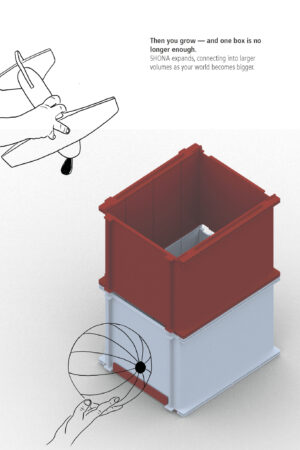
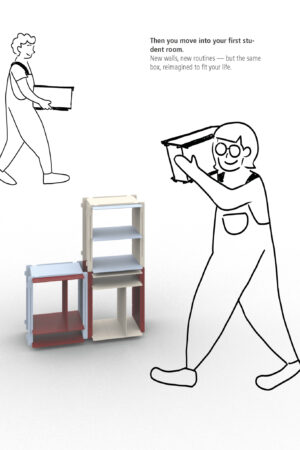
A storage system that adapts as life expands. SHONA is a modular storage system inspired by the sliding principles of shōji in traditional Japanese architecture. It is designed to adapt to changing needs with removable lids and bases, allowing stacked boxes to form larger volumes. The system supports stacking in multiple orientations and directions. Compartments can be rearranged using vertical or horizontal dividers.

SHONA is lightweight, made from recycled ABS, and easy to carry — even for children. It can be used individually or in combination, fitting into shared living areas, kitchens, or children’s rooms. Its neutral colour palette and customisable components allow it to blend into contemporary interiors while remaining flexible and easy to reorganise.

Ein Aufbewahrungssystem, das sich mit dem Leben weiterentwickelt. SHONA ist ein modulares Aufbewahrungssystem, das von den Schiebemechanismen der traditionellen japanischen Shōji-Architektur inspiriert ist.

Es wurde so gestaltet, dass es sich an veränderte Bedürfnisse anpasst: mit abnehmbaren Deckeln und Böden, wodurch gestapelte Boxen zu größeren Volumen kombiniert werden können. Das System ermöglicht das Stapeln in verschiedenen Richtungen und Ausrichtungen. Innenräume lassen sich durch vertikale oder horizontale Trennwände flexibel strukturieren.

SHONA ist leicht, besteht aus recyceltem ABS und lässt sich selbst von Kindern einfach tragen. Es kann einzeln oder in Kombination verwendet werden und passt in gemeinsam genutzte Wohnbereiche, Küchen oder Kinderzimmer. Die neutrale Farbpalette und auswählbare Komponenten sorgen dafür, dass es sich harmonisch in moderne Wohnumgebungen einfügt – dabei bleibt es flexibel und einfach neu zu organisieren.

The project:


The process:


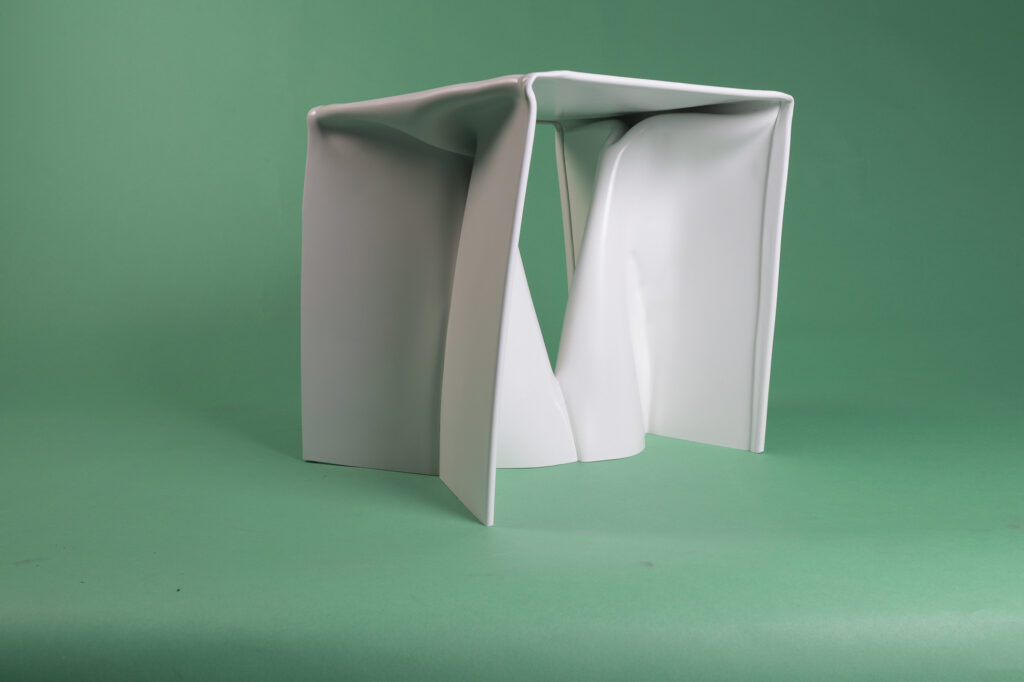
MonoFold – Piet Engel

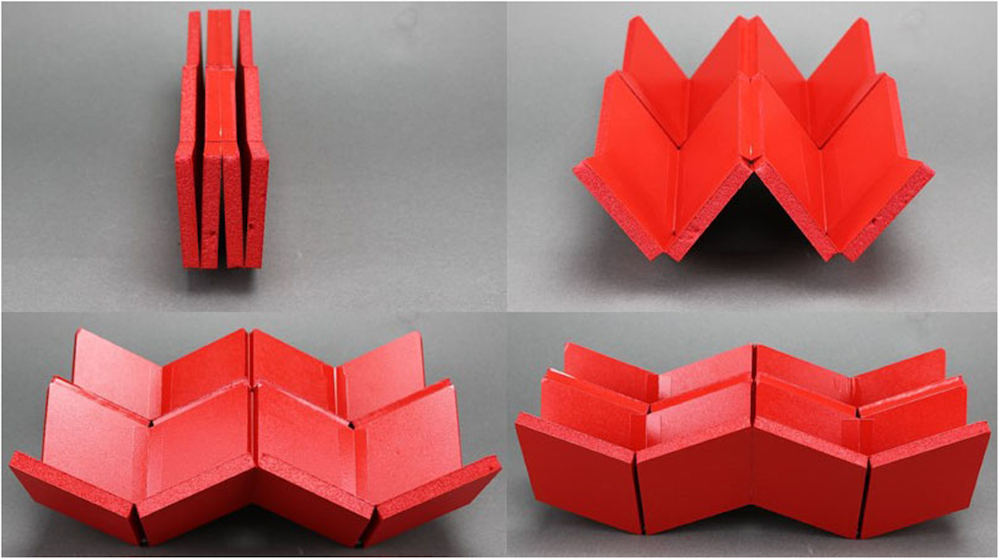
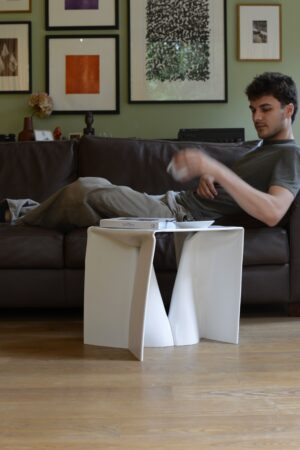
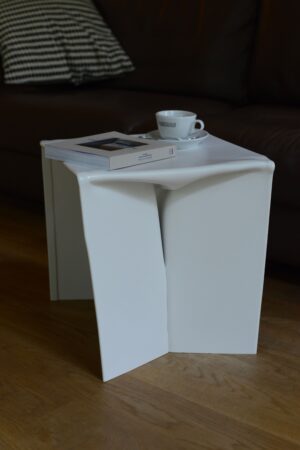
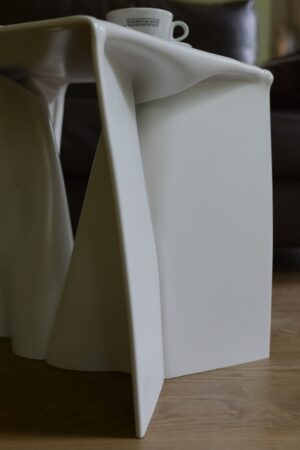
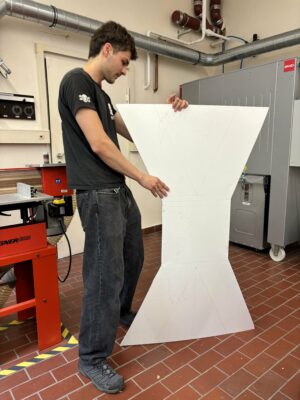
This side table is made from a single 4 mm PS sheet, heat-folded by hand using only simple tools: a heat gun, clamps, and bending guides. The flat pattern (1.4m × 1 m) was cut from a standard 2 × 1 m sheet, then locally heated and shaped with folds. Structural stability is achieved through folding and interlocking geometry. No screws, glue or other materials are used. The concept explores resource-conscious production using recyclable monomaterials and minimal infrastructure. While made from PS, the method applies to any low-melting thermoplastic. It’s a proposal for accessible, low-impact manufacturing: efficient in material, simple in process, and easy to recycle.

The project:

The process:


Weaving Poster – Noga Kassif

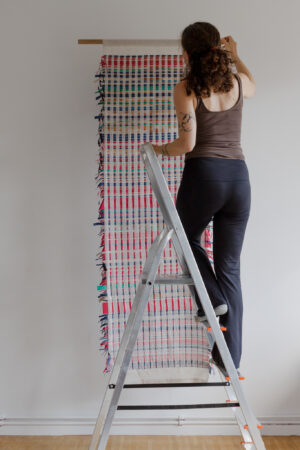
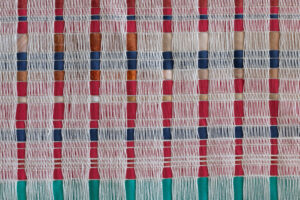
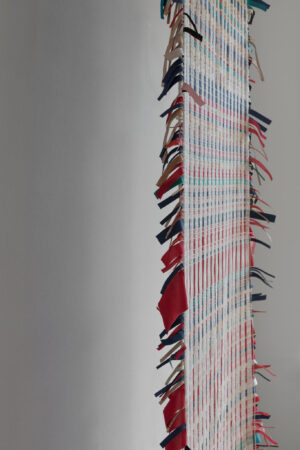
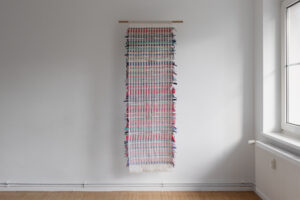
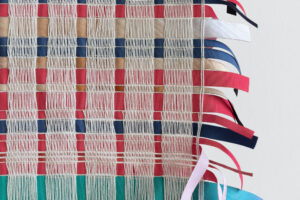
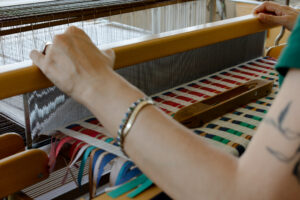
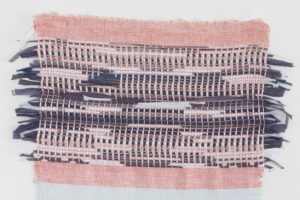
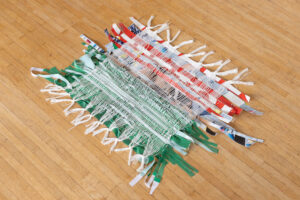
This project transforms discarded polyester advertising banners into woven textiles visualizing women’s parliamentary representation worldwide. Non-recyclable promotional materials gain new life through ancient feminine craft, exploring the intersection of advertising culture and weaving traditions. Using custom software, I convert global parliamentary data into weaving patterns and laser-cutting templates. The textiles encode each country’s percentage of women in parliament through color and pattern, creating beautiful fabrics whose data remains hidden without a legend. This invisible information system reflects women’s power – their ability to create beauty in homes and communities through skilled hands, despite inequality in high-level representation. The project celebrates quiet feminine strength while questioning contemporary gender dynamics.

The project:

The process:


POLYFUSE – Nicole Bedeker

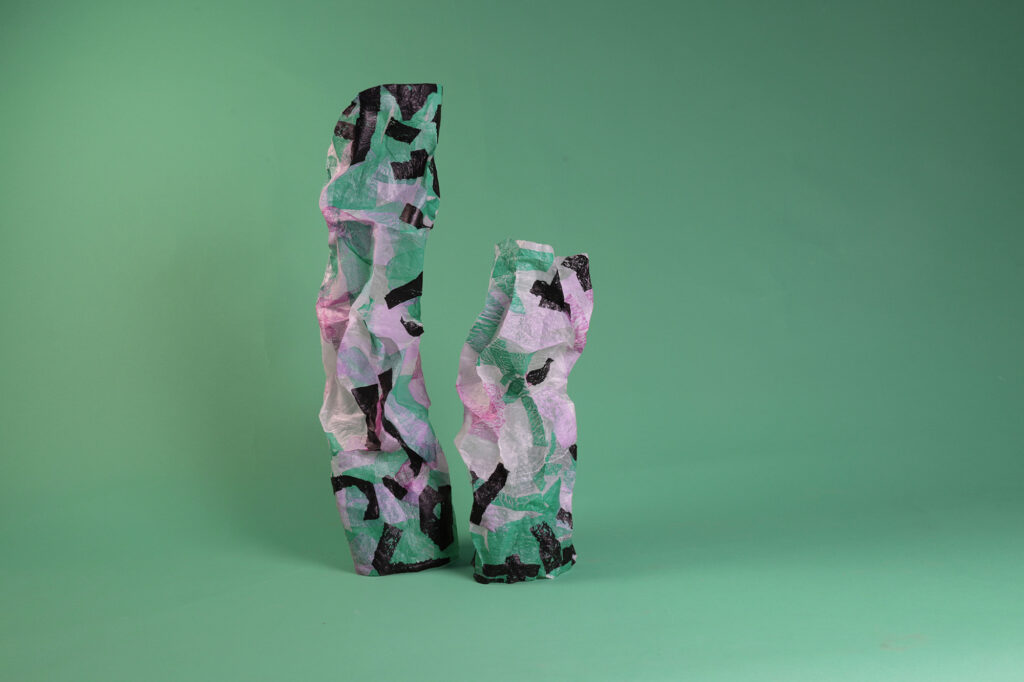
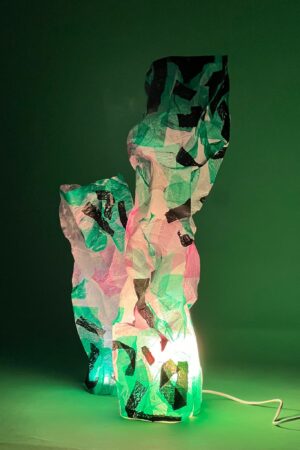
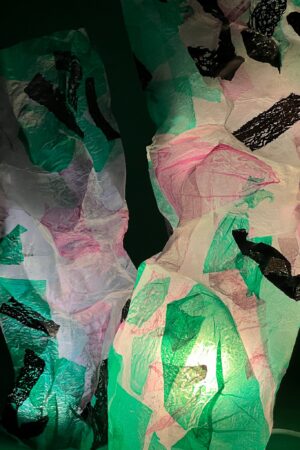
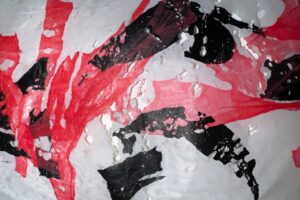
Polyfuse is a project that explores the issue of single-use plastic bags. Though recyclable, many end up in parks, streets, or water and those we save often get forgotten in drawers. Polyfuse fuses these thin plastics with heat, creating sturdier, colorful membranes with unique shapes and patterns. Any HDPE or LDPE plastic, like ripped trash bags or bottle packaging can be used. It’s about reimagining waste, giving it new purpose and visibility. I chose to use the material as a light cover to literally and symbolically shed light on this transformation, turning forgotten waste into something  present, and positive within the home.

Polyfuse ist ein Projekt, das sich mit dem Problem von Einweg-Plastiktüten auseinandersetzt. Obwohl sie recycelbar sind, landen viele in Parks, auf Straßen oder in Gewässern – und die, die man zu Hause aufbewahrt, geraten oft in Vergessenheit. Polyfuse verschmilzt diese dünnen Kunststofffolien mithilfe von Hitze zu stabileren, farbenfrohen Membranen mit einzigartigen Formen und Mustern. Verwendet werden kann jeder HDPE- oder LDPE-Kunststoff, wie z. B. gerissene Müllbeutel oder Verpackungsfolie von Flaschen. Es geht darum, Abfall neu zu denken und ihm Sichtbarkeit und eine neue Funktion zu geben. Ich habe das Material als Lampenschirm eingesetzt – um im wahrsten Sinne des Wortes Licht auf diesen Wandel zu werfen und das Vergessene sichtbar und positiv in den Alltag zu integrieren.

The project:

The process:


FACETTE – Moritz Glatte

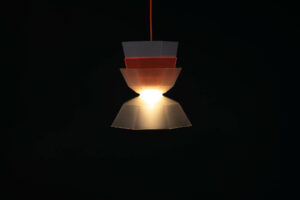
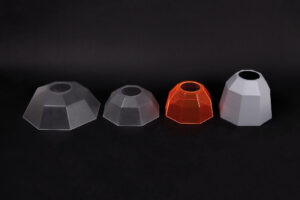
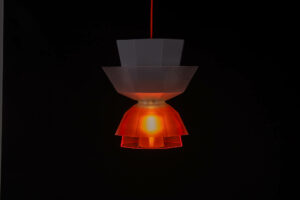
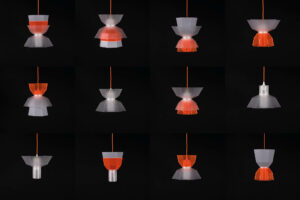
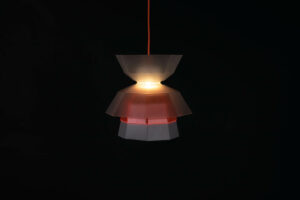
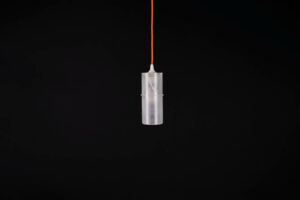
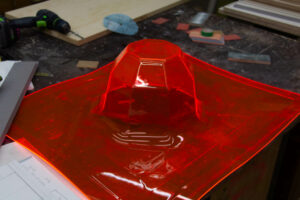
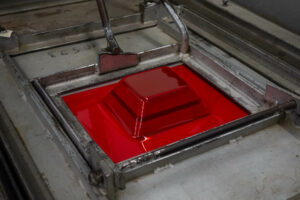
Facette is a modular pendant light designed for easy and tool-free customization to create distinct lighting moods. The assembly is based on a core that also functions as a diffuser. Shades and distance holders slide on and off this core, allowing you to change their order and orientation. The core attaches to the light bulb socket with a simple hanging mechanism and is vertically adjustable in three steps, enhancing versatility and atmosphere. The design features three main assemblies: a fully functional room light emitting illumination downward, sideways, and upward; a focused setup directing most light downward with minimal side and top glow, ideal for dining; and an atmospheric mode with a colorful acrylic shade creating a warm and colored ambiance. The shades, made of vacuum-formed acrylic and ABS, combine milky transparent, opaque, and vibrant orange elements.

Facette ist eine modulare Hängeleuchte, die sich werkzeuglos und mühelos anpassen lässt, um verschiedene Lichtstimmungen zu erzeugen.
Das System basiert auf einem zentralen Kern, der gleichzeitig als Diffusor fungiert. Schirme und Abstandshalter lassen sich in beliebiger Reihenfolge auf diesen Kern auf- und abschieben. Der Kern wird mit einem einfachen Drehmechanismus an der Glühbirnenfassung befestigt und ist in drei Stufen höhenverstellbar – für noch mehr Vielseitigkeit und Atmosphäre. Das Design bietet drei Hauptaufbauten: eine voll funktionale Raumbeleuchtung mit Licht nach unten, zur Seite und nach oben; eine fokussierte Variante mit gebündeltem Licht nach unten und minimaler Streuung – ideal für den Esstisch; sowie eine stimmungsvolle Variante mit einem farbigen Acrylschirm, der ein warmes, farbiges Licht erzeugt. Die Schirme bestehen aus tiefgezogenem Acrylglas und ABS und kombinieren milchig transparente, lichtundurchlässige sowie leuchtend orangefarbene Elemente.

The Project:

The process:


Refill Bodywash – Miron Bartosik

Single use packaging is one of the driving forces of the constant production and consumption of plastics on an unsustainable scale. When approaching this issue, the aim was to identify an easily replaceable (from single use to multi use) kind of packaging and find a context in which the change could be widely impactful. The supermarket dispensary system for shampoos could save 1.4 billion bottles annually while offering a pleasant experience for the customers. Providing additional value through the comfort of use and the visual appeal. This system would rely on a bottle returning system similar to pfand and big refillable containers for the dispensers.

The aim of this project was the alter the way we use plastics. The idea of eliminating single use packaging was the starting point of the project.

The project:

The process:


Fruits of the Sea – Leonard Hicks

In today’s reality plastic has become as abundant in our oceans as marine life. It’s now so pervasive that we consume it daily, often unknowingly, as if it were one of the ocean’s many delicacies. This is a result of the mass consumer culture we live in, and the twisted narratives we’re fed: that plastic is being recycled, that it’s being handled sustainably. But the truth is far more complex. Sustainable products alone won’t solve a deeply flawed global system.
Fruits of the Sea, is a jewellery collection made from silver and ocean plastics that seeks to expose this imbalance. Each piece explores reframing plastic, not as waste, but as material worth holding, wearing, and rethinking.

People treat plastic the way they perceive it, if we change that perception, we might begin to change our behaviour.

In der heutigen Realität ist Plastik in unseren Meere ebenso reichlich vorhanden wie Meeresleben. Es ist mittlerweile so allgegenwärtig, dass wir es täglich konsumieren, oft ohne es zu wissen, als wäre es eine der vielen Köstlichkeiten des Ozeans. Dies ist das Ergebnis der Massenkonsum Kultur, in der wir leben, und der verdrehten Narrative, die uns vorgesetzt werden: dass Plastik recycelt wird, dass es nachhaltig gehandhabt wird. Aber die Wahrheit ist weitaus komplexer. Nachhaltige Produkte allein werden ein zutiefst fehlerhaftes globales System nicht lösen.

Fruits of the Sea ist eine Schmuckkollektion aus Silber und Meeresplastik, die dieses Ungleichgewicht aufzeigen will. Jedes Stück untersucht die Neudefinition von Plastik, nicht als Abfall, sondern als Material, das es wert ist, aufbewahrt, getragen und neu gedacht zu werden.

Menschen behandeln Plastik so, wie sie es wahrnehmen. Wenn wir diese Wahrnehmung ändern, könnten wir beginnen, unser Verhalten zu ändern.

The project:

The process:


PALO – Layla Jordan

Over 150,000 tonnes of plastic packaging waste are generated annually in Germany’s transport and logistics sector, with the vast majority ending up in landfill (UBA, 2021). Palo is a reusable load-securing system designed to remove the need for single-use pallet wrap and strapping in warehouses. Made from durable woven PET fabric, straps and PLA components, it offers a robust, adaptable, and sustainable alternative. Palo attaches to pallet corners and can be quickly tightened via adjustable straps, securing a wide range of load shapes quickly and safely.

In Deutschlands Transport- und Logistiksektor fallen jährlich über 150.000 Tonnen Kunststoffverpackungsabfälle an, von denen der überwiegende Teil nicht recycelt wird (UBA, 2021). Palo ist ein wiederverwendbares Warensicherungssystem, das entwickelt wurde, um den Einsatz von Einweg-Folien und Bändern aus Kunststoff in Lagerhäusern zu verringern. Gefertigt aus strapazierfähigem, gewebtem PET-Material und Komponenten aus PLA, stellt Palo eine robuste, anpassungsfähige und nachhaltige Alternative dar. Palo wird an den Ecken der Paletten befestigt und lässt sich über verstellbare Gurte schnell straffen, wodurch unterschiedlich Formen und Großen sicher und effizient gesichert werden können.

The project:

The process:


FORMÖKOLOGIE – Johannes Lutz

A project focusing on new application possibilities for PHAs (Polyhydroxyalkanoates) – a compostable material that can degrade in almost any natural environment.

On one hand, the project explores ways to accelerate the degradation process through form and structure. On the other hand, it investigates application areas where the high material cost is less relevant, making PHAs a more viable alternative.

PHAs are produced by bacteria (such as Cupriavidus necator) from f.e. organic waste. Due to their strong barrier properties against water and oxygen, they are well suited for packaging. However, their current cost prevents them from gaining a strong foothold in the mass market.

This project is a search for alternative, meaningful uses – products whose life cycles make biological degradability desirable, and where the design is informed by the material’s natural origin and end-of-life behavior.

Ein Projekt, das sich auf neue Anwendungsmöglichkeiten für PHAs (Polyhydroxyalkanoate) konzentriert – ein kompostierbares Material, das in fast jeder natürlichen Umgebung abgebaut werden kann.

Einerseits untersucht das Projekt Möglichkeiten, den Abbauprozess durch Form und Struktur zu beschleunigen. Andererseits werden Anwendungsbereiche untersucht, in denen die hohen Materialkosten weniger relevant sind, wodurch PHAs zu einer praktikableren Alternative werden.

PHAs werden von Bakterien (wie Cupriavidus necator) aus z. B. organischen Abfällen produziert. Aufgrund ihrer starken Barriereeigenschaften gegen Wasser und Sauerstoff eignen sie sich gut für Verpackungen. Allerdings verhindern ihre derzeitigen Kosten, dass sie sich auf dem Massenmarkt durchsetzen können.

Dieses Projekt ist eine Suche nach alternativen, sinnvollen Verwendungsmöglichkeiten – Produkten, deren Lebenszyklus eine biologische Abbaubarkeit wünschenswert macht und deren Design von der natürlichen Herkunft des Materials und seinem Verhalten am Ende seiner Lebensdauer geprägt ist.

The project:


The process:


UFO – Emily Lechaux

The project aims to draw attention to an often-overlooked object by rethinking its conventional typology. A smoke detector — typically designed to fade into the background — becomes UFO, an unidentified flying object on your ceiling that is meant to catch your eye.

Beyond its appearance, the project promotes the idea of repairability. In Germany, smoke detectors must be replaced every ten years, regardless of their physical condition. This regulation — while rooted in safety — leads to the disposal of millions of fully intact housings, simply because the internal electronics reach the end of their certified lifespan.

UFO proposes a more sustainable alternative by separating the outer shell from the functional core. Rather than replacing the entire unit, only the electronic components are designed to be exchanged.

Ziel des Projekts ist es, einem oft übersehenen Objekt Aufmerksamkeit zu schenken, indem dessen konventionelle Typologie neu gedacht wird. Ein Rauchmelder – üblicherweise so gestaltet, dass er in den Hintergrund tritt – wird zu UFO, einem unbekannten Flugobjekt an der Decke, das bewusst ins Auge fallen soll.

Über seine äußere Erscheinung hinaus verfolgt das Projekt die Idee der Reparierbarkeit. In Deutschland müssen Rauchmelder alle zehn Jahre ausgetauscht werden – unabhängig von ihrem physischen Zustand. Diese Vorschrift, so sinnvoll sie im Hinblick auf die Sicherheit auch ist, führt dazu, dass jedes Jahr Millionen vollständig intakter Gehäuse entsorgt werden, nur weil die interne Elektronik das Ende ihrer zertifizierten Lebensdauer erreicht hat.

UFO schlägt eine nachhaltigere Alternative vor: die Trennung von äußerem Gehäuse und funktionalem Kern. Anstatt die gesamte Einheit zu ersetzen, sollen nur die elektronischen Komponenten ausgetauscht werden.

The project:


The process:


BLOOMING – Cody Toth

What if remembrance itself nourished lif?
A cemetery is a deeply emotional site where we go to honour loved ones. Traditionally, candles left at graves are petroleum based plastics or paraffin that persist in the landscape long after their light is gone.
This biodegradable cemetery candle is meant to transform that ritual into one that aligns with natural cycles. It is designed for impermanence, for decomposition, and renewal.
It preserves the symbolic meaning of the candle. It can be a vessel for light, hope, spiritual transcendence, while at the same time it is also a literal vessel for life, returning to the earth and nourishing it with flowers.
When we leave a candle at a grave what are we really leaving? My thesis focuses on changing the narrative of how we leave something on purpose; something not meant to be collected afterwards, something that gives back.

Was wäre, wenn die Erinnerung selbst das Leben nähren würde?
Ein Friedhof ist ein zutiefst emotionaler Ort, den wir aufsuchen, um geliebte Menschen zu ehren. Traditionell werden auf Gräbern Kerzen aus erdölbasierten Kunststoffen oder Paraffin hinterlassen, die noch lange nach dem Erlöschen ihres Lichtes in der Landschaft verbleiben.
Diese biologisch abbaubare Friedhofskerze soll dieses Ritual in ein Ritual verwandeln, das mit den natürlichen Zyklen in Einklang steht. Sie ist für Vergänglichkeit, Zersetzung und Erneuerung konzipiert.
Sie bewahrt die symbolische Bedeutung der Kerze. Sie kann ein Gefäß für Licht, Hoffnung und spirituelle Transzendenz sein, während sie gleichzeitig auch ein buchstäbliches Gefäß für das Leben ist, das zur Erde zurückkehrt und sie mit Blumen nährt.
Was hinterlassen wir wirklich, wenn wir eine Kerze an einem Grab zurücklassen? Meine Arbeit konzentriert sich darauf, die Erzählung darüber zu ändern, wie wir etwas absichtlich zurücklassen; etwas, das nicht dazu gedacht ist, hinterher eingesammelt zu werden, etwas, das etwas zurückgibt.

The project:

The process:


LUMBLE – Chih-Yun Cheng

LUMBLE is a modular, stone-inspired lamp crafted from recycled plastic, designed to provide calming and flexible lighting. Each unit can function individually or be stacked to enhance brightness and form sculptural shapes. Instead of hiding the flaws of reclaimed materials, LUMBLE highlights their natural textures and imperfections. When illuminated, these unique surfaces cast soft, organic shadows, giving each lamp its own character and turning everyday spaces into serene, visually engaging environments.

LUMBLE ist eine modulare, steinähnliche Lampe aus recyceltem Kunststoff, die für beruhigendes und flexibles Licht sorgt. Jede Einheit kann einzeln verwendet oder gestapelt werden, um die Helligkeit zu erhöhen und skulpturale Formen zu erzeugen. Anstatt die Unvollkommenheiten des wiederverwerteten Materials zu verbergen, hebt LUMBLE deren natürliche Texturen und Eigenheiten hervor. Beim Leuchten werfen diese einzigartigen Oberflächen weiche, organische Schatten und verleihen jedem Raum eine ruhige, visuell ansprechende Atmosphäre.

The project:

The process:


MASTER PROJECT EXHIBITION 2025 IN FELDFÜNF

UdK PRODUCT DESIGN PRESENTS:
FINAL_FINAL_FINAL.OBJ

The nine Master graduates of Product Design at the Berlin University of the Arts (UdK) warmly invite you to final_final_final.obj.
From September 30 to October 10, we showcase our final projects -in progress- at Feldfünf
Our exhibition opens up the design process itself: prototypes, iterations, and final pieces side by side.

“You are never done with a design, you’ve just met your deadline.”

A diverse collection of projects, exploring everything from fair practices on construction sites, innovative food storage solutions, menstrual care on the move, and much more.

On September 30 at 19:00, join us for a get-together with drinks & snacks – the perfect opportunity to connect, exchange ideas, and celebrate together.

Vernissage: September 30, 19:00
Exhibtion: September 30 – October 10.2025
Location: Feldfünf, Fromet-und-Moses-Mendelssohn-Platz 7–8, Berlin
Instagram: @udk_productdesign

check our PRESSKIT for all infos HERE
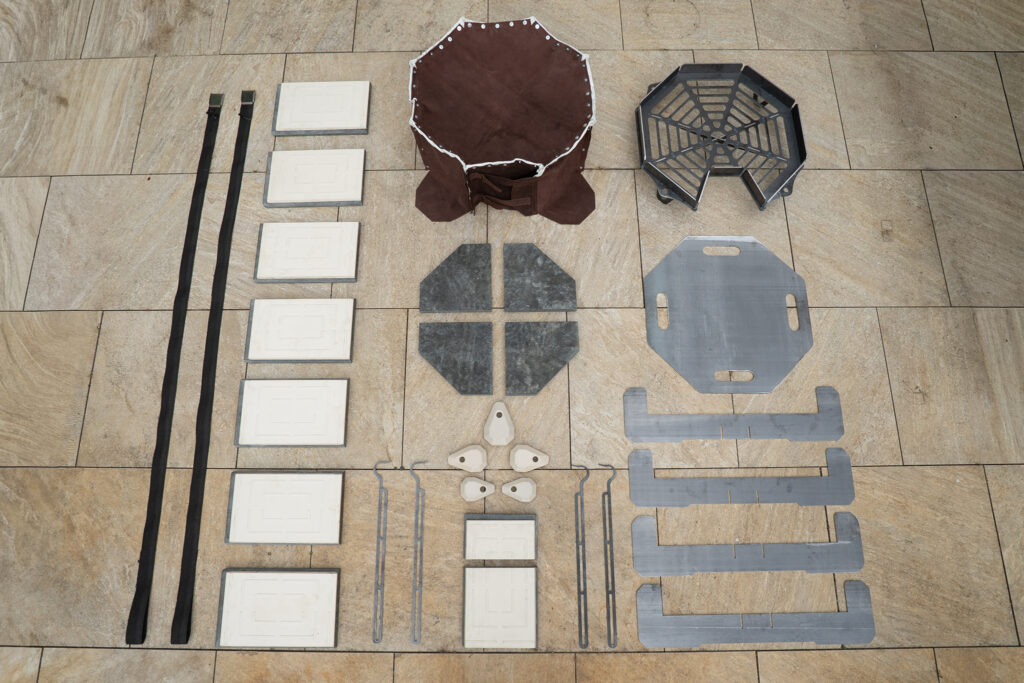
We look forward to seeing you!


Sophie Stanitzek nominated in Diploma Selection Designblok Prague 2025

8-12 October 2025

In collaboration with EUNIC Cluster ČR to Designblok Prague presents the eleventh year of the Diploma Selection international competition for the most talented European graduates in the field of product and fashion design.

Sophie Stanitzek who graduated with an in MA Product Design in September 2024 is selected for the Diploma Selection 2025.
The exhibition in the Museum of Decorative Arts in Prague and the fashion show in The New Spiral Na Výstavišti will present graduate works by thirty competition finalists. The winners of both categories, selected by international expert juries, will receive a financial reward of 1000 EUR along with other prizes and the opportunity to present solo at the next Designblok festival.

keep an eye on Designblok’s Website and Instagram

Gregor, Lilly, Clara: German Design Graduates 2025 in Museum für Angewandte Kunst Köln

Unter dem Titel „Dare to Design – Spaces of Care“ sind dieses Jahr drei Produktdesign Absolventen Teil der German Design Graduates Ausstellung:
– Gregor Jahner, MA Projekt: Queering the Bathroom
– Lilly Krämer, BA Projekt: Wenn ich muss, dann muss ich halt
– Clara Schmelter de Escobar, BA Projekt: Carbogem

Initiiert von der Stiftung Rat für Formgebung – German Design Council, konzipiert und umgesetzt vom Kölner „Studio für Gestaltung“, werden 45 herausragende Abschlussarbeiten von Absolvent*innen der renommiertesten deutschen Design- und Kunsthochschulen gezeigt. Die Ausstellung findet vom 4. September bis 12. Oktober 2025 im MAKK – Museum für Angewandte Kunst Köln statt.

Die vielfältigen Projekte aus den Bereichen Produkt- und Industriedesign, Kommunikations- und Digitaldesign sowie Textil- und Modedesign eint ein kollektives Bewusstsein und der Wille zur Veränderung gegenüber drängenden Fragestellungen und anhaltenden Krisen. Sie verstehen Gestaltung als kollektives Praktizieren und als Akt der Fürsorge.

Die Ausstellung wird begleitet von einem diskursiven Rahmenprogramm. In Talks diskutieren Absolvent*innen und Branchenexpert*innen über die Zukunft von Design und Perspektiven für junge Talente. In Kooperation mit dem Museumsdienst des MAKK werden Workshops mit Graduates als Leitung umgesetzt.

Was passiert, wenn Gestaltung sich einmischt? Welche Rolle nimmt sie zwischen demokratischer Erosion und ökologischen Krisen ein? Vom 4. September bis 12. Oktober zeigt die Initiative German Design Graduates, gefördert vom Rat für Formgebung – German Design Council, die Jahresausstellung „Dare to Design – Spaces of Care“ im Museum für Angewandte Kunst Köln (MAKK).

45 Projekte und Konzepte junger Designtalente widmen sich den drängenden Fragen und gesellschaftspolitischen Herausforderungen der Gegenwart. In ihrer Vielfalt spiegeln die Abschlussarbeiten die Innovationskraft von Design wider. Jenseits des klassischen Entwurfsbegriffs und der reinen Form laden sie zum Diskurs über ein erweitertes Verständnis der Disziplin ein: Design als kollektive Praxis und als Akt der Fürsorge.

Die Preview findet am 3. September um 17:30 Uhr in Anwesenheit der Aussteller*innen und Mentor*innen aus Wirtschaft und Kultur statt. Mit dem Rundgang werden neun besonders herausragende Arbeiten als „Spotlights“ präsentiert. Um 19 Uhr folgt die Eröffnung der Ausstellung durch Dr. Petra Hesse, Direktorin des MAKK, und Lutz Dietzold, Geschäftsführer des Rat für Formgebung. Ein Paneltalk zwischen Julia Kostial, Direktorin Stiftung Deutsches Design Museum, und drei Mentor*innen lädt dann zum interdisziplinären Perspektivwechsel ein.

„Dare to Design – Spaces of Care“
Museum für Angewandte Kunst Köln (MAKK), An der Rechtschule 7, 50667 Köln

03.09.2025, 17:30 – 19 Uhr
Preview für geladene Gäste und Pressevertreter*innen, danach Eröffnung mit freiem Eintritt

04.09. – 12.10.2025
Dienstag – Sonntag, 10-18 Uhr, 04.09. und 02.10. 10-22 Uhr


Eight Graduates Produkt Design nominated as German Design Awards Newcomer 2026

Each year the German Design Council nominates German Design Award Newcomers.
The institute for Product and Prozess design is very, very  proud that a number of Product Design Graduates are nominated as Newcomer in the German Design Awards 2026! This year even six!

Among them:
Luca Ortmann – BA March 2025, see 
Esmee Willemsen – BA September 2022, see
Sophie Stanitzek – MA September 2024, see
Gregor Jahner – MA September 2024, see
Anna Maria Argmann – BA March 2024, see
Marie Kurstsjens – MA September 2025
Emma Johann – BA March 2025, see
Katharina Matejcek –
 BA March 2024, see

Esmee Willemsen, Anna Maria Argmann and Katharina Matejcek are part of the MA group studying product design at UdK in the upcoming wintersemester. Part of that same MA group, but graduated with an BA in Folkwang Essen and nominated as newcomer too, are Jan Cichon, see and Adrian Grabow, see

We are super proud to have so many inspiring and talented students on board in our upcoming courses!

Finalists will be announced soon. In February 2026 the winners will be announced at the website of the German Design Council. Keep an eye on the keydates HERE


ALLE KÜHE DUCKEN SICH – Helena Wassilowsky | BA 2025

https://vimeo.com/1109705908?share=copy

ALLE KÜHE DUCKEN SICH

ALLE KÜHE DUCKEN SICH ist eine Übersetzung von Träumen in Muster und physische Objekte. Anhand der Dokumentation zahlreicher Träume wurde eine Auswahl visualisiert und abstrahiert. Dabei entstand eine Sammlung aus Collagen, die als Grundlage für die weitere Entwicklung ins Materielle dient. Aus unterschiedlichen Materialien wie Wachs, Stoff und Aluminiumblech wurden drei finale Objekte realisiert: Wachsfiguren, transparente Vorhänge mit hellgrauen Drucken und ein kleiner Alu-Schrank mit Prägungen. Der Prozess nimmt die Fragmentierung des Träumens auf, die sich in Abstraktion, fehlender Erinnerung und der Materialwahl während der Umsetzung zeigt. Dabei wird untersucht, wie das Unbewusste in eine greifbare, körperliche Form übersetzt werden kann.

ALLE KÜHE DUCKEN SICH is a translation of dreams into patterns and physical objects. Based on the documentation of numerous dreams, a selection was visualized and abstracted. The result is a collection of collages that serve as the basis for further development into material objects. Three final objects were created from different materials such as wax, fabric and sheet aluminum: Wax figures, transparent curtains with light gray prints and a small aluminum cabinet with embossing. The process takes up the fragmentation of dreaming, which manifests itself in abstraction, lack of memory and the choice of materials during the realization. It explores how the unconscious can be translated into a tangible, physical form.
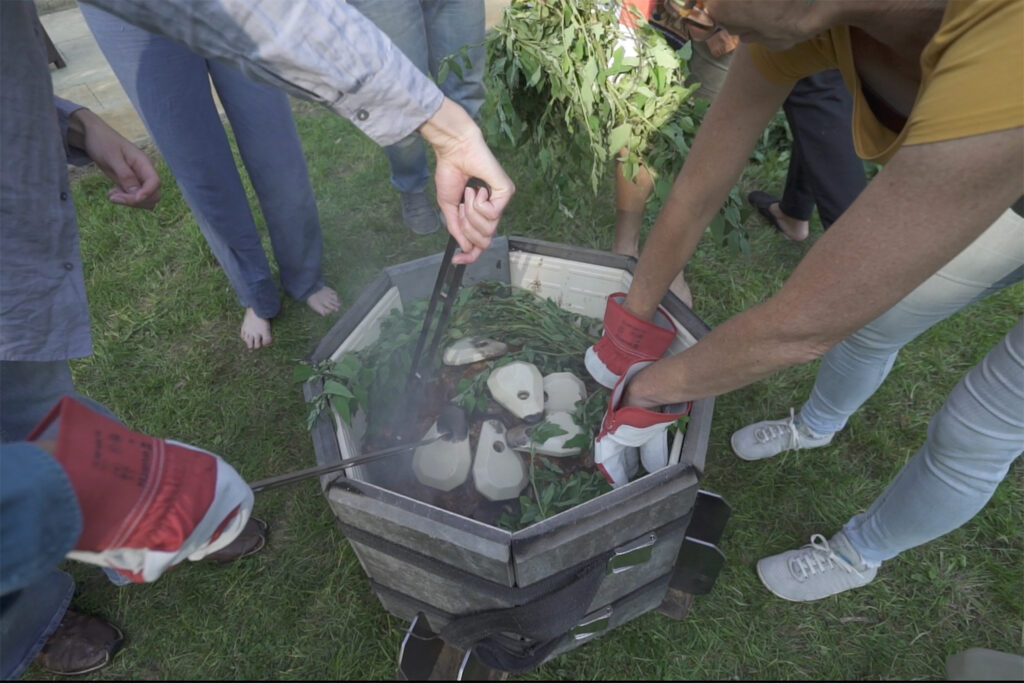


Prozess

MEMENTO – Laurin Höhne

MEMENTO

Memento ist ein kompaktes Wandregal, das Ordnung schafft, Kommunikation ermöglicht und auf unterschiedliche Nutzer:innen eingeht.

Im Alltag sammeln sich Schlüssel, Portemonnaie, Zettel oder kleine Erinnerungen oft lose im Eingangsbereich. Memento reagiert auf diese Situation mit einer klaren, funktionalen Lösung: Ein schlichtes rechteckiges Holzbrett mit eingearbeiteten Vertiefungen dient als Ablage, ein integrierter Magnet darunter hält Schlüssel sichtbar und griffbereit.

Das Besondere: Ein runder Spiegel steht lose auf dem Regal und ruht dabei in einer formschlüssigen Vertiefung – nicht fixiert, sondern ausbalanciert. So lässt er sich in der Neigung individuell einstellen und an verschiedene Körpergrößen oder Raumsituationen anpassen. Der Spiegel kann mit Kreidestift beschrieben werden – als Erinnerungsfläche, Nachrichtenträger oder einfach für Gedanken im Vorbeigehen.

Memento vereint Aufbewahrung und Ausdruck, Routine und Geste. Die Materialwahl ist bewusst einfach: Holz, Spiegelglas, Magnet, Kreide – alles gut verfügbar und in kleinen Serien leicht zu verarbeiten. Die Herstellung erfordert keine komplexen Werkzeuge.

Entwickelt wurde das Objekt im Rahmen einer Kooperation mit dem AW Newcomer-Shop und den DIM Werkstätten Berlin, einem inklusiven Werkstattverbund. Ziel war es, ein Produkt zu gestalten, das nicht nur funktional, sondern auch in seiner Herstellung zugänglich ist – als Teil eines sozialen Gestaltungsprozesses.

Memento ist ein leises, aber durchdachtes Objekt: Es unterstützt alltägliche Abläufe, macht Informationen sichtbar und erlaubt eine kleine, persönliche Interaktion mit dem Raum. Dabei bleibt es offen für individuelle Nutzung und Veränderung.

Memento is a compact wall-mounted shelf designed to bring structure, enable communication, and adapt to different users.

In many homes, keys, wallets, or notes end up loosely scattered near the door. Memento responds with a clear and functional solution: a minimalist wooden shelf with a hidden magnet underneath to keep keys visible and accessible.

Its key feature is a round mirror that sits freely in a form-fitting recess on the shelf. It isn’t fixed, but balanced – allowing the user to tilt it and adjust its angle to suit different heights or viewing needs. The mirror can be written on with chalk, serving as a space for reminders, messages, or quick thoughts on the way out or in.
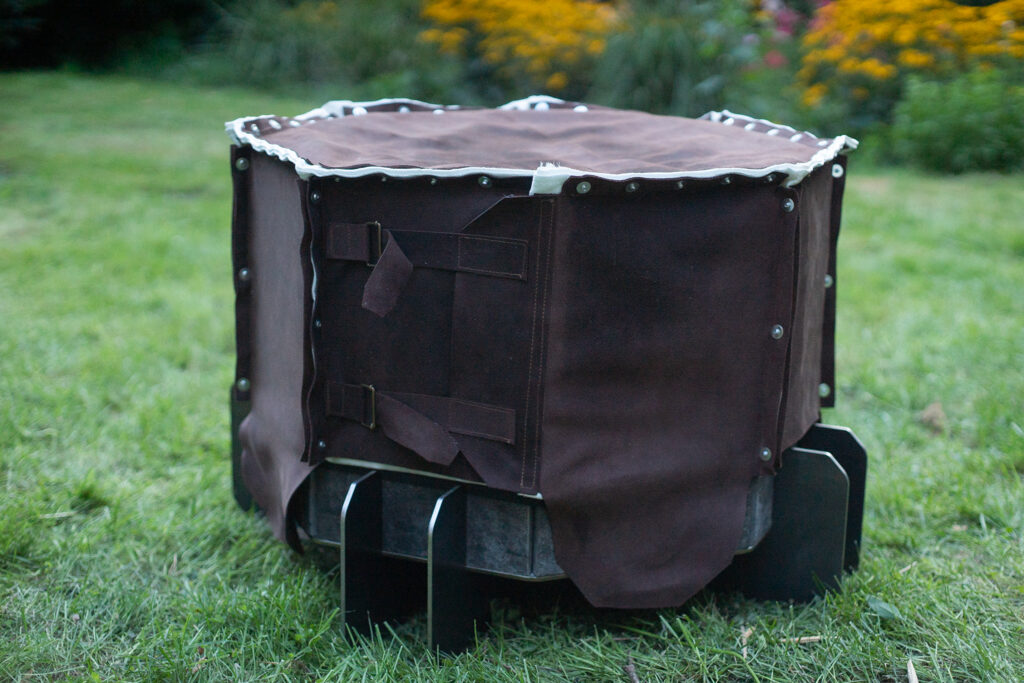
Memento combines storage and expression, routine and gesture. The materials are intentionally simple: wood, mirror glass, magnet, and chalk – all easy to source and process. No complex tools are needed to produce it in small series.

The object was developed in collaboration with the AW Newcomer-Shop and DIM workshops Berlin, a network of inclusive workshops. The aim was to create a product that is not only functional, but also accessible in its fabrication – part of a socially responsible design process.

Memento is a quiet yet thoughtful object: it supports everyday routines, makes information visible, and allows a subtle moment of interaction with one’s environment – open to personal use and change.

Process

CANDLE IN THE WIND – Severin Mörz

CANDLE IN THE WIND

Candle in the Wind ist ein modulares, aus pigmentiertem Faserbeton hergestelltes Kerzenständer System. Das integrierte Fügeprinzip der Module aus Form und Gegenform dient als Drehpunkt und Kerzenaufnahme. Candle in the Wind – lädt damit dazu ein, individuelle Lichtstimmungen zu schaffen, die mit der diffusen Figur- Grund- Beziehung zwischen Licht und Modul, Licht und Projektionsfläche spielen. Die fließenden Farbübergänge im Modul stärken dieses Gestaltungsprinzip und spielen mit der Materialität der Module. Ein puristisches Objekt mit unaufdringlicher Präsenz bei Tag und Nacht.

Candle in the Wind is a modular candle holder system made of pigmented fiber-reinforced concrete. The integrated joining principle of the modules, consisting of a mold and counter-mold, serves as a pivot point and candle holder. Candle in the Wind invites you to create individual lighting moods that play with the diffuse figure-ground relationship between light and module, light and projection surface. The flowing color transitions in the module reinforce this design principle and play with the materiality of the modules. A purist object with an unobtrusive presence by day and night.

Process

AURA – Marvin Kakpo

Aura

Aura ist ein Untersetzer aus Keramik, bestehend aus zwei drehbaren Teilen, die durch eine Achse aus Leder und Silikon verbunden sind. Er ist anpassungsfähig und eignet sich für kleine wie große Gefäße. An der Wand aufgehangen wird er zu einem dekorativen Element.
Inspiriert von den Adinkra-Symbolen Westafrikas, symbolisiert die zentrale Öffnung die Vereinigung von Stärke und Demut.
Aura vereint Ästhetik, Funktionalität und Spiritualität in einem Objekt, das den Raum schützt und verschönert, den es bewohnt.

Aura is a ceramic trivet composed of two rotating parts connected by a leather axis and silicone. Adjustable, it adapts to both small and large dishes. Hung on the wall, it becomes a decorative piece.
Inspired by Adinkra symbols from West Africa, its central opening symbolizes the union of strength and humility.
Aura combines aesthetics, functionality, and spirituality in an object that protects and enhances the space it inhabits.

Process

IMA – Jul Gross

https://youtu.be/NItez6hoKMI


ima

Die ima-Spiegel sind eine Serie von Spiegeln für den Eingangsbereich, die zwei dort üblich zu findende Gegenstände – Spiegel und Kleiderhaken – zu einem Objekt vereinen.

Während ima als funktionaler Kleiderhaken dient, ermöglicht der Spiegel eine letzte Blickkontrolle vor dem Verlassen des Hauses. Der Haken selbst formt im Spiegelbild ein Lächeln. Dies schafft einen charmanten und bestärkenden Moment, der Nutzenden erlaubt, mit einem positiven Gefühl das Haus zu verlassen.

Als Teil des kollaborativen Projekts der UdK Berlin, dem A+W Newcomer Shops und DIM Berlin befasst sich das ima-Projekt mit einen inklusiven Designprozess. Die Spiegel adressieren das allgemeine Streben nach Anerkennung geleisteter Arbeit, das nicht alle gleichermaßen erfahren. DIM bietet Menschen mit Behinderung einen sicheren, angepassten Arbeitsplatz und ermöglicht ihnen die Teilnahme an kreativen Arbeitsprozessen. ima ist für eine Herstellung in einfachen Schritten konzipiert, sodass die meisten Komponenten vor Ort bei DIM produziert werden können.
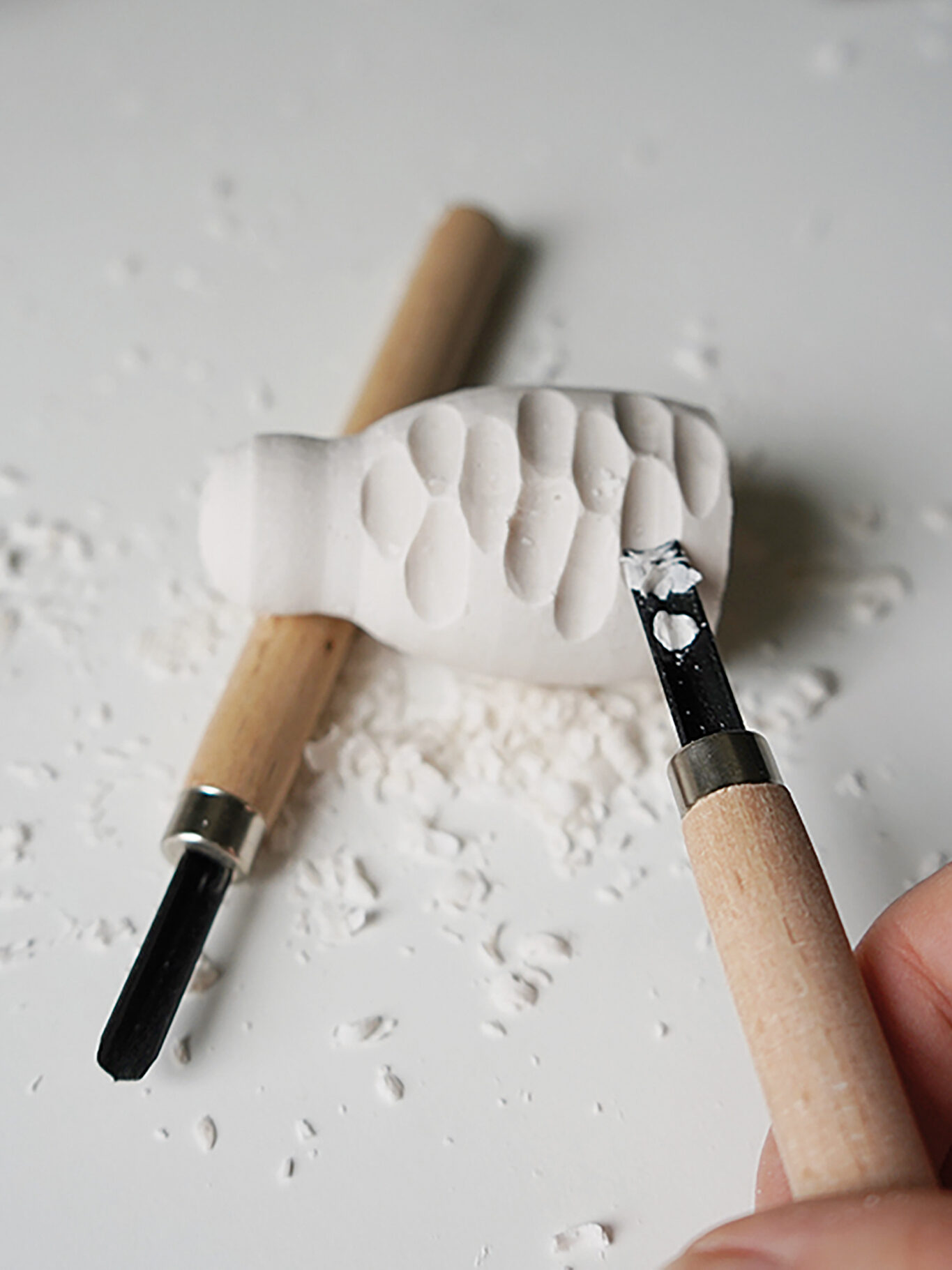
Die ima-Spiegel reflektieren nicht nur das Abbild der Nutzenden, sondern würdigen auch die Menschen, die sie herstellen. So verbindet ima den Akt der Selbstbetrachtung mit dem übergreifenden Thema der Sichtbarkeit – sowohl im persönlichen Spiegelbild als auch in der sozialen Anerkennung, die die Hersteller*innen bei DIM anstreben.

The ima mirrors are a set of mirrors designed for the entranceway, combining two commonly found objects in this space – a mirror and coat hooks – into one coherent piece.

Whilst functioning practically as a coat hook, the mirror reveals a charming detail when glancing in the mirror as you prepare to leave. The hook itself forms a subtle smile in the mirrors reflection. This provides a charming and reassuring moment, allowing users to leave home with a positive feeling.
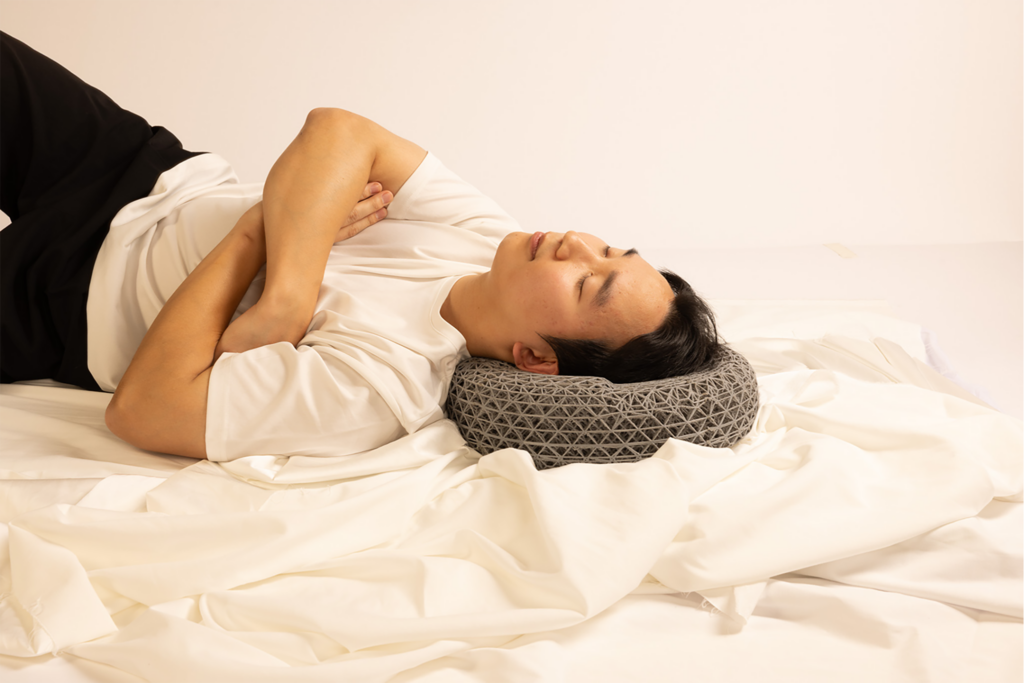
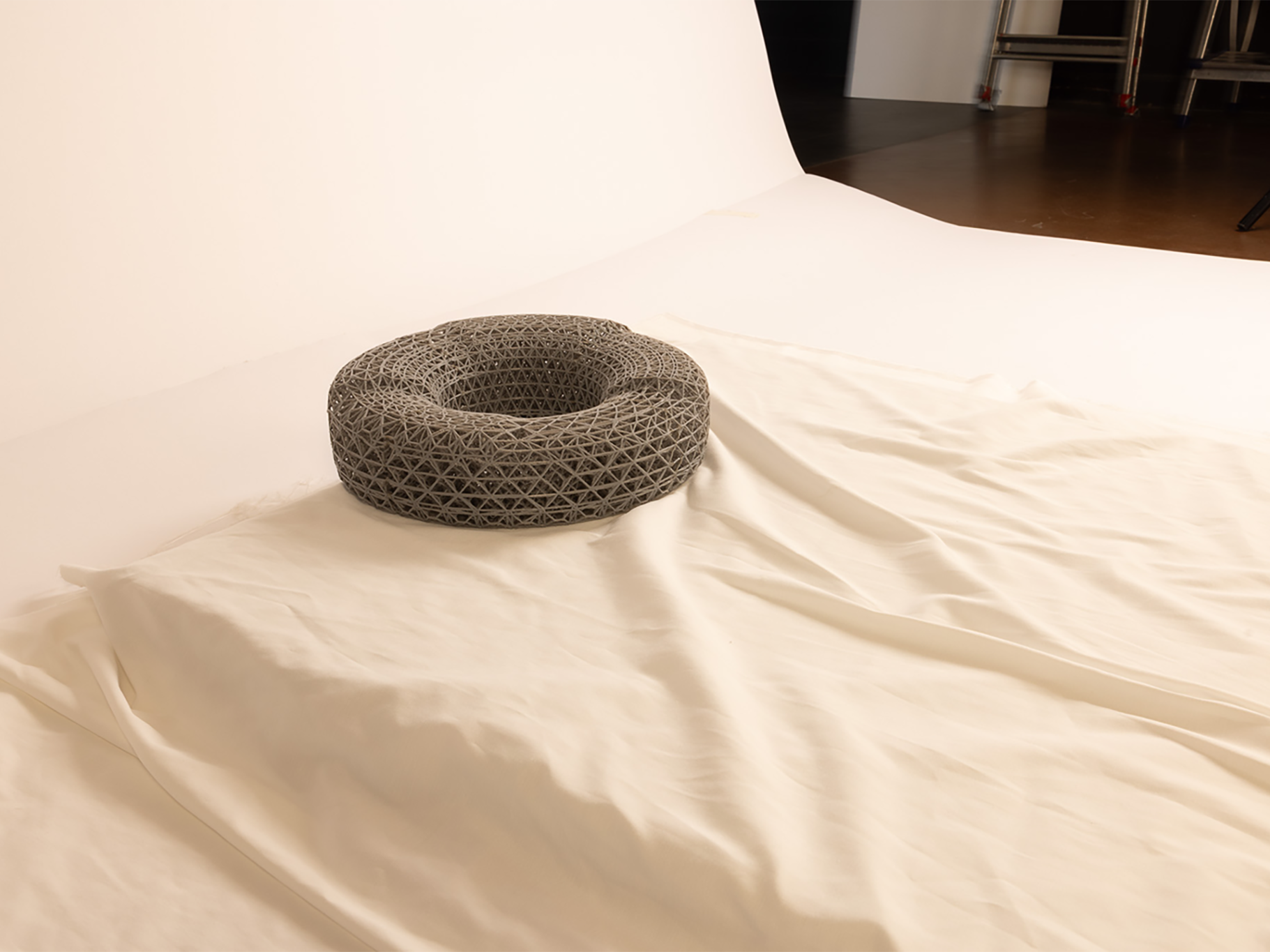
Being part of a collaborative project between UdK Berlin, the A+W Newcomer Shop, and DIM Berlin, the ima mirrors highlight an inclusive design process, addressing the shared desire for recognition that not all experience equally. DIM provides a safe, adapted work environment for disabled individuals, offering them the possibility to take part in a creative work process. ima is designed for production in straightforward steps, enabling most components to be manufactured in-house by DIM.

The mirrors reflect not only the user’s image but also acknowledge the people crafting them. In this way, ima connects the act of seeing oneself with the broader theme of visibility – both personal reflection and the recognition for the makers at DIM.


Process

BONBON – Jul Gross

Bonbon

Bonbon greift die Formsprache eines vertrauten Einrichtungsgegenstands im Eingangsbereich auf – die Garderobe – und adaptiert sie für Schuhe. Der 90 Zentimeter hohe Ständer bietet sechs Aufhängpositionen für bis zu drei Paar Schuhe. Seine spiralförmige Anordnung nutzt den Raum effizient, während die Schuhe ausreichend Abstand zueinander behalten.
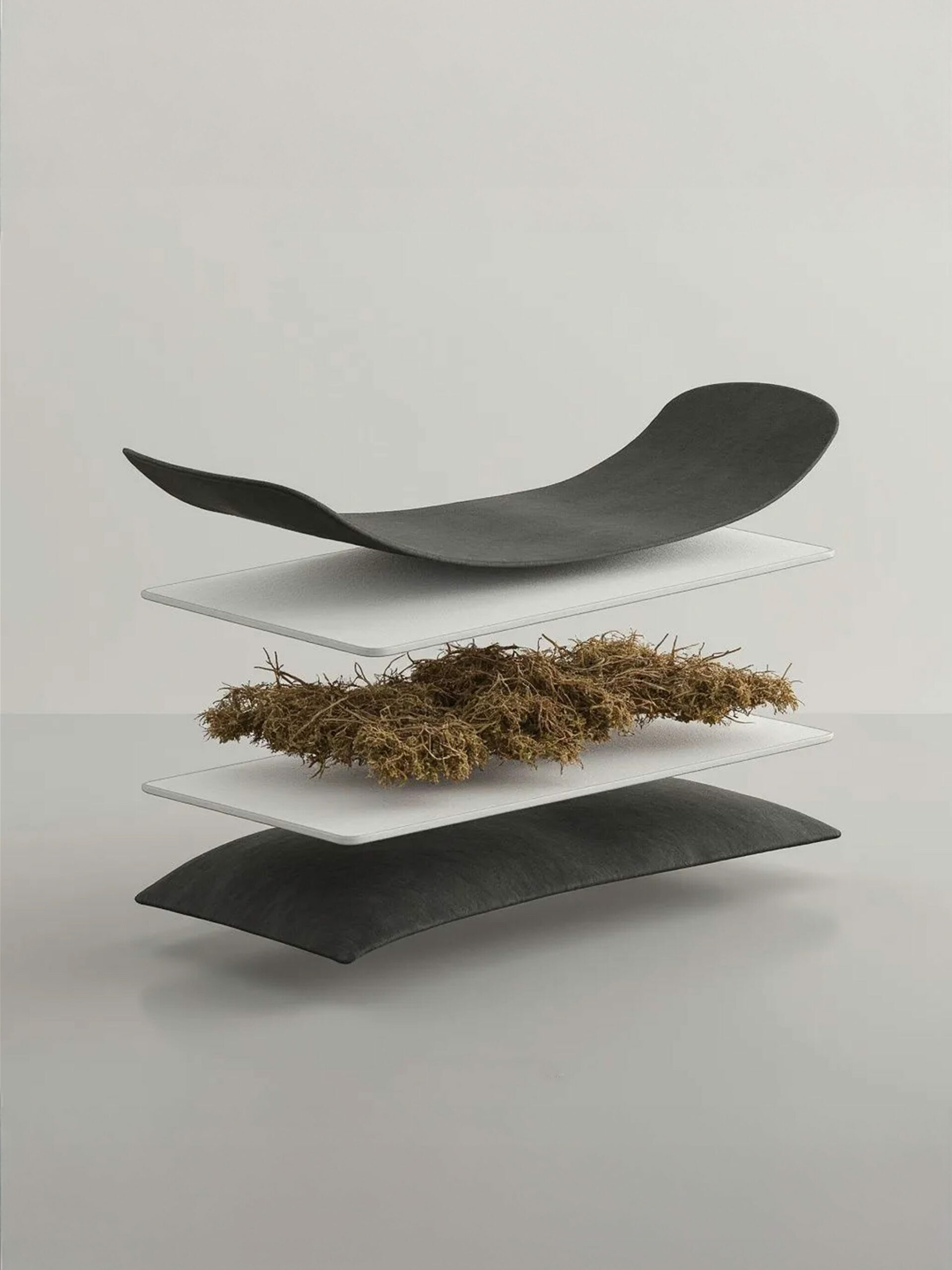
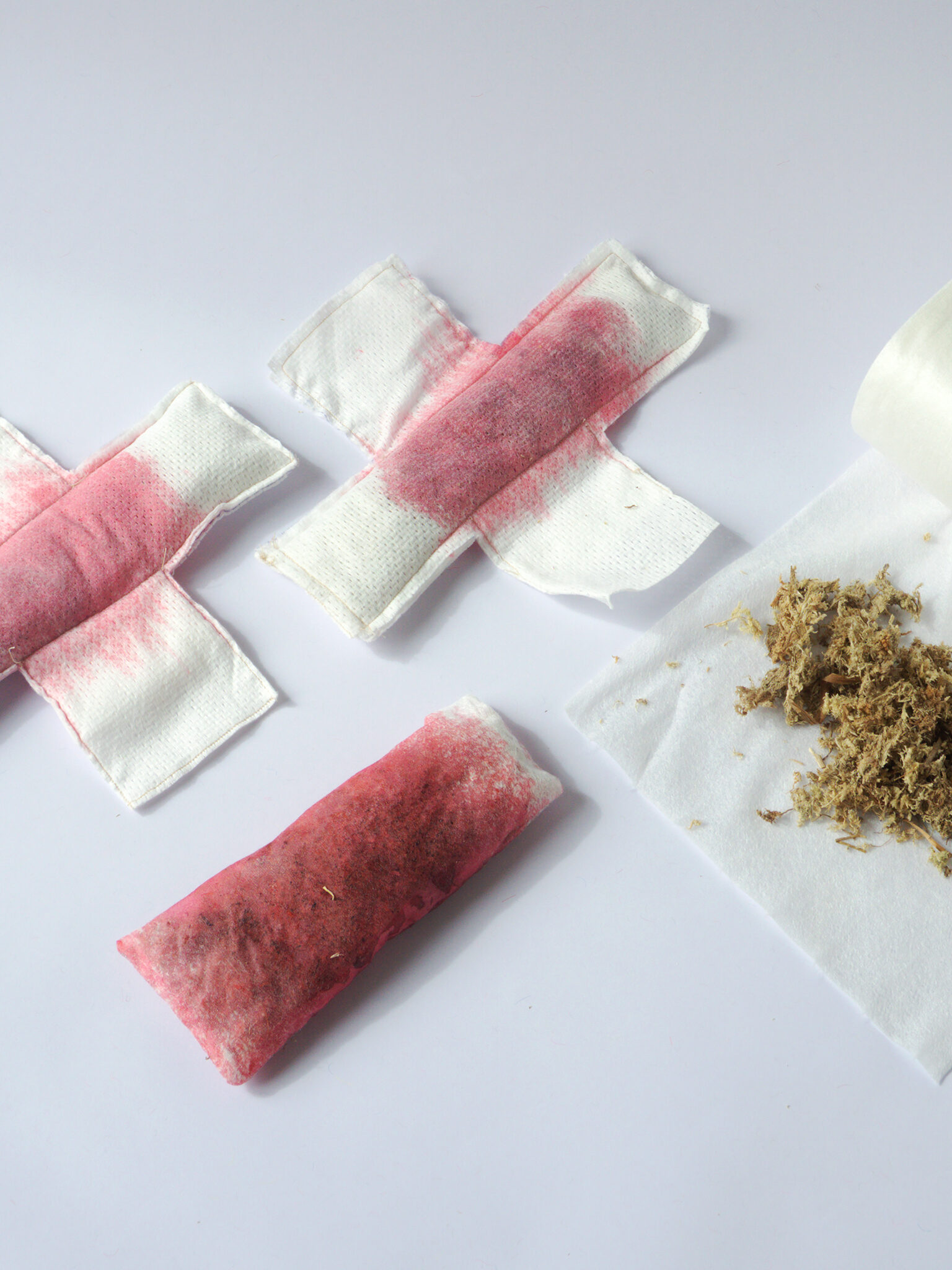
Entwickelt während des kollaborativen Projekt zwischen der UdK Berlin, dem A+W Newcomer Shop und DIM Berlin, priorisiert Bonbon eine unkomplizierte Herstellung. Dies ermöglicht es DIM Berlin, die meisten Teile intern zu produzieren. Bonbon nimmt sich vertraute Möbelelemente vieler Haushalte zum Vorbild und interpretiert sie neu – eine platzsparende Schuhlösung für urbane Lebensverhältnisse.
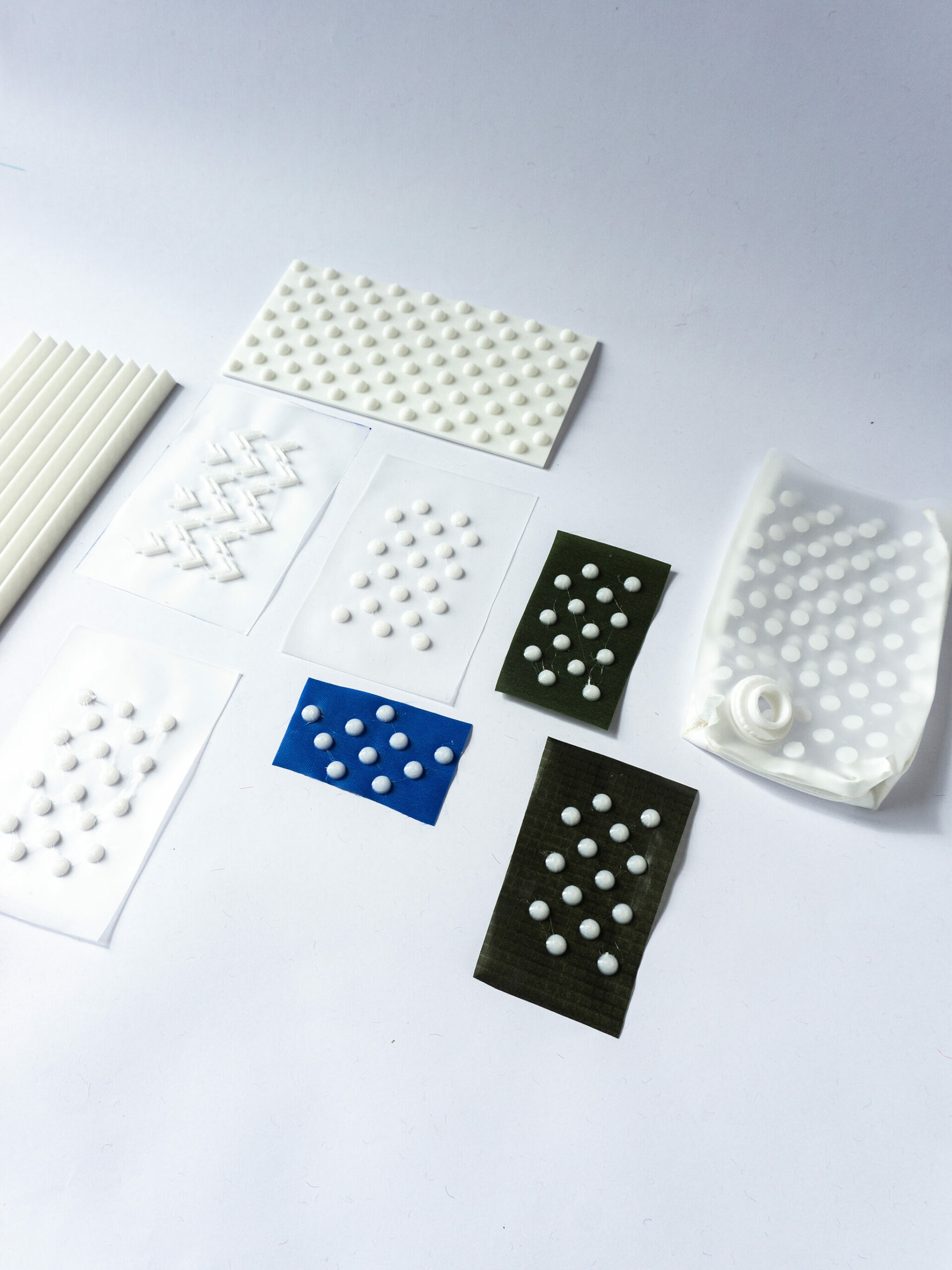
Bonbon takes inspiration from another common entranceway object – the coat rack – and adapts it for shoes. The 90-centimeter tall pole offers six positions to hang up to three pairs. Its spiral arrangement uses space efficiently while keeping shoes adequately spaced apart. A handle on top offers support when putting on shoes, moving Bonbon, or using a shoe brush to restore a shine.

Developed through a collaboration between UdK Berlin, the A+W Newcomer Shop, and DIM Berlin, Bonbon prioritizes straightforward production. This enables DIM Berlin to manufacture most parts in-house. All drill holes share a uniform distance and 15-degree angle, simplifying the production workflow.

Process

MOÉ – Johanna Printz

Moé

Bei MOÉ handelt es sich um einen Mörser aus Steinzeugkeramik, der eigens für das Zerkleinern von Salz und Pfeffer gestalt ist. Dieses Produkt ist ein Sinnesobjekt und ein Tischbegleiter, der Salz und Pfeffer wieder zu dem macht, was sie einmal waren: wertvoll. Durch eine einfache, intuitive Drehbewegung können mit MOÉ beide Gewürze gleichzeitig verarbeitet werden. Seine Form liegt angenehm schwer in der Hand, MOÉ ist kompakt und reduziert. Die organische, steinige Formensprache ist eine Hommage an das natürliche Material des Mörsers und seine ursprüngliche Funktion als einfaches Werkzeug aus der Natur.

Die Idee zu MOÉ resultierte aus einer kritischen Auseinandersetzung mit der kulturellen Bedeutung von Salz. Über Jahrhunderte hinweg galt Salz als „weißes Gold“ – als Zahlungsmittel, Handelsware und lebensnotwendiges Gut. Im Zuge der Industrialisierung wurde es jedoch zu einem Massenprodukt und ist heute zu einem geringen Preis erhältlich.

Salz und Pfeffer sind kleine Zutaten mit großer Wirkung: Sie verwandeln einfache Mahlzeiten in wahre Genussmomente, machen das Essen nicht nur schmackhafter, sondern lassen es auch kulturell erleben und individuell genießen. Das Ziel war es, ein Objekt zu entwerfen, das die Gewürze wieder sichtbar und erlebbar macht. Dies sollte durch eine Verarbeitung erreicht werden, die nicht nur funktional, sondern auch sinnlich ist. Durch die Inszenierung auf dem Tisch erfahren Salz und Pfeffer eine neue Wertschätzung. Bei den meisten handelsüblichen Mühlen sind Salz und Pfeffer versteckt, sodass das Gewürz anonym bleibt ues nd seine Haptik und Qualität verloren geht.

MOÉ verarbeitet Salz und Pfeffer nicht durch Mahlen, sondern durch Zermalmen. Diese Methode zeichnet sich dadurch aus, dass die Kristalle und Körner unregelmäßig aufgebrochen werden, wodurch eine Freisetzung der ätherischen Öle begünstigt und eine Intensivierung des Aromas ermöglicht wird. Gleichzeitig lässt sich die Körnung kontrollieren: grob, gebrochen oder fein – die perfekte Wahlmöglichkeit für unterschiedliche Speisen.

Die Herstellung von MOÉ erfolgt mithilfe der Eindrehspindel in der Imaginären Manufaktur DIM. Dieses Werkzeug ermöglicht die effiziente und inklusive Herstellung der Form mithilfe einer für den Mörser entwickelten Gipsform und eines Schneidewerkzeugs.

MOÉ is a stoneware ceramic mortar specially designed for grinding salt and pepper. This product is an object for the senses and a table companion that restores salt and pepper to what they once were: valuable. With a simple, intuitive turning movement, MOÉ can be used to process both spices at the same time. Its shape is pleasantly heavy in the hand, MOÉ is compact and minimalist. The organic, stony design language pays homage to the natural material of the mortar and its original function as a simple tool from nature.

The idea for MOÉ resulted from a critical examination of the cultural significance of salt. For centuries, salt was regarded as ‘white gold’ – as a means of payment, a commodity and a vital commodity. In the course of industrialisation, however, it became a mass product and is now available at a low price.

Salt and pepper are small ingredients with a big impact: they transform simple meals into real moments of pleasure, not only making food tastier, but also allowing it to be experienced culturally and enjoyed individually. The aim was to design an object that makes the spices visible and tangible again. This was to be achieved through processing that is not only functional but also sensual. By staging salt and pepper on the table, they are given a new appreciation. In most commercially available mills, salt and pepper are hidden, so that the spice remains anonymous and its feel and quality are lost.

MOÉ processes salt and pepper not by grinding, but by crushing. This method is characterised by the fact that the crystals and grains are broken up irregularly, which encourages the release of essential oils and intensifies the flavour. At the same time, the grain size can be controlled: coarse, broken or fine – the perfect choice for different dishes.

MOÉ is produced using the „Eindrehspindel“ in the DIM Imaginary Manufactory. This tool enables the efficient and inclusive production of the mould using a plaster mould and a cutting tool developed for the mortar.

Process

LAIB UND LEINEN – Johanna Printz

Laib & Leinen

Laib & Leinen ist ein zweiteiliges Ensemble aus Brottuch und Schneidebrett, das Brot nicht nur aufbewahrt, sondern es auch stilvoll präsentiert. Das Produkt verbindet Funktionalität mit Sinnlichkeit und würdigt Brot als kulturelles Gut und lebendige Tradition. „Laib & Leinen“ ist Alltagsbegleiter, der dazu auffordert, den Umgang mit Brot bewusster zu gestalten. Es fördert den Austausch zwischen Menschen – sei es bei der einem gemeinsamen Frühstück, beim Backen oder als Geschenk, das eine tiefere Bedeutung hat als eine einfache Geste.

„Bread is a living tradition“ – Brot ist ein Kulturgut, das weit über seine kulinarische Funktion hinausreicht. Über Generationen hinweg wurde es weitergegeben und steht für Werte wie Gastfreundschaft, als duftendes Geschenk und als Teil des Alltags. In einer Zeit, in der Brot wieder vermehrt selbst gebacken und mit Leidenschaft geteilt wird, entsteht eine neue Wertschätzung. Die Inspiration für die textile Gestaltung stammt von Furoshiki, einer japanischen Technik zum Einwickeln von Gegenständen. Diese Geste wurde auf den Umgang mit Brot übertragen und als bewusste, fast zeremonielle Handlung ausgeführt. Das Ergebnis ist ein Objekt, das Brot nicht nur aufbewahrt, sondern dessen Stellenwert im Alltag in den Fokus rückt. Die Besonderheit von „Laib & Leinen“ liegt in der durchdachten Verbindung von Tuch und Brett. Der Zuschnitt des Leinens ist so konzipiert, dass er die Platzierung des Holzbretts intuitiv vorgibt. Das Tuch nimmt beim Aufschneiden Krümel auf und bewahrt den Laib beim Einwickeln vor dem Austrocknen.

Der textile Teil besteht aus 240 mg schwerem, stone-washed Leinen, das weder gefärbt noch gebleicht wurde. Es wurde mit GOTS-zertifiziertem Baumwollgarn vernäht, wodurch das Tuch lebensmittelecht ist. Leinen zeichnet sich nicht nur durch Atmungsaktivität und antibakterielle Eigenschaften aus, sondern überzeugt auch durch seine Langlebigkeit. In Kombination mit dem robusten Eichenholz entsteht ein Alltagsgegenstand, der funktional überzeugt und zugleich eine Geschichte erzählt – über Herkunft, Handwerk und Verbundenheit.

Laib & Leinen is a practical and thoughtfully designed two-piece set consisting of a linen cloth and wooden cutting board. It offers a functional and aesthetically pleasing way to store, slice and present bread in everyday life. By combining natural materials with a simple, clear design, Laib & Leinen supports a more conscious and careful handling of one of our most familiar foods.

Bread is a living tradition – passed down through generations, cherished in kitchens, and shared at tables. It speaks of care and craftsmanship, of hospitality and home. Whether given as a fragrant gift or enjoyed during a moment of pause, bread connects us. Today, as more people return to baking, selecting, and sharing it with intention, bread is regaining the reverence it deserves.

Inspired by Furoshiki, the Japanese art of wrapping objects in cloth, Laib & Leinen embraces the beauty of gestures. Wrapping a loaf becomes a quiet, almost ceremonial act – a sign of appreciation and thoughtfulness. The design carries this idea into everyday life, creating an object that not only protects bread, but presents it with grace.

The cloth is tailored from heavy, stone-washed linen – undyed, unbleached, and sewn with GOTS-certified cotton thread. Naturally breathable and antibacterial, the linen preserves freshness while allowing the crust to stay crisp. Carefully shaped, the fabric guides the placement of the oak board and gently catches crumbs as bread is sliced. When folded around the loaf, it becomes a protective envelope – simple and elegant.

The board itself is crafted from solid oak, treated only with linseed oil – free of chemicals, honest in feel. Together, cloth and board form a quiet celebration of craftsmanship, sustainability, and the soulful nature of everyday rituals. Laib & Leinen doesn’t just hold bread – it holds stories. Of origin. Of connection and of shared moments.

Process

DREI – Hadas Feinholz

https://youtu.be/0Ezj0XoY-dg

DREI

Eine Serie spielerischer Schreibtischobjekte, die dazu entwickelt wurden, Stress zu reduzieren – durch Momente visueller Abwechslung und haptischer Beschäftigung. Jedes Objekt liegt angenehm in der Hand, bewegt sich auf befriedigende Weise und sieht auf dem Schreibtisch schön aus. Jedes Spielzeug erkundet eine andere Eigenschaft des Drahtes und feiert dessen Potenzial. Drei ist für alle gedacht – besonders für Menschen, die tagsüber kleine Momente sensorischer Erdung brauchen. Es kann neurodiversen Nutzer*innen helfen, die Konzentration fördern und Entlastung bieten, ohne wie ein therapeutisches Hilfsmittel auszusehen. Sie eignen sich für alle, die einen Moment der Ruhe brauchen – Erwachsene, Kinder und sogar Katzen! Drei ist eine Alternative zum Griff zum Handy, hilft dabei, Bildschirmzeit zu reduzieren und das mentale Wohlbefinden zu unterstützen.

Alle drei Formen wurden mit 3D-gedruckten Vorrichtungen gebogen, die eine einheitliche und einfache Herstellung ermöglichen und für den DIM-Workshop gedacht sind. Drei besteht aus gedrehtem Stahldraht, überzogen mit einer dünnen, dunkelgrünen Beschichtung, die dem Metall Wärme verleiht. Griffe und Kugeln bestehen aus gedrechseltem Buchenholz, das aufgrund seiner Stabilität ausgewählt wurde.

Spielzeug mit mehrere Perlen

Entwickelt, um sanft über den Körper gerollt zu werden – über die Arme, die Stirn, den Nacken. Die Perlen gleiten über die Haut und bieten eine stille, taktile Möglichkeit, zu entspannen und die eigenen Sinne neu zu spüren. Ein Werkzeug für Kontakt – nicht mit anderen, sondern mit sich selbst.

Spielzeug mit Seil

Ein Seil windet sich um den gedrehten Draht und spiegelt seinen Rhythmus wider. Es gleitet in die Rillen, bleibt darin hängen und ruht im wiederkehrenden Muster des Drahtes.

So wird die Geometrie der Drehung betont und eine einfache Bewegung in etwas Faszinierendes verwandelt.

Drehender Kreis

Ein Drahtkreis bewegt sich auf und ab entlang eines verdrehten Drahtes. Der Draht führt die Schlaufe, lässt sie wie eine Mutter auf einer Schraube nach unten gleiten – ganz von selbst, allein durch Schwerkraft. Keine Kraft nötig, nur Gravitation.

A series of playful desk toys designed to reduce stress by providing a moment of visual interest and tactile engagement. Each object is designed to feel good in the hand, move in satisfying ways, and sit beautifully on a desk. Every toy explores a different quality of the wire and celebrates its potential. Drei is designed for everyone, especially those who need small moments of sensory grounding during the day. It can offer support to neurodiverse users, help with focus, and provide relief without looking like a therapeutic tool. They’re for anyone who needs a moment of calm including adults, kids and even cats! Drei is an alternative to reaching for your phone, it helps to reduce screen time and support mental well being. All three plays were twisted using 3d printed jigs, which make the production unison and simple, aimed to be used at the DIM workshop. Drei is made from twisted steel wire covered with a thin layer of dark green coating which helps to bring more warmth to the metal. The handles and beads are made of turned beech wood chosen for its strength.

Toy with many beads

Designed to be rolled gently along the body, across the arms, the forehead, the back of the neck. The beads glide across the skin, offering a quiet, tactile way to relax and reconnect with your senses. A tool for contact, not with others, but with yourself.

Toy with rope

A rope spirals around the twisted wire, echoing its rhythm. It slips into the grooves, catching and resting in the wire’s repeating pattern.

The emphasises the geometry of the twist, turning a simple motion into something mesmerizing.

Spinning circle

A wire circle rides up and down a twisted wire. The wire guides the loop, letting it slide downward like a nut on a screw, falling under its own weight. No force needed, just gravity.

Process

CHEEKY MIRROR – Gustav Sundberg

CHEEKY MIRROR

Der Cheeky Mirror lässt sich in der Hand halten oder ganz entspannt als Tischspiegel nutzen. Weil er selbstständig stehen kann, bleibt er auch dann sichtbar, wenn er gerade nicht gebraucht wird – ein kleiner Begleiter, der nicht in der Schublade verschwindet, sondern zurückhaltend den Raum mitgestaltet.

Gefertigt aus Glas, Birke und verchromtem Stahl, verbindet der Spiegel Materialehrlichkeit mit Leichtigkeit. Die Form ist reduziert, der Rahmen schmal – von vorne scheint das Spiegelbild fast zu schweben. Auf der Rückseite greift der Griff um eine runde Öffnung, die in Größe und Position dem Smiley auf der Vorderseite entspricht. Eine kleine Geste, die Vorder- und Rückseite spielerisch miteinander verknüpft – als würde das Lächeln hindurchwandern.

Der Smiley bringt Persönlichkeit ins Objekt und erzeugt durch seine Spiegelung einen stillen, fast spielerischen Moment. Seit den 60ern taucht das Symbol in Friedensbewegungen, in der Clubkultur und heute in unserer digitalen Kommunikation auf – ein Zeichen, das viele lesen können. Der Spiegel richtet sich an eine junge Generation oder an alle, die Freude an charmanten, leichtfüßigen Dingen haben.

The Cheeky Mirror can be held in the hand and placed standing on a surface. Its ability to stand gives it a presence even when not in use, turning it into an object that lives in the room rather than being tucked away—something useful that also quietly shapes its environment.

The mirror is made from glass, birch, and chromed steel—materials chosen for their clarity, durability, and simplicity. The form of the frame is reduced, from the front it appears like floating and the thin edge makes it appear lighter than it is. A circular hole is cut through the handle at the back—matching the placement and size of the smiley face on the front. This small gesture creates a play that links front to back, as if the smile travels through the object.

The smiley adds personality and creates a playful illusion through its reflection, bringing emotion to an otherwise neutral object. The well known smiley symbol has been around from peace movements of the 60s, to modern club culture and today’s everyday use of emojis. The mirror is thought to aim for a younger audience or anyone drawn to playful objects.

Process

ZUGEKLAPPT – Gustav Friebel

Zugeklappt

A bookend centered around finishing your books in a fun and playful way.

The concept of the bookend revolves around encouraging the completion of reading books rather than leaving them closed and unread. The design allows for an open book to be rested on the bookend, supporting it in a way that invites continued engagement. Additionally, when flipped, the bookend can hold multiple books upright.

Gustav Friebel

Process

WhatisIconoclasm by Antonia Schober

Iconoclasm is the deliberate destruction of monuments charged with political or cultural meaning, often as a result of shifts in power. This project reimagines and reactivates those lost monuments in Berlin, along with the voids they left behind, through an interactive digital platform. By scanning QR codes placed in the urban landscape, users can virtually experience these erased histories. Through camera and sound interaction, they actively shape the experience, highlighting that history is not fixed, but something we continuously create together.

Ikonoklasmus bezeichnet die bewusste Zerstörung politisch oder kulturell aufgeladener Monumente, oft ein Ausdruck von Machtwechseln. Dieses Projekt macht zerstörte Denkmäler in Berlin und die Leere, welche diese hinterlassen, durch eine interaktive Website wieder sichtbar: über QR-Codes im Stadtraum lassen sich vergangene Monumente virtuell erleben. Die Nutzer*innen gestalten aktiv per Kamera und Ton mit und beeinflussen Klang und Bild. Das Ziel ist erkennbar zu machen, dass Geschichte kein fester Zustand ist und wir aktiv mitgestalten können.

THE PROJECT

THE PROCESS


SENSORY ANCHOR by Max Dufner

A tactile interface that redirects feedback from the visual to the haptic channel, allowing users to focus more fully on sound. This shift is based on sensory ergonomics and aims to reduce distraction caused by dominant sensory pathways. The Sensory Anchor explores how interfaces can be designed not to steal our attention, but to guide it more meaningfully.

Ein taktiles Interface, das visuelles Feedback durch haptische Rückmeldung ersetzt und so den Fokus auf das Hören lenkt. Basierend auf Prinzipien der sensorischen Ergonomie, reduziert es visuelle Ablenkung und ermöglicht ein intensiveres Erleben von Klang. Sensory Anchor stellt die Frage, wie Gestaltung unsere Wahrnehmung beeinflusst und wie Interfaces uns nicht ablenken, sondern gezielt führen können.


THE PROJECT

THE PROCESS


LESSUSEFULLCUPS by Philipp Firmbach

LessUsefullCups is a series of drinking vessels that, due to their unique shapes, cannot stand upright on their own. To use them in everyday life, improvised supports are required. Some cups also work in pairs, encouraging creative interaction and problem-solving. In this way, they become playful prompts for everyday creativity.

LessUsefullCups ist eine Serie von Trinkgefäßen, die aufgrund ihrer speziellen Form nicht eigenständig stehen können. Um sie im Alltag verwenden zu können, sind improvisierte Hilfsmittel notwendig. Manche Becher funktionieren auch paarweise und regen dadurch zur kreativen Interaktion und Lösungssuche an. So werden sie zu einem spielerischen Impulsgeber im Alltag.

THE PROJECT

THE PROCESS


PRECIOUS MONEY by Nora Shalabi

“Whom do we give our precious… money?” uses graphically sabotaged product labels to disrupt everyday consumption and initiate reflection. Based on research into brands like “Coca-Cola”, “Club-Mate“, and “fritz-kola”, it features stickers and reusable paper sleeves that question corporate ethics. Interactive elements like scratch-off areas and thermochromic prints deepen engagement. As a participatory initiative, the project invites users to create, share, and distribute their own label interventions via an online tool and discuss boycott/buycott contents—currently through a prototype Instagram account.

“Whom do we give our precious… money?” nutzt grafisch sabotierte Etiketten, um alltäglichen Konsum zu irritieren und zur Reflexion anzuregen. Basierend auf Recherchen zu Marken wie “Coca-Cola“, “Club-Mate” und “fritz-kola” kommen Sticker und wiederverwendbare Papierbanderolen zum Einsatz, die die Verantwortung dieser Unternehmen hinterfragen. Interaktive Elemente wie Rubbelflächen und thermochrome Drucke locken zur thematischen Auseinandersetzung. Als gemeinschaftliche Initiative lädt das Projekt dazu ein, eigene Etiketten über ein Online-Tool zu gestalten, zu teilen und zu verbreiten – aktuell in der Prototypphase über einen Instagram-Account.

THE PROJECT

THE PROCESS


DENT MIRROR by Nicolas Straub

Dent Mirror is a simplistic wall mirror featuring a deliberate three-dimensional dent that distorts reflections and challenges the illusion of objective self-perception. The dent doubles as a grip groove and allows for 360° rotation, making the mirror interactive. By merging clarity and distortion, the design invites reflection on self-percetion and societal expectations. As a sculptural object, Dent Mirror merges function with disruption and questions the supposed objectivity of reflective surfaces.

Dent Mirror ist ein reduzierter Wandspiegel mit einer gezielten dreidimensionalen Verformung, die das Spiegelbild bewusst verzerrt und zur Reflexion über Selbstwahrnehmung und gesellschaftliche Ideale anregt. Die beulenartige Ausformung dient zugleich als Griffnut und macht den Spiegel über eine 360°-Drehung interaktiv. Als skulpturales Objekt verbindet Dent Mirror Funktion mit Irritation und hinterfragt die scheinbare Objektivität reflektierender Oberflächen.

THE PROJECT

THE PROCESS


at a certain point – Mona Mei

at a certain point

Unsere Welt ist auf Effektivität und schnelle Interaktionen ausgelegt. Herumwandern ist fast komplett aus unserem Alltag verschwunden. Der Weg ist nicht mehr das Ziel. Das Ankommen ist das Ziel. Aber was passiert, wenn man kein festes Ziel hat? Fängt man überhaupt an, zu laufen?
Das Projekt ‚an einem bestimmten Punkt‘ ist eine Webbrowser Applikation, die ermöglicht, eine individuelle Karte mithilfe alternativer Daten zu erstellen. Ein aufgenommenes Panoramabild wird in eine Point Cloud umgewandelt und in der digitalen Karte eingefügt. Wenn die äußeren Umstände während der Aufnahme dazu führen, dass das Panorama verwackelt oder unscharf wird, wird das auch auf dem eingefügten Scan sichtbar sein. Zudem beeinflusst die während der Aufnahme existente Geräuschkulisse die Darstellung des Scans.
Für Außenstehenden wird es dadurch schwierig, die dargestellten Orte in den Scans zu erkennen. Nur die Person die die Scans erstellt hat, kann sich an den eingescannten Moment erinnern und somit den Scan decodieren. Die erstellten Point Clouds sollen als Gedächtnisstützen für Momente dienen. Das Projekt soll ermutigen seine Umwelt mit allen Sinnen wahrzunehmen und wieder mehr Wertschätzung für diese zu bilden.

Als Inspiration für mein Projekt dienten die Sonic Meditations von Pauline Oliveros und die Kunst der kritischen Kartografie. Ich habe mich mit Fragen beschäftigt wie: wer entscheidet was kartografiert wird? Für welche Zwecke erstellen und benutzen wir Karten? Welche Daten werden in visualisiert. Was für Schlüsse über unsere Gesellschaft können wir daraus ziehen?

Das Projekt wurde mit Hilfe von KI programmiert.

Our world is layed out for effective and fast interactions. Strolling around has become almost obsolete in our day to day life. We are focused on arriving somewhere instead of going to places. But what if you dont have a desired destination? Will you even start walking?
The Project ‚at a certain point‘ is a Webbrowser application that invites you to built your own map based on alternative data. User capture their enviroment with a Panorama Picture that gets transferred into a Point Cloud and placed at the users current GPS Location in a map. If your enviroment causes your Panorama to look shaky or blurry the scan in the map will do too. The Sound of the moment of recording alters the scans appearance too.
Others may not recognize whats being displayed on the scan. Just the Person who scanned the moment can remember and decode the Point Cloud. The Point Clouds should function as a marker for a moment. The Project should encourage users to experience their surroundings with all their senses to gain more appreciation for it.

Inspirations for this project were Paulina Oliveros Sonic Meditations and the art of critical cartography. I refelcted on questions like: who decides what is getting mapped? For which Purpose are maps made? Which data is being shown in maps? What conclusions about our Society can we draw from the answers to these questions?

the Project was coded with the help of AI.

THE PROJECT

THE PROCESS

sidewing by Maya Weiß

 Sidewing is a 3D-printable object that works as a small drinking spot for city pigeons. It fits any standard PET bottle and can be stuck into soil or cracks in the urban landscape. As a quiet counter-move to spikes and defense systems, it creates little moments of care. Sidewing can be printed, shared, and adapted. It invites us to pause and watch — and gives a bit of wonder back to the pigeons we once bred and now call pests.

Sidewing ist ein 3D-druckbares Objekt, das im Stadtraum als Tränke für Stadttauben funktioniert. Es lässt sich mit jeder handelsüblichen PET-Flasche kombinieren und einfach in Erde oder Fugen stecken. Als Gegen-Geste zu Spikes und Abwehrsystemen schafft es kleine Orte der Fürsorge. Sidewing kann gedruckt, verteilt und angepasst werden. Es schafft Momente des Beobachtens und gibt Stadttauben etwas von der Faszination zurück, die wir einst gezüchtet haben und heute als Schädlinge diskutieren.

THE PROJECT

THE PROCESS


SABOTASCHE by Linus Havers

Leaving the supermarket and, once again, you’ve bought a lot you don’t actually need? Then the “Sabotasche” is your tool against consumer traps. In the shopping cart, it forces you to ask the crucial question: real need or pure impulse? This way, a manipulated purchase becomes a conscious act of self-determination. So: Take back control and sabotage a system that profits from your subconscious desires!

Aus dem Supermarkt raus und schon wieder viel gekauft, was du eigentlich nicht brauchst? Dann ist die “Sabotasche” dein Werkzeug gegen die Konsumfallen. Im Einkaufskorb zwingt sie dich zur entscheidenden Frage: echter Bedarf oder reiner Impuls? So wird aus einem manipulierten Kauf ein bewusster Akt der Selbstbestimmung.

Also: Hol dir die Kontrolle zurück und sabotiere ein System, das von deinen unterbewussten Wünschen profitiert!

THE PROJECT


THE PROCESS


NEWS SCRAPER by Leon Remmert

An alternative news source that seeks to disrupt the way we consume news — by breaking patterns and biases through the constant change of visuals and sources.

The device itself is equipped with four encoders, each of which controls one of the „filters“ that change the way you perceive your news on this device.

Eine alternative Nachrichtenquelle, die versucht, unsere Art, Nachrichten zu konsumieren, zu hinterfragen, indem sie Muster und Vorurteile durch den ständigen Wechsel von visuellen EInflüssen sowie auch die Quellen selbst verändert.
Das Gerät selbst ist mit vier Drehreglern ausgestattet, von denen jeder einen der möglichen „Filter“ steuert, die beeinflussen, wie du deine Nachrichten auf diesem Gerät wahrnimmst.

THE PROJECT

THE PROCESS


DEFACED CLUTCH by Ido Levi

The project explores an object that requires defacement to become usable. The clutch bag begins as a flat surface hardened by a coating. Its first use is an act of breaking — a deliberate gesture that creates transformation: from rigid material, through emerging cracks, to an opened volume. The user leaves unique marks on the object, and the break becomes a private aesthetic reflecting the moment of activation.

The idea was inspired by everyday objects that users tend to alter, wear down, peel, or scratch over time — scribbled-on desks, half-peeled stickers, marks on walls. These actions are bodily gestures that allow intimacy or control over everyday things. The product invites reflection on the threshold between use and destruction: What is damage? When is destruction intimate? When is it domination? And when is it simply part of our natural relationship with material and objects?

Materially, the clutch bag is made from fabric coated in two distinct layers: a flexible inner layer and a harder outer shell, like a crust. This combination allows the object to feel closed and rigid at first glance, yet to break in a controlled way and reveal its volume and usability. The layered structure gradually exposes a relationship between material, form, and user, offering a tactile experience where defacement becomes a personal point of entry.

 THE PROJECT

 THE PROCESS


How do you see yourself by Angela Emilia Klein

„(how) do you see yourself?“ is an interactive mirror that clouds your reflection when care turns to compulsion — protecting you from the rituals that blur healing and harm. The installation explores the fragile boundary between self-perception and self-obsession, inviting viewers to confront the psychological toll of overanalysis and the desire for constant self-monitoring.


„(wie) siehst du dich selbst?“ ist ein interaktiver Spiegel, der das Spiegelbild verschwimmen lässt, wenn Fürsorge in Zwang umschlägt — ein Schutz vor Ritualen, die Heilung und Selbstschädigung ununterscheidbar machen. Die Installation erforscht die fragile Grenze zwischen Selbstwahrnehmung und Selbstbesessenheit und lädt dazu ein, die psychischen Folgen ständiger Selbstbeobachtung zu reflektieren.

 THE PROJECT


 THE PROCESS


HELP EACHOTHER TO A DRINK by Annett Elis Männil

Small inconviniences and frustrations often lead to bonding moments between people who otherwise may have never interacted, therefore a world so focused on making everything as efficient as possible also disconnects us from one another. I intend to do the opposite and hope my project encourages you to take a moment, help eachother, enjoy the inconvinience, the company and the drink.

Kleine Unannehmlichkeiten und Frustrationen führen oft zu verbindenden Momenten zwischen Menschen, die sonst vielleicht nie miteinander interagiert hätten. Eine Welt, die so sehr darauf ausgerichtet ist, alles so effizient wie möglich zu gestalten, entfremdet uns daher auch voneinander. Ich möchte das Gegenteil erreichen – und hoffe, dass mein Projekt Sie dazu ermutigt, einen Moment innezuhalten, einander zu helfen, die Unannehmlichkeit, die Gesellschaft und das Getränk zu genießen.


 THE PROJECT

 THE PROCESS

Corrosion as Connection by Andri Cavegn

Corrosion is usually seen as failure — a threat to infrastructure, machines, and materials. But what if it could be used productively?

This bench explores a specific form of material decay: galvanic corrosion. When two dissimilar metals, such as aluminum and steel, come into contact in the presence of moisture, the less noble metal corrodes more rapidly. In the case of aluminum, this process produces a exceptionally hard oxide layer that expands as it forms, (ultimately locking the two metals together.)

In this design, stainless steel tubes and a carbon steel connector are fused by an inserted aluminum wedge, which expands as it corrodes and creates the bond.

Inspired by stuck bicycle seat-posts, this project turns a typically undesired reaction into a joining method. The result is a weld-free, flat-packable bench that finishes assembling itself through weather and time.

Korrosion wird normalerweise als Versagen betrachtet – als Bedrohung für Infrastruktur, Maschinen und Materialien. Aber was, wenn man sie produktiv nutzen könnte?

Diese Bank untersucht eine spezielle Form der Korrosion: die Galvanische Korrosion. Wenn zwei unterschiedliche Metalle – z.B. Aluminium und Stahl – in Anwesenheit von Feuchtigkeit miteinander in Kontakt kommen, korrodiert das unedlere Metall schneller. Im Fall von Aluminium entsteht dabei eine außergewöhnlich harte Oxidschicht, die sich beim Entstehen ausdehnt und die beiden Metalle schließlich miteinander verkeilt.

In diesem Entwurf werden Edelstahlrohre und ein Verbindungsteil aus Kohlenstoffstahl durch einen eingesetzten Aluminiumkeil verbunden, der sich beim Korrodieren ausdehnt und so die feste Verbindung schafft.

Inspiriert von festgefressenen Sattelstützen bei Fahrrädern verwandelt dieses Projekt eine normalerweise unerwünschte Reaktion in eine Verbindungsmethode. Das Ergebnis ist eine schweißfreie, flach verpackbare Bank, die sich durch Witterung und Zeit selbst fertig zusammenbaut.

THE PROJECT

THE PROCESS


MONO by Anton Benz

MONO

Viele Alltagsprodukte sind nicht für alle Menschen zugänglich. Verpackungen zum Beispiel erfordern oft den Einsatz beider Hände – für viele selbstverständlich, für manche eine Barriere.

Dieses Projekt zeigt eine Schachtel, die sich mit nur einer Hand öffnen und schließen lässt. Entstanden ist ein inklusives Objekt, das nicht nur funktional ist, sondern auch ästhetisch.

Many everyday products are not accessible to all. Packaging, for example, often requires the use of both hands – something most take for granted, but for some, it creates a barrier.This project presents a box that can be opened and closed with just one hand. The result is an inclusive object that is not only functional, but also aesthetically considered.

Process

FONTUTTI – Amando Pascotto

Fontutti

Fontutti ist eine Vogel- und Insektentränke mit integriertem Untersetzer für Blumentöpfe. Sie wurde entwickelt, um auf einfache Weise einen Beitrag gegen die Folgen des Klimawandels zu leisten – insbesondere gegen Wasserknappheit für Tiere im urbanen Raum.
Mit jedem Gießen wird nicht nur die Pflanze versorgt, sondern auch Vögeln, Bienen und anderen Insekten eine wichtige Wasserquelle bereitgestellt. Gerade in Städten, in denen natürliche Tränken fehlen, kann ein Objekt wie Fontutti das ökologische Gleichgewicht fördern.
Das Design folgt einem inklusiven Ansatz: Die Form ist verständlich, selbsterklärend und ohne technische Hürden. Durch eine zweifarbige Glasur lässt sich intuitiv ablesen, bis wohin das Wasser gefüllt werden muss, damit der Untersetzer gefüllt wird. Verschiedene gängige Topfgrößen passen in die zentrale Aussparung, sodass Fontutti flexibel einsetzbar ist – ob auf dem Balkon, im Hof oder im Garten.
Hergestellt wird Fontutti in der inklusiv arbeitenden DIM-Werkstatt, in der Menschen mit und ohne Behinderung zusammenarbeiten. Die Produktion erfolgt mit Hilfe einer Eindrehspindel – einem Verfahren, bei dem der Ton in eine Gipsform eingelegt und mithilfe eines rotierenden Profils geformt wird. Das Profilwerkzeug wurde eigens für dieses Projekt entworfen und 3D-gedruckt.
Als Material kommt gebrannter Ton zum Einsatz. Er ist robust, wetterbeständig und lässt sich gut recyceln. Fontutti ist ein funktionales Objekt – und zugleich ein Zeichen von Fürsorge: für Pflanzen, Tiere und Mitmenschen.

Fontutti is a bird and insect water source with an integrated saucer for plant pots. It was developed as a simple way to help counter the effects of climate change – especially the lack of water for wildlife in urban environments. With every watering, not only is the plant nourished, but birds, bees and other insects are also offered an important source of water. Especially in cities where natural sources are scarce, an object like Fontutti can help support ecological balance. The design follows an inclusive approach: its shape is clear, intuitive, and free of technical barriers. A two-tone glaze serves as a visual indicator, showing the water level needed to fill the saucer. The central recess fits various standard pot sizes, making Fontutti versatile – whether on balconies, in courtyards or gardens.
Fontutti is produced at the inclusive DIM workshop, where people with and without disabilities work together. The production process uses a turning spindle – a method in which clay is placed into a plaster mould and shaped by a rotating profile. This profile tool was specially designed and 3D-printed for the project. The material used is fired clay: durable, weather-resistant, and recyclable. Fontutti is a functional object – and at the same time, a gesture of care: for plants, animals, and fellow humans.

Process

HACKINGTIW – Aaron Bigos

HACKING TIW

Der Blumenständer „hacking TIW“ (twisted-in wire) ist nicht nur irgendein gewöhnlicher Blumenständer, sondern auch ein neuer Zugang zu einer alten Maschine. Er befähigt den Hersteller, Prozesse neu zu denken. Durch ein cleveres Design entstehen interessante Objekte, mit minimalen Materialkosten und kurzer Produktionszeit.

The flower stand “hacking TIW” (twisted-in wire) is not just any other flower stand, it is also a new way to access an old machine. It empowers the manufacturer to think processes anew. Through a clever design it creates interesting objects, with minimal material costs and short time of production.

Process

HOWRU – Aaron Slupinski

https://youtu.be/cX8sZstN23Q


HOWRU

HOWRU ist ein stapelbares Becherset aus vier unterschiedlich großen Bechern, in die jeweils der gleiche Inhalt von ca. 350 ml passt. Außen transparent glasiert, innen farbig, zeigt jeder Becher ein abstraktes Gesichtselement – fünfmal wiederholt, sodass ein grafisches Muster entsteht. Beim Stapeln der Becher formt sich ein wandelbares Gesicht, das spielerisch zur Interaktion einlädt, wenn die Becher nicht in Benutzung sind.

HOWRU is a stackable set of four cups in different heights, each holding approximately 350 ml of liquid. Glazed in transparent on the outside and colored on the inside, each cup features an abstract facial element—repeated five times to create a graphic pattern. When stacked, the cups form a changeable face that playfully invites interaction when not in use.


Process


Standard Non Standard – Gloriana Valverde | BA 2025

https://vimeo.com/1100902640?share=copy#t=0
Standard Non Standard

Wenn man durch die Straßen Berlins geht, findet man sehr oft ausrangierte Möbelstücke; und es ist interessant zu sehen, wie viel davon gleich aussieht: dieselben billigen, schnell herzustellenden Möbelstücke aus Spanplatten oder wellen Pappe. Das hat mich zum Nachdenken gebracht: Wie viele Möbel werfen wir jedes Jahr weg? Was bringt uns dazu, sie wegzuwerfen? Und warum besitzen wir Möbel, die man genauso leicht wegwerfen wie kaufen kann?

10 Millionen Tonnen Möbel landen in der EU jedes Jahr auf der Mülldeponie. Die Menschen werfen sie weg, weil die Reparatur kompliziert und manchmal teurer ist als ein Neukauf. Außerdem sind die Möbel so billig geworden, dass es jetzt einfacher ist, sie auszutauschen, um das Wohnambiente aufzufrischen.

Also beschloss ich, den Designprozess mit einem Material zu beginnen, das zwar als Abfall betrachtet wird, aber dennoch nützlich sein kann; auf diese Weise wollte ich mich von einem Designansatz lösen, der von der Verfügbarkeit neuer Materialien abhängig ist.

Nach dem Besuch von 3 Recyclinghöfen entschied ich mich, mit Holz zu arbeiten, da es eines der Materialien ist, das am häufigsten weggeworfen wird. In Deutschland landet zwar nicht alles auf der Mülldeponie, sondern wird für die Energieerzeugung und die Produktion von Spanplatten verwendet, aber die nachhaltigste Art, mit einem Material umzugehen, ist, es so lange wie möglich im Kreislauf zu halten, da dies energieeffizienter ist als es zu verbrennen oder in ein minderwertiges Material zu verwandeln.

Ich habe Keilzapfen verwendet, die allein durch Druck funktionieren und keinen Leim oder Schrauben benötigen. So lassen sich die Hocker leicht zusammenbauen, zerlegen und reparieren, wenn ein Teil kaputt geht.  Jedes Teil wird digital aufgezeichnet, so dass Ersatzteile anhand der archivierten Vorlagen reproduziert werden können. Wenn sich der Keilstift im Laufe der Zeit lockert, kann er tiefer gehämmert, plangeschliffen oder durch einen größeren ersetzt werden.

Für die Herstellung der Gelenknegative verwendete ich das Shaper Tool, eine handgeführte CNC-Maschine. Ich habe ein Grasshopper-Skript entwickelt, das SVG-Dateien für das Shaper Tool erzeugt, indem ich einfach die Breite und Dicke jedes Materialstücks eingebe. Dadurch konnte ich mit kleinen und unregelmäßigen Holzstücken arbeiten, die nicht in einen herkömmlichen CNC-Arbeitsablauf passen würden. Das Projekt macht sich die Ungleichmäßigkeit von Abfall zunutze, dessen Material eine Geschichte hat – es bietet etwas Einzigartiges, das Möbel aus neuen Materialien nicht nachbilden können.

When walking the streets of Berlin, you find discarded furniture pieces very often; and it is interesting to see how much of it looks alike: same cheap, fast-furniture pieces of particleboard or honeycombed cardboard. To see this made me wonder: how much furniture do we throw each year? What makes us throw it? And why do we own furniture that is as easy to throw as it is to buy?

10 million tons of furniture end up in landfills in the EU every year. People throw it away because repairing is complicated and sometimes more expensive than buying something new. And furniture has become so cheap, that it’s now more accessible to change it in order to refresh the feel of the home.

So I decided to start the design process from a material considered waste, but that can still be useful; and this way, to break free from a design approach that relies on the availability of new materials.

After visiting 3 recycling centres, I chose to work with wood, as it was one of the materials discarded in the largest amounts. While in Germany not all of it ends up in landfills but is used in energy generation and production of particleboard, the most sustainable way to treat a material is to keep it circulating as long as possible, as it is more energy efficient than burning it or turning it into a low quality material.

I used wedge pins that work through pressure alone, requiring no glue or screws. This allows the stools to be easily assembled, disassembled, and repaired if a part breaks. Each piece is recorded digitally, so replacement parts can be reproduced using archived templates. If the wedge pin becomes loose over time, it can be hammered deeper, sanded flat, or replaced with a larger one.

To make the joint negatives, I used the Shaper Tool, a hand-held CNC machine. I developed a Grasshopper script that generates SVG files for the Shaper Tool by simply inputting the width and thickness of each material piece. This allowed me to work with small and irregular wood pieces that wouldn’t fit a traditional CNC workflow. This tool also reduced the need for additional workshop machinery, simplifying the process.

The project embraces the non-uniformity of waste, where its material carries a history – offering something unique that furniture made from new materials cannot replicate.


Process


Betreut durch I. Hans, H. Neumann, S. Aziz

SCHEINALLEIN – Paul Krüger | BA 2025

https://vimeo.com/1096667611?share=copy

SCHEINALLEIN

Das Trompe-L’œil ist eine wichtige Stilrichtung der bildenden Kunst, die die menschliche Faszination mit Illusionen verbildlicht. Aus der Bedeutungsschwere, die die Darstellung von Materialien in dieser Technik erzeugt, können Möglichkeiten für die Anwendung in der Produktgestaltung entstehen. Diese Möglichkeiten soll Schein Allein untersuchen und in Gestalt bringen.

Der Einsatz des Nicht-Schaumstoffs als Möbelfront ermöglicht es dem Schaumstoff aus seiner alltäglichen, umhüllten Umgebung herauszutreten. Durch die Absurdität des Einsatzes als Möbelfront stellt sich die Frage nach dem ,Warum Schaumstoff?‘, lässt die Betrachtenden dann aber mit dem ,Warum nicht?‘ zurück. Diese Unterbrechung in der Begegnung mit dem Möbelstück erzeugt die nötige Aufmerksamkeit, um die Nicht-Materialität in den Mittelpunkt zu stellen. Schaumstoff steht für den übermäßigen, häufig versteckten Konsum von Kunststoffen in unserem modernen Alltag. Das nur scheinbare Auftauchen des nicht bezogenen Schaumstoffs in einem Objekt des täglichen Gebrauchs kritisiert die Omnipräsenz von Kunststoffen. Die Anwendung des Trompe-L’œil bietet durch die Distanzierung von der eigentlichen Stofflichkeit die Möglichkeit diese Kritik gestalterisch zu formulieren.

Trompe-l’œil is a significant stylistic device used in the arts that reflects humanity’s enduring fascination with illusion. By portraying materials through this technique, it creates a layered depth of meaning—unlocking new possibilities when applied to product design. Schein Allein seeks to explore and give form to these possibilities.

The use of “non-foam” as a furniture front allows foam to step beyond its typical, concealed context. Its absurd recontextualization as a visible surface invites the question: Why foam?—and leaves the viewer considering: Why not? This moment of disruption draws attention to its non-materiality. Foam becomes a symbol of the excessive yet often invisible consumption of plastic in contemporary life. Its raw, unprocessed appearance in a functional object challenges the norms of material use and surfaces as a critique of plastic’s omnipresence. Trompe-l’œil, by creating distance between material and perception, provides a way to articulate this critique through design.


Credits for all images: Paul Krüger

Process


Betreut durch M. Hahn, H. Neumann, A.Stankowski

MO:COKITCHEN – Friedrich Kreppel | BA 2025

MO:CO Kitchen

MO:CO Kitchen ist ein modulares Küchensystem, das sich flexibel an die sich wandelnden räumlichen, funktionalen und sozialen Bedürfnisse des urbanen Lebens anpasst – und dabei Benutzerfreundlichkeit sowie die Freude am Kochen erhält. Ob Umzug, Familienzuwachs oder veränderte Lebensumstände, MO:CO Kitchen ist in der Lage mitzuwachsen. Die einzelnen Module sind robust, leicht herstell- und all Teile austauschbar – für einen nachhaltigen, lebenslangen Produktzyklus. Durch variable Arbeitshöhen, flexible Layouts und die Möglichkeit der Unterfahrbarkeit wird gemeinsames Kochen inklusiv und barrierefrei. Die Küche lässt sich vollständig trennen, erweitern oder neu zusammensetzen – und wird so zu einem lebenslangem Begleiter.

MO:CO Kitchen is a modular kitchen system that adapts flexibly to the changing spatial, functional and social needs of urban life – while maintaining user-friendliness and the joy of cooking. Whether moving house, adding to the family or changing living conditions, MO:CO Kitchen is able to grow with you. The individual modules are robust, easy to manufacture and all parts can be replaced – for a sustainable, lifelong product cycle. Variable working heights, flexible layouts and the option of wheelchair accessibility make cooking together inclusive and barrier-free. The kitchen can be completely separated, extended or reassembled – making it a lifelong companion.

Process

Betreut durch I. Hans, H. Neumann, J. Ribler